Learn what haul insurance means in trucking, what it covers (liability, cargo, physical damage), requirements, and 2026 cost drivers—so your COI passes broker packets and claims don’t turn into “excluded.”
Haul insurance in trucking usually isn’t a single policy—it’s the commercial truck insurance bundle that lets you legally haul freight and meet broker/shipper requirements, typically including auto liability, motor truck cargo, and physical damage (plus add-ons like GL, trailer interchange, and bobtail/NTL).
When cash flow is tight, the fastest way to get buried is a claim you thought was covered—or a broker packet you can’t meet because your COI doesn’t match their requirements. This guide breaks down what “haul insurance” commonly includes in 2026, what’s truly required (federal vs. state vs. contract), what it tends to cost, and how to buy affordable trucking insurance without underinsuring the business you worked to build.
Key Takeaways:
- “Haul insurance” usually isn’t one policy: it’s a bundle (liability + cargo + physical damage) with common add-ons.
- Legal minimums aren’t the same as “can book loads”: many brokers require $1M liability and $100k+ cargo.
- Cargo denials are often technical: unattended vehicle language, high-theft commodities, temperature controls, and securement matter.
- The cheapest quote can be the most expensive year: correct coverages + correct exclusions + broker-ready COIs win.
Table of Contents
Reading time: 10 minutes
- What Is Haul Insurance? (And Why the Term Causes Confusion)
- What Does Haul Insurance Cover? Core Coverages Explained
- Do You Need Haul Insurance for Trucking? Federal vs State vs Broker Rules
- How Much Does Haul Insurance Cost in 2026?
- Choosing the Right Haul Insurance by Operation Type
- Real-World Claim Scenarios: Which Policy Pays?
- How to Shop for Haul Insurance (Without Buying the Wrong Thing)
- Frequently Asked Questions
- Why Logrock’s Approach Is Different (Business-First)
- Conclusion & Get a Haul Insurance Quote That Matches Your Loads
What Is Haul Insurance? (And Why the Term Causes Confusion)
Haul insurance is an informal trucking term that usually refers to the set of coverages a carrier needs to haul freight and satisfy brokers, rather than a standardized policy defined by law.
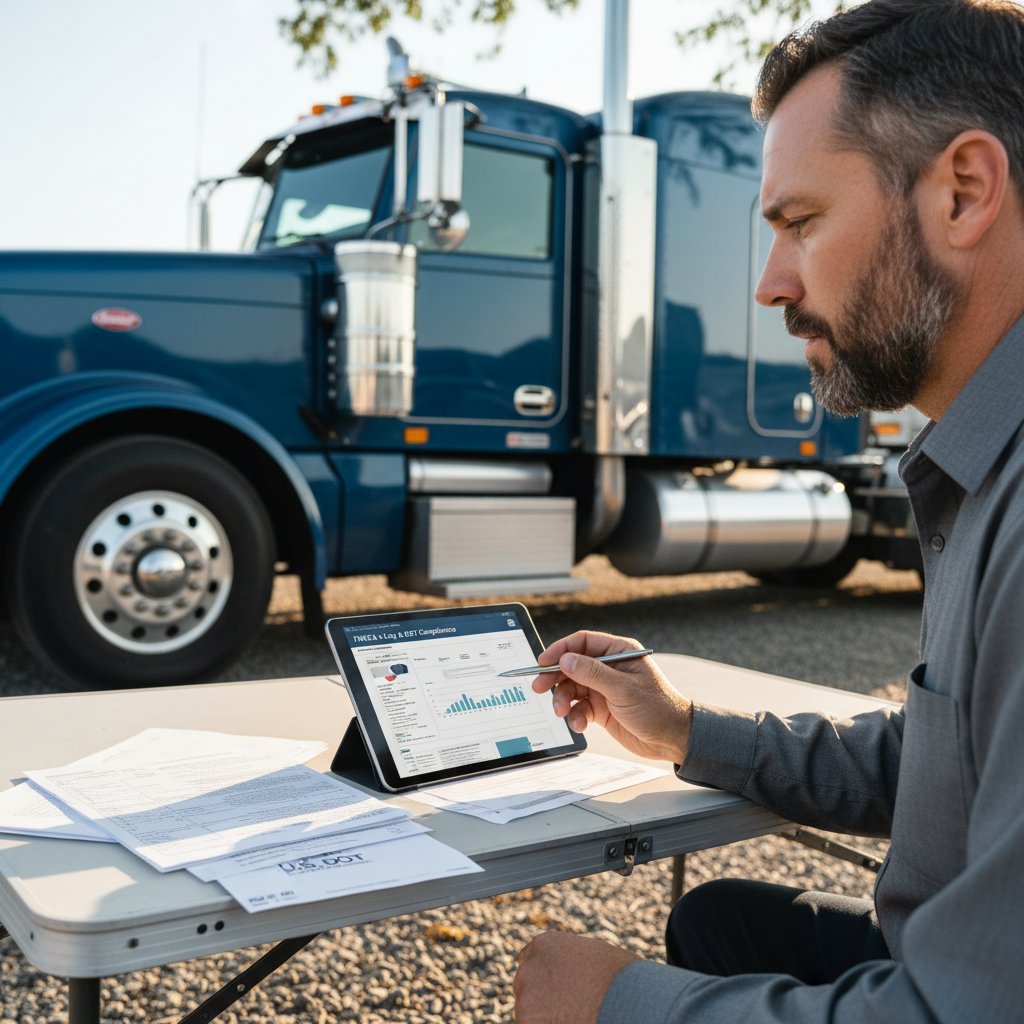
Image placeholder: Owner-operator reviewing COI requirements on a tablet beside a tractor (Alt: Trucking operator reviewing haul insurance coverage options).
A practical definition used in U.S. trucking
In real conversations, “haul insurance trucking” can mean different things depending on who you’re talking to (agent, broker, shipper, dispatcher). Most commonly, it’s shorthand for a bundle that includes:
- Auto liability: the coverage tied to your operation and broker requirements.
- Motor truck cargo: the freight you’re responsible for while hauling.
- Physical damage: your tractor (and sometimes trailer) for collision and comprehensive losses.
- Common add-ons: general liability (GL), trailer interchange, bobtail/non-trucking liability (NTL), and occupational accident.
The confusion matters because you can buy “cargo” and still fail a broker packet, or you can have “liability” and still be exposed on your own equipment.
Haulage insurance vs freight insurance vs inland marine (simple comparison)
These terms get mixed together, but they’re not interchangeable in day-to-day trucking.
| Term | Who buys it most often? | What it protects | What it’s not |
|---|---|---|---|
| Motor truck cargo (carrier’s cargo) | Motor carrier / owner-operator | Freight while you’re responsible for it | Not auto liability; not your truck |
| Freight/cargo insurance (shipper’s cargo) | Shipper / cargo owner | Their financial interest in the goods | Not a substitute for your cargo requirement |
| Inland marine | Shippers, warehouses, some carriers | Property in transit/temporary storage (policy form category) | Not automatically “you’re covered to haul” |
Even when a shipper has their own cargo/inland marine policy, brokers still require your motor truck cargo and your liability because you’re the one responsible when a loss happens under your control.
What Does Haul Insurance Cover? Core Coverages Explained
A typical haul insurance setup covers three main exposures—third-party liability, freight in your custody, and damage to your equipment—with limits and exclusions that vary by policy and contract.
Image placeholder: Simple chart/infographic mapping liability, cargo, physical damage, and add-ons to what they protect (Alt: Chart showing haul insurance coverages: liability, cargo, physical damage, and add-ons).
1. Auto liability (the coverage that keeps your operation running)
Auto liability pays for injuries and property damage to others if you cause a crash in your commercial truck.
- Why it’s essential: It’s the backbone of commercial truck insurance for for-hire operations, and missing required limits can stop you from booking loads.
- Reality check: Federal minimums are often $750,000 for many non-hazmat property carriers, but $1,000,000 is commonly what brokers want to see on a COI.
2. Motor truck cargo (the freight you’re responsible for while hauling)
Motor truck cargo pays for covered loss or damage to the load while it’s in your care, custody, and control, subject to the policy’s limit, deductible, and exclusions.
- Common broker minimums: Many broker packets require $100,000 cargo; higher-value lanes or commodities can require $250,000+.
- Why claims get denied: Cargo policies often have strict conditions and exclusions that matter as much as the limit.
Ask your agent to review these denial triggers before you bind:
- Unattended vehicle: overnight stops and “keys out” rules can decide whether theft is covered.
- High-theft commodities: electronics, alcohol, tobacco, copper, and similar items may be excluded or require endorsements.
- Reefer/temperature control: temperature coverage is often endorsement-driven, not automatic.
- Reporting deadlines: late notice can reduce or void coverage depending on the contract language.
3. Physical damage (protect your tractor—and your livelihood)
Physical damage typically includes collision (impact losses) and comprehensive (theft, fire, vandalism, weather, animal strikes) for your scheduled equipment.
If your tractor is down, your revenue is down. Physical damage is how you avoid turning one breakdown or crash into months of lost income.
Cash-flow tip: choose a deductible you can pay immediately; a “cheap” premium doesn’t help if the truck sits because you can’t cover the deductible.
4. Common add-ons that show up in “haul insurance” quotes
- General liability (GL): non-auto business claims (premises, certain loading/unloading exposures depending on wording).
- Trailer interchange: physical damage to a non-owned trailer you’re responsible for under an interchange agreement.
- Bobtail / non-trucking liability (NTL): liability when you’re not under dispatch; definitions vary, so don’t assume it’s “any personal use.”
- Occupational accident: medical/disability/death benefits for owner-operators (often used as an alternative to workers’ comp for 1099 setups, where allowed).
COI review • Limits & deductibles • Commodity/radius fit
Do You Need Haul Insurance for Trucking? Requirements (Federal, State, and Contract)
Haul insurance requirements come from three layers—FMCSA rules, state intrastate rules, and broker/shipper contracts—and contract requirements are often stricter than legal minimums.
Image placeholder: Layered pyramid showing federal, state, and broker/shipper contract requirements (Alt: Diagram showing three layers of requirements: federal, state, and broker/shipper contracts).
Federal (FMCSA) vs intrastate: what’s actually “required”
There are three different meanings of “required,” and mixing them up costs you loads:
- Federal (FMCSA): applies when you operate interstate and/or under federal authority; this is where liability minimums and filings show up.
- State (intrastate): varies by state if you operate only intrastate; some states require different minimums or filings.
- Contract (broker/shipper): often the strictest; you can be legal and still not be bookable.
Practical nuance: FMCSA generally does not require cargo insurance for most property carriers (household goods is a notable exception), but many brokers and shippers do—so cargo becomes “required” for everyday work even when it’s not a federal mandate.
State and contract requirements: why you can’t rely on minimums
Even if you meet a legal minimum, brokers commonly require combinations like:
- $1M auto liability
- $100k–$250k cargo (sometimes higher based on commodity and lane)
- Specific endorsements (reefer/temperature, high-theft, interchange, etc.)
- COI wording such as additional insured, waiver of subrogation, and primary & non-contributory (common asks)
If your COI doesn’t match the packet, you’ll be resubmitting paperwork while someone else hauls the load.
Quick checklist: documents you’ll be asked for
- Certificate of Insurance (COI): correct certificate holder and addresses.
- Policy limits and effective dates: matching the packet requirements.
- Commodity description: when the broker asks for it.
- Required endorsements: interchange, reefer/temperature, additional insured, etc.
How Much Does Haul Insurance Cost in 2026?
Haul insurance cost in 2026 is driven by underwriting factors like new venture status, radius, commodity, garaging state, loss history, and the limits/deductibles you choose, so pricing can vary by thousands per year for the same truck.
What drives haul insurance cost the most
- New venture vs. established authority
- Radius: local, regional, OTR (and annual mileage)
- Commodity: general freight vs hazmat vs high-theft vs refrigerated
- Equipment value: higher physical damage exposure
- Garaging location: theft rates, claim severity, litigation environment
- Loss history & violations: CSA issues, speeding, at-fault accidents
- Limits & deductibles: especially cargo and physical damage
Illustrative 2026 cost bands (realistic ranges, not promises)
These are illustrative monthly ranges per power unit that many owner-operators see quoted, depending on operation, underwriting, and selected coverages:
- Liability-focused setup: ~ $600–$1,800/month
- Liability + cargo: ~ $750–$2,300/month
- Full package (liability + cargo + physical damage + common add-ons): ~ $900–$2,500+/month
If a quote is far under market, the fastest way to protect yourself is to ask: What’s missing? (coverage, limit, endorsement) and what’s excluded? (theft, reefer, high-theft commodities, unattended vehicle rules).
Fast turnaround • Multiple markets • Broker-ready COIs
Choosing the Right Haul Insurance by Operation Type (Long-Haul, Local, and Niche)
Choosing the right haul insurance depends on operation type because underwriting and claims risk change with miles, stops, parking, cargo type, and whether you handle non-owned trailers or temperature-controlled freight.
1. Long-haul / OTR
More miles increases exposure, overnight parking increases theft risk, and multi-state routes increase variability in claim environments.
- Watch-outs: cargo theft exclusions, security requirements, higher cargo limits for certain lanes, and downtime costs tied to physical damage claims.
2. Local / regional
More stops and tighter turns often increase frequency risk, and more dock time can increase loading/unloading disputes.
- Watch-outs: GL wording (loading/unloading isn’t “automatic”), trailer interchange if you swap trailers, and bobtail/NTL gaps between dispatches.
3. Hot-shot
Hot-shot setups are sensitive to GVWR, trailer type, and a shifting cargo mix that can change your risk profile week to week.
- Watch-outs: hauling $100k freight with a $50k cargo limit, physical damage values for both truck and trailer, and broker requirements that treat you like a full-size carrier.
4. Reefer / temperature-controlled
Reefer cargo often requires specific endorsements and strict claim conditions tied to temperature logs and set-point procedures.
- Watch-outs: temperature-control endorsements, pre-cool and set-point documentation, and exclusions tied to mechanical breakdown unless endorsed.
5. Hazmat
Hazmat liability requirements can be significantly higher depending on the commodity and whether placarding applies.
- Watch-outs: higher liability limits (often discussed in the $1M–$5M range depending on hazmat class/operation), tighter underwriting scrutiny, and potential environmental/pollution considerations case-by-case.
Real-World Claim Scenarios: Which Policy Pays?
Real-world trucking claims typically fall into liability losses, cargo losses, or equipment losses, and the correct policy pays only when the facts match the policy triggers and conditions.
Image placeholder: 3-panel graphic showing accident, cargo theft, and loading damage—and which policy responds (Alt: Infographic explaining which policy pays in common trucking claim scenarios).
Scenario 1 — Rear-end accident while under dispatch
What happens: You clip a four-wheeler in stop-and-go traffic. Their car is totaled, and your hood/radiator is damaged.
- Auto liability: pays their property damage/injuries (up to your limit).
- Physical damage (collision): pays your repairs (minus deductible).
Scenario 2 — Cargo theft at an overnight stop
What happens: You park for the night and the trailer gets hit. The load is gone.
- Motor truck cargo: may respond, but theft is where conditions and exclusions matter most.
- Common decision points: unattended vehicle rules, evidence of forcible entry, required security steps, and reporting timelines.
Scenario 3 — Freight damaged during loading at the shipper
What happens: A forklift punctures product while loading, and everyone points fingers.
- Motor truck cargo: may apply depending on custody/contract and cause of loss.
- General liability: may be involved depending on the allegations and how GL is written.
This is why “I have haul insurance” isn’t enough. You want the right policy forms and endorsements for how you actually run.
How to Shop for Haul Insurance (Without Buying the Wrong Thing)
Shopping for haul insurance works best when you quote the right bundle first and then compare policy wording—especially cargo exclusions, deductibles, and endorsements—instead of comparing premium alone.
1. Start with requirements (authority + contracts + commodity)
Before you shop, gather these basics so the quote matches your real operation:
- Operating status: new venture vs established.
- Radius: local/regional/OTR lanes you actually run.
- Commodity list: what you haul and what you will not haul.
- Typical load value: and any peak seasons that change it.
- Equipment values: tractor and trailer.
- Broker packet requirements: limits, endorsements, and COI wording.
2. Quote the bundle, then stress-test the exclusions
Don’t just compare premium. Compare the parts that decide whether a claim pays:
- Cargo exclusions: unattended, high-theft, temperature, improper securement.
- Deductibles: whether you can pay them without stopping operations.
- Trailer coverage: whether it’s scheduled and how non-owned trailers are handled.
- Claims handling: speed matters when cash flow is on the line.
3. Use premium levers that don’t kill coverage
If you’re trying to keep affordable trucking insurance, the safer levers are usually:
- Adjusting physical damage deductibles (within what you can afford to pay).
- Tightening radius to match reality (don’t claim local if you’re truly OTR).
- Adding/verifying safety tech (dash cam, GPS, ELD compliance) when the carrier credits it.
- Documenting training and cleaning up violations where possible.
Side-by-side coverage • COI support • Owner-operator friendly
Frequently Asked Questions
Haul insurance is a trucking industry shorthand for the insurance bundle that lets a carrier legally haul and meet broker/shipper packets, usually including auto liability, motor truck cargo, and physical damage. In practice, brokers often expect $1,000,000 auto liability on the COI even when certain operations may be legal at lower minimums like $750,000. Many packets also require cargo limits like $100,000 or more, plus endorsements for reefer/temperature, high-theft commodities, or trailer interchange depending on the load and trailer arrangement. The exact “haul insurance” setup depends on authority type, lanes, commodities, and contract wording.
Haul insurance typically covers (1) third-party injuries and property damage through auto liability, (2) covered loss or damage to freight through motor truck cargo, and (3) damage to your tractor through physical damage if you include it. Coverage is always subject to limits, deductibles, and exclusions, and those exclusions are where many surprises happen—especially for cargo theft during “unattended” stops, temperature-controlled shipments without a reefer endorsement, and high-theft commodities like electronics or alcohol. If your broker packet requires specific wording or endorsements, the COI has to match those requirements to stay bookable.
Yes—if you operate for-hire, you generally need commercial auto liability to operate and stay competitive, and you almost always need motor truck cargo to satisfy broker and shipper contracts. FMCSA requirements focus heavily on liability limits and filings for interstate operations, while cargo requirements are usually driven by contracts (and certain regulated categories like household goods). Even intrastate-only carriers often end up carrying the same “market standard” limits—commonly $1,000,000 liability and $100,000+ cargo—because that’s what broker packets require to book loads without delays.
Haul insurance is a broader term, while cargo insurance is one specific coverage inside the bundle. Motor truck cargo covers freight while it’s in your care, custody, and control, subject to a cargo limit (often $100,000 or more for brokered freight) and policy exclusions. Haul insurance, as people use the phrase, usually includes auto liability (often expected at $1,000,000 by brokers) and may also include physical damage, trailer interchange, GL, and bobtail/NTL. If you buy “cargo only,” you can still fail a broker packet because liability and COI wording won’t match requirements.
Haul insurance is offered through commercial trucking insurers and specialty agencies that place policies with multiple markets, but the carrier choice matters less than matching coverage to your operation. A “good” haul insurance option is one that fits your radius, commodity list, load values, and equipment values, and can issue a broker-ready COI with the limits and endorsements required. For example, a general freight OTR operator may need $1,000,000 liability and $100,000–$250,000 cargo, while reefer or high-theft loads may require endorsements that not every market will write.
Why Logrock’s Approach Is Different (Business-First)
A business-first trucking insurance approach focuses on broker-ready COIs, correct limits, and correct endorsements so you can haul without resubmitting packets or fighting denials after a loss.
You don’t need insurance “education.” You need a setup that:
- Gets you booked: your COI meets broker packets.
- Keeps you compliant: the right limits and filings for your operation.
- Protects cash flow: fewer uncovered losses and fewer claim surprises.
- Scales: adding units and drivers without rebuilding everything.
That’s the difference between buying a policy and running a trucking business with a real risk plan.
Conclusion: Get a Haul Insurance Quote That Actually Matches Your Loads
“Haul insurance” is usually a commercial truck insurance bundle, not a single magic policy. The winning move in 2026 is straightforward: match coverage to your authority, broker packets, and cargo risk—then stress-test exclusions before you roll.
Key Takeaways:
- Buy for requirements + reality: radius, commodity, and load values—not just price.
- Treat cargo exclusions like a contract: that’s where denials usually live.
- Use smart premium levers: deductibles and safety controls can reduce cost without breaking broker-required coverage.
If you want to stop guessing and start hauling with confidence, get a quote that’s built around what you actually haul and what your brokers actually require.
Owner-operator focus • Fast COIs • Coverage that matches contracts