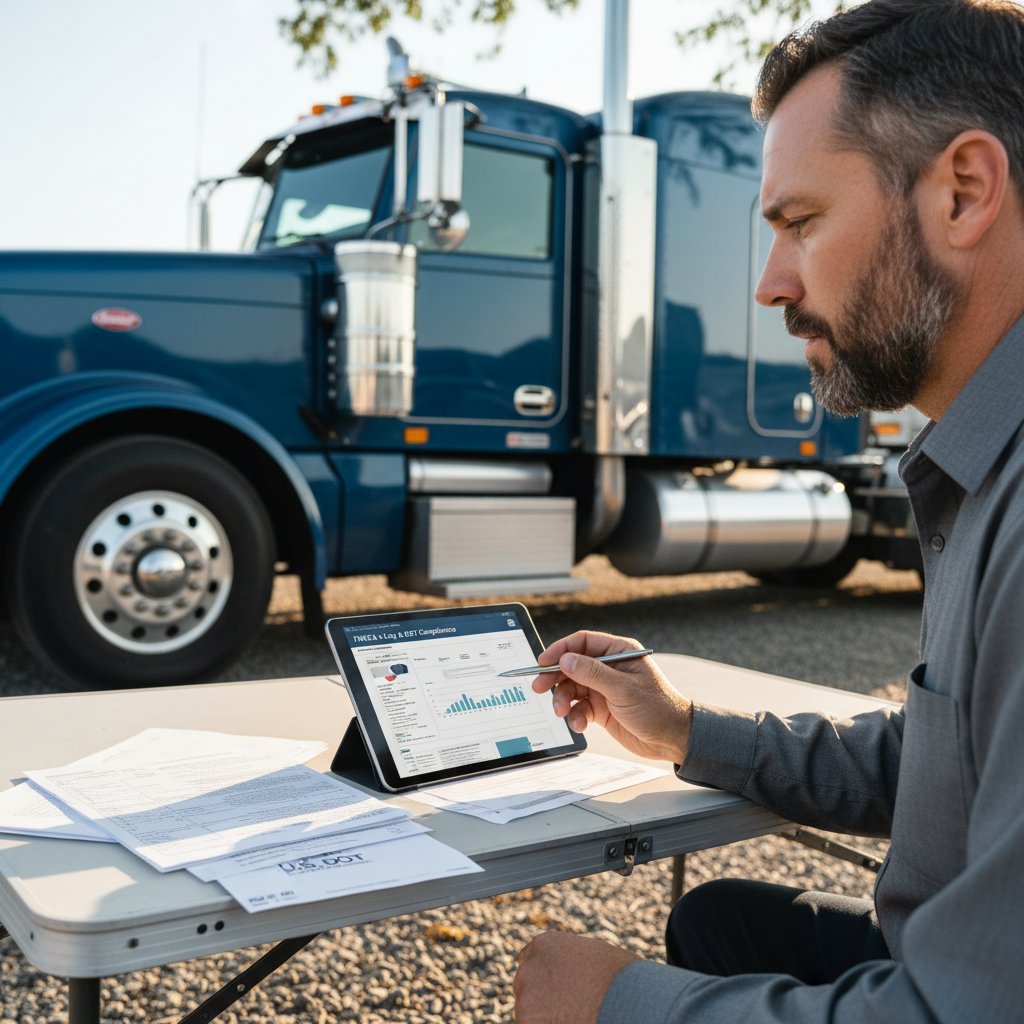
Insurance for driver in 2026: the commercial truck insurance coverages owner-operators need, what brokers require, and how to cut trucking insurance cost—get a quote.
Insurance for driver in trucking usually means choosing the right commercial truck insurance package for your truck, your authority, and your contracts—not buying a “driver-only” policy like personal auto. Most owner-operators need primary auto liability (often $750,000 minimum under FMCSA rules for non-hazardous interstate for-hire carriers, with $1,000,000 commonly required by brokers), plus cargo and the add-ons that prevent off-dispatch gaps and COI rejections.
If you’ve ever lost a load because a broker didn’t like your paperwork, start with COI + MCS-90/BMC-91X: what brokers check so your coverage is set up to book freight without back-and-forth.
Table of Contents
Reading time: 10 minutes
- Does insurance follow the driver or the truck?
- The owner-operator coverage checklist (with plain-English definitions)
- How much does trucking insurance cost in 2026 (and what really moves the price)?
- Frequently Asked Questions
- Why Logrock: practical coverage that passes broker checks
- Conclusion & get a quote without guesswork
Does insurance follow the driver or the truck?
In U.S. trucking, the primary liability coverage typically follows the power unit and the motor carrier’s operating authority, and FMCSA financial responsibility rules require at least $750,000 in public liability for most for-hire interstate carriers hauling non-hazardous property (higher minimums apply for certain hazmat).
The driver still matters—underwriters price your policy based on MVR, experience, and violations—but the policy written for the truck/authority is usually the one that responds first when you’re operating in the covered business use.
Where owner-operators get burned is off-dispatch time. Many motor carrier liability policies apply only while you’re under dispatch (or as defined in your lease and policy). That’s why understanding bobtail vs non-trucking liability (off-dispatch coverage) matters before you assume you’re protected.
The real-world example (what happens after a crash)
You’re in your tractor with no load, grabbing food or repositioning for tomorrow.
- If you’re not under dispatch: the carrier’s liability may not apply, depending on the policy and lease language.
- If you don’t carry the right off-dispatch coverage: you can be stuck paying out of pocket or fighting a denial while the truck sits.
Business reality: one uncovered loss can erase months of profit and make brokers hesitant to use you again.
The owner-operator coverage checklist (with plain-English definitions)
A practical owner-operator insurance program in 2026 usually includes primary auto liability ($750,000–$1,000,000+), cargo coverage (often $100,000 for many brokered loads), and optional coverages like physical damage and off-dispatch liability based on your truck, lanes, and contracts.
Think of this like a pre-trip: if one item’s missing, you won’t find out until it’s expensive.
Quick coverage table (owner-operator view)
| Coverage | What it pays for | Required by law? | Usually required by brokers/shippers? |
|---|---|---|---|
| Auto Liability (Primary) | Injury/property damage you cause while operating in covered business use | Often yes (by authority/cargo type) | Yes |
| Motor Truck Cargo | Covered damage/loss to freight you’re hauling | Not always | Very often |
| Physical Damage (Comp/Collision) | Repairs/total loss to your tractor (and sometimes trailer) from theft, crash, weather, etc. | No | Lender/lease often |
| General Liability | Non-auto third-party claims (e.g., damage at a customer site) | No | Sometimes |
| Bobtail / Non-Trucking Liability | Certain off-dispatch liability scenarios (depends on policy wording) | No | Common in lease agreements |
| Trailer Interchange (if applicable) | Damage to a non-owned trailer in your care under a written interchange agreement | No | Sometimes |
| Optional add-ons | Towing/roadside, rental/downtime options, etc. (varies by carrier) | No | No |
1) Auto liability (primary commercial auto)
Auto liability pays for other people’s injuries and property damage if you cause a wreck, and it’s the coverage that keeps your authority and broker relationships alive.
- Compliance note: For interstate for-hire carriers, liability must be maintained and typically filed with FMCSA via BMC-91/BMC-91X (your insurer files this), and the MCS-90 endorsement is part of most filings-backed liability policies.
- Contract reality: Many brokers won’t load you with less than $1,000,000 auto liability, even when the regulatory minimum is lower.
2) Motor truck cargo (what brokers care about on the COI)
Motor truck cargo insurance pays for covered loss or damage to the freight you’re hauling, and it’s one of the first boxes brokers check when they onboard you.
If you’re tendered a $100,000 load but your cargo limit is $50,000, you can be rejected before you even get the rate confirmation—or you can be exposed if a claim hits above your limit.
For the details that trip people up (limits, exclusions, and what “reefer breakdown” does and doesn’t mean), use motor truck cargo insurance limits and exclusions.
3) Physical damage (comprehensive + collision)
Physical damage coverage protects your tractor (and sometimes listed trailers) for theft, weather, animal strikes, vandalism, and collision losses.
If your truck is your business, physical damage is what keeps one bad day from turning into a forced shutdown. Deductibles matter here more than most drivers realize—set them like a business owner, not like a gambler.
If you want a simple breakdown (and a deductible strategy that matches how repairs actually get paid), see semi truck physical damage: collision vs comp + deductible strategy.
4) General liability (often misunderstood)
General liability covers third-party claims that aren’t caused by operating the truck, such as property damage at a shipper/receiver or certain “on-premises” incidents.
Limits commonly requested in contracts are often $1,000,000 per occurrence, but requirements vary. If a warehouse contract asks for GL and you don’t have it, you can lose the customer even with perfect auto liability.
5) Bobtail vs non-trucking liability
Bobtail and non-trucking liability are off-dispatch coverages designed to address gaps when primary liability doesn’t apply, and they’re one of the most common misunderstandings in lease-on arrangements.
The names get used loosely in the real world, so don’t rely on “what your buddy carries.” Match the coverage to your lease language and how you actually use the truck when you aren’t under dispatch.
Use this explainer before you bind: bobtail vs non-trucking liability (off-dispatch coverage).
6) Trailer interchange (if you pull someone else’s trailer)
Trailer interchange covers physical damage to a trailer you don’t own when you’re responsible under a written trailer interchange agreement.
If you routinely swap trailers with a partner or in certain dedicated lanes, this can be the difference between a clean relationship and a chargeback that kills the lane.
7) Optional “keep moving” coverages
These don’t satisfy the DOT, but they can save your week when things go sideways:
- Towing/roadside: heavy wrecker bills are real money, especially off major corridors.
- Rental/downtime options: availability and rules vary by carrier and policy form.
- Deductible tuning: raising deductibles can cut premium, but only if your cash reserve can handle a surprise claim.
How much does trucking insurance cost in 2026 (and what really moves the price)?
Trucking insurance pricing is driven by underwriting variables like MVR, loss history, cargo class, and operating radius, and a single at-fault liability loss can commonly trigger a 20%–50% renewal increase (or a non-renewal) depending on severity and market conditions.
You don’t go broke from the premium alone—most owner-operators go broke from the bad week when premium, breakdown, and slow pay hit together. So you need realistic ranges and a plan you can run month after month.
For current benchmarks and what actually moves premiums, use affordable trucking insurance cost ranges (2026).
The biggest price drivers (what underwriters actually look at)
- New venture / new authority: higher rates until you build safety and loss history.
- State + radius + lanes: dense metro areas and higher-loss corridors tend to price higher.
- Cargo type: theft-prone, higher value, or temperature-controlled freight usually costs more to insure.
- Loss runs + MVR: claims and violations follow you and impact renewals.
- Equipment value + deductibles: higher values and lower deductibles typically increase premium.
- Compliance signals: inspection history, maintenance practices, and safety tech can help (credit varies by insurer).
How to cut cost without cutting protection
- Compare quotes apples-to-apples: same limits, same deductibles, same radius, same filings.
- Don’t buy what you can’t explain: if you can’t explain it, you can’t manage it—or defend it when a broker asks.
- Pick deductibles you can pay mid-week: not on your best month.
If you want practical savings levers without creating coverage holes, use cheapest commercial auto insurance (2026) + how to pay less.
Why Logrock: practical coverage that passes broker checks
A broker-ready COI commonly needs to show $1,000,000 auto liability and cargo limits that match the load (often $100,000 for general freight), plus correct certificate holder details and any required additional insured wording per the rate confirmation.
Owner-operators don’t need a generic coverage lecture. You need paperwork that clears, limits that fit your freight, and a policy that matches how you run (radius, lanes, commodity, trailer setup, and authority status).
- No guessing: quotes built around what contracts and brokers actually require.
- No wasted spend: we flag “looks cheap, fails later” gaps before they cost you loads.
- Fast turnaround: because missing a load is missing real money.
If you’re running hotshot, operating under new authority, or trying to keep costs down without getting your COI kicked back, this guide helps too: new authority insurance: compare quotes apples-to-apples.
Hotshot operator? Use hotshot insurance requirements + typical limits + COI for the typical limits brokers request on that side of the business.
Frequently Asked Questions
These FAQs cover the most common owner-operator questions about insurance for driver, including FMCSA filings (like BMC-91X), typical broker cargo limits (often $100,000), and cost-saving moves that don’t break your coverage.
An owner-operator hauling freight typically needs primary commercial auto liability (FMCSA minimum is $750,000 for most non-hazardous interstate for-hire carriers, while many brokers require $1,000,000), plus motor truck cargo that matches the loads you haul (often $100,000 for general freight). If you’re financed or your truck would be hard to replace, add physical damage (comp/collision). Many contracts also ask for general liability (often $1,000,000) and, depending on your setup, bobtail/non-trucking liability for off-dispatch gaps.
New authority insurance is usually higher because underwriters treat a new MC as a higher-uncertainty risk until you build loss history, inspection history, and consistent operations, and pricing can be dramatically different even when limits look similar. The safest way to compare quotes is to make them identical: same liability limit (often $1,000,000), same cargo limit (often $100,000), same radius, same commodities, same deductibles, and the same filings. Use this walkthrough to avoid quote traps: new authority insurance: compare quotes apples-to-apples.
Brokers typically verify that your COI shows active dates, the required limits (commonly $1,000,000 auto liability and a cargo limit like $100,000 if that’s what the load requires), and correct certificate holder/additional insured wording when the contract asks for it. They may also confirm your federal liability filing is active (your insurer files BMC-91/BMC-91X with FMCSA) and that nothing on the COI contradicts your operation (radius, commodity, exclusions). This checklist breaks down what gets COIs rejected: COI + MCS-90/BMC-91X: what brokers check.
The cheapest safe way to lower commercial truck insurance is to reduce mismatch and friction—then adjust deductibles—without dropping the limits your brokers and contracts require (often $1,000,000 liability and cargo like $100,000). Start by comparing quotes apples-to-apples, cleaning up filings/COI wording so you don’t trigger last-minute endorsements, and choosing deductibles you can actually pay if a claim hits mid-month. After that, tighten operations (radius, commodity mix, loss control) because underwriters price what you do, not what you intend. For a practical playbook, see cheapest commercial auto insurance (2026) + how to pay less.
Conclusion: build coverage that stays valid when you’re off-dispatch and under a load
If you operate for-hire in interstate commerce, you must maintain at least $750,000 in public liability (higher for certain hazmat) and keep your insurance filings active, and most brokers won’t work with you without a COI that matches the rate confirmation.
The goal isn’t just being “legal.” It’s staying load-eligible, protecting your equipment, and avoiding coverage gaps that wreck cash flow.
Key Takeaways:
- Coverage usually follows the truck/operation first: off-dispatch gaps are a common failure point—learn bobtail vs non-trucking liability.
- Brokers care about COI accuracy as much as limits: use what brokers check on a COI to avoid setup delays.
- Don’t chase the cheapest premium: compare quotes apples-to-apples and set deductibles you can actually pay.
If you want a quote built around how you actually run—so it passes broker checks and holds up when it matters—use the button below.