
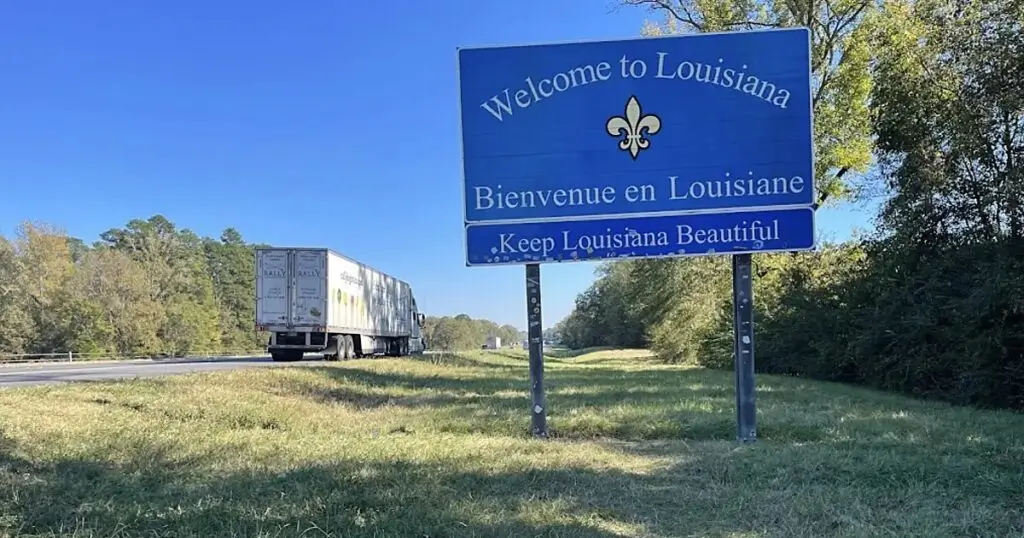

Driving in Louisiana is a challenge, whether you are navigating the narrow bridges of the Atchafalaya Basin on I-10 or hauling pipe through the oil fields of Houma. But for business owners, the real challenge is the bill.
Louisiana is legally unique. It is a "Direct Action" state, meaning if your truck is in an accident, the plaintiff's lawyer can sue your insurance company directly by name in court. Juries tend to award massive settlements when they know an insurance company is paying, leading to "Nuclear Verdicts." Consequently, insurance rates here are the highest in the nation.
Additionally, if you haul for-hire within the state (Intrastate), you must answer to the Louisiana Public Service Commission (LPSC), which regulates authority and requires specific filings like the Common Carrier Certificate.
In Louisiana, the average commercial truck insurance premium typically lands between $16,000 and $25,000 per year. This guide breaks down the costs and the LPSC requirements you need to know.
Key Takeaways: Louisiana Truck Insurance Costs
- The Price Tag: Louisiana is ranked #1 Most Expensive. Expect to pay around $21,500 annually for a Semi-Truck with a clean record.
- Monthly Breakdown: A typical owner-operator pays roughly $1,600/month for Liability and $400/month for Physical Damage (due to high rates of uninsured motorists and flood risks).
- The LPSC Factor: Intrastate carriers must register with the Public Service Commission and file Form E. Waste and Saltwater haulers have even stricter rules.
- Direct Action Statute: This law drives up premiums by 40-50% compared to neighbors like Texas or Arkansas.

Real Numbers: Estimated Costs by Truck Type
Let's look at the hard data. The following estimates represent the average annual cost for Auto Liability ($1M Limit) for a driver with a clean record in Louisiana. Warning: New Ventures (companies < 2 years old) may struggle to find a quote under $25,000 in the New Orleans or Baton Rouge areas.
| Vehicle Type | Limit $300,000* | Limit $750,000 | Limit $1,000,000 (Standard) |
|---|---|---|---|
| Hotshot | $12,500 | $15,800 | $18,500 |
| Box Truck | $9,800 | $12,500 | $15,200 |
| Dump Truck | $14,000 | $17,500 | $21,000 |
| Log Truck | $15,000 | $18,000 | $21,500 |
| Semi Truck | $16,500 | $19,500 | $23,500 |
Last update: December 15, 2025.
Logrock Reality Check: While you might legally operate an intrastate hotshot with $300,000 liability, virtually no oil field or construction site will let you enter without $1,000,000 General Liability and Auto Liability.
Liability Limits: Intrastate vs. Interstate
Louisiana rules change depending on whether you cross state lines. We have broken this down into two tables to make it clear.
Table 1: Intrastate Requirements (LPSC Only)
For trucks that never leave Louisiana (e.g., Lafayette to Shreveport).
| Vehicle Weight / Type | Minimum Liability Limit | Filing Required? |
|---|---|---|
| Freight < 10,000 lbs GVW | $300,000 CSL | Yes (Form E/LPSC) |
| Freight > 10,001 lbs GVW | $750,000 CSL | Yes (Form E/LPSC) |
| Waste / Saltwater | $750,000 + Pollution | Yes (Form E) |
| Household Goods (Movers) | $300k - $750k + Cargo | Yes (Form E + H) |
| Passenger (16+ seats) | $5,000,000 CSL | Yes (Form E) |
Note: "CSL" means Combined Single Limit. Intrastate carriers must apply for a Common Carrier Certificate from the LPSC. This involves a $50 filing fee and specific application process.
Table 2: Interstate Requirements (FMCSA / Federal)
For trucks that cross state lines (e.g., Slidell, LA to Gulfport, MS).
| Vehicle Weight / Type | Minimum Liability Limit | Filing Required? |
|---|---|---|
| Freight < 10,000 lbs | $300,000 CSL | No (Unless Hazmat) |
| Freight > 10,001 lbs | $750,000 CSL | Yes (BMC-91X) |
| Hazmat (Gas/Oil/Explosives) | $1,000,000 - $5,000,000 | Yes (MCS-90) |
| Passenger (16+ seats) | $5,000,000 CSL | Yes (BMC-91X) |
Louisiana Requirements & Critical Filings
To operate legally, your insurance agent must submit specific forms to the LPSC.
- Form E: Mandatory for Intrastate for-hire carriers. It proves to the LPSC that you have valid liability insurance. Without this, your Common Carrier Certificate will not be issued.
- LPSC Number: All intrastate for-hire carriers must display their LPSC number on the cab (in addition to the USDOT number).
- Waste/Saltwater Permit: Hauling waste or saltwater (common in oil fields) requires specific authority. Pollution Liability is almost always required by the shippers in this sector.
- Form H: Mandatory for Household Goods Movers to prove Cargo Insurance coverage.
Your Questions Answered: "People Also Ask" FAQs
Litigation. In Louisiana, accident victims sue the insurance company directly (Direct Action). This leads to higher settlements. Also, Louisiana roads are statistically more dangerous due to poor maintenance and high rates of uninsured drivers.
No. If you are a Private Carrier (e.g., a furniture store delivering your own sold sofas), you are generally exempt from LPSC authority. However, you still need a USDOT number if > 10,001 lbs.
Usually, No. Even if you pick up a container in New Orleans and drop it in Baton Rouge, that container is part of "Interstate Commerce" (coming from overseas). This falls under Federal (FMCSA) rules, requiring the UIIA endorsement and federal liability limits.
The Logrock Difference: We Navigate the Hard Market
Finding a quote in Louisiana is hard; finding a fair quote is harder. Many agents avoid writing policies here because the LPSC filings are tedious and the market is volatile. At Logrock, we don't back down from the Bayou. We work with the specific carriers that still write in Louisiana. We ensure your Form E is filed correctly with the LPSC so you don't get fined, and we help you secure the General Liability needed for oil field or port access.
Conclusion & Get Your Louisiana Quote
Louisiana offers high rates per mile for freight, but you have to survive the insurance premiums first. Don't risk your business on a policy that leaves you exposed to a Direct Action lawsuit. Ready to get a solid number for your business? Contact Logrock today for a customized, no-obligation quote and keep your wheels turning.





