
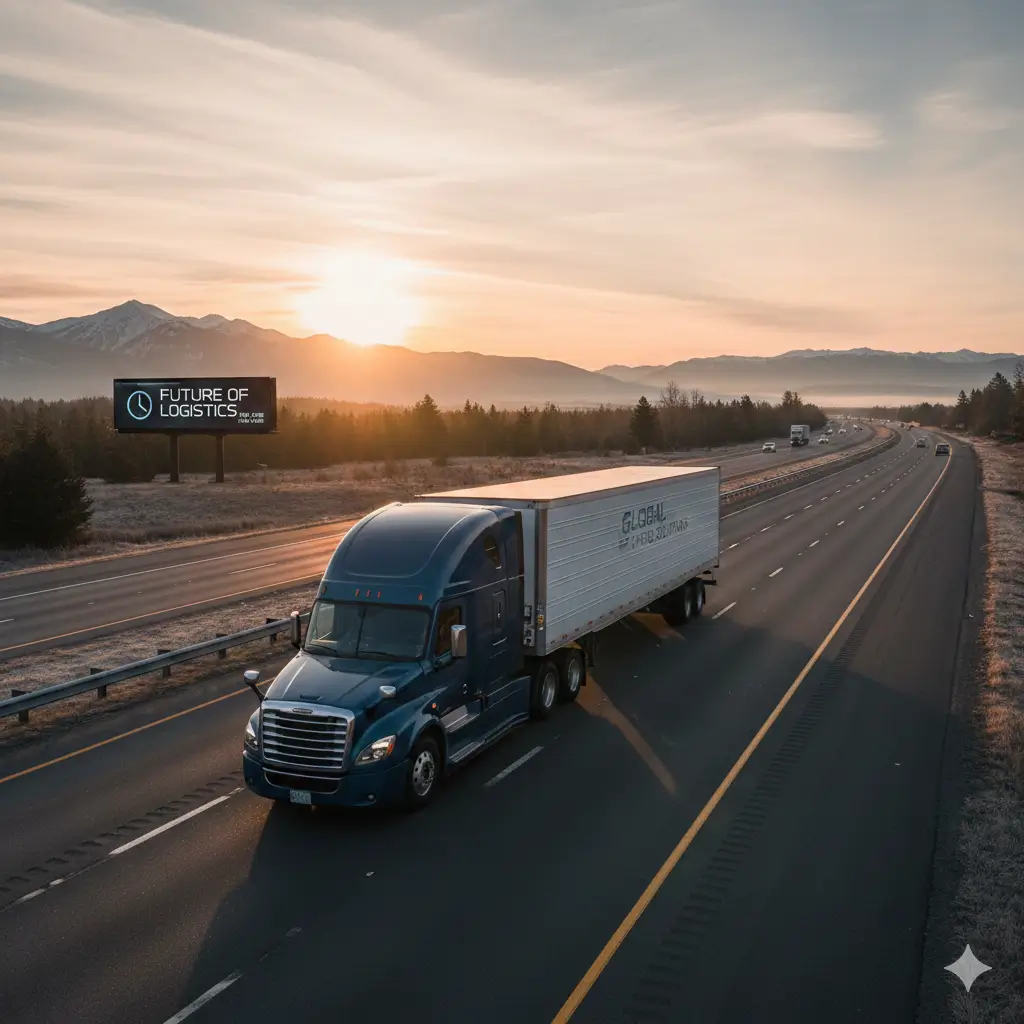
Explore major U.S. heavy truck types, what they haul, Class 7–9 differences, and how insurance needs vary by truck.

Commercial truck insurance changes based on your truck’s class, trailer setup, cargo, and operating radius—not just the logo on the hood. In the U.S., heavy trucks typically start at Class 7 (26,001–33,000 lbs GVWR) and include Class 8 (33,001+ lbs GVWR), and those weight classes connect directly to CDL thresholds, compliance, and insurance underwriting.
If you’re an owner-operator, the truck you run decides your rate per mile, fuel burn, maintenance costs, and what loads you can take—and it also drives what you’ll pay for commercial truck insurance. The terms get mixed fast (GVWR vs GCWR, straight truck vs tractor, vocational vs on-highway), so this guide breaks it down by weight class and real-world use, then ties each setup to the insurance pieces that matter.
Key Takeaways: Essential Heavy Truck Types in the USA
- Heavy trucks start at Class 7: Class 7 is 26,001–33,000 lbs GVWR; Class 8 is 33,001+ lbs GVWR—most semis are Class 8.
- “Type” can mean class or job: The industry sorts heavy trucks by weight class and by configuration (tractor-trailer vs straight truck) and application (dump, tanker, reefer, etc.).
- Insurance changes with how you work: Your cargo type, radius, operating authority, and trailer setup often affect pricing more than the truck badge.
- If you’re scaling from 1 truck to 2+: Standardizing spec (wheelbase, engine family, trailer type) helps control maintenance, downtime, and affordable trucking insurance options.
Table of Contents
Reading time: 9 minutes
- First, Know the Language: GVWR, GCWR, and Truck Classes
- The Main Heavy Truck Classes in the USA (Class 7–9)
- The Main Types of Heavy Trucks (By Real-World Use)
- How Truck Type Impacts Trucking Insurance Costs and Requirements
- Buying/Spec’ing Tips That Protect Cash Flow
- Your Questions Answered: “People Also Ask” FAQs
- The Logrock Difference: Insurance Built for Business Owners
- Conclusion & Get a Quote That Matches Your Truck
First, Know the Language: GVWR, GCWR, and Truck Classes
GVWR is the manufacturer-rated maximum weight of a single vehicle, and U.S. “truck classes” are commonly defined by GVWR, with heavy-duty typically starting at Class 7 (26,001 lbs GVWR).
If you don’t nail the definitions, you’ll get bad info fast—from dealers, dispatchers, and even insurance conversations.
For a deeper breakdown, see our guide to classifying medium and heavy-duty trucks by GVWR.
For a government reference on classifying medium and heavy-duty trucks by GVWR, see the U.S. Department of Energy vehicle weight class overview.
- GVWR (Gross Vehicle Weight Rating): Max weight of the truck itself + fuel + driver + payload (as rated by the manufacturer).
- GCWR (Gross Combined Weight Rating): Max weight of the truck + trailer + everything on both.
- “Class” in the U.S.: The most common system is Class 1–8 based on GVWR. Heavy duty is typically Class 7 and Class 8. Some people informally say “Class 9” for super-heavy/specialty, but it’s not part of the official 1–8 GVWR system.
GVWR Class Chart (Quick Reference)
| U.S. Truck Class | GVWR Range | Typical Examples |
|---|---|---|
| Class 6 | 19,501–26,000 lbs | Large box trucks, some single-axle straight trucks |
| Class 7 | 26,001–33,000 lbs | City tractors, dump straight trucks, refuse, some tow trucks |
| Class 8 | 33,001+ lbs | Semi truck insurance territory: sleepers, day cabs, heavy vocational, most highway tractors |
Why this matters for business: licensing, registration, routing (including some local restrictions), maintenance schedules, and commercial truck insurance underwriting all start with correct weight and usage.
Quick resource: Still mixing up GVWR and GCWR? Here’s the quick version.
The Main Heavy Truck Classes in the USA (Class 7–9)
In the U.S. GVWR class system, heavy trucks are generally Class 7 (26,001–33,000 lbs GVWR) and Class 8 (33,001+ lbs GVWR), while “Class 9” is common industry slang for super-heavy and specialty severe-service setups.
1. Class 7 Heavy-Duty Trucks (26,001–33,000 lbs GVWR)
What it is: Heavy straight trucks and some tractors that sit just below typical Class 8 highway tractor weights.
Why it matters: Class 7 trucks often run local/regional vocational work—stop-and-go, tight yards, job sites—which increases backing/turn exposure and can drive higher physical damage frequency in construction-style operations.
Who uses it: local contractors, municipal fleets, towing, some regional LTL/P&D, landscaping/material delivery.
Pro tip: If you’re doing job-site work, don’t “save” money by pushing physical damage deductibles too high; one hood/headlight/aftertreatment hit can wipe out months of premium savings.
Common Class 7 examples (by job):
- Single-axle dump straight truck
- Rollback/wrecker (medium-heavy towing)
- Refuse truck (many are Class 7 or 8 depending on build)
- City delivery straight truck (heavier builds)
2. Class 8 Heavy-Duty Trucks (33,001+ lbs GVWR)
What it is: The backbone of U.S. freight—tractors (day cabs and sleepers) plus heavy straight vocational builds.
Why it matters: Class 8 is where you see the biggest profitability swings (fuel, tires, aftertreatment, downtime), and it’s also where broker/shipper cargo requirements tend to be strict, driving higher insurance limits and filings.
Who uses it: owner-operators under their own authority, leased-on O/Os, fleets, and specialized haulers.
Most common Class 8 configurations:
- Sleeper tractor + 53′ van: OTR dry van
- Day cab + 53′: regional, port, rail
- Flatbed/step deck: construction, steel, machinery
- Reefer: food/pharma (often stricter cargo controls)
- Tanker: hazard profile varies by product
- Lowboy/RGN: heavy haul/oversize
3. “Class 9” / Super-Heavy & Specialty (Industry Slang)
What it is: Not an official GVWR class, but commonly used to describe severe-service and specialized heavy haul (multi-axle, extreme GVW, or dedicated vocational units).
Why it matters: Higher values, specialized trailers, permit complexity, escorts, and bridge-law routing can raise claim severity and compliance risk, and insurance mistakes can shut an operation down.
Who needs it: heavy haul operators, oilfield, specialized construction, crane support, multi-axle transport.
Examples:
- Multi-axle heavy haul tractors
- Specialized oilfield winch tractors
- Extreme-duty vocational builds
The Main Types of Heavy Trucks (By Real-World Use)
In U.S. trucking, “types of heavy trucks” usually means vocational and freight setups like dry van, reefer, flatbed/step deck, lowboy/RGN, tanker, dump, mixer, refuse, car hauler, and heavy wrecker—each with different cargo risk and insurance requirements.
When most people ask “types of heavy trucks,” they mean what the truck actually does. Here are the main categories you’ll see in the U.S.
1. Semi Truck (Tractor-Trailer) — Dry Van
What it is: Tractor pulling an enclosed box trailer—the most common freight setup in the U.S.
Typical freight: pallets, consumer goods, general freight.
Business notes: Usually easier to keep wheels moving, but rates can be volatile. Detention and lumper fees can quietly crush margin if appointments aren’t managed.
Insurance note: This is classic semi truck insurance—liability, cargo, and physical damage are the usual core.
2. Reefer (Refrigerated) Trucks
What it is: Refrigerated trailer (diesel or electric unit) maintaining temperature.
Typical freight: produce, meat, dairy, frozen foods, sometimes pharmaceuticals.
Business notes: Higher revenue potential, but higher operating complexity (set points, temp downloads, washouts).
Insurance note: Reefer claims often involve temperature allegations, so documentation and shipper requirements matter. See our reefer fleet insurance guide for coverage specifics and typical rate ranges.
3. Flatbed / Step Deck (Open Deck)
What it is: Open trailer for freight that can’t fit a box or needs top/side loading.
Typical freight: steel, lumber, machinery, building materials.
Business notes: More securement time = more labor. Bad securement = tickets, claims, downtime.
Insurance note: Cargo underwriting often asks about securement practices and commodity mix. See our flatbed owner-operator insurance guide for coverage details that match open-deck work.
Not sure which trailer type fits your freight? This breakdown compares dry van, reefer, and flatbed side by side:
4. Lowboy / RGN (Heavy Haul & Oversize)
What it is: Low-deck trailer (often removable gooseneck) for tall/heavy equipment.
Typical freight: dozers, excavators, lifts, large industrial equipment.
Business notes: Permits, routing, axle weights, escorts—this is a planning business as much as a driving job.
Insurance note: Higher limits and specialized coverage may be needed; confirm specifics before accepting the first oversize run.
5. Tanker Trucks (Liquid & Bulk)
What it is: Tank trailers hauling liquid or dry bulk (pneumatic).
Typical freight: fuel, chemicals, food-grade liquids, milk, water, cement powder.
Business notes: Surge and load dynamics require skill, and some products require endorsements and stricter shipper controls.
Insurance note: Product type changes everything—food-grade vs hazmat is a different world.
6. Dump Trucks (On-Road and Off-Road Vocational)
What it is: Straight dump trucks or dump trailers for aggregates and demo materials.
Typical freight: dirt, gravel, asphalt, debris.
Business notes: Seasonal swings, job-site risk, more tire and suspension wear.
Insurance note: Job-site exposure can increase premiums; accurate garaging and radius matter. Learn more about dump truck insurance and the factors that shape vocational pricing.
7. Concrete Mixer Trucks
What it is: Rotating drum mixer delivering ready-mix concrete.
Typical freight: concrete to job sites.
Business notes: Tight delivery windows, heavy wear, and rollover risk when rushed or on uneven ground.
Insurance note: Typically vocational underwriting; operational controls and driver training matter.

8. Refuse / Garbage Trucks
What it is: Front-loader, rear-loader, or side-loader refuse collection.
Typical work: waste and recycling pickup.
Business notes: Constant stops and tight residential streets raise claim frequency exposure.
Insurance note: Liability is often priced higher because of the operating environment.
9. Car Haulers (Auto Transport)
What it is: Multi-level trailers hauling vehicles (stinger-steer or conventional).
Typical freight: new and used vehicles.
Business notes: Securement and loading angles matter; damage claims can stack up when rushed.
Insurance note: Cargo values can be high, and shippers may require higher cargo limits. See our auto hauler insurance guide for coverage considerations by operation type.
10. Tow Trucks / Wreckers (Heavy Wrecker)
What it is: Heavy recovery for disabled trucks, buses, and equipment.
Typical work: recovery, towing, winching, roadside service.
Business notes: High-skill, high-risk; working on highway shoulders is dangerous.
Insurance note: Towing operations often require specific coverages beyond basic auto liability; review the operation carefully before binding. Explore tow truck insurance for a deeper look at the policies towing businesses commonly need.
How Truck Type Impacts Trucking Insurance Costs and Requirements
For interstate for-hire carriers, FMCSA financial responsibility minimums can be as low as $750,000 for non-hazardous property (49 CFR §387.9), but many brokers and shippers contractually require $1,000,000 auto liability and cargo limits that match the commodity.
If you’re shopping for affordable trucking insurance, the fastest way to overpay (or create a claim problem) is describing your operation wrong—or buying a policy that doesn’t match what you actually haul.
1. Liability Requirements: Federal Minimum vs Real-World Broker Minimums
What it is: Primary Auto Liability pays for bodily injury and property damage you cause.
Why it’s essential: One serious crash can end your business, and liability is required for authority and many contracts.
Reality check: Even when a federal minimum exists for your operation, many brokers and shippers still expect $1M on the COI.
2. Cargo: Your Trailer Type Often Determines Your Cargo Exposure
Cargo risk and claims patterns shift by trailer type, and that’s why underwriting questions often focus more on what you haul than what you drive.
- Dry van: general freight, moderate claim patterns
- Reefer: temperature disputes, spoilage, higher documentation demands
- Flatbed: securement failures, shifting loads, higher frequency of damage claims
- Auto hauler: high-value, high-visibility claims
- Tanker/hazmat: can require specialized underwriting and higher limits
If you’re changing trailer types to chase rate swings, update your policy before you hook a different trailer. “I was just trying it this week” is how coverage disputes start.
3. Physical Damage: Truck Value, Deductibles, and Downtime
Physical Damage (Comprehensive & Collision) pricing is driven by vehicle value, use, loss history, and deductibles, and high deductibles can create real cash-flow risk after a claim.
- Higher deductible: lower premium, but more cash risk after a claim
- Lower deductible: higher premium, but less “one bad day” damage to cash flow
If you can’t float a $10,000 repair plus downtime, a too-high deductible isn’t “savings.” It’s a gamble.
4. Non-Trucking Liability (NTL) vs Bobtail (Where People Get Burned)
Non-Trucking Liability (NTL) generally applies when you are not under dispatch, while Bobtail generally applies when you are operating the tractor without a trailer, and the exact trigger depends on policy wording.
If you’re leased on, your motor carrier’s liability may only cover you when you’re under dispatch, so the details matter.
| Coverage | What it generally covers | Typical scenario |
|---|---|---|
| Non-Trucking Liability (NTL) | Limited liability when not under dispatch | Driving to dinner during home time |
| Bobtail | Liability when operating without a trailer (coverage can be on or off dispatch depending on wording) | Driving the tractor to maintenance without a trailer |
Always confirm wording with your agent—this is a common gap. See Bobtail Insurance vs Non-Trucking Liability (NTL) for a deeper comparison.
This is one of the most common coverage gaps for leased-on owner-operators—here’s how to avoid it:
5. Hotshot vs Heavy Truck: Don’t Shop the Wrong Product
Hotshot operations are commonly underwritten as pickup-based setups (often a dually with a 30–40′ gooseneck), which is a different risk profile than a Class 7/8 commercial truck running for-hire freight.
If you’ve moved into a heavier unit or you’re pulling higher-value freight, you may need a true commercial truck insurance package, not a “hotshot-style” solution. See our hotshot insurance guide to compare the setup before you shop.
Tell us your truck class, trailer type, operating radius, and what you haul. We’ll quote coverage that fits how you run—no fluff, no surprise gaps.
Buying/Spec’ing Tips That Protect Cash Flow
Spec choices that push you over key thresholds—like 26,001 lbs GVWR/GCWR where CDL requirements often start—can change compliance workload, operating costs, and how your commercial truck insurance is underwritten.
These aren’t “internet tips.” They’re money tips.
1. Match the Truck to the Freight You Can Book Consistently
- If your lane is steady dry van freight, don’t buy a specialized rig that sits when the niche slows.
- If you’re going specialized (flatbed, tanker, heavy haul), price in securement time, permits, escorts, and deadhead.
2. Be Honest About Radius and Parking Reality
Operating radius and garaging location are standard underwriting inputs, and misstating them can create pricing issues and coverage headaches at claim time.
Parking shortages are real. If you’re forced to park in unsecured lots, that’s a theft and damage exposure—especially for reefers and high-theft lanes.
3. Plan for Compliance Time (Not Just Drive Time)
FMCSA hours-of-service (HOS) rules and ELD recordkeeping apply to most interstate CMVs, and compliance failures can lead to citations, out-of-service orders, and missed revenue.
HOS, ELD edits, IFTA, and IRP renewals don’t move freight, but they can shut you down. Build admin time into the week so you’re not scrambling and paying late fees.
4. Don’t Let Detention and Layovers Quietly Kill Your CPM
Unpaid detention is a direct cost in time and fuel that reduces your effective revenue per hour and cost-per-mile, even when the truck is sitting.
Track it (even a simple spreadsheet) and negotiate it like a business owner.
Your Questions Answered: “People Also Ask” FAQs
A Class 7 truck is a heavy-duty truck with a GVWR of 26,001 to 33,000 pounds. Common Class 7 examples include some dump straight trucks, refuse trucks, city delivery straight trucks, and certain regional or city tractors built just under Class 8 specs. Class 7 is often used for local or vocational work, which usually means more stop-and-go driving, tighter turns, and more backing—factors that can increase claim frequency and affect commercial truck insurance pricing. For quoting accuracy, insurers typically want the GVWR, use (vocational vs over-the-road), radius, and garaging location.
A Class 8 truck is any truck with a GVWR of 33,001 pounds or more, which includes most highway semi tractors (day cabs and sleepers) and many heavy vocational trucks. Because Class 8 operations commonly haul interstate freight for hire, they often need a full commercial truck insurance setup: auto liability, motor truck cargo, and physical damage, plus any required filings based on how you operate. Contract requirements also matter; many brokers and shippers commonly request a COI showing $1,000,000 auto liability and cargo limits that match the commodity.
A tractor pulls a separate trailer, so it is typically insured with the trailer treated as non-owned or scheduled equipment depending on the operation, while a straight truck’s cargo box is part of the insured unit itself. Insurers can price them differently because a straight truck combines liability, cargo exposure, and physical damage on one VIN, while a tractor-trailer operation adds trailer configuration, cargo, and interchange details.
GVWR (Gross Vehicle Weight Rating) is the maximum allowed weight of a single vehicle—including the truck, fuel, driver, passengers, and payload—as set by the manufacturer. GVWR is used to define U.S. truck classes (like Class 7 at 26,001–33,000 lbs and Class 8 at 33,001+ lbs). GVWR is a rating, not your typical scaled weight. For combined truck-and-trailer limits, you’ll also hear GCWR, and for legal road compliance you’ll deal with axle weights and bridge-law limits. Accurate GVWR/GCWR details also help prevent insurance misclassification.
In the common U.S. GVWR class system, medium-duty trucks are typically Class 4–6 (up to 26,000 lbs GVWR) and heavy-duty trucks are typically Class 7–8 (26,001+ lbs GVWR). That 26,001 threshold matters because it often lines up with CDL requirements depending on configuration and combined weight. From a business standpoint, heavy-duty trucks generally bring higher operating costs (fuel, tires, aftertreatment, repairs) but allow more freight options and higher revenue potential. Insurance also changes with use, radius, and cargo once you’re hauling for hire.
Often, yes—because a CDL is generally required when the vehicle or combination is rated at 26,001+ lbs GVWR/GCWR, depending on configuration and trailer weight. Many Class 7 and almost all Class 8 setups cross that threshold. Exact CDL requirements vary by state and by how the truck is configured (power unit rating, trailer rating, and combined rating), and endorsements like tanker or hazmat can apply based on what you haul. Before you scale up equipment or change trailer type, verify your CDL requirements and endorsement needs, because roadside enforcement won’t accept “I didn’t know.”
The reefer refrigeration unit is usually addressed under the trailer’s physical damage coverage, but temperature-sensitive cargo often needs cargo-policy language that addresses spoilage and temperature excursions. A standard dry-van cargo policy may not respond the same way to a temperature loss, so confirm the reefer endorsement, temperature-monitoring conditions, and cargo limits before accepting refrigerated freight.
Dump truck insurance commonly runs in the $400–$1,200+ per month range depending on radius, job-site exposure, driver history, liability limits, and truck value. Vocational or off-road use, government-project requirements, and frequent work in construction zones can push pricing higher. The most reliable quote reflects the actual job sites, radius, vehicle configuration, and driver roster.
Semi truck insurance cost per month varies widely, but many new owner-operators see ballpark pricing around $900 to $1,500+ monthly for a standard non-haz OTR setup, and it can be higher for higher-risk commodities, new ventures, or specialized operations. Your driving history, experience, operating radius, garaging location, cargo type, limits (like $1,000,000 liability), and truck value all impact pricing. If you want affordable trucking insurance, the biggest lever is accuracy: describe your operation correctly (cargo, radius, trailer type, and garaging) and choose limits that match your contracts—no more, no less.
Hotshot insurance is typically underwritten around a pickup-and-gooseneck setup, with different liability, cargo, and physical-damage assumptions than a Class 7 or Class 8 commercial rig. Once you move into a heavier unit, longer radius, or higher-value freight, a hotshot-style policy may not match your actual risk. Tell the insurer exactly what truck, trailer, freight, and lanes you run before binding coverage.
The Logrock Difference: Insurance Built for Business Owners
A Certificate of Insurance (COI) is an insurance document that lists your coverages, limits, policy period, and certificate holder, and brokers commonly request it before confirming a load.
Logrock is built for operators who think in cost-per-mile, cash flow, and compliance risk. We help you line up commercial truck insurance with what you actually run: Class 7 vocational, Class 8 OTR, specialized trailers, or a growing small fleet.
What that looks like in the real world:
- Quoting based on truck type + trailer type + cargo + radius (not generic assumptions)
- Help keeping COIs moving so you can book loads without delays
- Straight answers on trade-offs (deductibles, limits, optional coverages) so you can protect margin
Conclusion: Get a Quote That Matches Your Truck
In the U.S., the “main types” of heavy trucks come down to Class 7 (26,001–33,000 GVWR) and Class 8 (33,001+ GVWR), then job-specific setups (van, reefer, flatbed, tanker, dump, heavy haul) that drive real-world risk and commercial truck insurance requirements.
The right insurance decision isn’t about buzzwords—it’s about matching coverage to your cargo, radius, authority, and trailer type so you’re protected without paying for the wrong thing.
Key Takeaways:
- Class 7 is 26,001–33,000 GVWR; Class 8 is 33,001+ GVWR (most semis).
- “Truck type” is really class + configuration + application—all three affect profitability.
- The right trucking insurance depends more on cargo, radius, and trailer type than marketing labels.
Whether you’re running Class 7 vocational work, a Class 8 sleeper on dry van, or a specialized flatbed or reefer setup, LogRock can help you match coverage to how you actually operate. Talk to our team about your truck type, trailer, cargo, and radius, and get a quote built around your real risk—not a generic template.





