
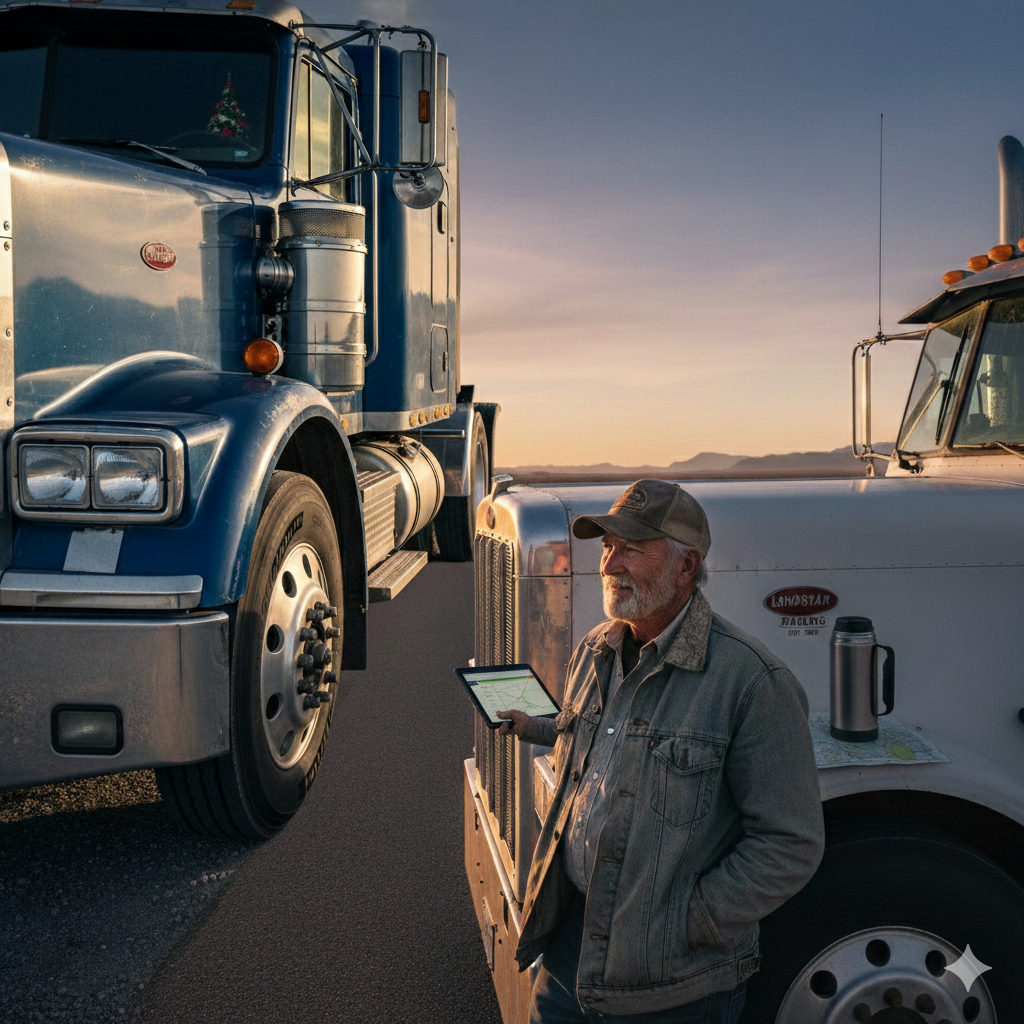

Buying a truck? Use this step-by-step guide to budget, inspect, finance, and set up trucking insurance the right way. Avoid surprises—get a quote.
Buying a truck is one of the fastest ways to wreck cash flow if you guess wrong, and commercial truck insurance is one of the biggest “deal killers” when it’s handled at the last minute.
A “good deal” can turn into a $25,000 aftertreatment problem, a week of deadhead to a dealer, and a lender payment you can’t cover when freight softens. And it’s not just the iron: IRP, IFTA, HVUT (2290), UCR, HOS/ELD compliance, and insurance filings can stop a purchase cold—especially when a lender needs proof of physical damage coverage before funding.
Featured snippet (answer): To buy a commercial truck, (1) define your operation and specs, (2) build a realistic budget and cost-per-mile, (3) choose new vs used, (4) verify history and maintenance records, (5) pay for a professional pre-purchase inspection, (6) line up financing and required documents, (7) secure trucking insurance and filings, (8) close the deal correctly (title/bill of sale), and (9) baseline maintenance before you run hard.
Key Takeaways: Essential Steps to Buy a Commercial Truck
- Budget like a business, not a shopper: Your payment is only one line—insurance, tires, PMs, and downtime decide profit.
- Never skip the pre-purchase inspection (PPI): A $400–$900 inspection can save you a $10,000–$40,000 surprise.
- Insurance can make or break the deal: Lenders and brokers may require specific limits and coverages (liability, physical damage, cargo) before you can haul.
- Buy the truck that fits your lanes: Spec mismatch (rear ratio, wheelbase, emissions setup, sleeper) shows up as low MPG, breakdowns, and lost loads.
Table of Contents
Reading time: 10 minutes
- Step-by-step: How to buy a commercial truck
- Budgeting: What should you plan to spend?
- Financing vs leasing vs cash
- Legal + compliance requirements before you roll
- Pre-purchase inspection checklist (PPI)
- Commercial truck insurance checklist (don’t bind last-minute)
- Your Questions Answered: “People Also Ask” FAQs
- The Logrock Difference
- Conclusion & Get a Quote

Step-by-Step: How to Buy a Commercial Truck (2026 Checklist)
A profitable commercial truck purchase usually requires 9 steps—spec, budget, history checks, a paid PPI, financing documents, and insurance proof—because lenders and brokers often require coverage (like physical damage and $1,000,000 liability) before you can haul.
If you want a truck that makes money instead of consuming it, follow a process. Emotion is expensive in trucking.
1. Define your operation (so you don’t buy the wrong spec)
- What it is (plain English): Decide what loads you’ll run, where you’ll run, and what trailer/weight you’ll pull before you pick a truck.
- Why it’s essential (business risk): A cheap truck that’s wrong for your lanes becomes low MPG, overheating on grades, slow climbing, or constant breakdowns—your cost-per-mile (CPM) goes up and your rate-per-mile doesn’t.
- What to decide:
- Type of work: dry van, reefer, flatbed, step deck, power-only, local P&D, hotshot
- Average gross weight: 60k? 80k? Heavy haul?
- Terrain: mountains vs flat
- Home time: day cab vs sleeper (and sleeper size)
- Pro tip (veteran advice): If you’re buying for spot market, spec for versatility (common wheelbase, common tire size, common engine family) so you can pivot when freight changes.
2. Build a real budget (payment is not the “cost”)
- What it is: A full monthly operating budget tied to your expected miles and rate.
- Why it’s essential: A truck payment that “fits” can still crush you if semi truck insurance, tires, and repairs spike.
- Minimum lines to price out:
- Payment (or reserve if cash)
- Fuel (based on realistic MPG for your lanes)
- Maintenance escrow (PMs + wear items)
- Tires (a set is not cheap—plan for it)
- Tolls/scales/permits
- Plates (IRP), IFTA, HVUT (2290), UCR
- Trucking insurance (liability + physical damage + cargo if required)
- Factoring fees (if you use it) + reserves for slow pay
Quick CPM reality check: If you run 9,000 miles/month and your all-in fixed costs are $9,000/month, you’re already at $1.00 CPM before fuel and maintenance. Know your break-even.
3. Choose new vs used (and be honest about downtime tolerance)
- New truck: Higher payment, often better uptime and warranty (but still can have shop delays).
- Used truck: Lower payment, higher variance—maintenance records matter more than paint.
- Business trade-off: New helps predictability; used can help cash flow if you buy right and keep a repair reserve.
| Decision | Upside | Downside | Best for |
|---|---|---|---|
| Buy new | Warranty, often better uptime | Higher payment, higher insurance value | Drivers needing reliability + strong lanes/contracts |
| Buy used (dealer) | Some recon, sometimes limited warranty | Markup vs private | Buyers who want financing + some dealer support |
| Buy used (private) | Often cheaper | Highest risk, title/liens, unknown maintenance | Experienced buyers who can verify history |
| Auction | Potential deals | High risk, limited recourse | Buyers with strong inspection skills + repair budget |
4. Find candidates and verify history (don’t “trust the listing”)
- What to check every time:
- Maintenance records (PM intervals, invoices, in-frame history)
- Engine hours vs miles (high idle time matters)
- Aftertreatment history (DPF/DOC/SCR work)
- Prior use (linehaul vs local vs oilfield)
- Tire wear patterns (alignment/suspension clues)
- Pro tip: Ask for an ECM/engine report and compare it to the odometer story. If the seller won’t cooperate, that’s the answer.
5. Pay for a professional pre-purchase inspection (PPI)
- What it is: A shop-level inspection (often plus a road test) that checks engine, drivetrain, brakes, suspension, and emissions system.
- Why it’s essential: One bad DPF/DEF/SCR event can be a multi-thousand-dollar bill and days of downtime—right when you need revenue to cover the first payment.
- Pro tip: Choose a shop that works on that make/engine family daily, not a general mechanic.
6. Line up financing (or cash plan) before you negotiate
- What it is: Pre-approval, down payment plan, and document package ready to go.
- Why it’s essential: Good trucks move fast. If you “wait to get financing,” you’ll either lose the truck or overpay to rush.
- Common documents lenders ask for:
- Driver’s license + CDL
- Proof of income / bank statements
- Business docs (LLC/Corp papers, EIN)
- Proof of insurance (binder)
- Bill of sale / purchase agreement details
7. Set up insurance early (so you don’t miss pickup deadlines)
- What it is: Binding coverage with correct limits, deductibles, and filings (if needed).
- Why it’s essential: Lenders typically require physical damage; brokers/contract shippers often require cargo and $1M liability. Waiting until the day before pickup is how deals fall apart.
- Pro tip: If you’re a hotshot operator (pickup + trailer), don’t assume personal auto covers it. You likely need hotshot insurance structured correctly for commercial hauling.
8. Close the deal correctly (title, lien, and documents)
- What to do:
- Confirm title status (and lien release if applicable)
- Get a signed bill of sale with VIN, price, date, odometer statement (as required)
- Confirm temporary tags/permits for your route home
- Pro tip: If anything feels “loose” (no clear title, odd payment requests), stop. The cheapest truck can become the most expensive problem.
9. Baseline maintenance before you run hard
- What it is: Start ownership with known fluids/filters and a clean maintenance slate.
- Why it’s essential: You can’t manage what you don’t control. Baseline maintenance protects uptime and resale value.
- Minimum baseline list:
- Oil + filters, fuel filters
- Air dryer service if needed
- Coolant test/service
- Check brakes/linings, drums/rotors
- Grease points, inspect suspension
- Scan for codes, address small leaks now
How Much Should You Budget for a Commercial Truck? (Owner-Operator Reality)
A realistic owner-operator budget includes fixed costs (payment, insurance, permits) plus variable costs (fuel, tires, maintenance), and many operators plan a 30–45 day cash reserve to survive downtime or a soft freight month.
You’re budgeting for a profit machine, not a vehicle. That means you plan for downtime and you protect cash flow.
A practical monthly budget framework (simple, but accurate)
- Fixed costs (happen even if you sit):
- Payment / lease
- Insurance (primary liability + physical damage + cargo if needed)
- Base plates/permits (amortized monthly)
- ELD + load boards/apps
- Variable costs (per mile):
- Fuel
- Tires
- Maintenance/repairs
- Tolls/scales
Pro tip: decide your “survival number”
Ask: “If freight slows for 30–45 days, can I still cover fixed costs without missing payments?” If the answer is no, either reduce the truck price/payment or increase your cash reserve before you buy.
How Do I Finance a Commercial Truck? (Financing vs Leasing vs Cash)
Commercial truck financing usually requires a purchase agreement (VIN and price), proof of income, a down payment, and proof of insurance—because many lenders won’t fund until physical damage coverage is bound.
The “best” option is the one that protects your cash flow and keeps you running.
Financing options in plain English
| Option | How it works | Pros | Cons | Best for |
|---|---|---|---|---|
| Traditional finance (bank/credit union) | Loan with term + rate | Often best rates | Harder underwriting, slower | Strong credit + docs |
| Dealer financing | Dealer arranges lender | Convenient | Can be pricier | Buyers who need speed |
| Specialized commercial truck lenders | Asset-based trucking lenders | Truck-focused | Rates vary widely | New authority / thinner file |
| Lease | Pay to use truck (may have buyout) | Lower upfront sometimes | Contract terms can bite | Predictable lanes + careful readers |
| Cash | No payment | Maximum flexibility | Ties up capital | Buyers with large reserves |
What lenders care about (so you don’t get denied)
- Time in business / driving history
- Credit + down payment
- Truck age/miles (many lenders cap year/mileage)
- Verifiable income and bank statements
- Ability to insure the unit (this is where affordable trucking insurance planning matters)
Pro tip: If your down payment wipes out your repair reserve, you’re not “approved,” you’re exposed.
What Legal Requirements Are Involved in Buying a Commercial Truck? (Before You Roll)
Most interstate owner-operators must handle IRP apportioned registration, IFTA fuel tax reporting, HVUT Form 2290, UCR, and DOT compliance (HOS/ELD) before they can legally run and avoid fines or out-of-service orders.
Buying the truck is step one. Running it legally is how you keep your revenue and avoid fines at the chicken coop.
Core compliance items most owner-operators deal with
- CDL/class requirements: Match your GVWR/GCWR and operation.
- Registration: IRP (apportioned plates) if you’re running interstate.
- Fuel tax: IFTA if you cross state lines and qualify (track miles/fuel by state).
- HVUT (Form 2290): Federal Heavy Vehicle Use Tax for qualifying units.
- UCR: Unified Carrier Registration for interstate commerce.
- DOT compliance: HOS rules, ELD, driver qualification file if you have authority.
State and emissions reality (example: California)
Some states have extra emissions requirements. California, for example, has CARB-related rules that can impact which equipment is usable and where. If you run into stricter states often, spec your truck with that in mind—“cheap” can become “restricted.”
Pro tip: Before you buy, list your top 10 states by miles. Then check registration, emissions, and permit needs for those states—not “the whole country.”
What Inspections Are Needed Before Buying a Commercial Truck? (PPI Checklist)
A professional pre-purchase inspection (PPI) typically costs $400–$900 and should include a road test, brake and suspension measurements, and a fault-code scan—because modern aftertreatment failures (DPF/DOC/SCR) can create multi-thousand-dollar repairs and major downtime.
A real PPI is not a walk-around and a handshake. It’s a structured inspection plus proof.
Pre-purchase inspection checklist (bring this to the shop)
Engine & aftertreatment
- Blow-by check (and document results)
- Check for oil/coolant leaks
- Coolant condition + pressure test if needed
- DPF/DOC/SCR health indicators (where available)
- Regen history and fault codes (scan tool)
Drivetrain
- Transmission shift quality (road test)
- Clutch condition (manual)
- Differential leaks/noise
- Driveline/U-joints
Brakes, suspension, steering
- Brake lining thickness, drums/rotors condition
- Slack adjusters, air system leaks, compressor health
- Kingpins, tie rods, steering box play
- Shocks, bushings, airbags
Frame, cab, and electrical
- Frame cracks, rust, repaired sections
- Battery/charging system test
- Wiring damage (especially around aftertreatment)
- HVAC function (comfort = endurance)
Tires & alignment
- Tire date codes + tread depth
- Irregular wear patterns (alignment/suspension clues)
Optional but smart: oil analysis and ECM report
- Oil analysis: Can flag coolant intrusion, fuel dilution, and bearing wear trends.
- ECM download/report: Helps validate miles, idle time, overspeed/abuse events.
Pro tip: If a seller says, “It doesn’t need an inspection,” that’s exactly when it needs an inspection.
Commercial Truck Insurance Checklist (Don’t Let Coverage Kill the Deal)
Commercial truck insurance underwriting is based on factors like driving history, garaging location, radius, commodities, and prior losses, and many brokers and lenders commonly require $1,000,000 liability plus physical damage and cargo coverage before you can haul.
Most buyers think insurance is a quick phone call. In reality, underwriting depends on your experience, radius, commodities, garaging, prior losses, and the truck itself.
What coverage you typically need to buy a truck and start hauling
- Primary Auto Liability (required for authority): Often $1M is the working standard to access better freight.
- Physical Damage: Usually required by lenders; protects the truck (collision/comprehensive).
- Motor Truck Cargo: Often required by brokers/shippers; limits vary by commodity (common is $100k+, but not universal).
- Non-Trucking Liability (NTL) / Bobtail (as needed): Fills gaps when you’re off dispatch or operating without a trailer—depends on your setup and contracts.
- General Liability (sometimes required): Especially for certain shipper facilities/contracts.
For hotshot operators, your hotshot insurance may need to address trailer, cargo, and business use correctly—personal auto won’t cut it when you’re hauling for hire.
How to keep trucking insurance affordable without getting underinsured
- Pick a deductible you can actually pay tomorrow (not “maybe later”).
- Be accurate about radius and operations (misclassifying can cost you at claim time).
- Keep your loss history clean (basic safety and maintenance pays ROI).
- Don’t buy limits you don’t need—but don’t chase the cheapest quote if it leaves gaps that bankrupt you.
Pro tip: The “cheapest” policy is the one that pays a claim without a fight. Price matters, but wording and correct classification matter more.
For a deeper breakdown of coverages, see: commercial truck insurance basics.
CTA: Get the Truck + Insurance Setup Right (Before You Sign)
Most lender-funded truck purchases require proof of physical damage coverage and a certificate of insurance (COI) before the deal can close, so starting your commercial truck insurance process days—not hours—before pickup helps prevent funding delays.
If you’re about to buy a truck, we’ll help you line up trucking insurance that satisfies lenders and brokers—and matches how you actually operate (radius, commodities, trailer type, hotshot vs semi). No last-minute scrambling the night before pickup.
What you get: Fast certificates • Correct filings • Coverage built for owner-operators
Frequently Asked Questions
These FAQs answer the most common owner-operator questions about budgeting, inspections, financing, and insurance using practical numbers (like $400–$900 PPIs and $1,000,000 liability limits) you can apply right away.
You should budget for the purchase or payment plus fixed operating costs like insurance and permits, and many owner-operators keep a 30–45 day cash reserve so one breakdown or a slow freight month doesn’t cause missed payments. A simple way to sanity-check the deal is a CPM model: (fixed monthly costs ÷ expected miles) + fuel per mile + maintenance per mile. If your break-even CPM is too close to your realistic rates, the truck is priced wrong for your lanes (or your reserve is too thin).
At minimum, you should get a professional pre-purchase inspection (PPI) with a road test, brake and suspension checks, and a fault-code scan, because emissions and aftertreatment issues (DPF/DOC/SCR) can create multi-thousand-dollar repairs and immediate downtime. On higher-mileage units or unclear histories, add an ECM/engine report to verify idle time and abuse events, plus oil analysis to flag coolant intrusion or fuel dilution. Skipping these steps is how “cheap” trucks become $10,000–$40,000 surprises.
You can finance a commercial truck through a bank/credit union, dealer financing, or a specialized commercial truck lender, and most lenders require a purchase agreement with the VIN, proof of income/bank statements, a down payment, and proof of insurance before they fund. Many lenders also require physical damage coverage on the truck, and some set age/mileage limits that affect approval. The fastest path is getting pre-approved first, then shopping so you can bind semi truck insurance quickly once the numbers and VIN are final.
You should buy new when warranty-backed uptime and predictability are worth the higher payment and often higher insured value, and you should buy used when you can verify maintenance history and keep a real repair reserve for downtime risk. A used truck can be a strong business move if you treat it like an asset: strict history checks, a paid PPI, and baseline maintenance before you run hard. If you’re thin on reserves, “used” can turn into missed loads and missed payments fast—especially if aftertreatment work hits early.
The Logrock Difference: Insurance Built for Business Owners
Owner-operators typically need insurance structured around real operations—radius, commodities, trailer type, and whether you’re hotshot, power-only, or under dispatch—because a misclassified policy can create coverage gaps at claim time.
Logrock works with owner-operators and small fleets who live and die by cash flow. That means we don’t just “quote a policy”—we help you structure coverage so it fits your operation (hotshot vs semi, local vs regional, power-only vs under trailer), satisfies lender/broker requirements, and avoids the common gaps that show up when you’re off dispatch or switching trailers.
If you’re trying to keep affordable trucking insurance without gambling your business, the fastest win is getting the details right upfront—so you’re not fixing it after a claim.
Conclusion: Get Your Commercial Truck Insurance Quote Before Pickup Day
Buying a commercial truck the right way is a process: spec it for your lanes, budget for total ownership, verify history, pay for the PPI, and get insurance/compliance handled early so you can roll and get paid.
Key Takeaways:
- Build a budget around CPM and cash reserves—not just the payment.
- Pay for a real PPI (especially aftertreatment diagnostics on modern trucks).
- Line up commercial truck insurance early so financing and broker setup doesn’t stall.
When you’re ready, get your coverage aligned with your truck deal—before the seller sets a pickup deadline you can’t meet.
Related Reading: commercial truck insurance basics, how motor truck cargo insurance works, and non-trucking liability vs bobtail insurance.





