
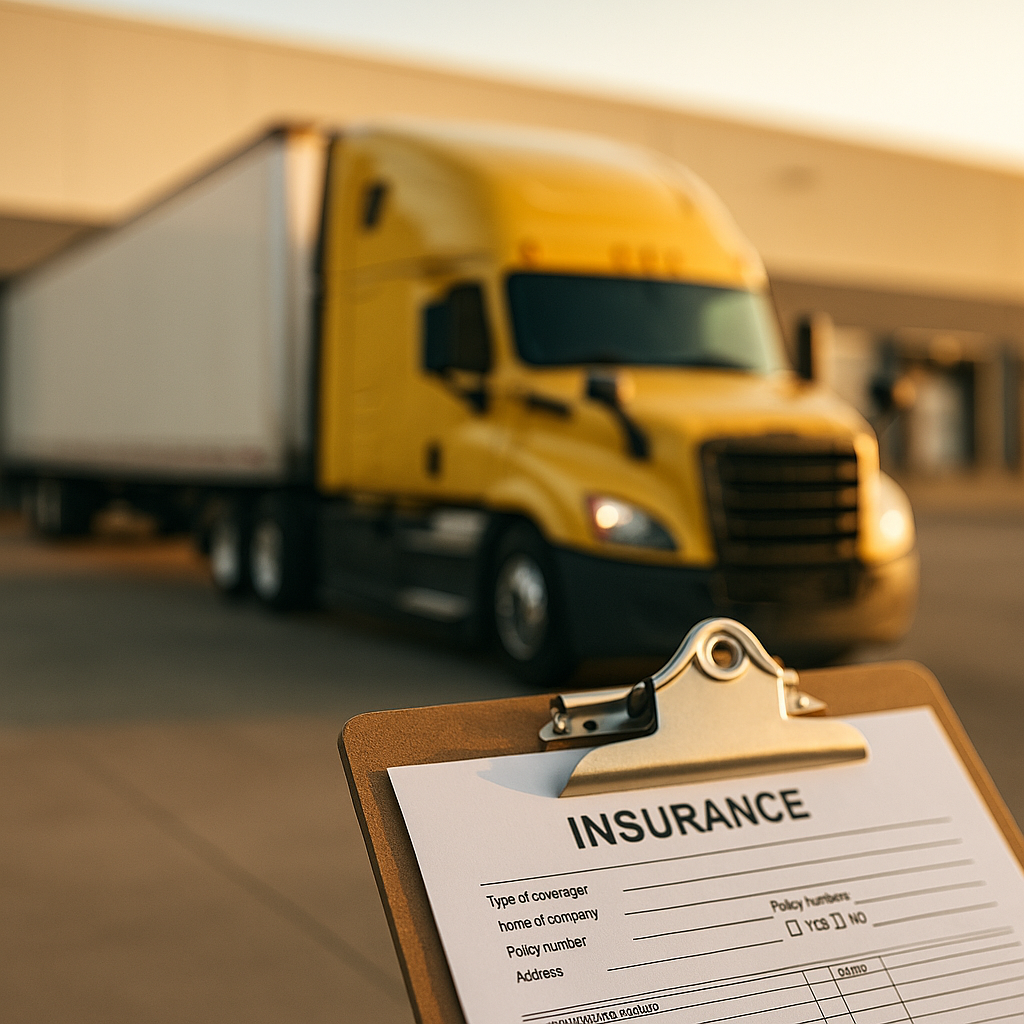

Learn tractor trailer insurance requirements for 2026: federal liability minimums, interstate vs intrastate differences, hazmat tiers, and required FMCSA filings. Get compliant fast—get a quote.
Tractor trailer insurance requirements in 2026 usually start with public liability (BI/PD), with federal minimums commonly cited at $750,000 for many for-hire interstate general freight carriers and higher tiers like $1,000,000 or $5,000,000 for certain hazmat categories. The part that trips carriers up is that being “insured” isn’t the same as being “active” in compliance—your FMCSA filings and legal business details have to match your authority.
If you’ve ever had a broker reject your COI, or your authority show “not active” when you’re trying to book a load, it’s usually a filings/operations mismatch—not bad luck. Below is the plain-English checklist to help you stay legal, stay bookable, and avoid preventable shutdowns.
Key Takeaways: Essential Tractor Trailer Insurance Requirements
- Federal minimum public liability for many for-hire interstate carriers is commonly cited at $750,000 (higher for certain hazmat/oil operations).
- Intrastate rules can be different (and sometimes stricter) when you’re running for-hire inside one state.
- Having a policy isn’t enough—your FMCSA/state filings must be active and match your DOT/MC and legal name.
- Most problems happen at the edges: wrong filings, wrong entity name, wrong cargo classification, or a coverage lapse.
Table of Contents
Reading time: 11 minutes
- Minimum tractor trailer insurance requirements (quick answer)
- Federal tractor trailer insurance requirements vs intrastate rules and hazmat tiers
- Tractor trailer insurance requirements filings: MCS-90, BMC-91/91X, and state forms
- What else is “required” to haul loads (cargo, physical damage, COIs, additional insured)
- Frequently Asked Questions
- Why Logrock: practical help for owner-operators
- Conclusion: get compliant before you roll

Minimum tractor trailer insurance requirements (quick answer)
Minimum tractor trailer insurance requirements typically mean public liability (bodily injury/property damage), and the minimum limit depends on your authority type, interstate vs intrastate operation, and hazmat classification.
If you want a clean baseline for what “requirements” usually includes (and what it doesn’t), start here: commercial truck insurance requirements for tractors and trailers.
Federal minimum public liability tiers (interstate, for-hire) — quick reference
FMCSA financial responsibility minimums are commonly discussed in tiers like $750,000, $1,000,000, and $5,000,000, but your exact requirement depends on your authority and what you haul.
| Minimum limit | When it applies (high-level) | Common examples | What it’s really covering |
|---|---|---|---|
| $750,000 | Many for-hire interstate carriers hauling non-hazmat property | Dry van, reefer (non-hazmat), general freight | Injuries/property damage to others (public liability) |
| $1,000,000 | Some higher-risk categories (often referenced for oil/certain hazmat) | Some fuel/oil-related operations | Public liability with higher severity expectations |
| $5,000,000 | Higher-hazard hazmat categories | Certain placarded hazmat, high-hazard materials | Public liability where cleanup/litigation can be massive |
What those minimums do not cover
Public liability minimums are not “full coverage,” and they usually do not pay for your truck, your trailer, or the freight you’re hauling.
- Damage to your tractor/trailer: usually handled by physical damage (comp/collision), if you buy it.
- Customer freight: usually handled by motor truck cargo, if you buy it and it matches the commodity.
- Downtime/lost revenue: typically excluded unless you have a specific endorsement.
Federal tractor trailer insurance requirements vs intrastate rules and hazmat tiers
FMCSA financial responsibility rules apply to many for-hire interstate motor carriers, while intrastate, for-hire operations can be regulated by states with different minimums and state-specific proof requirements.
Who must meet FMCSA insurance minimums?
If you’re for-hire and operating interstate (or hauling interstate commerce), federal minimums and federal filings usually apply to your authority.
- Common fits: owner-operators with authority, small fleets, and carriers hauling loads that cross state lines.
- Why it matters: if your limits or filings don’t match the requirement, you can lose dispatches and get flagged in onboarding.
Interstate vs intrastate: why the rules change
Interstate operations typically follow the FMCSA baseline, but intrastate authority may require different limits and state-specific proof filings through a state agency or PUC.
A lot of “I bought insurance, why am I not approved?” problems come from one question that wasn’t answered clearly: Are you operating under interstate authority, intrastate authority, or both?
Hazmat trucking insurance requirements: why $5M comes up fast
Placarded hazmat increases severity exposure (cleanup, environmental damage, litigation), so minimum limits can escalate quickly to tiers commonly cited at $1,000,000 or $5,000,000 depending on the material.
- Don’t wing classification: misclassifying the commodity is a fast path to cancellations, rejected filings, or denied claims.
- Real-world trigger: you “occasionally” take a hazmat load, but the policy was rated as non-hazmat.
The MCS-90 endorsement: what it is (and what it isn’t)
MCS-90 is a federal endorsement used on certain motor carrier liability policies to support financial responsibility, but it is not a substitute for properly structured coverage and correct operations classification.
For the straight answer most carriers need, read: MCS-90 endorsement explained.
Tractor trailer insurance requirements filings: MCS-90, BMC-91/91X, and state forms
FMCSA compliance is proven through insurer-submitted filings (commonly BMC-91/BMC-91X for liability) and correct business details, not by the insurance card sitting in your glove box.
The filings you’ll hear about (and what they do)
Insurance filings are the “proof of insurance” submitted to regulators, and a missing or rejected filing can stop your authority from showing active even if your premium is paid.
- BMC-91 / BMC-91X: proof of liability filing (which one depends on setup).
- BMC-34: cargo filing in certain scenarios/authorities.
- State forms: some intrastate authorities require separate proof through state channels.
If you want to see why carriers get tangled up between endorsements and filings, read: FMCSA insurance filings (BMC-91/BMC-91X) explained.
Step-by-step: how to verify your filing is actually active
Filing verification means confirming the filing was submitted, accepted, and tied to the correct legal entity name and USDOT/MC numbers.
- Confirm your legal entity name matches your authority exactly (LLC vs Inc vs punctuation matters).
- Confirm USDOT and MC are correct on the application and the policy.
- Get written confirmation from your agent that filings were submitted.
- Re-check after changes (new driver, new cargo type, new garaging/state, new address).
- Avoid lapses; a lapse can cancel filings and cause instant onboarding and dispatch issues.
Common filing failure points (what actually happens in the field)
- Policy issued to an individual name, but authority is under an LLC (or vice versa).
- Wrong MC/DOT entered during quoting or binding.
- Missed payment triggers cancellation notice, filing cancels, and your status drops mid-week.
- Cargo changes (like adding hazmat) but underwriting and filings weren’t updated.
Use the quote request to include your state, radius, authority status, and commodity so your limits and filings match how you actually operate.
What else is “required” to haul loads (cargo, physical damage, COIs, additional insured)
Brokers and shippers often require coverage limits by contract (for example, cargo limits like $100,000 or $250,000) even when those coverages are not part of federal public liability minimums.
Cargo insurance (often required by the rate confirmation)
Motor truck cargo covers the freight you’re responsible for while it’s in your care, custody, and control, and it’s one of the most common “no coverage = no load” issues in broker onboarding.
- Typical problem: the policy exists, but the commodity or exclusions don’t match what you’re hauling.
- Practical tip: ask what cargo limit is required before you sign the rate confirmation.
Physical damage (protecting your tractor/trailer asset)
Physical damage (comprehensive and collision) is what repairs or replaces your equipment after covered losses like accidents, theft, vandalism, or weather.
- Financed units: lenders commonly require comp/collision with a deductible.
- Owner-operator reality: one major loss can wipe out months (or a year) of profit if you’re self-insuring.
Bobtail / non-trucking liability (lease-on reality check)
Bobtail or non-trucking liability may apply when you’re not under dispatch, but the exact trigger depends on policy wording and your lease arrangement.
If there’s one thing to get crystal clear, it’s “who covers what” when you’re off-dispatch and still operating the tractor.
COIs + additional insured: how you get approved by brokers/shippers
A certificate of insurance (COI) is the document brokers/shippers use to verify limits, policy dates, and key information, and it must match the contract requirements and the entity listed on your authority.
For the nuts-and-bolts workflow, see: certificate of insurance (COI) for brokers and shippers.
Cost control without cutting the wrong corners
“Affordable trucking insurance” usually means staying insurable and clean at renewal: accurate operations, no lapses, and fewer preventable claims.
- Premium spike triggers: preventable losses, bad MVR/driver qualification issues, and misclassified operations.
- Easy win: keep maintenance, logs, and your operational description consistent with what underwriting expects.
Frequently Asked Questions
FMCSA public liability minimums are commonly cited at $750,000 for many for-hire interstate property carriers, but your actual “required” coverage can be higher due to hazmat tiers, state intrastate rules, and broker/shipper contracts.
Federal tractor trailer insurance requirements for many for-hire interstate carriers start with public liability, with a minimum commonly cited at $750,000 for general freight and higher minimums for certain hazmat/oil operations. Compliance also depends on your insurer keeping the correct FMCSA filings active under your exact legal name and USDOT/MC numbers. If your filing is rejected, attached to the wrong entity, or cancels due to a lapse, you can lose broker approval and dispatch options even if you “have a policy.” Always confirm your commodity, operating radius, and authority type before binding.
Yes, state tractor trailer insurance requirements can exceed federal minimums when you operate intrastate, for-hire under state authority, because some states set their own minimum limits and require state-specific proof forms. Federal rules are the baseline for many interstate operations, but intrastate authority can add extra steps that brokers still expect you to satisfy before onboarding. If you run both interstate and intrastate, your safest move is to meet the stricter requirement and verify the correct filings are active before you book freight.
To prove insurance compliance, carriers typically rely on insurer-submitted filings with FMCSA such as BMC-91 or BMC-91X for liability, plus required endorsements such as MCS-90 when applicable to the operation and policy. Some operations can also encounter cargo-related filings like BMC-34, and intrastate authority may require separate state filings. The most common failure is not the policy limit—it’s an incorrect legal name, wrong USDOT/MC, or a lapse that cancels the filing and drops your status during onboarding.
Cargo and bobtail/non-trucking liability are often not required to meet federal public liability minimums, but they’re commonly required to get loads and avoid out-of-pocket losses. Brokers and shippers regularly require cargo limits by contract (often $100,000 or more), and leased-on owner-operators frequently need bobtail/non-trucking liability depending on the lease and what the motor carrier’s policy covers off-dispatch. For a contract-focused breakdown of cargo expectations, see: cargo insurance requirements.
Why Logrock: practical help for owner-operators
Owner-operators most often lose revenue from insurance issues due to preventable compliance breakdowns like canceled filings, mismatched entity names, and COIs that don’t match broker contract requirements.
Logrock’s approach is simple: build coverage around how you run (commodity, lanes, garaging, authority), then keep the proof clean so brokers don’t kick you back at the worst time.
If your contracts include “additional insured” language and you want to understand what it actually means before you sign, read: additional insured coverage for cargo claims.
Conclusion: get compliant before you roll
A coverage lapse can trigger cancellation of insurer filings, and that can cause your authority or onboarding status to drop until the filing is reinstated and accepted.
Tractor trailer insurance requirements aren’t complicated, but they’re easy to mess up when you’re moving fast—new authority, new lanes, or a new type of freight. Treat insurance like compliance: match it to your operation, keep filings active, and keep your paperwork clean.
Key Takeaways:
- Federal minimums are a baseline: commodity and operation drive the real requirement.
- Intrastate authority can add proof requirements: verify state filings if you run for-hire intrastate.
- Filings matter as much as the policy: wrong entity name, wrong MC/DOT, or a lapse can shut you down.
Related reading: tractor trailer insurance overview and how to verify tractor trailer insurance.





