
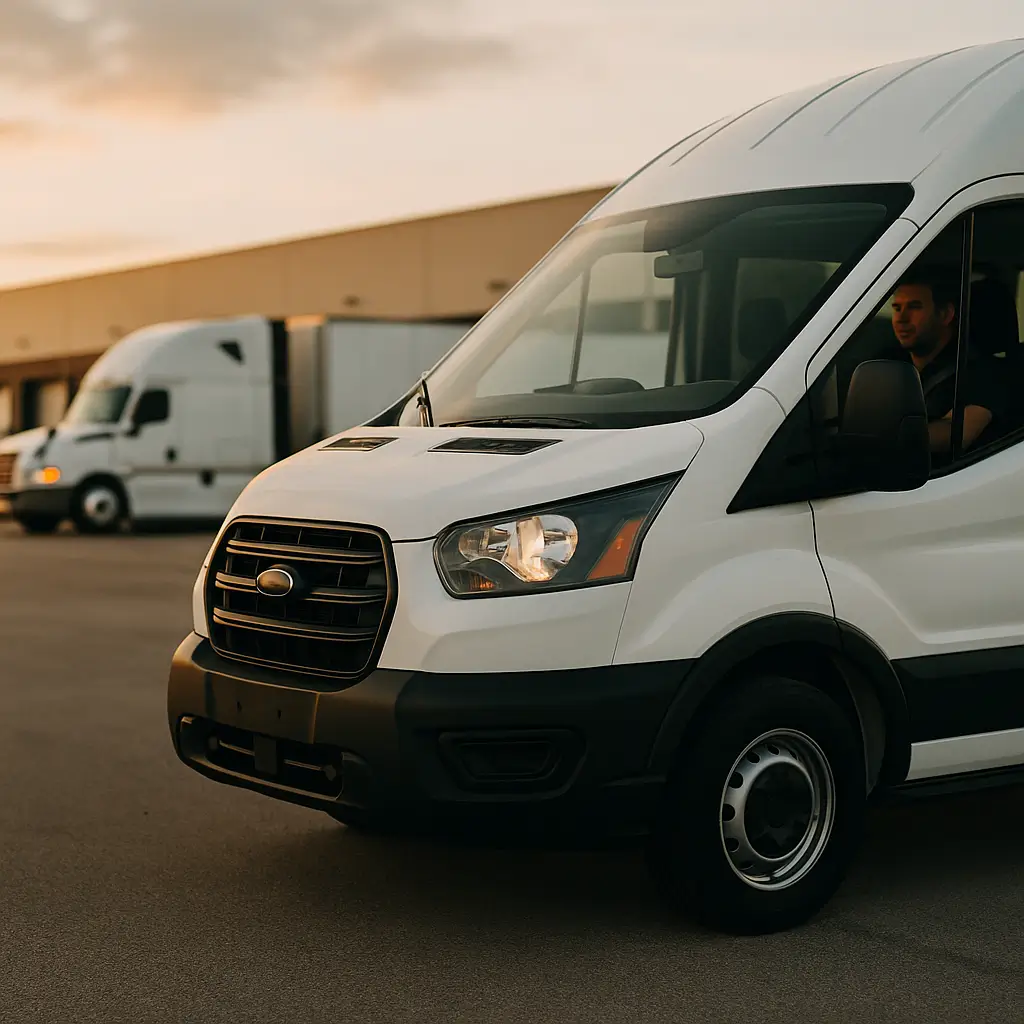
Learn 2026 12 passenger van insurance costs, personal vs. commercial rules, required liability limits, state requirements, and key coverage options.

12 passenger van insurance in 2026 typically runs about $80–$350 per month for true personal use and roughly $150–$700+ per month for commercial use, with higher limits (like $1M–$2M) pushing premiums up. The biggest pricing drivers are how you use the van (family vs church/daycare/shuttle), driver records, territory, and whether rides are paid (for-hire/livery).
Because pricing varies a lot by van type and use, it helps to compare broader ranges first—then narrow down to your 12-passenger situation. Start here for the bigger picture and come back to apply the passenger-van rules: van insurance quotes (2026) cost benchmarks.
For a broader overview of passenger van insurance options and cost factors, see our full guide to passenger van insurance before narrowing down to 12-passenger specifics.
Key Takeaways: Essential 12 Passenger Van Insurance
- Expect higher liability needs than a typical personal auto policy because multiple passengers increase injury exposure in one crash.
- Personal auto may only fit true personal use (no paid rides, no organizational transport, no business use). Once money, employees, students, or “for-hire” enters the picture, you’re typically in commercial territory.
- Costs usually swing based on use type + liability limit (family vs church/nonprofit vs daycare vs paid shuttle), plus driver MVRs, territory, and annual mileage.
- The cheapest policy can become the most expensive mistake if it has a livery/business-use exclusion or limits that don’t meet contracts (schools, airports, municipalities).
Table of Contents
Reading time: 11 minutes
- Why 12-Passenger Vans Are Harder to Insure
- Personal vs Commercial 12 Passenger Van Insurance
- 12 Passenger Van Insurance Cost Per Month (2026)
- Required Liability Limits (State & City Examples)
- Coverage Checklist: What to Carry (and Why)
- How to Qualify for Better Rates
- How to Save Money Without Creating Gaps
- Frequently Asked Questions
- Why Logrock (and What to Have Ready)
- Conclusion & Get Quotes That Match Your Use
Why 12-Passenger Vans Are Rated Differently (and Sometimes Harder to Insure)
A 12-passenger van can put 8–12 injury claims into a single accident, so insurers rate it for higher loss severity than a typical personal auto vehicle.
Underwriters aren’t just asking “will there be a crash?”—they’re pricing “how big is the bill if there is?” That’s why two identical vans can price very differently depending on passenger exposure, driver controls, and whether the vehicle is used for an organization or for-hire.
1) Capacity = higher injury exposure in one accident
- What it is: One crash can trigger multiple medical bills, wage-loss claims, and attorney involvement.
- Why it matters: Even “minor” collisions can turn into six-figure totals once several passengers report injuries.
- Who sees this most: Churches, nonprofits, daycares, schools, employee transport, small shuttle operators, and large families.
Practical tip: When you compare quotes, don’t just compare premium. Compare premium per $1M of liability (or whatever limit your contract requires).
2) Passenger transport can change your insurance category
- What it is: Transporting people for an organization or compensation often triggers commercial auto or passenger-carrier rating rules.
- Why it matters: Personal auto policies often contain business-use and for-hire/livery exclusions that can lead to denied or disputed claims.
- Who needs to pay attention: Anyone doing airport runs, hotel shuttles, daycare pickup/drop-off, scheduled routes, or member/client transport.
3) Driver standards can matter more than the vehicle
- What it is: Insurers price heavily off driver MVRs (violations, at-fault accidents, DUI history) and how drivers are managed.
- Why it matters: Poor MVRs can spike premiums or make coverage difficult to place, especially with multiple drivers.
- Who this hits: Any operation using volunteers, part-time staff, or rotating drivers.
Personal vs Commercial 12 Passenger Van Insurance (What’s Allowed and What’s Not)
Most personal auto policies are written for non-business, non-for-hire use, and many carriers treat paid passenger transport (or organizational transport) as a commercial exposure.
If you want the baseline definitions, coverages, and classification rules for commercial use, read this first and then apply the 12-passenger specifics here: commercial van insurance coverage + requirements.
Before comparing personal and commercial options, it helps to understand exactly what auto liability covers and what it doesn’t:
1) When a personal auto policy might be acceptable
A personal policy can be appropriate when the van is privately owned and used only for true family transportation.
- Family trips and errands
- Unpaid carpools (carrier rules vary—confirm in writing)
- No transporting people on behalf of a church, school, daycare, or business
Disclosure matters: If your use looks organizational (youth events, daycare field trips, church activities), tell the carrier. Misclassification is one of the fastest ways to create claim disputes.
2) When you likely need commercial insurance
You’re commonly in commercial territory if any of the following are true:
For full coverage breakdowns and cost ranges for commercial operations, see our dedicated guide to commercial passenger van insurance.
- The van is titled to a business or nonprofit
- Drivers are employees or scheduled volunteers
- You transport clients, students, members, or patients
- You do airport/hotel/shuttle routes
- Anyone pays (directly or indirectly) for rides (for-hire/livery)
3) Denied-claim triggers insurers actually enforce
- Livery/for-hire exclusion: Compensation for rides (sometimes even “donations,” depending on the policy wording and facts).
- Business-use misclassification: The vehicle is primarily used for operations, not personal errands.
- Driver restrictions: Unlisted drivers, underage drivers, or drivers without permission.
How Much Does 12 Passenger Van Insurance Cost per Month? (2026 Benchmarks)
In 2026, 12-passenger van insurance commonly ranges from about $80–$350/month for true personal use and roughly $150–$700+/month for commercial use, with higher required limits (like $1M–$2M) increasing premiums.
Quick cost scenarios (what you’re likely to see)
| Use case (12-passenger van) | Typical policy type | What drives price | Typical monthly range* |
|---|---|---|---|
| Personal/family use only | Personal auto | MVR + ZIP code + vehicle value | $80–$350 |
| Church/nonprofit, volunteer drivers, no fares | Often commercial auto | Higher liability limits + driver list + frequency | $150–$600+ |
| Daycare/school transport | Commercial auto (higher scrutiny) | Child passenger exposure + routing + driver standards | $250–$800+ |
| Paid shuttle / hotel / airport runs (for-hire) — see transit van insurance | Commercial auto + passenger/for-hire rating | Highest limits + licensing + miles + territory | $400–$1,200+ |
*Ranges are broad estimates; state rules, carrier appetite, loss history, and underwriting details can move this significantly.
What drives the price (the underwriting inputs that actually matter)
- Liability limit: 100/300/50 vs $1M CSL vs $2M (often via umbrella/excess)
- For-hire vs not-for-hire: one of the biggest swing factors
- Driver MVRs: violations/accidents + driver age/experience
- Territory and radius: urban congestion and high-claim areas cost more
- Annual mileage + time of day: night and weekend passenger transport can rate higher
- Physical damage: van value, comp/collision deductibles, garaging
Quote like-for-like: same limits, same deductibles, same driver list, and the same written description of use.
Required Liability Limits for a 12 Passenger Van (State & City Examples)
Liability requirements for passenger vans usually come from three layers—state auto minimums, passenger-carrier licensing rules, and contract requirements—and commercial passenger work often lands in the $1M–$2M range.
People get tripped up because they buy a policy that satisfies registration, but not city licensing, airport permitting, school contracts, or DOT/PUC rules.
1) Split limits vs CSL (why it matters for passenger vans)
- Split limits: shown like 100/300/50 (per person / per accident / property damage).
- CSL (Combined Single Limit): shown like $1,000,000 CSL total per accident.
Operational reality: With multiple passengers, CSL is often easier to work with because injuries “stack” quickly, but availability depends on state and carrier program.
2) Examples: Georgia, California, and NYC (verify your exact situation)
| Jurisdiction (example only) | Who it applies to (as described by authority) | Example minimum liability mentioned | Source |
|---|---|---|---|
| Georgia | Vehicles seating 12 passengers or less (per GA doc context) | $100,000 per person / $300,000 per accident / $50,000 property damage | GA Motor Carrier doc (PDF) |
| California | Passenger carriers seating 8–15 | $1,500,000 minimum liability | California PUC passenger carrier requirements |
| NYC (TLC commuter vans) | Commuter vans (12 passengers or fewer) | $500,000 per occurrence + $50,000 property damage + $50,000 PIP | NYC TLC Insurance Requirements |
Choosing the right liability limit is one of the most important decisions for 12-passenger van operators. This breakdown covers how to think through it:
For a state-by-state comparison of minimum requirements, see our 2026 guide to auto insurance requirements by state.
How to verify your real requirement (do this before you buy)
- Check your state DOT / PUC / DMV guidance for passenger carriers
- Check city licensing rules (NYC, major metros, airport authorities)
- Review school/municipal/contract insurance language
- Ask whether any filings are required (this varies by jurisdiction and use)
3) Contracts usually require more than the law
When you transport for schools, daycares, municipalities, airports/hotels, or venues, contracts commonly require $1M–$2M CSL and sometimes an umbrella, plus certificate wording like:
- Additional Insured
- Waiver of Subrogation
- Primary & Non-Contributory
Those aren’t “nice-to-haves”—they’re how the other party pushes liability back onto your policy.
What Coverages Should a 12 Passenger Van Policy Include? (Checklist)
A solid 12-passenger van policy usually includes auto liability, UM/UIM, MedPay or PIP (state-dependent), comprehensive/collision, and often umbrella/excess to meet $1M–$2M contract limits.
Think like an operator: liability keeps you in business, physical damage keeps you rolling, and add-ons prevent cash-flow surprises.
Coverage checklist (required vs smart vs situational)
| Coverage | Usually required? | Why it matters for 12-passenger vans |
|---|---|---|
| Auto liability (split or CSL) | Yes | Primary protection for passenger injuries and third-party damage |
| UM/UIM (uninsured/underinsured) | Often | Many drivers carry low limits; your passengers can still be injured |
| MedPay/PIP (state-dependent) | Sometimes | Faster medical coverage regardless of fault, depending on your state rules |
| Comprehensive + Collision | If you can’t self-insure | Protects cash flow after theft, weather losses, or at-fault damage |
| Towing/Roadside | Recommended | A breakdown can wipe out a week of margin or disrupt service |
| Rental reimbursement / downtime | Recommended for shuttle/daycare | If the van is down, revenue (or operations) is down |
| Hired & Non-Owned Auto (HNOA) | Situational (orgs) | Covers liability when staff/volunteers drive personal or rented vehicles for the organization |
| Umbrella / excess liability | Common for passenger ops | Often the most cost-effective way to reach $2M+ when contracts demand it |
1) Liability: don’t buy “cheap limits” with expensive exposure
Liability coverage pays for injuries and damage you’re legally responsible for, and passenger claims can escalate fast with medical bills, wage loss, and attorney involvement.
2) Physical damage: match deductibles to real cash reserves
If you can’t write a check tomorrow to repair or replace the van, comp/collision with a realistic deductible is usually the right move.

3) Hired & Non-Owned Auto: the “volunteer driver” trap
If volunteers use their own cars for errands or transport, your organization can still get pulled into a liability claim. HNOA is designed for that gap.
How to Qualify for Better Rates: Safety, Driver Standards, and Documentation Insurers Ask For
Insurers commonly ask for driver lists, MVR history, annual mileage, operating radius, garaging, and a written description of use, and organized submissions often price better than vague ones.
Small operators can win here by being simple and consistent: fewer drivers, clearer rules, and paperwork that matches reality.
1) Driver controls (even if you only have 2–5 drivers)
- Run MVR checks before authorizing drivers
- Keep an approved driver list (and stick to it)
- Set minimums (example): 25+ years old, 3+ years licensed, no major violations
- Do annual refreshers: defensive driving, backing/parking, passenger management
2) Vehicle + trip controls underwriters like
- Maintenance logs (oil, brakes, tires)
- Written and enforced seatbelt policy
- Route planning to reduce night driving and risky pickup zones
- Dash cams or telematics can help with claim disputes and driver behavior
If you’re considering a dash cam as part of your driver management program, here’s what operators need to know before choosing one:
Practical move: A one-page “Safety + Driver Policy” attached to the quote submission can separate you from sloppy operators.
How to Save on 12 Passenger Van Insurance (Without Creating Coverage Gaps)
Saving money on 12-passenger van insurance usually comes from tightening underwriting inputs—like driver quality, accurate use classification, and deductible choices—rather than stripping coverage below what your passenger exposure demands.
“Affordable” isn’t the lowest premium; it’s the lowest total risk to your balance sheet.
For a more detailed breakdown of cost levers and insurer options, see our guide to affordable passenger van insurance.
Savings checklist that won’t blow holes in coverage
- Quote apples-to-apples: same limits, coverages, driver list, and use description
- Raise deductibles only to what you can pay immediately
- Limit drivers; remove occasional drivers who shouldn’t be behind the wheel
- Fix premium killers: violations, preventable losses, lapses in coverage
- Use an umbrella strategically if it’s cheaper than stacking base layers
- Keep clean documentation (driver list, training, maintenance)
Frequently Asked Questions
Commercial van insurance commonly costs about $150–$700+ per month per van, and passenger transport (daycare, shuttle, for-hire) can run higher when you need $1M–$2M limits or more. The biggest drivers are your liability limit, whether the use is for-hire/livery, driver MVRs (violations/accidents), territory, and annual mileage. If you’re transporting people for an organization, underwriters also look at driver controls, hiring/volunteer screening, and how consistent your operations are. For a deeper baseline on classification and coverages, see commercial van insurance coverage + requirements.
Required liability limits for a 12-passenger van depend on whether you’re only meeting state auto minimums or you’re regulated as a passenger carrier (or bound by a contract). As examples, Georgia guidance references 100/300/50 for certain vehicles seating 12 or less, California references $1,500,000 for certain passenger carriers seating 8–15, and NYC commuter vans have their own published limits. Real-world contracts (schools, airports, municipalities) commonly require $1M–$2M CSL plus certificate wording like Additional Insured and Primary & Non-Contributory. Verify with your state DOT/PUC and any city licensing authority.
It depends on how the van is used and whether it crosses state lines. Vans used for intrastate personal or church transport typically don’t need a USDOT number, but vans operating as for-hire passenger carriers — especially across state lines — may need to register with the FMCSA and comply with commercial vehicle rules. Some states also require PUC (Public Utilities Commission) operating authority for paid passenger transport. Verify with your state DOT and, if you operate across state lines, with FMCSA before you begin.
Split limits break out coverage as three separate caps: per-person injury / per-accident injury / property damage (e.g., 100/300/50). CSL is a single pool that can be applied to any combination of injuries and property damage up to the total (e.g., $1,000,000 CSL). For a 12-passenger van, CSL is often more practical because passenger injuries “stack” fast — if multiple people are injured in one crash, a per-person cap of $100,000 can be exhausted quickly, while a $1M CSL gives you more flexibility. Availability and pricing vary by carrier and state, so it’s worth asking for both options when you quote.
Personal auto insurance is often valid for a 12-passenger van used for true personal/family transportation only, but many personal policies exclude business use and for-hire/livery (any compensation for rides). If the van is used for church/nonprofit transport, daycare/school pickup, employee transport, scheduled routes, or any paid rides, you should expect to need a commercial policy to avoid coverage disputes. The safest move is to disclose the exact use in writing and quote the correct classification from the start, especially if a contract requires $1M+ limits or specific certificate wording.
If your personal auto policy excludes business use or for-hire transport and you were using the van for organizational or paid rides at the time of an accident, the insurer can deny the claim — even if the crash itself had nothing to do with the business activity. Denied claims leave you personally liable for passenger injuries, third-party damages, and legal costs. The safest move is to disclose your actual use in writing before buying a policy, and get commercial coverage if your use puts you in that territory.
Driver MVRs are one of the biggest pricing inputs for passenger van insurance. A driver under 25, or one with at-fault accidents, DUIs, or major violations in the past 3–5 years, can significantly raise premiums or make coverage harder to place — especially with multiple passengers involved. Carriers often run MVRs on all listed drivers, and some will exclude specific drivers rather than rate on them. Running MVR checks before authorizing drivers and setting minimum age and licensing standards (common example: 25+, 3+ years licensed, no major violations) is one of the most effective ways to keep rates manageable.
Many churches choose commercial coverage because transporting members is typically considered organizational passenger transport, and higher limits like $1M CSL (or more) are common for venues, schools, and municipal partners. To keep the policy clean, list all drivers, set basic standards (age/licensing/MVR), and document simple safety rules like seatbelts and maintenance logs. If a contract requires $2M+, an umbrella can be a cost-effective way to reach the limit. If you want to compare baseline pricing across van types first, start with van insurance quotes (2026) cost benchmarks and then narrow down to the church use-case.
Hired & Non-Owned Auto (HNOA) covers liability when employees or volunteers use their own personal vehicles — or rented vehicles — for organizational purposes. If a volunteer drives their own car to pick up members and causes an accident, your organization can still be drawn into a liability claim. HNOA fills that gap, since the volunteer’s personal auto policy may not cover organizational use. Churches, nonprofits, and daycares that use any volunteer-owned vehicles for organizational activities should consider it, even if the main fleet vehicle is already covered under a commercial policy.
Often, yes. Nonprofit and religious organization transport is generally rated differently than for-hire operations because there’s no compensation for rides and passenger exposure is typically limited to scheduled activities rather than continuous revenue operations. Carriers who specialize in religious or nonprofit accounts may offer more favorable terms, especially with organized driver controls, training documentation, and a clean loss history. That said, you still typically need commercial-level limits — $1M CSL is common for contracts with venues, schools, and municipalities — and the premium difference between a nonprofit and a small for-hire shuttle may be smaller than expected once you account for required limits.
Built for Real Operators: Quote It Right, Keep It Simple, Avoid Surprises
To quote a 12-passenger van accurately, insurers typically require a driver list, operating radius, for-hire status, required limits, VIN, garaging address, and a clear description of use.
Whether you’re a shuttle operator, a daycare, or a church protecting your community, the goal is straightforward: no denied claims, no contract problems, and no “we thought we were covered” surprises.
What to have ready before you request quotes
- Who drives (names/ages + any MVR issues)
- Where you run (radius, city/state, typical routes)
- Whether anyone pays for rides (directly or indirectly)
- Required limits (legal + contract)
- Vehicle info (VIN, value, garaging)
Conclusion: Get Quotes That Actually Match How You Use the Van
12-passenger van insurance costs more because the potential injury exposure is larger, and many real-world operations require $1M+ liability limits to satisfy laws, licensing, and contracts.
If you’re also comparing capacity options, see how requirements shift in our guide to 15-passenger van insurance.
Control your premium by controlling your risk story: clean driver standards, clear use classification, and limits that match your actual passenger exposure.
Key Takeaways:
- Buy the right policy type (personal vs commercial) based on real use, not assumptions.
- Set liability limits based on passenger exposure + contracts, not just state minimums.
- Document drivers and safety practices to improve eligibility and pricing.
If you’re ready, request quotes built around your exact use-case and limit requirements so the policy performs when it matters.
If you operate a 12-passenger van — for a church, daycare, shuttle route, or family use that’s crossing into organizational territory — LogRock can help you figure out whether your current coverage actually fits your use, what limits your situation requires, and where you may have gaps. Talk to our team to ask questions, get clarity on your classification, and request a quote built around your specific operation.





