
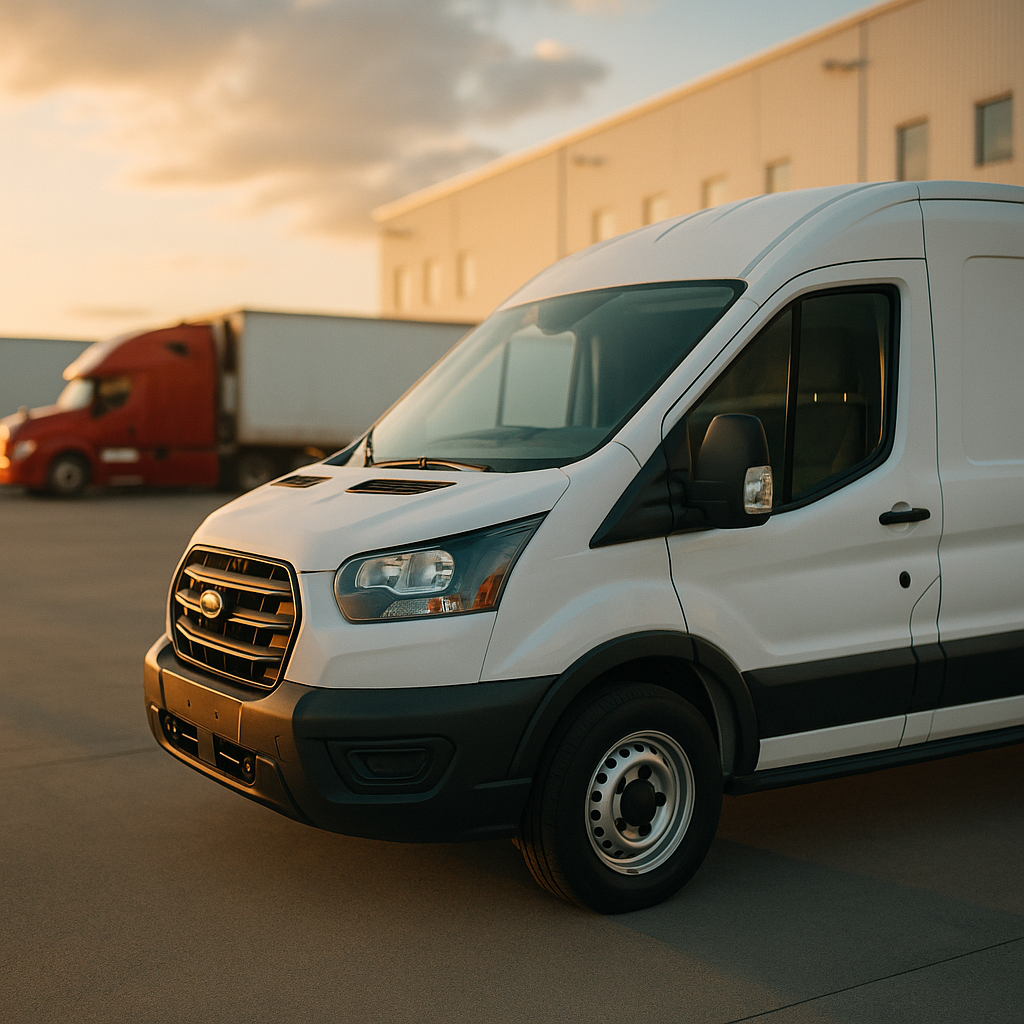
Learn how much transit van insurance costs in 2026, what coverage you need (personal vs commercial), key requirements, and how to avoid claim issues. Get a quote.

Transit van insurance in 2026 usually costs $1,800–$3,200/year for personal use and $3,500–$9,500+/year for commercial use, with delivery routes and passenger-for-hire operations often landing at the high end. The fastest way to overpay (or get a claim fight later) is getting classified wrong, picking limits that don’t match a contract, or failing to insure an upfit like shelving, refrigeration, or a conversion build.
This guide breaks down real 2026 price ranges, coverage requirements by use-case, the most common claim-denial traps, and a checklist you can use to get clean quotes without paying for fluff.
Table of Contents
Reading time: 9 minutes
- How Much Does Transit Van Insurance Cost in 2026?
- What Coverage Is Required for Transit Vans?
- Commercial vs Personal Transit Van Insurance
- Transit Van Insurance Coverage Options Explained
- Van Conversions & Upfits: Are They Covered?
- What Drives Rates (And How to Lower Them)
- Best Transit Van Insurance Companies (How to Choose)
- How to Get a Transit Van Insurance Quote
- Frequently Asked Questions
- Conclusion: Get Covered Without the Usual Headaches
Key Takeaways: Essential Transit Van Insurance
- Your use-case sets the price. Personal commuting is one world; deliveries, tools, employees driving, and passenger-for-hire is another.
- Legal minimums aren’t the same as “workable” coverage. Contracts often demand higher limits, specific endorsements, and clean COIs.
- Misclassification is a claim-denial trap. If you’re doing paid deliveries or hauling tools/materials daily, a personal policy can leave you exposed.
- Upfits/conversions need to be declared. Shelving, ladder racks, refrigeration, or camper builds may not be fully paid without proper endorsements and documentation.
How Much Does Transit Van Insurance Cost in 2026?
In 2026, transit van insurance typically ranges from $1,800–$3,200 per year for personal use and $3,500–$9,500+ per year for commercial use, with passenger-for-hire often running $6,000–$15,000+.
Pricing is basically a math problem built on exposure: miles driven, hours in traffic, where it’s garaged, what you haul, who drives, and whether you transport passengers.
1) 2026 cost ranges (personal vs commercial)
What it is (plain English): Typical premium ranges you’ll see for a Ford Transit-style van, assuming a reasonably clean driving history, standard deductibles, and consistent prior insurance.
Why it’s essential (business risk): If you budget off the wrong number, you underprice jobs and choke cash flow—insurance is a fixed cost, and missed payments can lead to cancellation.
| Use Type | Typical Annual Range (2026) | Notes |
|---|---|---|
| Personal use (commute + errands) | $1,800–$3,200 | Varies heavily by ZIP, driver age, credit tier (where allowed), and claims history |
| Commercial “light” (contractor/service calls, tools on board) | $3,500–$7,500 | Usually needs commercial auto classification; tools/upfits matter |
| Commercial delivery/courier (route work, frequent stops) | $4,500–$9,500+ | Stop-and-go exposure drives claim frequency; hired/non-owned may apply |
| Passenger transport / for-hire (shuttle, NEMT, church transport) | $6,000–$15,000+ | Higher liability expectations; local rules can require specific limits/filings |
Pro tip: When you compare quotes, match limits, deductibles, driver schedule, and radius. “Cheaper” is often just not the same coverage.
2) Cost ranges by model: Transit vs ProMaster vs Sprinter (what changes)
Different van models can rate differently because replacement cost, repair costs, theft risk, and upfit value directly affect comprehensive and collision pricing.
- Mercedes Sprinter: parts and labor can be higher, which can push comp/collision up.
- Ford Transit / Ram ProMaster: often more moderate depending on trim, safety tech, and parts availability.
- High-roof / extended wheelbase / passenger trims: higher vehicle value and different usage patterns can increase premium.
Pro tip: If you’re adding shelving, refrigeration, liftgates, or a full camper build, the “model” is only half the story—upfit value can exceed the van’s base value.
3) Regional and urban factors (why the ZIP code matters)
The same driver and van can price very differently by garaging ZIP because crash frequency, theft/vandalism rates, and litigation trends vary by area.
If you can store the van inside or in a fenced, lit lot, tell your agent—garaging and anti-theft can matter more than people think.
What Coverage Is Required for Transit Vans? (By Use-Case + State/Federal Notes)
Every state requires at least its minimum auto liability coverage, but business use typically needs a commercial auto policy and many contracts require $1,000,000 CSL (or higher) plus specific certificate language.
There’s “required by law,” and then there’s “required to keep working.” Most operators get stuck on the second one when they need a COI, an additional insured, or a higher limit to get on-site or get loaded.
1) Minimum coverage vs what contracts require
State minimum liability limits are often too low for commercial work, and contracts frequently require higher limits, additional insured status, and endorsement proof on the COI.
- Liability: pays for injuries/property damage you cause.
- Split limits vs CSL (Combined Single Limit):
- Split limits separate bodily injury (per person/per accident) and property damage.
- CSL is one pot (example: $1,000,000 per accident), and it’s often simpler for contracts.
If you can’t meet COI requirements, you can lose the job that day—so this isn’t “paperwork,” it’s revenue.
2) Requirements matrix: cargo/delivery vs contractors vs passenger/for-hire
Transit vans in delivery, contractor trades, and passenger transport have different “must-have” coverages because the liability and claim profile changes with each use-case.
| Use-Case | “Must-Have” Coverages | Often Required by Contracts | Common Miss |
|---|---|---|---|
| Delivery/courier | Commercial auto liability; comp/collision (if financed); UM/UIM where applicable | Higher liability limits; hired/non-owned if you subcontract; cargo/goods-in-transit | Cargo coverage assumed but not purchased |
| Contractor/service van | Commercial auto liability; comp/collision; coverage for attached equipment/upfit | Additional insured on COIs; waiver of subrogation; general liability for operations | Tools/equipment not scheduled; upfit value not declared |
| Passenger transport (for-hire, shuttle, NEMT) | Commercial auto liability at higher limits; Med Pay/PIP where needed | City/state program requirements; specific filings; higher CSL | Understating passenger use or seating capacity |
Pro tip: If you transport people for money—even part-time—treat it as a different class. It’s usually underwritten differently and priced accordingly.
3) State-by-state requirement pointers (how to verify fast)
You can verify minimum liability and for-hire/passenger requirements through your state DMV and local transportation regulators, and some cities have separate taxi/livery rules.
- State DMV: state minimum liability requirements
- Public Utilities / Transportation Commission: for-hire, passenger carrier rules
- City taxi/livery commissions: metro-specific requirements and permits
- Program administrators: for NEMT and brokered passenger programs
Requirements Check (Before You Bind)
If your Transit van is tied to a contract or permit, don’t guess—confirm your classification, limits, and COI requirements before you pay.
Commercial vs Personal Transit Van Insurance (And Why Misclassification Can Deny a Claim)
Personal auto policies often restrict “business use,” while commercial auto policies are built to rate delivery, tools/equipment exposure, employee drivers, and for-hire passenger operations.
This is where small operators get burned: a side gig becomes full-time, but the insurance application never gets updated.
1) What counts as “commercial use” for a Transit van?
Commercial use generally means the van is used to generate income or support business operations, which triggers different underwriting and eligibility rules than personal auto.
- Paid deliveries (courier routes, pharmacy delivery, platform delivery)
- Hauling tools/materials daily (HVAC, plumbing, electrical, carpentry)
- Multiple drivers or employees driving
- Regular jobsite-to-jobsite travel (not just commuting)
- Passenger-for-hire or any compensated transport
2) Real-world claim pitfalls (misclassification examples)
Misclassification, undisclosed upfits, and undisclosed passenger use are three of the most common reasons claims become delayed, disputed, or underpaid.
- Personal policy + paid deliveries: after a crash, claim notes, trip history, or statements can reveal route work, increasing dispute risk.
- Upfit not disclosed: a settlement may reflect the base van’s value, not your shelving, racks, refrigeration, or custom build.
- Passenger use not disclosed: seating capacity and for-hire use can change eligibility and required limits.
Pro tip: The goal isn’t “saying the right words.” It’s giving underwriting the usable facts: what you do, what you carry, where you drive, who drives, and how often.
Transit Van Insurance Coverage Options Explained (Build the Right Policy)
A solid transit van insurance policy usually combines liability plus physical damage, then fills business gaps with endorsements like hired/non-owned auto, equipment, and goods-in-transit.
If you’ve ever shopped commercial auto insurance, you’ve seen the menu—here’s what actually matters for Transit-type vans.
1) Core coverages (the foundation)
Core commercial auto coverages include liability, comprehensive, collision, UM/UIM (where available), and Med Pay/PIP depending on state rules.
- Auto liability: injuries and property damage you cause.
- Comprehensive: theft, vandalism, weather, animal hits.
- Collision: at-fault crashes and impact damage.
- UM/UIM: protects you if the at-fault driver has no insurance or low limits.
- Med Pay / PIP: helps with medical bills; requirements vary by state.
Why it’s essential: Liability keeps you in business after a serious loss. Physical damage keeps you from needing a lump-sum replacement you don’t have.
2) Business add-ons that actually matter for vans
The most common “gap” coverages for Transit vans are hired & non-owned auto, tools/equipment coverage, scheduled upfit/equipment, cargo/goods-in-transit, and towing/rental downtime protection.
- Hired & non-owned auto (HNOA): if employees use personal cars or you rent/borrow vehicles for business.
- Tools/equipment coverage: protects the gear that makes you money (often separate from auto).
- Upfit/scheduled equipment: shelving, racks, refrigeration, liftgates, partitions.
- Cargo / goods-in-transit: if you transport other people’s property for a fee.
- Towing/roadside + rental/downtime protection: keeps you moving when the van is down.
Why it’s essential: Many small operators can survive a claim—but not a month without revenue.

Van Conversions & Upfits: Are They Covered Under Standard Policies?
Most auto policies pay total losses based on the vehicle’s actual cash value (ACV), and upfits or conversions are often underpaid unless they’re declared and covered by an endorsement or scheduled equipment value.
Usually not fully—unless you set it up right.
1) Upfit vs conversion (and why insurers care)
Insurers treat work upfits (shelving, racks, refrigeration) and camper conversions (electrical, plumbing, interior buildouts) as added value that may require documentation and special coverage.
- Upfit: work setup (shelving, racks, partitions, refrigeration).
- Conversion: camper/van-life build (interior buildout, electrical, plumbing).
What insurers usually need:
- Receipts, photos, and a build sheet
- Declared value of the upfit/conversion
- Proof of professional installation (where applicable)
- Clear description of use (personal recreation vs commercial use)
Pro tip: If your build is $20,000–$80,000, don’t assume the policy “just knows.” If it’s not scheduled/endorsed, you’re betting your whole build on hope.
Upfit/Conversion Review
Before you bind coverage, confirm how your carrier treats upfits and custom builds so you don’t get paid like it’s a stock van.
What Drives Transit Van Insurance Rates (And How to Lower Them)
The biggest transit van insurance pricing drivers are use-case (delivery vs contractor vs passenger), garaging ZIP, driver MVRs, annual mileage/radius, prior coverage continuity, and vehicle value/upfit cost.
There’s no magic carrier—there are better underwriting facts.
1) Top pricing factors (fast list)
Most premium swings come from a short list of underwriting variables that directly affect claim frequency and severity.
- Use-case: delivery vs contractor vs passenger
- Radius and annual mileage
- Garaging ZIP (theft + crash frequency)
- Driver MVRs, age, experience
- Claims history and prior coverage (lapses hurt)
- Vehicle value, trim, and anti-theft
- Number of drivers and permissive use controls
2) Deductible planning + practical savings (without gambling)
Raising deductibles can reduce premium, but it only works if you can pay the deductible immediately after a loss without shutting down the business.
- Raise comp/collision deductibles only if you have a cash reserve
- Tighten the driver list and permissive use (don’t let “anyone” drive)
- Use telematics/driver monitoring if it earns real credits
- Improve parking/security (fenced lot, cameras, trackers)
- Pay-in-full if it saves installment fees
- Keep coverage continuous (avoid lapses)
Pro tip: Don’t “save” $80/month by creating a $5,000 problem you can’t fund.
Compare Quotes (Apples-to-Apples)
The fastest way to overpay is comparing different limits and deductibles. Quote the same structure across multiple markets and pick the best fit.
Best Transit Van Insurance Companies (How to Choose, Not Just Who’s Cheapest)
The “best” transit van insurance option is the market that will write your exact class (contractor, delivery, or passenger), provide required endorsements/COIs quickly, and handle claims consistently at your needed limits.
“Best” depends on your operation: the right policy for an HVAC service van is not the right policy for a shuttle or a delivery route van.
1) What “best” means by use-case
Carrier fit matters because underwriting appetite differs sharply between contractor service vans, high-frequency delivery exposures, and passenger-for-hire operations.
- Single-van contractor: wants solid liability + physical damage + equipment handling + easy COIs.
- Delivery/courier: needs correct classification + tolerance for frequent stops and route mileage.
- Passenger-for-hire: needs higher limits + local compliance handling (and sometimes filings).
2) What to screen for before you bind
Screening for eligibility, endorsements, and COI speed prevents last-minute job losses and reduces the chance of surprise exclusions after a claim.
- Do they write your exact class (delivery, contractor, passenger)?
- Can they cover upfits/conversions the way you need (scheduled or stated/agreed where available)?
- How fast can they issue COIs and add additional insureds?
- Are limits and deductibles clearly spelled out (no surprise exclusions)?
- What’s the claims process like for commercial auto?
Pro tip: “Cheapest” is fine after eligibility and coverage fit are confirmed.
How to Get a Transit Van Insurance Quote (Checklist for Accurate Pricing)
Accurate commercial transit van insurance quotes require your VIN, garaging address, driver list, prior insurance history, mileage/radius, and a specific description of how the van is used.
If you show up with vague details, you’ll get “ballpark” pricing that changes after underwriting—and that’s when people waste days going back and forth.
1) Quote checklist (bring this to your agent)
- VIN(s), year/make/model/trim
- Garaging address + primary operating area
- Driver list (DOB, license numbers, experience)
- Prior insurance declarations pages + any lapses
- Loss history (commercial loss runs if applicable)
- Annual mileage + radius (local vs regional)
- Clear use description: delivery/courier, contractor, passenger, mixed
- Upfit/conversion value + receipts/photos
Common mistakes:
- “We just use it for a few deliveries” (be specific: days/week, routes, platforms, and cargo)
- Forgetting to list drivers who actually drive
- Not disclosing racks, refrigeration, shelving, or passenger use
Frequently Asked Questions
In 2026, transit van insurance typically costs $1,800–$3,200 per year for personal use and $3,500–$9,500+ per year for commercial use, with delivery routes and passenger-for-hire often pricing higher. Rates move the most based on use-class (personal vs commercial), driver MVRs, garaging ZIP, annual mileage/radius, and liability limits (for example, $1,000,000 CSL often costs more than state-minimum limits). To compare quotes correctly, make sure each quote uses the same limits, deductibles, driver list, and radius—otherwise the “cheapest” option may simply be less coverage.
Transit vans must carry at least your state’s minimum auto liability, but business use usually needs commercial auto classification and many contracts require higher limits such as $1,000,000 CSL plus COI wording (additional insured, waiver of subrogation, etc.). Delivery/courier work may also require cargo or goods-in-transit coverage if you carry other people’s property for a fee, and passenger-for-hire operations can have extra city/state program requirements and filings. The fastest way to verify requirements is to check your state DMV for minimums and your local transportation regulator for for-hire/passenger rules.
Yes, commercial van insurance is rated and written for business operations like deliveries, transporting tools/materials, employee drivers, and jobsite travel, while personal auto is primarily built for commuting and household use. Many personal policies restrict or exclude certain business activities (especially delivery or for-hire passenger use), so using a Transit van to make money under a personal policy can create a claim dispute or denial risk. Commercial policies also support business add-ons like hired & non-owned auto, scheduled upfit/equipment, and goods-in-transit. If the van is part of how you get paid, commercial classification is usually the safer structure.
To get an accurate transit van insurance quote, provide your VIN, garaging address, full driver list, prior coverage details (including any lapses), loss history, and your real annual mileage/radius. You also need a specific use description—contractor/service calls, delivery/courier routes, passenger transport, or mixed use—because classification drives eligibility and pricing. Then request “like-for-like” quotes: the same liability limit (for example, $1,000,000 CSL), the same deductibles, and the same coverages. That’s the only way to know which quote is truly cheaper.
Van conversions are sometimes only partially covered because many policies settle total losses using actual cash value (ACV) for the base vehicle unless the conversion or upfit is declared and endorsed. If you have a build worth $20,000–$80,000, keep receipts, photos, and a build sheet, and ask whether the carrier offers scheduled equipment value or other options (such as stated/agreed value where available). Without documentation and the right endorsement, a claim payout can look like “stock van money” even if you invested heavily in the build. Treat the conversion as an asset that needs to be insured on purpose.
If you transport goods for a fee, you may need cargo or goods-in-transit coverage, and many delivery contracts require it on the COI. Set the cargo limit based on the maximum value you carry on a single trip, not your average day, because claims are paid per loss event. Also confirm what’s covered (theft, collision, temperature spoilage for refrigerated loads, unattended vehicle rules) and whether there are sublimits or exclusions that affect your cargo type. For contractors carrying tools, note that tools are often insured under a separate inland marine/tools policy rather than auto liability.
Conclusion: Get Covered Without the Usual Headaches
Transit van insurance in 2026 is most affordable when the policy matches your real use-case, your required liability limits, and the true value of your upfits or conversion.
Nail the classification (personal vs commercial), match limits to contracts, and document your build or equipment. That’s how you avoid the “cheap policy, expensive loss” trap.
Key Takeaways:
- Price follows use: delivery and passenger operations usually cost more than contractor/service use.
- Contracts beat state minimums: many jobs want $1,000,000 CSL and specific COI language.
- Avoidable claim problems: misclassification and undisclosed upfits are the two biggest preventable issues.
If you want fast, clean quotes, bring your VIN, driver list, mileage/radius, and upfit value—and ask for like-for-like comparisons.





