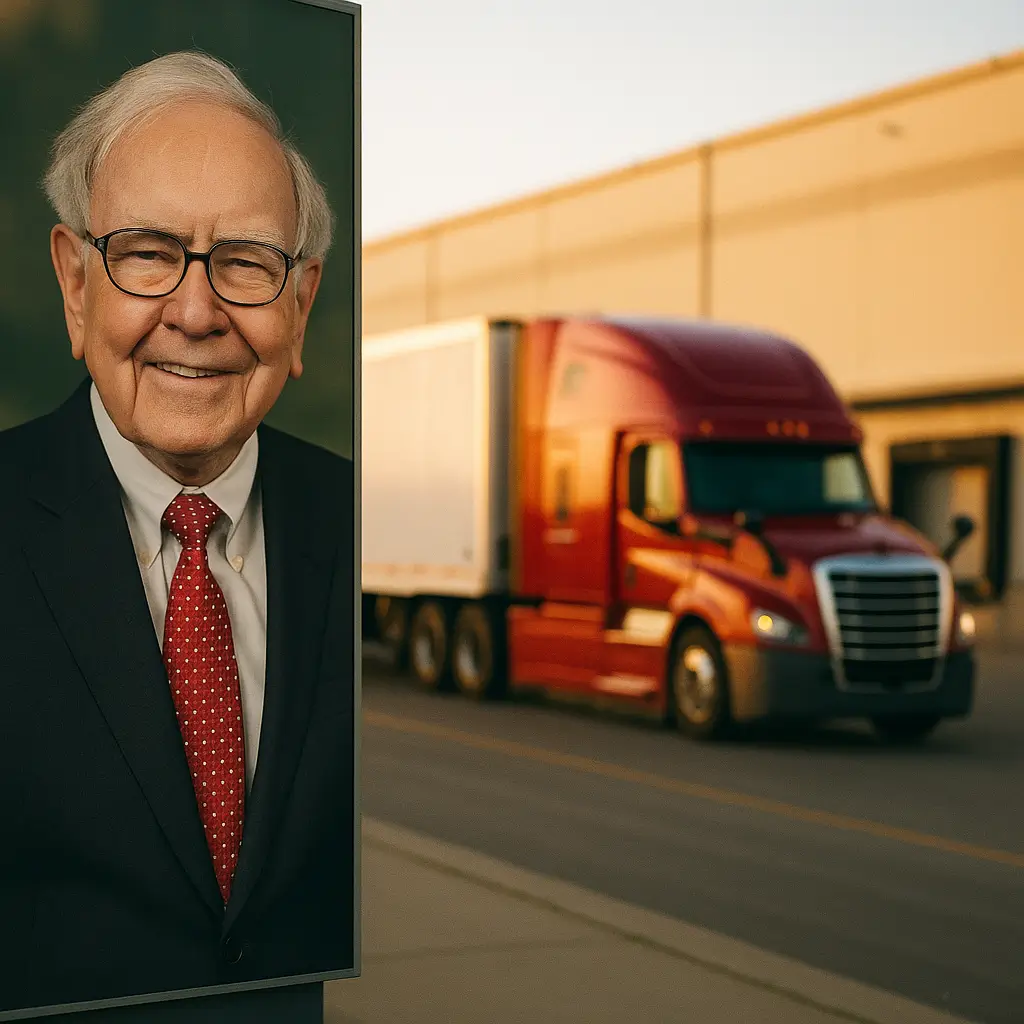
Searching “Warren Buffett insurance company”? Buffett owns an insurance group via Berkshire Hathaway—GEICO, National Indemnity, Gen Re, and more. See the list, how “float” works, and how to verify ownership.
If you’re searching warren buffett insurance company, you’re usually trying to figure out (1) which insurer Buffett actually owns, or (2) whether the company on your policy is Berkshire-owned. The fast answer is simple: there isn’t one single “Buffett insurance company”—Buffett controls a group of insurance businesses through Berkshire Hathaway, including GEICO, National Indemnity, and General Re (Gen Re).
That distinction matters because “famous name” doesn’t automatically mean “right coverage.” If you’re shopping for business coverage like commercial truck insurance, you want the right filings, endorsements, and claims handling—not a logo.
Table of Contents
Reading time: 9 minutes
- Quick Answer: The 3 Biggest Buffett-Owned Insurance Names
- Owned Subsidiary vs. Stock Investment: What Buffett “Owns” vs. What Berkshire “Holds”
- Berkshire Hathaway’s Primary (Direct) Insurance Companies
- Berkshire’s Reinsurance Companies (Why Gen Re Is Different)
- Why Buffett Loves Insurance: Float, Capital, and Long-Term Investing
- Timeline: How Berkshire Became an Insurance Powerhouse
- How to Verify Buffett/Berkshire Insurance Ownership (Fast Checklist)
- Frequently Asked Questions
- How Logrock Helps You Shop Commercial Truck Insurance Without Getting Burned
- Conclusion & Next Step
Quick Answer: The 3 Biggest Buffett-Owned Insurance Names
Berkshire Hathaway has owned GEICO as a wholly owned subsidiary since 1996, and it also owns key insurance entities like National Indemnity and major reinsurance operations like General Re (Gen Re).
When people say “Warren Buffett insurance company,” they’re typically pointing at one of these three names.
1) GEICO (consumer auto insurance brand)
GEICO is a large U.S. auto insurer best known for direct-to-consumer personal auto policies. It’s a recognizable brand, but brand recognition isn’t a substitute for reading the policy—especially if you need commercial lines.
- Best fit: Mostly personal auto customers.
- Watch-out for business owners: Most semi truck insurance and hotshot insurance is written in specialized commercial markets, not mass-market personal lines.
2) National Indemnity (a core Berkshire insurance entity)
National Indemnity is one of Berkshire’s central insurance entities and often appears in corporate structure discussions and filings. It’s important to Berkshire’s insurance “engine,” even though it’s not usually a retail-shopping brand.
- Best fit: More relevant to ownership research than consumer shopping.
- What it signals: Berkshire’s insurance group is a network of companies, not one storefront brand.
3) General Re (Gen Re) (reinsurance)
General Re (Gen Re) is a reinsurance company, meaning it primarily insures other insurers rather than individual consumers. Reinsurance is a big reason Berkshire is considered an insurance heavyweight.
- Best fit: Industry players and large commercial programs.
- Why buyers hear about it: Reinsurance affects pricing and capacity across the whole insurance market.
Owned Subsidiary vs. Stock Investment: What Buffett “Owns” vs. What Berkshire “Holds”
In public-company terms, an “owned subsidiary” is controlled and consolidated, while a “stock investment” can be any percentage of shares and does not equal operating control.
This is where most search results get sloppy, because headlines often blur “Buffett bought shares of X” with “Berkshire owns X.” Those are different things.
What “owned” actually means
An owned operating company is a business Berkshire controls and reports within its operating segments. If you’re trying to verify who you’re dealing with (or why a headline matters), you need to know if Berkshire can actually control operations or if it’s just a financial stake.
- Practical takeaway: Ownership is about control, not hype.
- Shopping takeaway: “Berkshire-owned” doesn’t automatically mean “best policy for my operation.”
What “held” (stock investment) means
Berkshire can own shares of an insurance company without owning the company itself as a subsidiary. The insurer still runs independently, and your policy terms, claims process, and underwriting rules come from that insurer—not from Berkshire.
Example: If a headline says Berkshire “bought” an insurer, check whether it was a subsidiary purchase or just an equity position.
Berkshire Hathaway’s Primary (Direct) Insurance Companies
Primary (direct) insurers sell policies to end customers, while reinsurers sell coverage to other insurance companies.
Berkshire’s “direct” side includes well-known consumer brands and a long list of specialty and commercial operations that most people never see advertised.
Notable Berkshire-owned insurance operations (high-level)
| Company/Group | Type | What it’s known for | Typically sold to |
|---|---|---|---|
| GEICO | Primary insurance | Consumer auto insurance brand | Individuals, households |
| National Indemnity (entity) | Primary/specialty structure | Core Berkshire insurance entity in the structure | Varies (often not retail-facing) |
| Specialty/commercial insurers (various) | Primary insurance | Niche lines (professional liability, surety, specialty commercial) | Businesses, professionals |
For trucking readers specifically, the most relevant Berkshire-adjacent question is not just who owns the insurer, but whether the market actually fits commercial trucking. See our guide to Berkshire Hathaway Commercial Truck Insurance for a trucking-focused breakdown.
Accuracy note: Berkshire’s full insurance org chart is extensive. For a truly complete list, use Berkshire’s filings and subsidiary exhibits rather than a random online list.
GEICO — big brand, but not a dedicated trucking market
GEICO is built for scale in personal auto, which is a different underwriting world than heavy commercial trucking risk. If you operate a trucking business, your insurance program often needs commercial endorsements, proof-of-insurance formats, and filings that aren’t part of a typical personal auto setup.
Straight talk for trucking buyers
FMCSA requires at least $750,000 in public liability insurance for most interstate for-hire motor carriers hauling non-hazardous property, and many brokers/shipper contracts require higher limits than the federal minimum.
- Start with requirements: liability limit, cargo needs, physical damage, and any required filings (for example, BMC-91X/34 when applicable).
- Then match underwriting appetite: radius, commodities, experience, loss history, equipment, and safety controls.
- Goal: claim-paying ability + correct coverage + clean paperwork (COIs and filings) so you can keep hauling.
If liability limits and coverage basics are still fuzzy, this walks through what truck liability insurance actually covers:
Berkshire’s Reinsurance Companies (Why Gen Re Is Different)
Reinsurance is a business-to-business insurance market where one insurer transfers part of its risk to another insurer to manage catastrophe and high-severity losses.
Reinsurance is one of the most misunderstood parts of “Buffett insurance,” but it’s central to why Berkshire has so much staying power in bad loss years.
Reinsurance in one sentence
Reinsurance is insurance for insurance companies. It helps primary insurers stay solvent and stable when losses spike (catastrophes, large liability verdicts, clustered claims).
Why Gen Re matters inside Berkshire
Berkshire acquired General Re in 1998, adding a major global reinsurance platform to its insurance group. Reinsurance can be profitable, but mistakes get expensive fast, which is why disciplined pricing and long-term capital matter.
Why Buffett Loves Insurance: Float, Capital, and Long-Term Investing
Insurance “float” is the premium money an insurer holds between collecting premiums and paying claims, and underwriting performance is often summarized by the combined ratio where under 100% indicates underwriting profit.
This is the “why” behind Berkshire’s insurance empire: if you can underwrite profitably, you get paid to hold investable capital for long periods.
What is insurance float?
Float is the time-and-money gap between premium inflow and claim outflow. If an insurer underwrites badly, float becomes a future bill. If underwriting is disciplined, float is a durable, low-cost pool of capital.
Underwriting profit vs. investment income
Underwriting profit is premiums minus claims and expenses, while investment income is the return on float and capital. In a bull market, weak underwriting can look “fine” for a while—until losses catch up.
Trucking tie-in (real-world)
When insurance markets “harden,” rates rise because capital gets tighter after big loss years, litigation trends, or catastrophe-driven volatility. That’s why chasing the cheapest premium without understanding coverage can trap an owner-operator: cheap up front can turn into expensive later if a claim is denied or a contract requirement isn’t met.
Timeline: How Berkshire Became an Insurance Powerhouse
Berkshire Hathaway’s insurance expansion is best understood as a multi-decade build that combined primary insurance scale with reinsurance capacity, including the 1996 consolidation of GEICO and the 1998 acquisition of General Re.
This timeline is intentionally high-level; exact dates and entity lists should be verified in Berkshire’s annual reports and subsidiary exhibits.
Early entry: insurance becomes the capital engine
Berkshire’s insurance operations became a major source of investable capital over decades, not overnight. The compounding effect comes from writing insurance thoughtfully and investing with patience.
Expansion: adding large consumer and reinsurance platforms
Berkshire built both consumer visibility and institutional scale by pairing big primary platforms with reinsurance. That blend matters because it diversifies how profits are generated.
Diversification: specialty and commercial niches
Specialty insurance focuses on narrow lines where wording, exclusions, and endorsements often decide whether a claim gets paid. For business owners, this is where the “fine print” can become a cash-flow event.
Today: a diversified insurance group
The strength is in the mix: consumer insurance, specialty/commercial operations, and reinsurance backed by long-term capital. That’s the real “Buffett insurance company” story.
How to Verify Buffett/Berkshire Insurance Ownership (Fast Checklist)
The most reliable way to verify Berkshire insurance ownership is to check Berkshire Hathaway’s latest annual report (Form 10‑K) and subsidiary listings filed with the U.S. SEC each year.
If you want to confirm whether an insurer is actually “Buffett-owned,” don’t rely on listicles. Use a quick, repeatable process.
1) Check Berkshire Hathaway’s most recent annual report/10‑K
Filings are closer to the source than blogs because they’re updated on a regular reporting cycle and reflect controlled operating businesses. Online lists go stale fast.
2) Separate “operating subsidiaries” from “equity investments”
Subsidiaries are controlled businesses, while equity holdings are investments and do not equal operational control. That one difference explains why headlines can be misleading.
3) Cross-check with multiple sources
Use filings first, then cross-check credible secondary sources for context. If two reputable sources disagree, treat it as “unverified” until you can trace the claim back to primary documentation.
How Logrock Helps You Shop Commercial Truck Insurance Without Getting Burned
Commercial truck insurance is only “affordable” if the coverage matches your operation and meets contract and filing requirements the first time, because re-shopping after a cancellation or denied claim is usually more expensive.
A famous parent company can help with confidence, but fit still comes from underwriting appetite. Compare practical options in our guide to the best commercial truck insurance companies.
Most owner-operators don’t lose money because they can’t drive. They lose money because the business side gets them: the wrong coverage, a filing issue, a COI rejected by a broker, or a claim that turns into a fight.
- Buy what your contracts require: and what your lanes, commodities, and trailer type actually expose you to.
- Control the rate drivers: radius, garaging, driver history, equipment value, deductibles, and safety practices.
- Avoid “cheap-but-wrong” insurance: downtime and coverage disputes are margin killers.
If you want affordable trucking insurance, the usual path is: get the program right, then optimize price—not the other way around.
Here’s how to think about pricing once your coverage is right:
Supplemental viewing: Do You Need A Trucking Insurance Agent?
Frequently Asked Questions
Warren Buffett doesn’t have one single insurer called a “Buffett insurance company”; he controls an insurance group through Berkshire Hathaway that includes GEICO (owned outright since 1996), National Indemnity, and reinsurance operations like General Re (acquired in 1998). When people use the phrase, they’re usually referring to Berkshire’s insurance segment rather than a single storefront brand. If you’re trying to verify ownership for a policy decision, focus on whether the carrier is an operating subsidiary (controlled) or simply a company Berkshire holds shares in (investment).
Yes—GEICO is a wholly owned subsidiary of Berkshire Hathaway, and Berkshire consolidated full ownership in 1996. People commonly say “Buffett owns GEICO” because Buffett controls Berkshire, but the legal ownership is through Berkshire Hathaway. For buyers, the practical takeaway is that GEICO is primarily a personal auto insurer, and many commercial risks (especially trucking) are placed in specialized commercial markets with different underwriting and policy forms.
Usually not as the primary option. GEICO is built for personal auto scale, and most owner-operators and small fleets need trucking-specific coverages, filings, and claims handling. Compare that question through a dedicated GEICO hotshot insurance or GEICO semi truck insurance lens before assuming the brand fits.
No—National Indemnity and GEICO are separate companies within the Berkshire Hathaway insurance group, and they serve different roles. GEICO is a consumer-facing auto insurance brand, while National Indemnity is a core Berkshire insurance entity that is more likely to appear in ownership charts and filings than in retail advertising. If your goal is to confirm who stands behind a policy, verify the named insurer on the declarations page and then check whether that company is listed as a Berkshire operating subsidiary.
Yes, indirectly. Berkshire Hathaway’s insurance group includes commercial and specialty brands that can write business insurance, including some trucking-related risks, but these are separate from GEICO’s personal-auto reputation. For trucking, the practical question is whether the carrier can handle your radius, commodities, filings, and claims process—not simply whether Berkshire is connected.
Buying direct works when your risk is simple and standard. Trucking is often more complex because filings, cargo limits, endorsements, broker packets, and COIs all have to line up. A trucking insurance agent can help match your operation to the right carrier appetite instead of forcing a one-size-fits-all policy.
Gen Re (General Re) is a reinsurance company, meaning it primarily insures other insurance companies rather than individual consumers, and Berkshire Hathaway acquired it in 1998. It matters because reinsurance absorbs shock losses from catastrophes and high-severity years, which affects pricing and capacity across the entire insurance market. For everyday buyers, Gen Re’s impact is indirect: when reinsurance gets tighter or more expensive, primary insurance rates can rise and underwriting can get stricter.
Not necessarily—headlines can refer to Berkshire owning shares of an insurer, but a stock investment is not the same as owning an insurer as an operating subsidiary. The precise way to confirm this is to check Berkshire Hathaway’s latest SEC filings and see whether the company is listed as a controlled operating business (subsidiary) or as an equity security (investment). For insurance buyers, the key point is that being “invested in” does not mean Berkshire controls underwriting, claims handling, or policy terms.
Insurance matters to Berkshire because it creates “float,” which is premium money held between collection and claim payments, and underwriting performance is commonly tracked by the combined ratio (under 100% indicates underwriting profit). When underwriting is disciplined, float can function as durable, low-cost investable capital over long periods. When underwriting is sloppy, float becomes a future liability that shows up as losses and capital strain.
Not necessarily. Trucking rates are driven by your radius, commodities, equipment value, driver history, garaging location, and loss experience. A large parent company can still be a poor fit or an expensive quote if your operation does not match its underwriting appetite.
It matters because trucking is a high-severity commercial risk, and FMCSA requires at least $750,000 in public liability coverage for most interstate for-hire carriers of non-hazardous property, while many contracts require higher limits. The “Buffett lesson” is the business lesson: your policy has to match your operation—liability limits, cargo, physical damage, bobtail/non-trucking liability, and any required filings—so you don’t get blindsided after a loss. A famous parent company doesn’t fix missing endorsements or incorrect paperwork.
Use independent insurance rating agencies such as AM Best, plus state insurance department resources, to check whether an insurer is financially strong enough to pay claims. Financial strength matters more than brand recognition, especially for commercial trucking where one severe loss can be expensive.
Conclusion & Next Step
“Warren Buffett insurance company” is shorthand for Berkshire Hathaway’s insurance group—a mix of consumer insurance (GEICO), core insurance entities (National Indemnity), and large-scale reinsurance (Gen Re). The big idea isn’t the brand name; it’s disciplined underwriting, float, and long-term capital.
If you’re shopping coverage, build quotes around your real operation (radius, commodity, trailer, and contracts) so your authority stays protected and you can keep rolling.
Key Takeaways:
- Buffett doesn’t own one insurer—he controls a group through Berkshire Hathaway.
- Owned subsidiary vs. stock investment are not the same thing, and headlines often confuse them.
- For commercial truck insurance, prioritize correct coverage, filings, and claims reputation over fame.
When you’re ready to compare options, get quotes that are built for your lanes and your contracts—not a one-size-fits-all policy.