
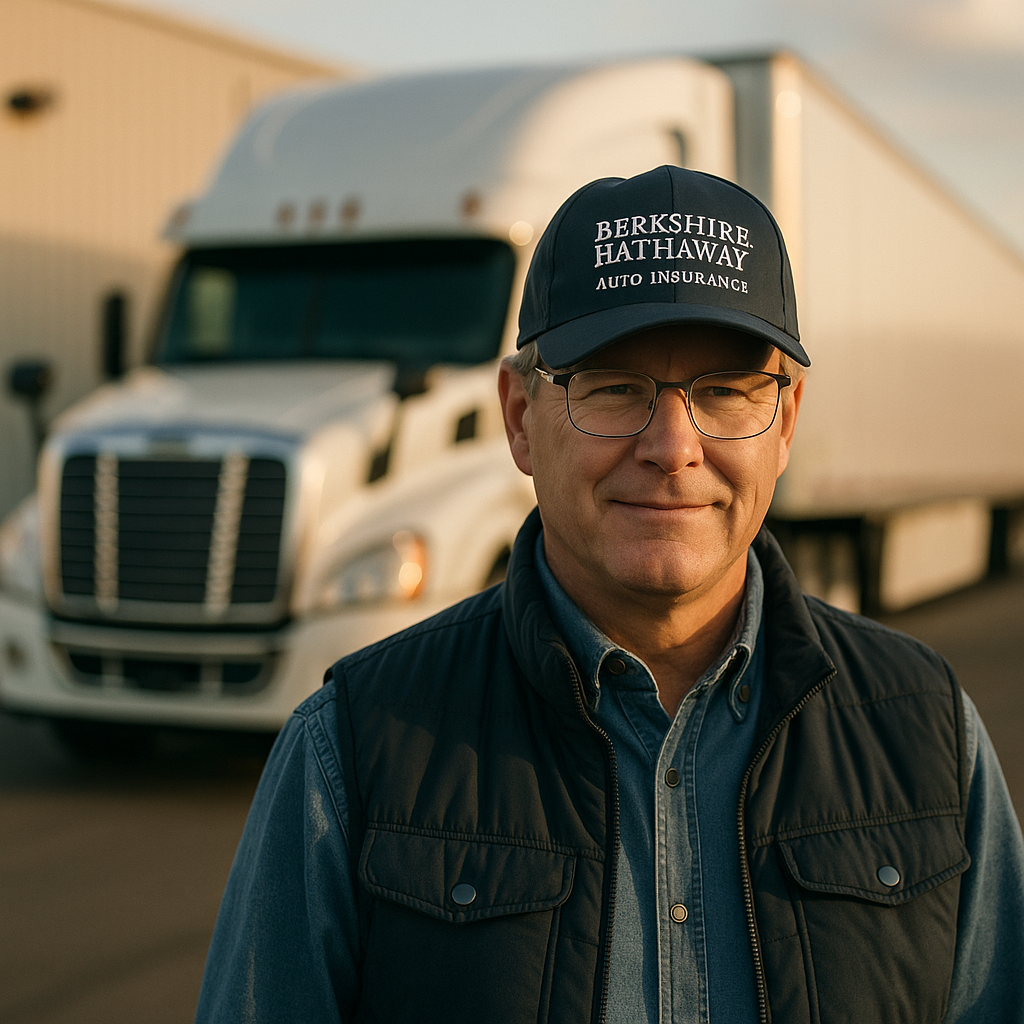
Berkshire Hathaway auto insurance isn’t one policy—it’s sold through brands like GEICO and THREE. Learn the right path for personal vs commercial auto and how to quote in 2026. Get a quote.
Berkshire Hathaway auto insurance isn’t one product you buy from “Berkshire” directly—it’s coverage sold and serviced through Berkshire-owned brands (most often GEICO for personal auto) or commercial programs (like THREE for some small businesses). The right choice depends on whether your vehicle use is personal, business-use commercial auto, or true trucking exposure (hotshot, for-hire, plated trucks).
You don’t lose money in insurance because you “picked the wrong company.” You lose money because you bought the wrong type of policy for how the vehicle is used—then a claim gets questioned, delayed, or denied when it matters.
Key Takeaways: Essential Berkshire Hathaway Auto Insurance
- You usually can’t buy “Berkshire Hathaway auto insurance” directly from Berkshire Hathaway Inc.; you buy through its brands (most commonly GEICO for personal auto).
- THREE by Berkshire Hathaway targets small businesses and may include commercial auto as part of a simplified approach (eligibility varies by state and business type).
- Commercial auto is not one-size-fits-all. If you operate work vehicles (or anything close to semi truck insurance / hotshot insurance), you often need a broker who can place the right commercial policy and handle filings when required.
- There’s no single “Berkshire rate.” Price depends on state, drivers, vehicle type, usage, loss history, limits, and (for businesses) industry class and radius.
Table of Contents
Reading time: 10 minutes
- Quick Answer: Which Berkshire Company Should You Use?
- Can You Buy Berkshire Hathaway Auto Insurance Directly?
- Personal Auto: GEICO (Berkshire Hathaway) Coverage and Options
- Commercial Auto: What “Business Use” Really Means
- What Is THREE by Berkshire Hathaway (and Is It Auto Insurance)?
- How to Get a Berkshire Hathaway Auto Insurance Quote (Step-by-Step)
- Cost & Rates: What You Can (and Can’t) Assume
- Claims: What to Expect (and How to Protect Yourself)
- Customer Satisfaction, Reviews, and Common Complaints
- Frequently Asked Questions
- Why Logrock: Straight Answers for Commercial Vehicle Insurance
- Conclusion & Next Step
Quick Answer: Which Berkshire Hathaway Auto Insurance Company Should You Use?
Berkshire Hathaway auto insurance is typically purchased through a Berkshire-owned brand like GEICO (personal auto) or a commercial program like THREE (some small businesses), not from Berkshire Hathaway Inc. directly.
If you’re trying to insure a family vehicle and normal commuting, start with GEICO. If the vehicle is used for work—employee drivers, service routes, deliveries, tools, jobsite use—you’re usually in commercial auto territory. If you’re hauling for-hire, running hotshot, or operating a plated truck with freight exposure, you’re often in commercial truck insurance territory and need a trucking-focused quote flow.
Decision Tree (Fast Path)
What it is: A quick filter so you don’t waste time calling the wrong place.
- Personal car / family vehicles / commuting: Start with GEICO (Berkshire-owned).
- Business-owned vehicle, employee drivers, deliveries, service calls: You likely need commercial auto (THREE may fit some small businesses; many risks require an agent/broker market).
- For-hire trucking, hotshot, or a plated truck used to haul: You’re in commercial truck insurance / semi truck insurance territory (often needs specialized underwriting and sometimes federal/state filings).
Why this matters (the real risk)
If you quote personal auto when you actually need commercial auto, the policy can be written on the wrong form for your usage. That mismatch is where claim disputes usually start—especially after a loss involving a jobsite, delivery, employee driver, or cargo exposure.
Can You Buy Berkshire Hathaway Auto Insurance Directly?
Berkshire Hathaway Inc. is a holding company, so most consumers buy coverage through Berkshire-owned insurers and brands (for example, GEICO for personal auto) rather than buying a retail policy from “Berkshire” itself.
Featured-snippet answer (45–60 words)
Not usually. Berkshire Hathaway Inc. is a parent company, so most people don’t buy a policy “from Berkshire” directly. For personal auto, the common path is GEICO (owned by Berkshire Hathaway). For businesses, commercial auto may be available through Berkshire-owned insurers or programs like THREE, depending on your industry, vehicles, and eligibility.
Why the name creates confusion
Berkshire owns insurance companies. Those companies sell, bill, and handle claims under their own brand names and underwriting entities, and that’s what shows on your declarations page.
Pro tip: During quoting, ask two questions:
- “Who is the underwriting company on the declarations page?”
- “Is this written as personal or commercial?”
That clears up most “Berkshire vs GEICO vs THREE” confusion in under a minute.
Personal Auto: GEICO (Berkshire Hathaway) Coverage and Options
GEICO is a Berkshire Hathaway company that sells personal auto policies built for non-business driving such as commuting, errands, and family use, with coverage options like liability, collision, and comprehensive.
What you can expect in a personal auto policy
Personal auto is priced and structured for personal risk. When usage shifts into business use (deliveries, carrying tools daily, employee drivers), the policy form may not match how the vehicle is actually used.
- Liability (BI/PD): Pays for injuries and property damage you cause.
- Collision: Damage to your vehicle from a crash (subject to deductible).
- Comprehensive: Theft, vandalism, hail, fire, animal strikes, and similar non-collision losses.
- UM/UIM: Protection if the at-fault driver has no insurance or not enough coverage (varies by state).
- MedPay or PIP: Medical-related coverage depending on your state’s rules.
What to have ready before you quote (so it doesn’t turn into a 45-minute call)
Accurate quoting depends on the inputs, and missing information often causes re-quotes or surprise pricing when you bind.
- VIN(s)
- Driver’s license info for all household drivers
- Garaging address
- Estimated annual mileage
- Prior insurance history (including any lapse)
- Your current declarations page (best way to compare apples-to-apples)
Commercial Auto: What “Business Use” Really Means
Commercial auto insurance is designed for vehicles used in business operations—such as employee drivers, deliveries, jobsite travel, and business-titled vehicles—because the exposure profile is different from personal driving.
When you need commercial auto (not personal auto)
A personal policy is often the wrong fit when the vehicle is titled to a business, employees drive it, it hauls tools or equipment regularly, it runs delivery/service routes, or it’s primarily used for work. Commercial underwriting expects these exposures and prices them accordingly.
If any of these are true, treat it like a commercial quote, not a personal quote:
- Ownership: Vehicle is owned or leased by an LLC/corporation.
- Drivers: Employees or multiple non-family drivers use the vehicle.
- Operations: Jobsite travel, deliveries, or service calls are routine.
- Equipment: Tools/materials are carried daily (especially contractor setups).
If you’re in trucking: commercial auto isn’t the whole story
For-hire trucking accounts often require coverage beyond “basic commercial auto,” and interstate for-hire carriers commonly face a federal financial responsibility minimum of $750,000 in auto liability under FMCSA rules (with higher limits often required by contracts).
If you’re searching “Berkshire Hathaway auto insurance” but the real need is semi truck insurance or hotshot insurance, you’ll usually be asked for trucking-specific details like radius, commodity, authority type, driver history, and contract requirements.
Common trucking coverages (what they do)
- Auto Liability (primary): The core liability coverage for bodily injury/property damage.
- Physical Damage: Covers your truck/tractor/trailer for collision/comp losses (deductible-driven).
- Motor Truck Cargo: Covers freight you’re responsible for (limit often set by broker/shipper contracts).
- General Liability: Non-auto third-party claims (like loading dock or premises issues).
- Non-trucking liability / bobtail: Depends on lease-on vs own authority and when the truck is being used.
- Filings (when required): Used to keep authority active or meet contract/state requirements.
What Is THREE by Berkshire Hathaway (and Is It Auto Insurance)?
THREE is a Berkshire Hathaway small-business insurance offering that aims to simplify coverage and may include commercial auto for eligible business classes, depending on state availability and underwriting appetite.
THREE’s basic idea (simple business insurance—sometimes including auto)
Many small businesses don’t want multiple renewals, multiple carriers, and multiple billing systems. THREE positions itself as a simpler small-business path, which can be attractive if your operation is straightforward and your vehicle exposure is modest.
Who THREE is usually not built for
This is a fit issue, not a “good company vs bad company” issue—complex operations often need a more tailored commercial placement.
- Larger fleets or rapid growth plans
- Specialty vehicle classes (heavy, custom, or unusual use)
- High-risk operations with tough loss history
- For-hire trucking setups needing specialized underwriting and filings
Questions to ask before you assume it fits
- “Does this include hired and non-owned auto?”
- “Are employee drivers scheduled and covered?”
- “Any exclusions for delivery, towing, hauling, or jobsite use?”
How to Get a Berkshire Hathaway Auto Insurance Quote (Step-by-Step)
Getting a Berkshire Hathaway auto insurance quote usually means quoting through GEICO for personal auto or through a commercial channel (like THREE or a broker/agent market) for business-use vehicles.
Quote path for personal auto (GEICO route)
Fast online quotes are useful only if the coverage matches your real usage and you compare the same limits and deductibles.

- Gather VIN(s), driver info, garaging address, and your current policy declarations page
- Choose realistic liability limits (don’t shop only on state minimums)
- Match deductibles to your cash reserves (what can you absorb tomorrow?)
Quote path for commercial auto (THREE or broker route)
Commercial underwriting focuses on exposure: who drives, how far you operate, what your business does, what you haul (if applicable), and your loss history.
Bring this information to move quickly:
- Business name, entity type, FEIN (if applicable)
- Driver list (license numbers, DOBs)
- Vehicle list (VIN, year/make/model, cost new, stated value if applicable)
- Usage details: commute/service/delivery and radius
- Garaging locations
- Prior insurance and loss runs (if you have them)
- Required certificates (COIs) and additional insured needs (if you operate under contracts)
Need Commercial Auto or Commercial Truck Insurance That Actually Fits Your Operation?
If you’re running business vehicles (or anything close to semi truck insurance / hotshot insurance), “cheap” doesn’t matter if the policy can’t back the claim or satisfy contract requirements. Get a quote built around your real usage.
- Coverage matched to operations
- Faster COI help
- No guesswork on limits
Cost & Rates: What You Can (and Can’t) Assume About Berkshire Hathaway Auto Insurance
There is no single “Berkshire Hathaway auto insurance rate” because pricing varies by brand, underwriting company, state, driver/vehicle risk, coverage limits, deductibles, and (for commercial) your industry class and operating radius.
Why there’s no single “Berkshire Hathaway rate”
GEICO personal auto pricing and commercial auto pricing are different worlds. Even within commercial insurance, appetite can vary by state, vehicle type, and business class.
What moves the price (personal vs commercial)
Personal auto pricing drivers:
- Driving record and claims history
- Location and garaging
- Vehicle type (repair costs and theft rates matter)
- Annual mileage
- Prior insurance continuity (lapses can increase premium)
- Credit-based insurance score (where allowed by state law)
Commercial auto pricing drivers:
- Industry class (contractor vs delivery vs towing vs trucking)
- Driver MVRs (employee drivers count)
- Vehicle weight class and usage
- Radius and territory
- Loss runs (frequency and severity)
- Safety controls (dashcams, telematics, driver training)
Lowering premium without wrecking coverage
If you want affordable trucking insurance or affordable commercial auto, focus on reducing risk and removing waste—not just cutting limits.
- Raise deductibles only to a level your cash flow can absorb
- Clean up drivers (one bad MVR can swing the whole account)
- Use dashcams and basic telematics (some markets offer credits)
- Don’t underinsure liability just to chase a lower monthly payment
Claims: What to Expect (and How to Protect Yourself)
Auto claim experiences can vary by brand, state, claim type (glass vs liability vs injury), and repair network, so the best protection is fast reporting and clean documentation from the first hour.
Why claims can feel different across brands
Your “real premium” shows up during a claim: downtime, rental coverage, communication speed, and the documentation burden. For business owners, downtime is often the biggest hidden cost.
Simple claims checklist (personal + commercial)
- Get safe and call 911 if needed
- Take photos/video: vehicles, plates, DOT numbers (if applicable), scene, signage
- Get witness names and phone numbers
- Get the police report number (when filed)
- Notify the insurer quickly (don’t “wait to see what happens”)
- If business use is involved, document work status and customer/job impacts
Commercial pro tip: keep a “bad week” folder
If you rely on COIs and contracts, keep a single folder with your current declarations page, vehicle list, driver list, and claim reporting numbers. When something goes wrong, that folder saves hours.
Customer Satisfaction, Reviews, and Common Complaints
Insurance reviews are most useful when you separate billing/service issues from claim outcomes and then look for patterns across multiple sources, including your state Department of Insurance complaint resources.
How to evaluate before you buy (without getting fooled by one-star noise)
One angry review can be real, but it’s not data. You’re looking for repeated themes: communication, claim timelines, documentation demands, and renewal stability.
- Check your state Department of Insurance complaint tools (more grounded than random posts)
- Compare multiple review platforms to see consistent patterns
- Ask direct questions during quoting: “How do after-hours claims work?” “Is there an app?” “Preferred repair network?”
Common themes to watch for (personal and commercial)
- Renewal premium increases
- Documentation requirements during claims
- Repair timelines and parts delays
- Communication speed and adjuster responsiveness
- For commercial: certificate turnaround time and endorsement processing
Frequently Asked Questions
No—most people can’t buy a retail auto policy directly from Berkshire Hathaway Inc. because it’s a parent company, so coverage is purchased through Berkshire-owned brands and underwriting companies. For personal auto, the most common Berkshire-owned option is GEICO. For small-business risks, a program like THREE may offer a simplified path that can include commercial auto if you’re eligible. If your usage looks like trucking (for-hire, hotshot, plated vehicles hauling freight), you’ll usually need a trucking-focused commercial placement and may face federal/state filing requirements depending on your operation.
GEICO is the best-known Berkshire Hathaway-owned brand for personal auto insurance in the U.S. Berkshire Hathaway also owns and operates multiple insurance businesses that write commercial coverage through various underwriting companies and distribution channels (often accessed through agents, brokers, or specific programs). In practice, you’ll usually encounter Berkshire’s auto-related options as either (1) GEICO for personal vehicles or (2) commercial auto/commercial package options for businesses based on state availability, business class, driver history, vehicle type, and radius. Always confirm the underwriting company listed on the declarations page.
Berkshire Hathaway-related commercial auto options are typically offered through Berkshire-owned insurers and programs that target specific business classes and states, and they commonly include auto liability and physical damage. Depending on the account and underwriting rules, a policy may also include or offer hired and non-owned auto for employee-owned or rented vehicles used for work. If your operation is trucking, your “commercial auto” need can expand into cargo, general liability, and filings; for example, interstate for-hire carriers commonly face a federal auto liability minimum of $750,000 under FMCSA rules, with higher limits often required by contracts.
To get a Berkshire Hathaway auto insurance quote, you usually quote through GEICO for personal auto or use a commercial channel (like THREE or a broker) for business-use vehicles. For personal auto, have VIN(s), driver details, garaging address, and your current declarations page so you can match limits and deductibles. For commercial auto, be ready with driver lists, vehicle schedules, radius/territory, business class, and prior insurance details (including loss runs if you have them). If you need commercial truck insurance, expect trucking-specific questions about authority, commodity, and contracts.
THREE is a Berkshire Hathaway small-business insurance offering designed to simplify coverage, and it may include commercial auto for eligible businesses depending on state availability and underwriting appetite. It’s typically positioned for straightforward operations with relatively simple exposures, a small number of vehicles, and clean history. It’s often not the best fit for complex fleets, specialized vehicle classes, or for-hire trucking setups that need specialized underwriting and filings. Before you commit, confirm key items like employee driver coverage, hired and non-owned auto, delivery/jobsite exclusions, and certificate/endorsement turnaround times.
Why Logrock: Straight Answers for Commercial Vehicle Insurance
Commercial vehicle insurance decisions affect contracts, cash flow, and claim outcomes, which is why businesses often need coverage designed for their real operations instead of a generic “quick quote.”
If you’re just insuring a personal car, the GEICO route is usually straightforward.
But if you’re running vehicles for work—especially anything that touches trucking insurance, hotshot insurance, or semi truck insurance—your job isn’t “get the lowest price.” Your job is to:
- keep contracts moving (COIs, additional insureds, correct limits),
- avoid coverage gaps that show up at claim time,
- protect cash flow when equipment is down.
That’s the lane we live in: commercial auto and commercial truck insurance built around real usage, real radius, and real contract requirements.
Conclusion: Pick the Right Berkshire Hathaway Auto Insurance Path
“Berkshire Hathaway auto insurance” is real—but it’s not one product. In 2026, the right move is picking the right Berkshire-owned path for how the vehicle is used.
If you match policy type to usage (personal vs commercial vs trucking), you reduce the odds of claim friction and coverage gaps.
Key Takeaways:
- Buy through the brand/program (like GEICO or THREE), not the parent name.
- Match the policy type to usage (personal vs commercial auto vs commercial truck insurance).
- Compare quotes apples-to-apples using the same limits and deductibles—not just the monthly price.
If you’re insuring business vehicles (or you’re trying to solve a trucking insurance problem), get a quote built around your operation—not a generic online form.





