
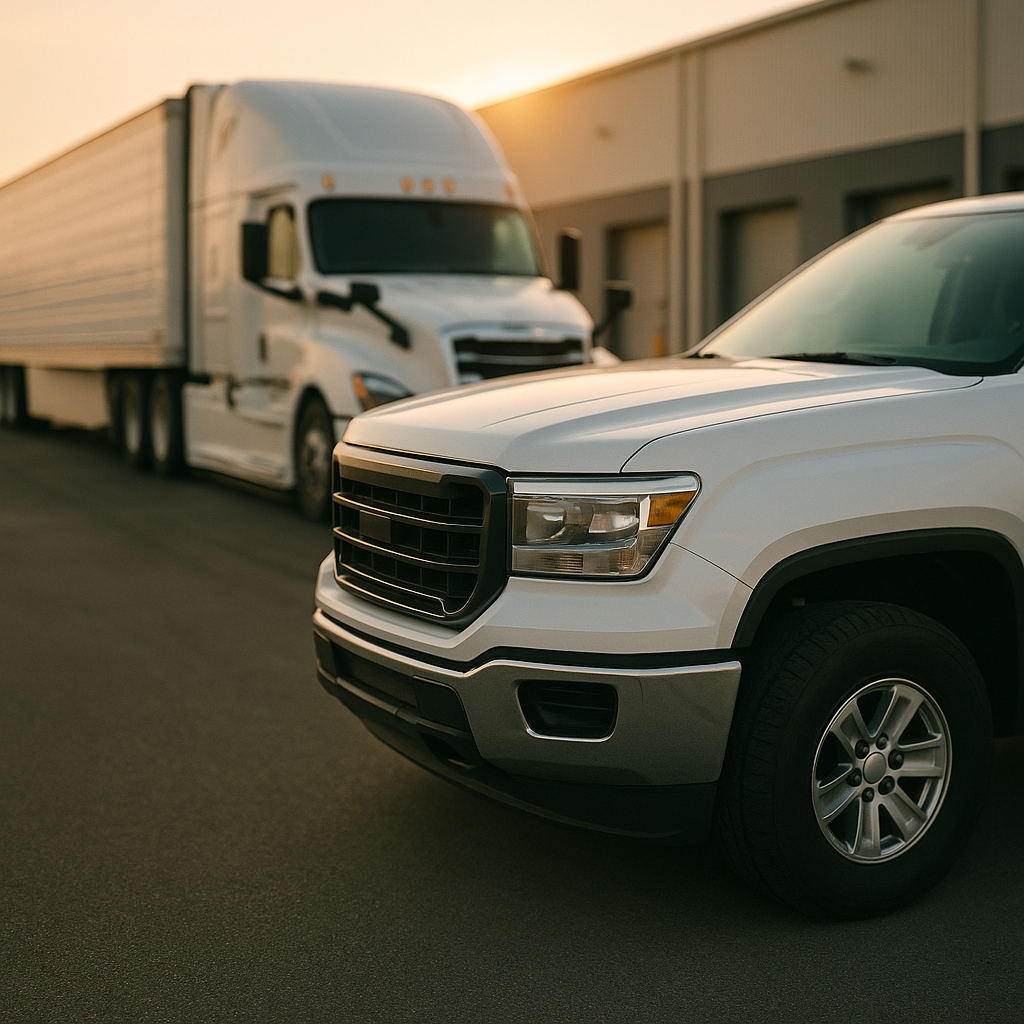
Pick up truck insurance in 2026: what it covers, typical cost drivers, when you need commercial coverage, and how to lower premiums without risking a claim denial.

Pick up truck insurance is simple until your truck starts earning money, because the biggest risk isn’t the price—it’s having the wrong policy when you need it. If you’re hauling tools to job sites, towing for work, making deliveries, or doing hotshot-style hauling, the “personal auto” label can become the reason a claim turns into a fight.
Here’s the no-guesswork answer: pick up truck insurance can be written as personal auto for personal use, or commercial auto when the pickup is used for business, and the correct classification is what keeps coverage aligned with real-world use. For broader context on why quotes vary so much across truck types, start with truck insurance costs, coverage, and ways to save, then use the checklist below to classify your pickup correctly.
Key Takeaways: Essential Pick Up Truck Insurance
- The #1 money move is correct classification: personal vs commercial; misclassifying business use is a common trigger for claim disputes.
- Towing/for-hire hauling changes the game: frequent towing, delivery routes, or hotshot-style hauling often requires commercial auto and higher limits.
- Your “stuff” needs its own coverage: tools, equipment, trailers, and cargo often need separate coverage decisions.
- Shop apples-to-apples: same limits, same deductibles, same drivers, same use/radius—otherwise “cheaper” usually means “less coverage.”
Table of Contents
Reading time: 9 minutes
- What is pick up truck insurance?
- Do you need commercial insurance for a pickup used for business?
- What does pickup truck insurance cover?
- Pickup truck insurance cost in 2026
- Cheapest pickup trucks to insure (2026)
- How to lower pickup truck insurance premiums (2026)
- Why pickup insurance prices vary by state
- Common pick up truck insurance mistakes
- Why Logrock
- Frequently Asked Questions
What Is Pick Up Truck Insurance?
Pick up truck insurance is typically written on a 6- or 12-month auto policy term as either personal auto or commercial auto, and it’s designed to pay for covered liability and vehicle damage losses tied to how the pickup is used.
Most pickup owners don’t get “burned” by the premium—they get burned by a policy that assumes grocery-store driving when the truck is really a work truck. The right policy starts with honest use: personal errands and commuting vs job-site miles, deliveries, towing, or for-hire hauling.
Personal pickup truck insurance (most drivers)
Personal auto is built for everyday driving like commuting, family trips, errands, and occasional towing (boat/camper) that isn’t tied to earning income.
- Best fit: Personal transportation, weekend hauling, light incidental towing.
- Common gap: Business use that’s more than “occasional” can fall outside what the carrier intended, even if you didn’t mean to hide it.
- Practical move: If you do any paid work with the pickup, ask what’s allowed in writing (email is fine) and keep it with your policy records.
Commercial pickup truck insurance (business use)
Commercial auto is written around business exposure like more road time, more stops, more drivers, tools/equipment in the vehicle, towing, deliveries, and contract-driven insurance requirements.
- Best fit: Contractors, landscapers, delivery/last-mile drivers, tow operators, and pickup + trailer for-hire operations.
- Why it exists: Business driving tends to increase claim frequency and severity, so underwriting rules and documentation are different.
- Real-world signal: If you routinely need COIs (certificates of insurance) for a GC, shipper, broker, or customer, you’re already being treated like a commercial operation.
Do You Need Commercial Insurance for a Pickup Truck Used for Business?
If your pickup is used in interstate commerce with a vehicle or combination rated at 10,001+ lbs GVWR/GCWR, federal “commercial motor vehicle” rules can apply under 49 CFR 390.5, which often pushes insurance needs beyond a basic personal auto setup.
If you use your pickup to make money, commercial is often the safe bet—but not always. The correct answer depends on how you use it (job sites vs predictable commuting), how often you tow/haul, who drives, and what your insurer explicitly allows.
Personal vs commercial pickup insurance: quick checklist
If you check any of the boxes below, you should strongly consider commercial auto (or, at minimum, get written confirmation that personal auto is acceptable).
| Question | If “Yes,” what it usually means |
|---|---|
| Do you drive to multiple job sites most days? | Commercial exposure (more time on the road + more stop frequency) |
| Do you carry expensive tools/equipment? | You may need commercial auto plus separate tools/equipment coverage |
| Do you tow a trailer routinely for work? | Underwriting changes; trailer value and frequency matter |
| Do you do deliveries or transport goods as part of work? | Commercial class is common due to higher on-road exposure |
| Is the truck wrapped/lettered with your business? | Many carriers treat this as clear business use |
| Do employees drive the truck? | Commercial is typical; driver listing becomes critical |
| Do you tow or haul for hire? | Commercial is typical; you may need higher limits and possibly cargo coverage |
Common business-use scenarios (and what usually fits)
- Contractor/handyman/landscaper: Often commercial auto plus separate tools/equipment coverage (many tools aren’t covered the way people assume).
- Delivery/last-mile: Commonly commercial auto due to frequent stops and time pressure.
- Towing for pay: Almost always commercial.
- Hotshot-style hauling (pickup + trailer, for-hire): Typically commercial auto with higher limits, and cargo coverage may be required by brokers/shippers depending on the freight and contract.
Leased-on vs. running your own authority (when it matters)
Leasing on can change who carries primary liability while you’re dispatched, but it doesn’t automatically mean “you’re covered for everything,” because leases often split responsibility for physical damage, bobtail/non-trucking situations, and deductibles.
If you’re moving from “pickup used for business” into true for-hire operations, treat it like a commercial trucking decision—not a personal-auto add-on.
A 10-minute classification check now is cheaper than weeks of downtime and a contested claim later.
What Does Pickup Truck Insurance Cover? (Personal vs Commercial)
Most pickup policies are built from liability, collision, and comprehensive, and deductibles are commonly offered in set options like $500, $1,000, or $2,000+ depending on carrier and vehicle.
Coverage is where many pickup owners overestimate what they have: liability is only one piece, and your truck, trailer, tools, and cargo can each require separate boxes checked.
Core coverages on most personal pickup policies
- Liability (BI/PD): Pays others if you cause an accident (limits depend on what you select and your state’s minimums).
- Collision: Pays to repair/replace your pickup after a crash, subject to your deductible.
- Comprehensive: Theft, hail, vandalism, animal strikes, and often glass, subject to deductible.
- Uninsured/Underinsured motorist: Helps when the other driver can’t pay (availability varies by state).
- Medical payments / PIP: State-dependent.
- Towing/roadside + rental: Optional; can be valuable for work-truck downtime.
Commercial add-ons pickup owners overlook
- Hired & non-owned auto: If you rent/borrow vehicles or employees use personal vehicles for work.
- Tools & equipment coverage (often inland marine): Tools usually aren’t “cargo,” and they’re not automatically covered just because they’re in the truck.
- Trailer coverage: Your truck policy may not fully cover the trailer’s value, especially for business towing.
- General liability (GL): Auto liability doesn’t cover many job-site claims (slip-and-fall, workmanship-related property damage, etc.).
- Umbrella/excess: Used when contracts require higher limits than your base policy.
Contract-driven limits (the part that forces your hand)
Contract requirements can matter more than state minimums, because a GC, shipper, broker, or towing contract can demand higher liability limits and a clean COI before you’re allowed on the job or dispatched.
Pickup Truck Insurance Cost in 2026 (What to Expect)
Pickup insurance is commonly quoted and billed on 6-month or 12-month terms, and the premium can change sharply when a pickup is rated as commercial due to mileage, stops, towing/hauling, and higher liability limits.
There’s no single “average” that’s useful for budgeting, because the cost swings are driven by underwriting inputs more than the word “pickup.” The practical way to plan is to separate (1) personal-auto pricing logic from (2) commercial-auto pricing logic, then identify what pushes you from one to the other.
Cost ranges: the useful way to think about it
- Personal pickup insurance: Often priced similarly to other personal vehicles; big drivers are garaging ZIP, driving record, truck value/trim, and comp/collision choices.
- Commercial pickup insurance: Often higher due to business miles, stop frequency, towing/hauling exposure, multiple drivers, and contract-driven limits.
Top factors that move pickup insurance prices
| Factor | Why it matters | Typical impact |
|---|---|---|
| Garaging ZIP / territory | Theft, weather losses, litigation trends, repair costs | High |
| Driving record | Tickets/accidents can re-rate the policy quickly | High |
| Truck value / trim | Replacement cost and repair complexity | High |
| Business use / for-hire | Higher exposure and severity assumptions | High |
| Towing frequency + trailer value | More risk + more property at stake | Med–High |
| Deductibles | Higher deductibles can reduce premium but increase out-of-pocket | Medium |
| Annual mileage / radius | More time on road usually means more claims exposure | Medium |
| Safety / anti-theft | Can reduce claim frequency depending on carrier credits | Medium |
Quote comparison rule: Keep limits, deductibles, drivers, and use/radius identical. If any of those change, you’re not comparing price—you’re comparing coverage.
Cheapest Pickup Trucks to Insure (2026): What Actually Makes a Truck “Cheaper”
A pickup is “cheaper to insure” when expected claim costs are lower, and even a $10,000 difference in MSRP or equipment can materially change comprehensive and collision pricing because repair and replacement costs rise with vehicle value.
Most online “cheapest trucks” lists miss the real levers that matter for work pickups: towing, modifications, dense metro driving, and multiple drivers can erase any model-based savings.
What usually makes a pickup cheaper to insure
- Lower replacement cost: Lower MSRP and fewer expensive electronics.
- Lower repair cost profile: Common parts and broad repair networks.
- Lower theft appeal: Varies heavily by region and trim/package.
- Strong safety tech: Can reduce loss frequency and may earn discounts depending on carrier.
How to use “model rankings” the right way
A truck that’s “cheap to insure” nationally can become expensive locally when you add a lift kit, oversized tires, high-end wheels, frequent towing, job-site miles, or multiple drivers. If you’re buying a work truck, quote the exact year/trim (and disclose modifications and real use) before you sign paperwork.
How to Lower Pickup Truck Insurance Premiums (2026 Discounts & Tactics)
Many insurers offer common deductible steps like $500, $1,000, and $2,500, and adjusting deductibles is one of the fastest legal ways to change premium without changing liability limits.
Lowering premiums is about reducing uncertainty and reducing claim probability—without stripping coverage your business can’t operate without.

Quick wins (personal and commercial)
- Choose deductibles based on cash reserves: If you can’t comfortably pay the deductible tomorrow, it’s too high.
- Bundle when it truly saves money: Personal: auto + home; commercial: auto + GL can be efficient when it matches your operation.
- Pay-in-full if fees are high: Installment fees vary by carrier and state.
- Re-shop at renewal: Especially after moving ZIPs, changing vehicles, or cleaning up tickets.
Pickup-specific savings moves
- Telematics / usage-based programs: Best for disciplined driving (fewer hard brakes, fewer night miles, steady speeds).
- Secure parking + anti-theft: Especially important in high-theft areas.
- Don’t assume the trailer is “covered”: Insure the trailer correctly instead of guessing that the truck policy pays full trailer value.
Business owners: reduce claim severity, not just premium
For work trucks, the real cost of a claim is often downtime, missed jobs, and a painful renewal—not just the deductible. Even with one pickup, basic controls help: driver rules, maintenance logs, and clean documentation of who drives what and why.
Why Pickup Insurance Prices Vary by State (and How to Sanity-Check Quotes)
State minimum auto liability limits are set by law and are commonly shown in split-limit formats like 25/50/25 or 30/60/25, and those legal minimums can be far below what a serious crash or a business contract requires.
Pricing swings by state because the underlying losses swing: repair/labor rates, hail/flood/wildfire exposure, theft rates, uninsured driver rates, and lawsuit/settlement trends all move premiums.
How to sanity-check a quote (fast)
- Confirm use: personal vs commercial vs for-hire (and get it documented).
- Match liability limits: don’t compare 25/50/25 to 100/300/100.
- Match deductibles: comp and collision.
- Match drivers listed: who’s actually behind the wheel.
- Confirm towing/trailer details: frequency, value, ownership.
If any of those differ, the “cheaper quote” usually isn’t cheaper—it’s just different.
Common Pick Up Truck Insurance Mistakes (Especially for Business Use)
A single coverage dispute can leave you paying the full loss out of pocket, and late-model pickup repairs can easily exceed $10,000 when bodywork, sensors, and calibration are involved.
These are the mistakes that create surprise denials and cash-flow emergencies.
Calling it personal when it’s obviously commercial
“I’m just hauling my tools” can quietly turn into daily job-site miles, routine towing, and deliveries. When underwriting discovers the real operation after a loss, you can face delays, denials, or non-renewal at the worst time.
Forgetting the trailer and the load
Many owners assume the truck policy automatically covers (1) the trailer value, (2) what’s on the trailer, and (3) customer property being transported. That’s exactly the scenario where people learn, after a wreck, that the trailer or the property had minimal coverage or wasn’t covered the way they expected.
Assuming auto liability covers job-site problems
Auto liability is for accidents arising out of vehicle use, not the full scope of your operations. If you work on customer property, job-site liability needs to be handled with the right business coverage—not hoped into an auto claim.
Why Logrock (And What We Do Differently)
Logrock’s quoting process documents 7 core details (use, radius, drivers, towing, trailer value, equipment/tools, and contract/COI needs) so your pickup policy matches the operation you actually run.
We’ll ask the unglamorous questions that protect you later:
- What are you towing, how often, and what’s it worth?
- Are you job-site hopping or running predictable routes?
- Is this personal use, contractor use, delivery, or for-hire hauling?
- Do you need COIs for contractors, brokers, or customers?
Because in the real world, cash flow dies from denied claims and downtime—not from paying a little extra for the correct classification.
Frequently Asked Questions
You often need commercial auto if the pickup is used for business, especially when you drive to multiple job sites, do deliveries, tow routinely, or have employees driving. If the pickup is used in interstate commerce with a vehicle or combination rated at 10,001+ lbs GVWR/GCWR, it can meet the federal “commercial motor vehicle” definition in 49 CFR 390.5, which is a strong signal you’re beyond casual personal use. Some insurers allow limited business use on personal auto, but you should get what’s permitted in writing and make sure your policy reflects real use so a claim doesn’t become a classification dispute.
Pickup truck insurance typically covers liability plus optional collision and comprehensive, with deductibles commonly offered in set steps like $500 or $1,000 depending on the carrier. Liability pays others for bodily injury/property damage you cause, while collision and comprehensive can pay for damage to your pickup (subject to your deductible). For business use, the common gaps are tools/equipment, trailer value, and for-hire hauling exposures, which may require commercial auto and separate coverage types (for example, tools coverage often sits outside standard auto coverage). The right coverage depends on whether the truck is personal transportation or a revenue-producing work vehicle.
The cost to insure a pickup truck depends on rating factors like garaging ZIP, driving record, truck value/trim, annual mileage, and the liability limits and deductibles you choose, and it’s commonly quoted on 6-month or 12-month terms. The same pickup usually costs more when rated for commercial use because insurers price in more road exposure (more miles and stops), towing/hauling, multiple drivers, and higher contract-required limits. To get a real comparison, keep the quotes identical on limits, deductibles, drivers, and stated use/radius—otherwise you’re comparing different products, not different prices.
The cheapest pickup trucks to insure are usually lower-cost trims with lower expected repair and replacement costs, and even a $10,000 jump in MSRP or options can raise comprehensive and collision pricing. Trucks with strong safety tech and lower theft appeal in your area can also price better, but “internet rankings” often ignore what matters most for work trucks: towing frequency, job-site driving, dense metro routes, modifications (lift/wheels/tires), and multiple drivers. The practical way to choose is to quote your exact year/trim and disclose real use before you buy, because your ZIP code and your operation can outweigh the model name.
You can often lower pickup insurance premiums by selecting higher deductibles (many carriers offer options like $500, $1,000, and $2,500), bundling only when it truly reduces total cost, and re-shopping at renewal. Telematics/usage-based programs can help if you’re a steady driver, and secure parking/anti-theft can matter in high-theft areas. For business owners, the biggest long-term savings lever is correct classification (personal vs commercial) and fewer claims, because a cheap premium doesn’t help if the claim is delayed or disputed due to stated use not matching actual use.
Insurance is often higher on a lifted pickup because modifications can increase repair cost and change the vehicle’s risk profile, especially when wheels/tires, suspension components, and related sensors are involved. If you’ve added aftermarket parts, you should ask your agent how the policy handles custom parts and equipment, because a standard claim settlement may not reimburse the full value of expensive upgrades. From a budgeting standpoint, it’s smart to disclose the lift and major mods up front and confirm whether coverage for those parts is included, capped, or requires an endorsement—before a loss happens.
Sometimes you need special insurance when towing a trailer, because the truck policy may not automatically cover the trailer’s full value or the property on it the way you expect. Trailer needs depend on ownership, trailer value, how often you tow, and whether towing is personal or business use; routine work towing is a common reason underwriting moves a pickup into commercial auto. A good sanity check is to list the trailer (year/value), confirm physical damage coverage for the trailer itself, and clarify how liability applies while it’s attached. That prevents a trailer total loss from becoming an out-of-pocket event.
Hotshot hauling with a pickup typically requires commercial auto liability and physical damage for the truck/trailer, and cargo coverage is commonly required by brokers and shippers if you’re hauling other people’s freight. If you’re operating as a for-hire interstate motor carrier, the FMCSA’s financial responsibility rules can apply, including a $750,000 minimum public liability requirement for many for-hire carriers under 49 CFR 387.9 (the exact requirement depends on operation and vehicle). In practice, your dispatch/contract requirements often drive limits and COIs, so you should set coverage based on the loads you plan to pull and who you’re pulling them for.
Conclusion: Get the Right Pickup Coverage for How You Actually Use the Truck
A pickup used for personal transportation can often fit a personal auto policy, but business use—and especially for-hire interstate hauling with a 10,001+ lbs GVWR/GCWR combination—can change the insurance and compliance standard you’re held to. Classify the truck correctly (personal vs commercial), insure the trailer/tools/load exposures you actually have, and compare quotes apples-to-apples so “cheap” doesn’t turn into “not covered.”
Key Takeaways:
- Correct classification beats “cheap” every time: it’s the difference between smooth claims and coverage disputes.
- Towing and for-hire hauling are major underwriting triggers: they often require commercial auto and higher limits.
- Tools, trailers, and cargo require explicit choices: don’t assume they’re automatically covered.
If your pickup is part of your income, quote it the way you actually run it—before a loss forces the issue.





