
Learn what bobtail insurance is, what it covers (and excludes), how it differs from non-trucking liability, 2026 cost ranges, and how to buy the right policy—get a quote.
American bobtail insurance is liability coverage that can protect you when you’re driving a tractor with no trailer attached, and your carrier’s primary liability may not apply (depending on whether you’re under dispatch and how the endorsement is written). In plain terms: it helps pay for injuries and property damage to others after an off-dispatch bobtail accident, but it typically doesn’t pay to fix your own tractor.
You can run legal, keep your ELD clean, and still get crushed by one off-dispatch accident if your endorsement wording doesn’t match how you actually operate. If you want a shorter overview first, start with Logrock’s bobtail insurance guide, then come back here for the deeper 2026-level detail on denials, dispatch disputes, and buying checks.
Table of Contents
Reading time: 10 minutes
- Key takeaways: essential bobtail insurance decisions
- What “bobtail” means in American trucking
- What is bobtail insurance?
- What does bobtail insurance cover?
- What bobtail insurance does NOT cover (and common denied claims)
- Bobtail vs non-trucking liability vs deadhead/unladen coverage (decision matrix)
- Is bobtail insurance required in the U.S. in 2026?
- How much does American bobtail insurance cost in 2026?
- Temporary bobtail insurance: can you buy it by the day or week?
- How to buy bobtail insurance (step-by-step) + COI checklist
- Best American bobtail insurance providers (how to compare, not just who to pick)
- Frequently Asked Questions
- Why Logrock’s approach is different: wording first, price second
- Conclusion: choose bobtail coverage based on wording, not the label
Key takeaways: essential bobtail insurance decisions
Bobtail insurance decisions come down to tractor configuration (no trailer) and coverage trigger wording (under dispatch vs not in the business), and that wording is what adjusters use to approve or deny claims.
- “Bobtail” is a truck configuration: A tractor with no trailer, but coverage depends on whether you were under dispatch or in the business of the motor carrier.
- Bobtail/NTL is liability: It usually pays for injury/property damage to others, not repairs to your tractor (that’s comprehensive/collision physical damage).
- Most denials are “business use” disputes: Deadheading, fueling between loads, and driving to a pickup can get labeled “in business” even with no trailer.
- Your lease and COI wording control: What the yard says doesn’t matter if the lease requires specific language and limits.
What “bobtail” means in American trucking
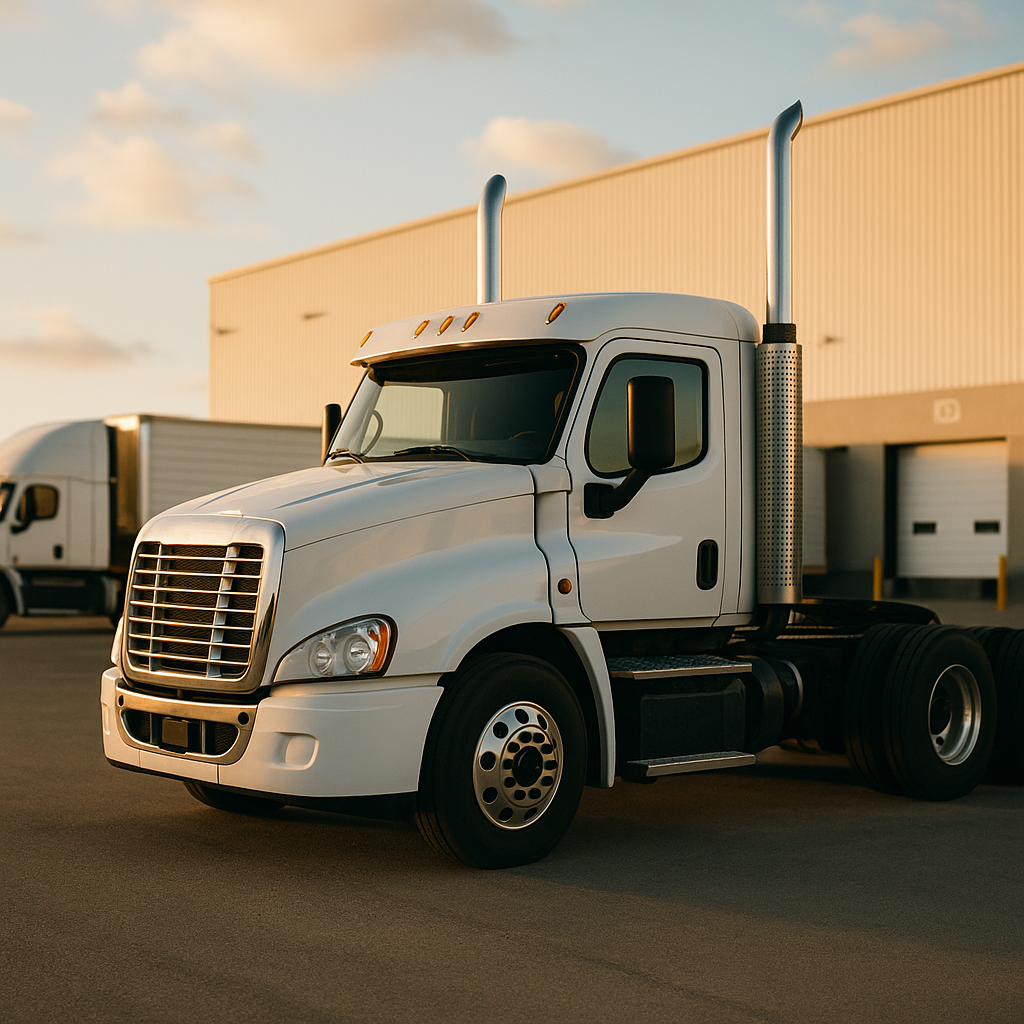
“Bobtailing” means driving a tractor without a trailer attached, which is a physical setup—not a guarantee that your bobtail or non-trucking liability endorsement will apply.
Common real-world bobtail situations include leaving a terminal after dropping a trailer, driving to/from home time, going to a shop for service, or moving the tractor around a yard (coverage varies by policy and use).
Why the term causes insurance confusion
A lot of drivers (and some carrier safety departments) use “bobtail,” “non-trucking liability,” and “deadhead” like they’re the same thing. Insurance companies usually don’t.
The label doesn’t matter—the endorsement wording does. On a claim, the adjuster is looking at dispatch records, ELD/telematics, texts, trip documents, whether a trailer was attached (even empty), and whether you were operating “in the business of the motor carrier.”
What is bobtail insurance?
Bobtail insurance is liability coverage for operating a tractor with no trailer, typically intended to apply when you are not under dispatch (exact trigger depends on the endorsement form and carrier program).
It’s designed to pay for bodily injury and property damage you cause to others while bobtailing, and it often includes legal defense (confirm whether defense costs are inside or outside the policy limit).
Where bobtail/NTL fits in a commercial truck insurance “stack”
Think of commercial truck insurance as a stack of coverages—because no single policy fills every gap.
| Coverage type | What it’s for | Who often provides it |
|---|---|---|
| Primary liability | Accidents while operating under authority / in business operations | Motor carrier (leased) or you (own authority) |
| Bobtail / non-trucking liability (NTL) | Accidents that occur off-dispatch (varies by endorsement wording) | Often the owner-operator |
| Physical damage (comp/collision) | Fixing/replacing your tractor | Owner-operator or required by lender |
| Motor truck cargo | Cargo loss/damage while hauling | Depends on contract and authority |
Bottom line: Bobtail coverage usually exists to prevent a liability gap when the carrier’s primary liability is not supposed to apply.
What does bobtail insurance cover?
Bobtail insurance typically covers third-party bodily injury and third-party property damage you cause while bobtailing, as long as the accident happens in a covered scenario under your endorsement.
1) Covered losses (typical)
What it is (plain English): Liability protection for harm you cause to other people and their property while you’re driving the tractor without a trailer.
- Bodily injury liability: Medical bills, pain and suffering allegations, lost wages claims, and related damages (subject to policy limits).
- Property damage liability: Their vehicle, a building, a light pole, guardrail damage, and similar losses.
- Legal defense: Often included, but you should confirm how defense costs are handled and whether they reduce your available limit.
2) Real-world examples (mini claim stories)
- Often covered (if truly off-dispatch): You drop your trailer at the terminal, get released, and rear-end a car at a stoplight driving home in the bobtail.
- Coverage dispute risk: You’re bobtailing to a pickup appointment after dispatch sent you the rate confirmation; many endorsements treat this as “in business,” so bobtail/NTL may not respond.
3) Limits carriers/leases commonly ask for
Many lease agreements and carrier onboarding packets commonly request $1,000,000 liability limits for bobtail/NTL-type coverage, but the lease language controls and your COI needs to match it exactly.
What bobtail insurance does NOT cover (and common denied claims)
Bobtail/NTL denials most commonly happen when the insurer determines you were under dispatch or otherwise operating in the business of the motor carrier, even if you had no trailer attached.
1) It usually won’t cover damage to your tractor
Bobtail coverage is liability for damage you cause to others; it generally does not pay to repair your hood, bumper, frame, or engine after an at-fault accident.
If you need your own truck repaired after a collision or a deer strike, that’s typically handled under physical damage (comprehensive and collision), which is often required if your tractor is financed.
2) Common denial scenarios you should expect (and plan around)
- You were under dispatch: Going to pick up, repositioning as instructed, or running any trip that’s part of the carrier’s operation can trigger a “business use” denial.
- You had a trailer attached (even empty): Many endorsements treat that as not bobtail, and coverage may shift back to a business policy.
- You were deadheading between loads: Deadhead is often treated as business use, which many NTL/bobtail forms exclude.
- Your application doesn’t match reality: If you describe “personal use only” but you regularly reposition between loads off-dispatch, you’re setting up a claim problem.
3) The one sentence to ask your agent (in writing)
“Can you confirm whether this endorsement provides liability coverage while I am bobtail with no trailer attached and I am not under dispatch / not in the business of the motor carrier—and what ‘in the business’ means on this form?”
If they can’t answer clearly (in writing), don’t bind yet.
Bobtail vs non-trucking liability vs deadhead/unladen coverage (decision matrix)
Bobtail describes a tractor with no trailer, while non-trucking liability (NTL) describes when coverage applies, and “deadhead/unladen” is where most dispatch-related coverage disputes happen.
Quick definitions
- Bobtail: Tractor with no trailer.
- Non-trucking liability (NTL): Liability coverage for non-business / personal use (wording varies by form).
- Deadhead: Driving empty as part of business operations (often between loads).
- Unladen: A sometimes-vague term meaning “not hauling cargo”; confirm exactly how your endorsement defines it.
Decision matrix: use this to spot coverage gaps
| Situation | Trailer attached? | Under dispatch / working? | What likely applies | What to ask |
|---|---|---|---|---|
| Driving home after being released | No | No | Bobtail/NTL | “Does ‘released’ count as non-business on this form?” |
| Driving to the shop on a day off | No | No | Bobtail/NTL | “Any exclusions for maintenance runs?” |
| Going to pick up your next load | No | Yes | Carrier liability / business policy | “Is this considered ‘in the business’ even without a trailer?” |
| Fueling between loads | No | Often yes | Business policy | “Does the form treat fuel stops as part of dispatch?” |
| Moving tractor in yard | No | Maybe | Depends | “Is yard movement excluded or covered?” |
| Pulling an empty trailer back to terminal | Yes (empty) | Yes | Business policy | “Is an empty trailer ever covered under this endorsement?” |
| Personal errand (groceries) | No | No | NTL (if truly personal use) | “Any restrictions on personal use, radius, or garaging?” |
| After dropping trailer, heading to hotel for a 34 | No | Maybe | Depends | “How does the policy treat rest periods tied to dispatch?” |
The deciding question: Were you operating in the business of the motor carrier at the time of the accident? Adjusters often use dispatch records, ELD notes, texts, and trip paperwork to answer that question.
Tip: If your lease says “non-trucking liability while not under dispatch,” don’t buy a policy just because it’s labeled “bobtail.” Match the wording and the COI.
Is bobtail insurance required in the U.S. in 2026?
Bobtail insurance is usually not a standalone federal FMCSA filing requirement, but it is commonly required by lease agreements and carrier onboarding packets, often at $1,000,000 CSL limits.
Keep these buckets separate so you don’t buy the wrong thing:
- FMCSA/authority requirements: Federal financial responsibility rules focus on a motor carrier’s primary liability (for many for-hire property carriers, the FMCSA minimum is $750,000 under 49 CFR §387.9, with higher minimums for certain hazardous materials).
- State requirements: Intrastate operations can have different rules depending on state law and commodities.
- Lease requirements: Your contract can require bobtail/NTL proof, specific language, and specific certificate holder formatting to stay dispatched.
Typical lease wording you’ll see
- “Non-trucking liability / bobtail liability required”
- “Coverage applies while not under dispatch”
- “Minimum limit $1,000,000 CSL”
- “Certificate holder must be [carrier name]”
Not legal advice: Your lease controls; if it’s vague, get written clarification from the carrier’s compliance team.

How much does American bobtail insurance cost in 2026?
American bobtail insurance in 2026 often ranges from about $40 to $300+ per month depending on MVR, garaging ZIP, liability limits, and how the endorsement defines covered use.
Pricing swings a lot because underwriters are rating both driver risk and how often you’re realistically off-dispatch in the tractor.
Typical cost ranges (illustrative planning numbers)
- Low: ~$40–$90/month (clean record, lower-risk garaging, truly personal-use NTL)
- Common: ~$90–$175/month
- High: ~$175–$300+/month (violations/claims, higher-risk metros, unclear use)
These are planning numbers, not a quote, and some risks price outside these bands.
Regional snapshots (why geography matters)
| Region | Typical trend | Why it trends that way |
|---|---|---|
| Northeast | Higher | Density, claim severity, litigation frequency |
| Southeast | Mixed | High-volume corridors; varies heavily by metro and state |
| Midwest | Often lower | Lower density in many areas, but metro exposure still matters |
| Southwest | Mixed | Urban exposure vs rural mileage patterns |
| West Coast | Higher | Repair costs, traffic density, litigation trends |
What changes your price the most (what you can control)
- Driving record: speeding, following too close, preventables
- Clear use description: don’t call business repositioning “personal use”
- Continuous coverage: lapses often increase pricing and underwriting scrutiny
- Accurate garaging/radius: your ZIP and operating pattern drive the rating
Temporary bobtail insurance: can you buy it by the day or week?
Temporary bobtail insurance (day-by-day or week-by-week liability) is not consistently available because many insurers avoid very short terms due to underwriting and fraud concerns.
1) The practical reality
Drivers usually ask for short-term bobtail/NTL when switching carriers, waiting on onboarding, picking up a truck from a shop/auction, or trying to bridge a tight cash week. The issue is that “one-week liability” is hard to underwrite and easy to game, so availability varies by state and market appetite.
2) Alternatives that often work better
- Bind with the correct effective date/time: start coverage exactly when you need to roll.
- Carrier program option: some carriers offer a structured bobtail/NTL program for leased drivers.
- Specialty broker access: some brokers can access short-term markets, but it’s not guaranteed.
3) What to watch before you move the truck
- Start time: 12:01 a.m. vs “bound now” matters if you’re rolling tonight.
- COI issuance speed: same-day COIs prevent lost loads and onboarding delays.
- Cancellation terms: minimum earned premium can cost more than you expect.
How to buy bobtail insurance (step-by-step) + COI checklist
Buying bobtail insurance the right way means verifying the endorsement wording and the COI fields before you roll, because paperwork errors and trigger mismatches are a common reason drivers get shut down or denied.
Step-by-step buying checklist
- Read your lease line-by-line: look for “bobtail,” “NTL,” “unladen,” “while not under dispatch,” and the required limit.
- Write down your real use: home time, shop runs, personal errands, and whether you reposition between loads.
- Ask for the endorsement specimen before binding: don’t rely on a one-line quote description.
- Confirm who provides primary liability: leased to a carrier vs own authority changes everything.
- Bind with the correct effective date/time: don’t assume it starts tomorrow if you’re moving today.
- Verify the COI end-to-end: then send it to carrier compliance.
COI checklist (don’t let paperwork shut you down)
- Named insured: matches your LLC/DBA exactly
- Coverage shown: bobtail/NTL language displayed if the lease requires it
- Limits: commonly $1,000,000 CSL, but match the lease requirement
- Certificate holder: correct carrier name and address (and any required formatting)
- Policy dates: effective date/time and expiration are correct
Copy/paste email to your agent (request wording in writing)
Subject: Bobtail/NTL Endorsement Wording Confirmation
Can you send the specimen form/endorsement wording for the bobtail or non-trucking liability coverage you’re quoting?
I need to confirm whether it applies when I’m in the tractor with no trailer and not under dispatch, and what the policy defines as “in the business of the motor carrier.”
That one email can prevent a denial later.
If two quotes don’t match on limits and the “when coverage applies” trigger wording, they’re not apples-to-apples.
Best American bobtail insurance providers (how to compare, not just who to pick)
The “best” bobtail/NTL provider is the one that can document the correct coverage trigger in writing, issue accurate COIs fast, and handle claims with a clear process and realistic turnaround times.
You don’t pick a provider based on a logo—you pick based on whether the policy language matches your lease and whether the claims process works when you need it.
What to compare across providers/brokers
- Trigger wording: “not under dispatch” vs “not in the business” are not the same in practice.
- Trailer language: what happens if an empty trailer is attached?
- Claims process: 24/7 reporting, documentation requirements, adjuster communication.
- COI speed and accuracy: same-day COIs and correct holder/wording prevent downtime.
Provider comparison framework
| Comparison point | Why it matters |
|---|---|
| Clear written definition of “business use” | Prevents denial surprises when dispatch status is disputed |
| Ability to match lease wording | Keeps you compliant and rolling during onboarding |
| Transparent pricing + fees | Protects your cash flow and avoids surprises at billing time |
| Fast endorsements/COIs | Prevents lost loads due to paperwork delays |
Frequently Asked Questions
Bobtail insurance is liability coverage for driving a tractor with no trailer attached, usually intended to apply when you are not under dispatch or not in the business of the motor carrier (the exact trigger depends on the endorsement form). It generally pays for third-party bodily injury and property damage you cause while bobtailing, and it may include legal defense. It typically does not repair your own tractor; that’s handled by physical damage (comprehensive/collision). Always confirm the endorsement wording in writing because “bobtail” is a configuration, but claim decisions are made on dispatch/business-use facts.
Bobtail insurance typically covers liability to others—including bodily injury and property damage—when you cause an accident while operating a tractor without a trailer in a covered scenario under your endorsement. Many policies also provide legal defense, but you should confirm whether defense costs reduce your limit. What matters most is the coverage trigger, such as “not under dispatch” or “not in the business,” because an accident that happens while you’re heading to a pickup, fueling between loads, or repositioning may be treated as business use and excluded. Get the specimen endorsement form before binding.
Bobtail means the tractor has no trailer attached, while non-trucking liability (NTL) describes coverage that applies during non-business/personal use—often written as “not under dispatch” or “not in the business of the motor carrier.” That’s why two policies both called “bobtail” can behave differently on a claim. If your lease requires NTL “while not under dispatch,” you need that exact trigger in the endorsement, and your COI should reflect the required language and limits (many carriers ask for $1,000,000 CSL). Don’t assume the label matches the form.
Leased owner-operators commonly need bobtail/NTL coverage when their carrier’s primary liability is intended to apply only during dispatched business operations and the lease requires proof of off-dispatch liability via COI. It’s especially important if you regularly drive the tractor to home time, hotels, shops, or personal errands after being released. Many carrier packets specify limits like $1,000,000, but the requirement is contractual—not automatically federal. If you only operate under your own authority, you may not need a separate bobtail endorsement in the same way, because your primary liability may follow you—confirm with your agent based on authority and use.
Bobtail/NTL in 2026 often prices around $40–$300+ per month, with many drivers landing roughly $90–$175 per month, depending on MVR, garaging ZIP, requested limits (commonly $1,000,000), prior insurance history, and how the endorsement defines covered use. A clean record and clear “personal-use” exposure generally price lower, while violations, prior claims, metro garaging, or unclear off-dispatch use can push rates higher. To compare quotes fairly, match limits, deductibles (if any), and endorsement trigger wording, then compare total premium and fees.
Bobtail/NTL often does not cover deadheading because deadhead is frequently treated as business use (repositioning between loads or to a pickup), which many endorsements exclude. Even if you have no trailer attached, insurers can deny if dispatch records show you were heading to a load, fueling between loads, or otherwise operating in the motor carrier’s business. The only safe answer is what your endorsement says—get the specimen form and ask for written confirmation of how “under dispatch” and “in the business” are defined. If your carrier dispatches you for the move, assume it’s business unless proven otherwise.
Temporary bobtail insurance is sometimes possible, but true day-by-day or week-only liability is not consistently available because many insurers avoid very short terms. A more reliable approach is to bind a standard policy with the correct effective date and time (for example, “effective immediately” vs 12:01 a.m. the next day) and confirm you can receive a COI before you move the truck. Also check cancellation terms, because some policies have a minimum earned premium that can make “short-term” coverage more expensive than expected. Availability depends on state, market, and your risk profile.
Why Logrock’s approach is different: wording first, price second
Most trucking insurance problems come from coverage mismatch—not just price—because claim decisions depend on dispatch status, business-use definitions, and COI wording.
When drivers get burned, it’s usually one of these:
- Wrong trigger wording: the endorsement doesn’t match “released,” “off-dispatch,” or “personal use” the way you thought.
- Wrong certificate language: the COI doesn’t meet lease requirements, so you can’t get dispatched.
- Wrong assumption about deadhead: repositioning gets treated as business use after a claim.
- Cheap premium, expensive claim: low price doesn’t help if the endorsement excludes your scenario.
A practical broker earns their keep by matching your paperwork to your operation, so you don’t get shut down during onboarding or denied after an accident.
Conclusion: choose bobtail coverage based on wording, not the label
Bobtail insurance can be the difference between a bad day and a business-ending lawsuit, but only if the endorsement is written to match how you actually operate. Treat it like maintenance: prevent the breakdown instead of paying for the tow.
Key Takeaways:
- Bobtail = no trailer: coverage still depends on dispatch/business-use wording.
- Bobtail/NTL is liability: physical damage (comp/collision) is what fixes your tractor.
- Get it in writing: request the specimen endorsement form and verify the COI before you roll.
If you want a companion overview, read Bobtail Insurance (2026 Guide): Coverage, Cost, Requirements & Comparisons, then use this page as your checklist when you’re binding and sending certificates.





