
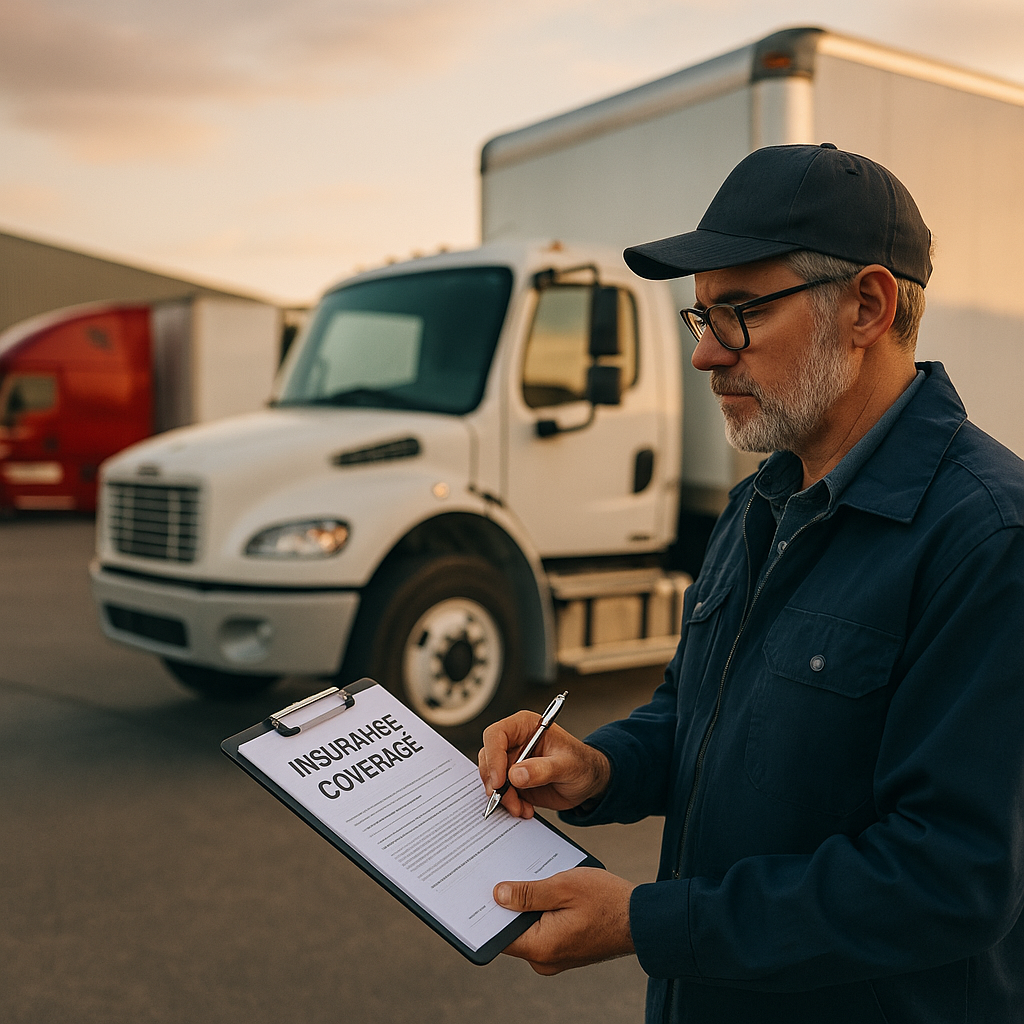
Learn what box truck insurance coverage includes, what’s required by law vs contracts, realistic 2026 monthly costs, and how to lower premiums. Get a quote.

Box truck insurance coverage is the set of commercial policies that protect your business from liability claims, truck damage, and (if added) cargo and site-related lawsuits. Most operators need auto liability plus optional physical damage, motor truck cargo, and often general liability; in 2026, many box truck owners budget roughly $250–$1,500+ per month per truck depending on radius, freight, limits, and driving history.
You can run clean for months, then one fender-bender, one cargo claim, or one “we require $1M + cargo + GL” email from a broker blows up your week’s cash flow. If you want to sanity-check your budget first, start with Logrock’s deeper pricing guide on box truck insurance price tiers in 2026.
Key Takeaways: Essential Box Truck Insurance Coverage
- Liability pays for the damage you cause to others—it does not fix your own truck, and it does not automatically cover cargo.
- “Required” coverage usually means (1) legal requirements and (2) broker/shipper/warehouse COI requirements (often stricter).
- Most box truck operators need some mix of auto liability + physical damage + motor truck cargo + general liability to avoid gaps.
- The cheapest premium can become the most expensive decision if the policy doesn’t match your radius, cargo type, and contract limits.
Table of Contents
Reading time: 10 minutes
- What does box truck insurance cover? (Quick checklist)
- Coverage types: required vs optional (and what each one does)
- What insurance is required for box trucks? (Law vs contract)
- Box truck insurance cost per month in 2026 (realistic ranges)
- How to lower box truck insurance premiums (without cutting protection)
- Frequently Asked Questions
- Why Logrock (straight answers, correct filings, broker-ready COIs)
- Conclusion & Get a Quote
What Does Box Truck Insurance Cover? (Coverage Checklist)
Box truck insurance coverage typically includes commercial auto liability plus optional physical damage, cargo, and general liability coverages designed for 12–26 ft straight trucks used for delivery, moving, and contractor work.
Your exact package depends on how you run—local vs regional, for-hire vs private carrier, and what you’re hauling.
Quick coverage checklist (at-a-glance)
| Coverage | What it protects (plain English) | Who typically needs it |
|---|---|---|
| Auto Liability | Injuries + property damage you cause to others | Pretty much everyone using a box truck for business |
| Physical Damage (Comp/Collision) | Your truck (the asset) | Anyone who can’t afford a total-loss hit; often required if financed |
| Motor Truck Cargo | Customer freight while in your care/custody/control | For-hire loads, contract work, higher-value deliveries |
| General Liability (GL) | Non-driving claims (dock/warehouse/property “oops”) | Anyone working at customer sites; often required on COIs |
| Non-Trucking Liability / Bobtail | Off-dispatch liability gaps | Leased-on drivers or mixed personal use scenarios |
| Hired & Non-Owned Auto (HNOA) | Liability when you rent/borrow vehicles or employees use personal cars | Fleets, helpers, or any business using non-owned vehicles |
Box truck vs cargo van vs semi: why pricing differs
Insurers price risk. Box trucks often see higher exposure than a cargo van because of vehicle size, repair cost, and urban stop-and-go delivery frequency. Compared to a semi, box trucks can be cheaper in some lanes—but last-mile work can be claim-heavy (tight docks, pedestrians, four-wheelers cutting in, theft risk).
Common Box Truck Insurance Coverage Types (Required vs Optional)
A typical box truck insurance package can combine $750,000–$1,000,000+ auto liability with physical damage, motor truck cargo (often $50,000–$250,000+), and general liability to meet broker and warehouse requirements.
Below is what each coverage actually does—and what can go wrong when it’s missing.
1. Primary Auto Liability (Bodily Injury & Property Damage)
- What it is (plain English): Pays for the other person’s injuries and damage if you’re at fault.
- Why it’s essential (business risk): One serious claim can wipe out months of profit and put your operation at risk. Many brokers and warehouses want $1,000,000 liability even if your state minimum is lower.
- Who needs it: Anyone running a box truck for business (for-hire or commercial use).
2. Physical Damage (Comprehensive + Collision)
- What it is: Covers your box truck for collision losses and non-collision events (theft, vandalism, fire, hail, animal strike).
- Why it’s essential: Your truck is your revenue engine. If it’s totaled and you can’t replace it fast, you’re out of business—especially if you’re running thin reserves.
- Who needs it: Most owner-ops and small fleets; usually required if financed.
Pro tip (deductible reality): A higher deductible can lower premium, but only do it if you can write that check tomorrow. “High deductible + no cash reserve” is how operators get stuck parked.
3. Motor Truck Cargo (and when it actually applies)
- What it is: Covers the freight you’re hauling (typically while in your care, custody, and control).
- Why it’s essential: Cargo claims are a fast way to lose a customer and get blacklisted by brokers. Many contracts require cargo limits (commonly $50,000–$250,000+ depending on commodity).
- Who needs it: For-hire operators, moving/household goods, higher-value deliveries, and anyone signing rate confirmations with cargo requirements.
Before you buy, ask about these common cargo exclusions:
- Improper securement / improper loading language
- Unattended vehicle theft restrictions (especially overnight parking)
- High-theft commodities (electronics, alcohol, certain consumer goods)
- Wear/tear, spoilage, delay (usually excluded without endorsements)
4. General Liability (GL) — the “not driving” lawsuits
- What it is: Covers third-party injury/property damage claims that aren’t caused by operating the truck (example: you damage a customer’s property during loading/unloading, or someone slips around your work area).
- Why it’s essential: Many facilities require GL on the COI to access docks—even if it’s not “required by law.”
- Who needs it: Operators working at customer sites, warehouses, and job sites.
5. Optional add-ons that prevent coverage gaps
- Non-trucking liability / bobtail: Helps cover liability when you’re off-dispatch (common confusion point for leased-on drivers).
- HNOA (Hired & Non-Owned Auto): Helps if helpers use personal cars for business errands (parts runs, scouting routes) or if you rent/borrow vehicles.
- Umbrella/excess liability: Useful when contracts want limits above your auto liability.
If you’re shopping for “affordable trucking insurance,” don’t aim for the smallest premium—aim for the right limits with no expensive gaps. Logrock’s guide on affordable trucking insurance in 2026 explains how to cut waste without cutting protection.
What Insurance Is Required for Box Trucks? (By Law vs Contract)
For interstate for-hire carriers hauling non-hazardous property in vehicles over 10,000 lbs GVWR, FMCSA financial responsibility rules require at least $750,000 in public liability coverage, while many brokers still require $1,000,000 and add cargo and GL requirements.
This is where new operators get burned: legal requirements and contract requirements are not the same thing.
Required by law (general rule)
- If you’re operating for-hire, you typically need commercial liability that meets federal and/or state requirements depending on what you haul and where you operate (intrastate vs interstate).
- If you haul certain hazardous materials, federal minimums can be higher (commonly $1,000,000 to $5,000,000 depending on hazmat class and quantity).
- If you’re a private carrier (hauling your own goods), your filing requirements may differ—but you still need commercial auto coverage when the truck is used for business.
Required by brokers, shippers, and warehouses (real-world requirement)
Even if you could legally operate with lower limits in some situations, many contracts commonly demand:
- $1,000,000 auto liability
- Cargo coverage (limit varies by commodity)
- General liability (common for warehouse access)
COI checklist (save yourself re-work)
- Match the exact limits requested.
- Make sure the named insured is correct (your LLC, not “you personally”).
- Confirm any additional insured wording if required.
- Confirm effective dates align with your first pickup.
When you’re comparing quotes, compare apples-to-apples. Logrock’s breakdown of cheapest commercial auto insurance in 2026 (and how to shop correctly) is useful if you’re trying to lower cost without creating a COI problem.
Box Truck Insurance Cost Per Month in 2026 (Realistic Ranges)
In 2026, box truck insurance cost per month commonly ranges from about $250 to $1,500+ per truck, with new ventures and higher-risk cargo trending toward the top end.
Featured snippet answer (45–55 words)
Box truck insurance typically costs about $250–$1,500+ per month depending on truck size (16–26 ft), for-hire vs private use, operating radius, cargo type/value, driver history, and coverage limits. New ventures and higher-risk freight often pay more—especially with $1M liability and cargo coverage.
Typical monthly ranges by package (budgeting table)
| Package (common bundles) | Typical use case | Budget range (per truck / month) |
|---|---|---|
| Liability only | Private carrier, low contract requirements | $250–$700 |
| Liability + Cargo | For-hire, broker loads requiring cargo | $450–$1,000+ |
| Full package (Liability + Cargo + Physical Damage + GL) | Most serious owner-ops and small fleets | $700–$1,500+ |
Reality check: Your ZIP, garaging, radius, and loss history can push you outside any “average.”
For broader benchmarks across commercial truck insurance (including other truck types), use Logrock’s guide: how much truck insurance costs per month in 2026.

Cost examples by operation (why “same truck” prices differently)
- Local last-mile (dense metro): Higher frequency stops + tight docks + theft exposure can raise premium.
- Regional (200–500 mile radius): More highway miles, different claim profile.
- Moving/household goods: Higher cargo handling exposure; claims can get messy fast.
- 26-ft vs 16-ft: Bigger truck usually means higher physical damage premium (value/repair), and sometimes higher liability exposure.
How to Lower Box Truck Insurance Premiums (Without Cutting Protection)
Most insurers apply the biggest premium improvements when you reduce measurable risk—clean MVRs, accurate radius/cargo classification, documented safety tech, and no coverage lapses—which can save hundreds of dollars per month versus misclassified or unstable accounts.
If you want cheaper box truck insurance coverage, you lower premium by reducing uncertainty and claims—not by gambling on missing coverages.
1. Re-shop early and compare the same limits
Start 30–45 days before renewal. Quote the same liability limit, the same cargo limit, and the same deductibles. Otherwise, you’re comparing different products.
2. Tighten your “story” to underwriting (radius, cargo, garaging)
Wrong radius or cargo descriptions are a common trigger for delays and disputes. Be accurate about:
- Local vs regional vs multi-state operations
- Commodity type (general freight vs higher-risk)
- Where the truck is parked (garaging ZIP matters)
3. Use tech that reduces losses (and prove it)
- Dash cams: Better claim defense + real behavior change
- GPS tracking / anti-theft: Helps with theft exposure and recovery
- Basic driver coaching: Especially if you run helpers
4. Avoid lapses—lapses are expensive
Missed payments can cause cancellations and higher restart pricing. If cash flow is tight, ask about payment plans before you let coverage lapse.
Pro tip: If you’re looking for the lowest cost, focus on “cheap but correct.” That’s what keeps your authority and your contracts intact.
Frequently Asked Questions
These FAQs answer the most common box truck insurance coverage questions, including whether cargo is covered, what limits are “required,” and why many operators see $250–$1,500+ per month pricing in 2026.
Box truck insurance covers commercial auto liability first, and then you add options like physical damage, motor truck cargo, and general liability based on your contracts and risk. Liability pays for injuries and property damage you cause to others, but it doesn’t repair your truck or automatically pay cargo claims. Physical damage covers your truck for collision and comprehensive losses (theft, fire, hail). Cargo covers freight while it’s in your care, custody, and control, and GL covers many “not driving” claims at docks or customer sites. Many brokers want $1,000,000 liability plus stated cargo and GL limits on the COI.
Box truck insurance commonly costs about $250–$1,500+ per month per truck in 2026, depending on your limits, truck value, operating radius, cargo type, and driver history. Liability-only accounts can land closer to the low end, while packages that include $1,000,000 liability, cargo (often $50,000–$250,000+), physical damage, and GL tend to price higher. New ventures often pay more because insurers have less operating history to rate. For a tighter budgeting breakdown by package, see box truck insurance price tiers in 2026.
Required box truck insurance depends on whether you’re for-hire and whether you operate interstate or intrastate, but interstate for-hire carriers hauling non-hazardous property in vehicles over 10,000 lbs GVWR typically need at least $750,000 in public liability under FMCSA rules. Contract requirements are often stricter than legal minimums, with many brokers, shippers, and warehouses requiring $1,000,000 auto liability plus cargo and sometimes general liability on the COI. Always match the COI wording, named insured, and limits to the onboarding packet to avoid rejected loads.
No—auto liability does not automatically cover the freight you’re hauling, so you usually need a separate motor truck cargo policy or endorsement to pay cargo claims. Many broker contracts require cargo limits like $50,000, $100,000, or higher based on commodity. Cargo policies also have exclusions and conditions that matter in real life, including unattended vehicle theft rules, commodity restrictions (high-theft items), and securement/loading language. Before you bind, confirm your cargo description matches what you actually haul and ask for the key exclusions in writing so you don’t find out after a loss.
Why Logrock (Straight Answers, Correct Coverages, No COI Surprises)
Most broker onboarding packets ask for a certificate of insurance (COI) showing $1,000,000 auto liability plus specified cargo and general liability limits, and errors in limits or named insured commonly cause dispatch delays.
Owner-operators don’t have time for vague answers. Logrock’s approach is simple: build commercial truck insurance that matches how you actually operate, then make sure your COI and limits line up with the contracts you’re trying to sign.
If your goal is affordable trucking insurance, the win is right coverage + clean paperwork + fewer surprises—not just the lowest number on the invoice.
Conclusion & Get a Quote
The most reliable way to avoid claim disputes and rejected COIs is to match box truck insurance coverage to your operation—starting with $750,000–$1,000,000 liability (depending on authority/contract), then adding cargo, physical damage, and GL based on your freight and dock requirements.
The right package isn’t a “standard bundle.” It’s a business decision based on your radius, your freight, your contracts, and your truck value.
Key Takeaways:
- Liability is mandatory—but it won’t fix your truck or pay your cargo claim.
- Contract requirements (COI limits and wording) often matter more than state minimums.
- Accurate ops info + early re-shopping is one of the fastest ways to lower premiums without creating gaps.
If you want pricing and paperwork that actually match your first load, get your quote based on your truck size, radius, and freight—and the limits your customers require.
Related Reading: box truck insurance price tiers in 2026, how much truck insurance costs per month in 2026, and affordable trucking insurance in 2026.





