
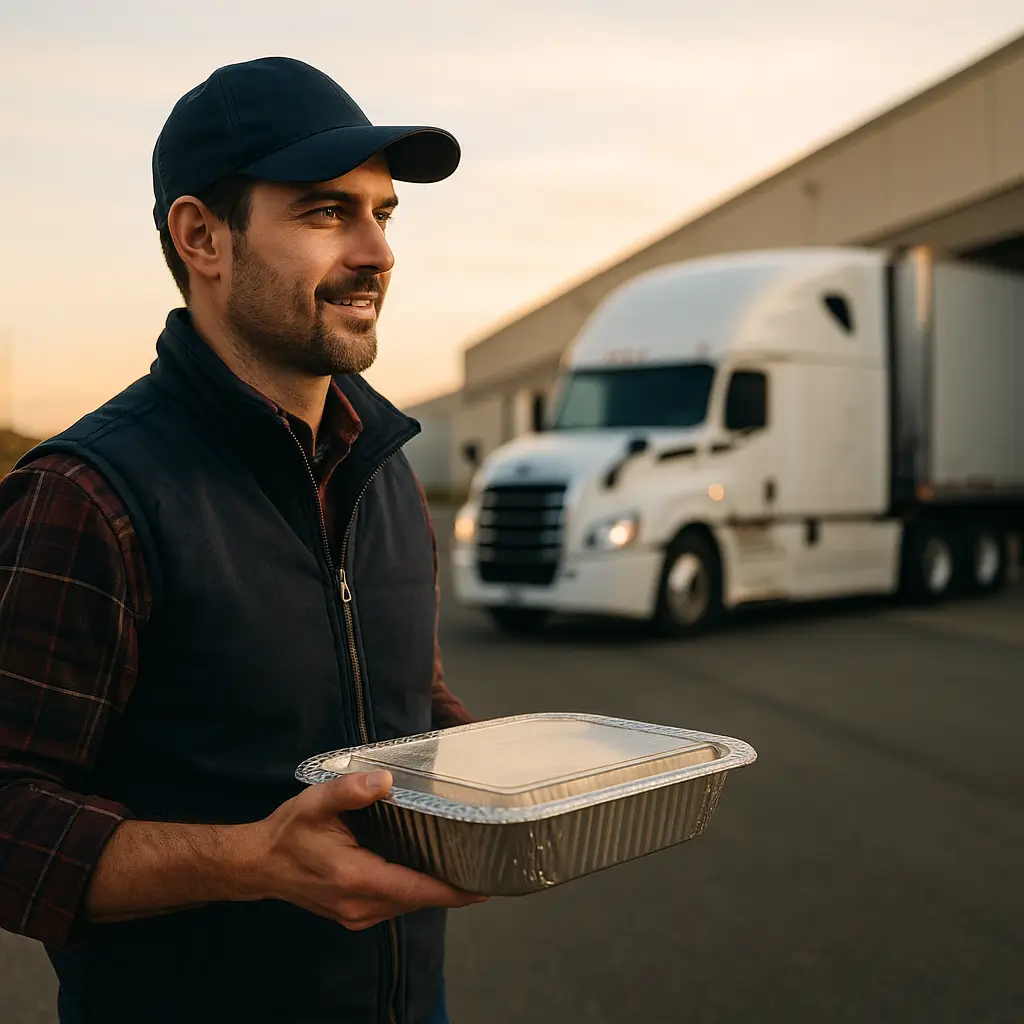
Compare catering insurance companies, GL, BOP, liquor, auto, workers’ comp, typical costs, one-day options, and quotes.

Best catering insurance is the policy stack that matches your real operation (venues, alcohol, deliveries, staff, and equipment) and meets contract wording like additional insured and primary/noncontributory. Most small catering businesses pay about $60–$250 per month in total insurance costs in 2026, but your price moves fast if you add liquor liability, workers’ comp, or commercial auto.
Catering is a tight-margin business. One slip-and-fall at a venue, one foodborne illness allegation, or one delivery fender-bender can wipe out a month of profit—or trigger a lawsuit that drags on for years.
Most caterers don’t get burned because they “had no insurance.” They get burned because they had the wrong insurance: limits too low for the venue contract, no liquor liability when the bar is under their name, no coverage for mobile equipment, or a certificate of insurance (COI) that can’t be turned around fast enough to keep the job.
Table of Contents
Reading time: 10 minutes
- Quick Picks: The Best Catering Insurance (Best by Scenario)
- What Catering Insurance Covers (And Typical Limits Venues Ask For)
- What’s Required vs Optional for Caterers (Contracts, States, and Common Triggers)
- How Much Does Catering Insurance Cost in 2026? (Average Ranges + What Changes the Price)
- Cost by State: Why the Same Catering Business Pays Different Rates
- Do You Need Liquor Liability (and Other Niche Coverages)?
- Can You Get One-Day Event Catering Insurance?
- How to Choose the Best Catering Insurance Provider (2026 Checklist + Decision Matrix)
- 2026 Mini Case Studies: What Claims Look Like for Caterers
- Frequently Asked Questions
- Conclusion: Get Quote-Ready Before Your Next Event
Quick Picks: The Best Catering Insurance (Best by Scenario)
There is no single “best catering insurance company,” because coverage needs change based on whether you deliver, serve alcohol, staff events, and what limits (often $1M/$2M) your venues require.
Think like an owner: the “best” option is the provider that can match your contract wording, issue COIs quickly, and build the right stack without coverage gaps.
Best overall for small caterers (5–50 events/year)
Look for: fast COIs, easy endorsements, strong general liability (GL) + BOP options, clear exclusions, and responsive support.
Typical setup: GL + (often) BOP + (sometimes) hired & non-owned auto (HNOA).
Best for one-day / special events
Look for: short-term policies, instant COI, clear coverage window (setup/teardown), and the ability to add the venue as additional insured.
Reality check: one-day insurance is usually liability-only and doesn’t solve workers’ comp or auto exposures. For a deeper look at event catering insurance, including what venues typically require and how to get a same-day COI, see our dedicated guide.
Best for liquor-heavy events (open bar, bartenders under your brand)
Look for: liquor liability availability, defense-cost clarity, higher limits, and endorsement/COI wording support for liquor requirements.
Best when you deliver (owned vehicles or employee cars)
Look for: commercial auto for owned vehicles, HNOA for staff using personal cars, bundling options, and correct “delivery” classification.
Mini decision table (use this before you shop)
| Your Situation | Policies That Usually Matter Most | Provider Features That Matter |
|---|---|---|
| Venue-based catering, no alcohol | GL, often BOP | COI speed, additional insured endorsement |
| Weddings + alcohol | GL + liquor liability | Liquor eligibility, limits, contract wording support |
| Frequent deliveries | Commercial auto and/or HNOA | Correct vehicle classification, claims handling |
| High equipment value (tents, warmers, trailers) | Inland marine / equipment floater | Off-premises coverage, theft coverage details |
| Employees on-site | Workers’ comp | Proper class codes, payroll flexibility |
What Catering Insurance Covers (And Typical Limits Venues Ask For)
Catering insurance is typically a stack of policies—with general liability commonly written at $1M per occurrence / $2M aggregate—plus add-ons like liquor, auto, workers’ comp, and mobile equipment coverage.
The right stack depends on what you do (drop-offs vs full-service), where you do it (venues vs private homes), and what your contracts demand.
1) General Liability (GL): the foundation
What it is: GL covers third-party bodily injury and property damage—like a guest tripping over a service line or a hot pan damaging a venue’s counter.
- Why it matters: Most venues won’t let you load in without GL and a COI; legal defense costs can hurt cash flow fast.
- Who needs it: Basically all caterers working on client premises.
- Typical venue limits: Often $1M/$2M, but some contracts demand higher.
2) Business Owner’s Policy (BOP): GL + property + business interruption
What it is: A BOP commonly bundles general liability with property coverage, and may include business interruption depending on the carrier and form.
Why it matters: GL doesn’t cover your stuff. If you have a commissary kitchen, storage, inventory, or expensive equipment, a fire or theft can halt revenue overnight.
Operator tip: Set property limits to replacement cost, not what you paid years ago.
3) Equipment and mobile gear (often inland marine / equipment floater)
What it is: Coverage designed for gear that leaves the premises—chafers, hot boxes, warmers, tents, tables, portable bars, and sometimes trailers (depending on endorsements). If you operate from a vehicle, see our guide to catering van insurance. For caterers who operate mobile setups with significant equipment investments, see our guide to mobile catering insurance for a breakdown of what typically qualifies for off-premises coverage.
Why it matters: Standard property coverage may be limited off-premises or in transit, and theft from a venue or vehicle is a common loss.
4) Delivery and transportation exposures (commercial auto + HNOA)
What it is: Commercial auto covers business-owned vehicles, while hired & non-owned auto (HNOA) helps protect the business when employees drive personal cars for business errands or deliveries.
Why it matters: Personal auto policies often restrict business delivery use, and lawsuits can still name your business even if the driver has their own insurance.
What’s Required vs Optional for Caterers (Contracts, States, and Common Triggers)
Most catering insurance “requirements” are contract requirements, and venues commonly require a COI showing $1M/$2M general liability plus endorsements like additional insured and sometimes waiver of subrogation.
If you want the job, you meet the venue/client’s insurance terms—even when they go beyond what’s “typical.”
What’s commonly required by venues/clients
- General liability (sometimes called catering public liability insurance) with specific limits (often $1M/$2M, sometimes higher)
- Additional insured for the venue/client
- Waiver of subrogation (sometimes)
- Primary & noncontributory wording (sometimes)
- Liquor liability when alcohol service is in your scope
- Workers’ comp if you have employees (and sometimes required by contract even for small crews)
- Auto liability if deliveries are part of the contract
When workers’ comp becomes non-negotiable
What it is: Workers’ compensation generally covers employee injuries (medical costs and wage replacement) and can limit certain employee lawsuit exposure.
Trigger points: Having W-2 employees is the big one, but requirements vary by state and contract; if you staff events with servers and cooks, assume it will come up.
Get your requirements straight before you shop. Pull your last 3 venue contracts and list: required limits, additional insured wording, liquor requirements, and any waiver language. Then request quotes that match those exact terms so you’re comparing apples-to-apples.
How Much Does Catering Insurance Cost in 2026? (Average Ranges + What Changes the Price)
In 2026, many small catering businesses pay about $60–$250 per month across their insurance stack, with general liability often starting around $30–$80/month before adding auto, workers’ comp, liquor, or property. For a breakdown of monthly catering insurance payment options, see our full cost guide.
Insurance pricing is a math problem built on your risk profile—revenue, payroll, alcohol exposure, vehicle use, venue types, and claims history.
Typical cost ranges by policy (ballpark)
| Policy Type | Common Monthly Range (Small Caterer) | Biggest Pricing Drivers |
|---|---|---|
| General liability (GL) | $30–$80 | Revenue, limits, venue types, claims |
| BOP (GL + property) | $60–$200 | Property value, location, fire/theft risk |
| Workers’ compensation | Varies | Payroll, class codes, state rules, loss history |
| Commercial auto | Varies | Vehicle type, radius, drivers, delivery exposure |
| Liquor liability | Varies | Alcohol frequency, service type, limits, venue requirements |
Pricing factors unique to catering (what underwriters care about)
- Alcohol: beer/wine vs full bar, who provides bartenders, who holds the permit, and whether you “sell” alcohol.
- Delivery radius and frequency: daily routes rate differently than occasional transport.
- Staffing model: full-time vs seasonal spikes; W-2 vs 1099 (venues and insurers may still treat you as responsible).
- Event profile: weddings and large public events often have higher severity potential than small corporate drop-offs.
- Claims history: even one prior slip-and-fall allegation can move pricing.
Practical money rule: If you buy the cheapest GL and add liquor/auto/limits later, you may pay more than if you structure the stack correctly up front.
Cost by State: Why the Same Catering Business Pays Different Rates
Insurance premiums for caterers can vary significantly by state because liability trends, workers’ comp systems, and auto loss costs are priced regionally rather than nationally. Insurance is regulated at the state level — each state sets its own rules for workers’ comp systems, liability rate structures, and auto loss cost benchmarks.
Two caterers can run the same menu and still pay different rates because insurance is state- and venue-driven.
The big drivers of state variation
- Liability environment: some states have higher litigation frequency and claim severity, affecting GL and liquor pricing.
- Workers’ comp systems: payroll levels, class code rules, and state rating structures can materially change comp premiums.
- Auto loss costs: accident frequency, repair costs, and lawsuit trends vary by region.
- Catastrophe/weather exposure: coastal storms, wildfire risk, and hail can affect property/BOP pricing.
- Venue contracting culture: certain metros push higher limits and more endorsements as a baseline.
How to sanity-check your quote
If pricing feels wildly above expectation, verify these inputs before you assume it’s “just expensive”:
- Limits: are you being quoted $1M/$2M, or higher, or with an umbrella/excess layer?
- Alcohol scope: host liquor vs true liquor liability, and whether the contract puts alcohol under your name.
- Vehicles: owned vs personal use, and whether you’re classified for delivery exposure.
- Payroll/class codes: servers, cooks, and drivers can rate differently; misclassification happens.
- Business type: ensure you’re rated as a caterer, not a restaurant, if that’s accurate for your operation.
Do You Need Liquor Liability (and Other Niche Coverages)?
Liquor liability is typically needed when your catering business sells or serves alcohol or provides bartenders, because alcohol-related injury claims can escalate quickly and are frequently excluded from standard general liability.
This is where “cheap” insurance becomes expensive—because the biggest claims often come from the coverages people skip.
1) Liquor liability: when it’s necessary
What it is: Protection for claims arising from alcohol service, such as injury or property damage caused by an intoxicated guest where your business is alleged to have contributed (overservice, negligent service, etc.).
Who needs it (rule of thumb): If you sell/serve alcohol, provide bartenders, or the contract puts alcohol service under your business name, you likely need liquor liability. Dram shop and alcohol service liability laws vary by state, so check with your state’s insurance regulator to confirm how alcohol service affects your coverage requirements.

Host liquor vs liquor liability (simple)
- Host liquor: typically limited, intended for incidental alcohol where you’re not in the business of selling/serving.
- Liquor liability: designed for businesses actively serving/selling alcohol or taking responsibility for bar operations.
2) One-off risks caterers overlook (but claims adjusters see)
- Food spoilage / refrigeration breakdown: a cooler failure before a wedding can create a real loss.
- Product liability / foodborne illness allegations: even when you did everything right, defense costs are real.
- Equipment breakdown: can cover certain mechanical/electrical failures when included by endorsement.
- Cyber liability: if you take card payments, store customer data, or book online, breaches can be costly.
- Crime/employee dishonesty: small operations get hit here more than they expect.
Can You Get One-Day Event Catering Insurance?
One-day or special event catering insurance is commonly available as a short-term liability policy for a specific date and location, but it often excludes workers’ comp and auto exposures.
It can be a fit in specific situations, especially when a venue needs a COI fast for a one-off job.
What one-day catering insurance usually covers
- General liability for a specific date/location
- Sometimes liquor liability as an add-on (carrier- and event-dependent)
Common limitations (don’t miss these)
- May not cover prep work done days earlier at your kitchen.
- Often doesn’t address commercial auto, HNOA, or workers’ comp.
- Coverage can be narrow around exclusions (professional services language, cooking methods, subcontractors, etc.).
When one-day makes sense vs annual
One-day can make sense if you do only a handful of events per year and need a fast COI for a venue.
Annual usually wins if you cater monthly, deliver regularly, have employees, or own meaningful equipment—because exposures exist between events too.
How to Choose the Best Catering Insurance Provider (2026 Checklist + Decision Matrix)
Choosing the best catering insurance provider in 2026 comes down to whether they can match your required limits (often $1M/$2M), issue COIs quickly, and add endorsements like additional insured, waiver of subrogation, and primary/noncontributory without delays.
Buying insurance the smart way is like pricing jobs: get the inputs right first, then compare the final numbers.
Step-by-step checklist (bring this to every quote request)
- Event mix: weddings, corporate, private, public festivals
- Max headcount: biggest event size
- Annual revenue range
- Payroll: number of employees, estimated annual payroll, roles (cooks, servers, drivers)
- Alcohol details: do you sell/serve, provide bartenders, subcontract bar service, hold permit
- Vehicles: owned vehicles, employee vehicles used for errands, delivery radius
- Equipment value: replacement cost of mobile gear + storage locations
- Contract requirements: limits, additional insured, waiver of subrogation, primary/noncontributory wording, COI deadlines
Digital-first vs legacy providers: what actually changes
- Speed: same-day quote/bind vs longer turnaround
- COI management: self-serve COIs vs request-based
- Endorsement flexibility: some contracts need custom wording, and not every provider handles that smoothly
- Claims experience: after-hours support and responsiveness matter when the venue calls at 9 p.m.
Simple scoring matrix (use this, don’t guess)
| Category | Weight | Score (1–10) | Notes |
|---|---|---|---|
| Coverage fit (correct stack + endorsements) | 30% | ||
| Price (apples-to-apples) | 30% | ||
| COI speed / ease | 15% | ||
| Claims reputation / service | 15% | ||
| Contract wording flexibility | 10% |
2026 Mini Case Studies: What Claims Look Like for Caterers
Common catering claims typically fall into three buckets—premises liability, food/product allegations, and auto accidents—and each bucket maps to a different policy in your insurance stack.
These examples are simplified, but the claim patterns are real.
Case 1: Guest slip-and-fall during service
What happened: A guest trips over a cable near your service area and breaks a wrist. Venue and caterer both get named.
Coverage that matters: General liability + a clean additional insured setup on the COI.
Prevention: Mark hazards, manage lines, document layout, and keep incident notes.
Case 2: Refrigeration failure spoils food the night before a wedding
What happened: Walk-in cooler fails overnight. Food is unsafe. You re-buy ingredients and pay rush labor.
Coverage that matters: Food spoilage endorsement and/or equipment breakdown (depends on cause and policy language).
Prevention: Temperature logs, alarms, maintenance, backup coolers.
Case 3: Employee hits another car while delivering in a personal vehicle
What happened: Employee runs an errand in their own car, causes an accident, and the claimant sues the business too.
Coverage that matters: Hired & non-owned auto (HNOA) plus driver controls.
Prevention: Written driver rules, basic MVR checks where appropriate, and no-delivery policies unless covered.
Frequently Asked Questions
Catering insurance typically includes general liability (often written at $1M per occurrence / $2M aggregate) and may also include a BOP (property + business interruption), workers’ compensation, commercial auto, hired & non-owned auto (HNOA), liquor liability, and inland marine/equipment coverage for mobile gear. The right stack depends on your contracts, alcohol exposure, delivery frequency, employee count, and equipment value. If you only buy low-limit GL, you may still fail venue requirements or have gaps for autos, employees, and off-premises equipment.
Many small caterers pay about $60–$250 per month in 2026 across their insurance stack, with general liability often starting around $30–$80/month before adding other policies. The biggest cost drivers are usually alcohol (liquor liability eligibility and limits), employees (workers’ comp payroll and class codes), and vehicles (commercial auto and/or HNOA for deliveries). For an accurate comparison, request 3–5 quotes using the same limits, endorsements, payroll, and vehicle details.
The best catering insurance provider is the one that can meet your venue’s required limits (commonly $1M/$2M GL), issue COIs fast, and add contract endorsements like additional insured, waiver of subrogation, and primary & noncontributory without delays. A “best” option for one-day events may be a poor fit for liquor-heavy weddings or frequent deliveries. Compare at least 3–5 catering insurance quotes with identical inputs (limits, endorsements, revenue, payroll, autos, alcohol scope), then choose based on coverage fit and COI/claims support—not premium alone.
If your catering business sells or serves alcohol, provides bartenders, or the contract places alcohol service under your business name, you typically need liquor liability (and many venues require it). “Host liquor” under a general liability policy is usually meant for incidental alcohol where you’re not in the business of serving/selling, and it may not satisfy venue requirements. The safest approach is to read the venue contract language and confirm with your insurer how alcohol is classified and whether liquor liability is required for that job.
Yes, one-day or special event catering insurance is commonly available as a short-term policy that provides general liability for a specific date and location and can often generate a COI quickly. However, one-day policies frequently don’t address workers’ comp, commercial auto, or HNOA for deliveries, and they may not cover prep work done days earlier. If you cater regularly, have employees, deliver food, or move valuable equipment, an annual policy is usually simpler and reduces gaps between events.
Yes. Home-based and part-time caterers can typically get general liability coverage — most insurers don’t require a commercial kitchen or full-time revenue to quote a policy. What matters for eligibility is how you operate: whether you serve at client venues, deliver food, or use a home kitchen as your commissary. Be upfront about your setup when applying. If you prepare food from home, confirm whether the policy covers liability for injury or illness traced back to preparation done at that location, since some GL policies have exclusions for residential premises used for business purposes.
Many venues commonly require $1,000,000 per occurrence / $2,000,000 aggregate in general liability for caterers, but requirements can be higher for large guest counts, public events, or certain venue types. It’s also common to require COI endorsements like additional insured, and sometimes waiver of subrogation and primary & noncontributory wording. Some venues also require separate liquor liability limits when alcohol service is included. Always follow the venue contract, even when it’s above the “typical” baseline.
Personal auto insurance often does not fully cover business delivery use, and many policies restrict or exclude certain “delivery for a fee” or business-use scenarios. If you have vehicles titled to the business, you typically need commercial auto. If employees use personal vehicles for business errands or deliveries, hired & non-owned auto (HNOA) can help protect the business from liability if the business gets named in a lawsuit. Confirm classification and usage with your agent before you rely on a personal policy.
When a venue asks to be listed as an additional insured on your certificate of insurance, it means they’re extending coverage under your policy for claims that arise from your catering work at their location. It gives the venue a direct right to make a claim against your insurer rather than having to sue you first to recover. Most venues require it as a standard contract term — not as an optional add-on. Confirm your provider can add the venue as additional insured and issue a COI reflecting that before signing any contract.
Not automatically. General liability may cover actions your subcontractors take on your behalf in some circumstances, but workers’ compensation typically only covers W-2 employees — meaning a 1099 server who gets injured at an event may not be covered under your comp policy. Some venues and contracts require you to confirm that all workers on-site are either covered under your policy or carry their own insurance. If you regularly use event staff or freelance bartenders, discuss the classification with your insurer before your next event.
A COI is a one-page document your insurer provides that confirms your coverage is active, lists your limits, and names any additional insureds. Venues typically require a COI before you can load in — sometimes with only 24–48 hours’ notice. A competitive catering insurance provider should be able to generate and email a COI the same day you request it, often through a self-serve portal. If your current provider takes days to turn around a COI, that’s a service gap worth evaluating at renewal.
Food-related illness claims typically fall under general liability’s product liability coverage, which can cover third-party bodily injury arising from your food — including defense costs if a guest alleges food poisoning. However, coverage terms vary: some policies may have narrower language around “products” vs. “completed operations,” and high-frequency or severe foodborne illness claims can affect renewability. Keeping prep records, temperature logs, and sourcing documentation helps both in a claim and in keeping your insurance in good standing.
General liability can cover third-party property damage arising from your operations — including damage to a venue you’re working in. However, coverage depends on how the damage occurred and what exclusions apply in your policy. Some policies limit or exclude certain types of damage: fire from open-flame cooking equipment, gradual or maintenance-related damage, or damage caused by subcontractors you hired. Read the exclusions carefully. If the venue contract holds you responsible for specific damage scenarios, confirm with your insurer that your policy responds to those situations before signing.
Standard catering insurance — GL, BOP, liquor liability — generally does not cover revenue loss from cancelled or postponed events. That exposure requires a separate product: event cancellation or contingency insurance. If you regularly take deposits on high-value events (weddings, large corporate bookings) and a cancellation or venue closure could mean a major financial loss, it’s worth asking your agent whether event cancellation coverage is available as a standalone policy or add-on. Most caterers don’t carry it, but the exposure is real and frequently overlooked during insurance setup.
Most commercial general liability policies cover your operations anywhere in the United States, so you’re generally not limited to one state for liability purposes. Workers’ compensation is the main exception — it’s regulated state by state, and if you have employees working in multiple states, you may need coverage in each relevant state (or a policy structured to address multi-state exposure). Auto coverage can also have state-specific nuances. If you regularly cater across state lines, tell your insurer or agent upfront so they can confirm there are no geographic gaps in your coverage.
A Business Owner’s Policy (BOP) bundles general liability with commercial property coverage — and sometimes business interruption — into a single policy. Standalone GL covers only third-party bodily injury and property damage. If you operate from a commissary kitchen, own equipment worth replacing, or carry significant inventory, a BOP usually makes more financial sense than GL alone. If you work entirely out of rented venues with no fixed business property, standalone GL may be sufficient. Ask your agent to compare both based on your actual property exposure.
Conclusion: Get Quote-Ready Before Your Next Event
The best catering insurance is the one that matches your real operation—events, alcohol, deliveries, staff, equipment—and the venue’s contract language. Start with coverage design (GL/BOP, auto/HNOA, workers’ comp, liquor if needed), then shop providers based on COI speed, endorsement flexibility, and claims support.
Key Takeaways:
- Buy to your contracts first: limits and endorsements (often $1M/$2M + additional insured) decide whether you can work the venue.
- Quote apples-to-apples: same limits, same endorsements, same payroll, same vehicle use, same alcohol scope.
- Don’t ignore the big claim triggers: liquor, auto, employees, and mobile equipment.
If you want to move fast, gather your venue requirements plus your revenue/payroll/vehicle details before you request quotes. For a full overview of insurance for catering companies — including how requirements differ by business model — see our complete 2026 coverage guide.
If you’re putting together your catering insurance stack — whether you need GL only, a full BOP, or coverage that includes liquor liability and hired auto — LogRock can help you review your operation, match your venue contract requirements, and request quotes based on your actual business. Talk to our team before your next event.
Speak with LogRock and request a quote




