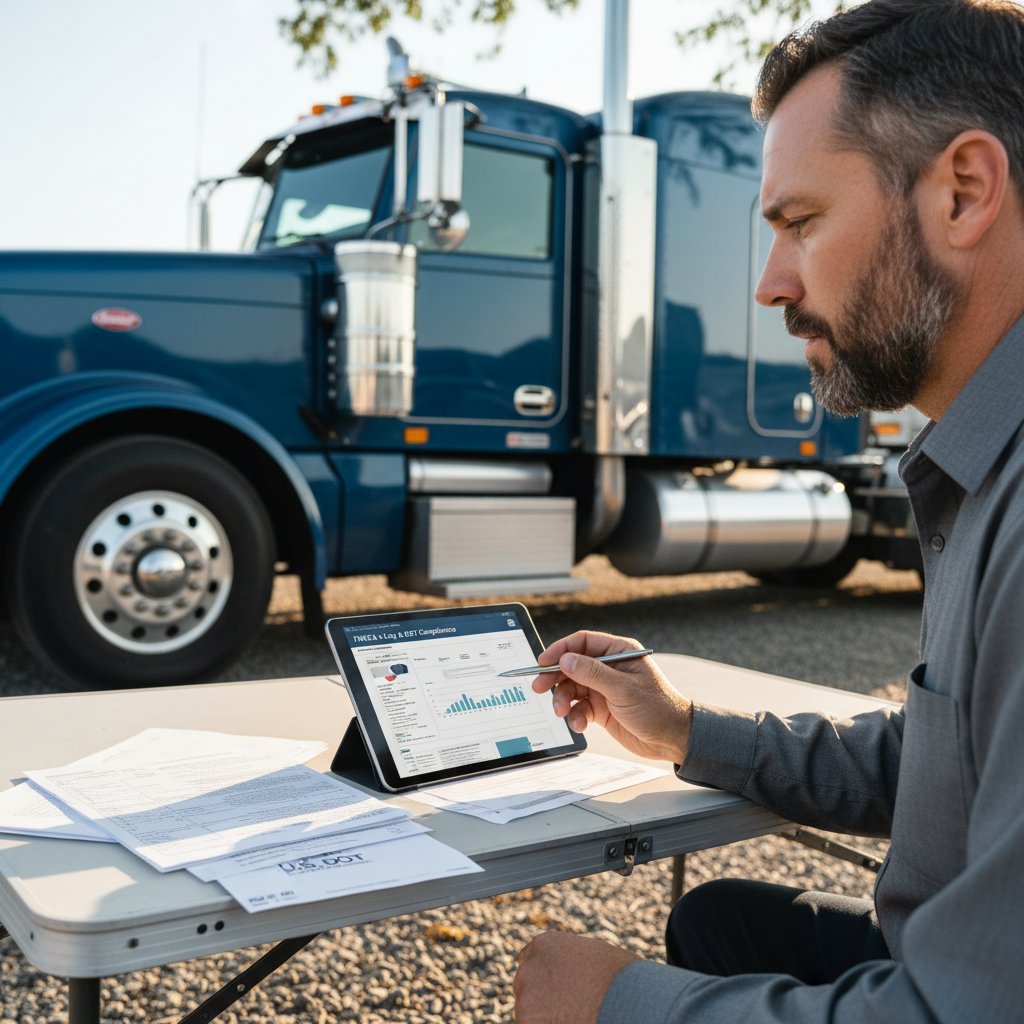
Is commercial auto insurance cheaper than personal? Usually no—but sometimes. See 2026 cost ranges, rules, and pick the right policy fast.

Is commercial auto insurance cheaper than personal? Usually it costs more for the same driver and vehicle because it’s rated for business exposure (more miles, higher liability risk, and often stricter use rules), but low-risk business use can price close to a personal policy in some states. As a quick benchmark, many personal full-coverage policies land around $150–$250+/month, while low-risk commercial auto can sometimes quote around $58–$147/month, and higher-risk for-hire or delivery categories can jump to $800–$1,200+/month or more depending on the operation.
If you’re using a vehicle to make money, the bigger risk isn’t overpaying by $30/month—it’s a claim dispute because the policy doesn’t match real-world use. If you want a baseline for coverage terms before comparing quotes, start with the Commercial auto insurance guide.
Key takeaways (commercial vs personal pricing)
Commercial auto is usually not cheaper than personal for comparable coverage, but exceptions exist when the business use is low-risk and correctly classified by the carrier.
- Compare apples-to-apples: same liability limit, same comp/collision, same deductibles, same drivers, same annual miles, same garaging ZIP.
- Misclassifying business driving as “personal” can backfire: a claim may be delayed, limited, or denied based on policy language and facts.
- The best “cheap” policy is one that pays: pick the right structure (endorsement vs commercial vs HNOA), then optimize price.
Is commercial auto insurance cheaper than personal? Quick answer (when it can be)
Commercial auto can look cheaper only when the risk class, limits, and usage you’re quoting are genuinely lower than what you’re comparing it to, because insurers price primarily on exposure (miles, radius, use type, drivers) and liability severity.
Commercial vs personal: what you’re really comparing
Personal auto insurance is built for commuting and personal errands, while commercial auto insurance is built for business use (job sites, deliveries, multiple drivers, and higher third-party injury/property claims).
If the insurer rates you as “personal” but you drive like a business—job sites, deliveries, client visits, tools/equipment—you can end up in a claims fight at the worst time. If you want the most common “line in the sand” personal policies use, read Personal auto business-use exclusions.
Commercial can look cheaper when…
- You’re comparing a lower-limit commercial quote to a higher-limit personal policy (not an equal comparison).
- The business use is low-risk: local radius, low annual mileage, one experienced driver, no deliveries or for-hire work.
- Your personal premium is inflated by territory, prior losses, or household drivers that aren’t part of the business setup.
Commercial is usually higher when…
- You have multiple drivers (employees, permissive use, driver turnover).
- You need higher liability limits to satisfy contracts or vendor requirements.
- You do delivery, for-hire transportation, towing/hauling, or high-mileage routes.
Is commercial auto insurance cheaper than personal in 2026? Typical cost ranges
2026 quote ranges vary by state, garaging ZIP, driver record, vehicle class, annual mileage, operating radius, and liability limits, so you should treat any “average premium” as a starting point—not a promise.
Here are common ranges you’ll see in the market when people request quotes; the biggest pricing mistake is comparing different liability limits or different comp/collision setups and calling it “cheaper.”
| Policy Type (Typical Scenario) | Typical Monthly Range (2026 quotes) | Notes |
|---|---|---|
| Personal auto (full coverage) | ~$150–$250+/mo | Often higher in high-cost states and dense urban areas |
| Commercial auto (low-risk business use) | ~$58–$147/mo | Single driver, light local business use can price close to personal |
| Commercial auto (higher-risk/for-hire categories) | ~$800–$1,200+/mo (or more) | Delivery/for-hire exposure can spike fast |
Sources for context: Industry summaries often cite commercial auto averages around ~$147/month for many small businesses (for example, Insureon-style market reporting), while personal auto varies widely by state and year (consumer summaries like NerdWallet). For consumer insurance data context, the NAIC publishes education and reporting resources at https://content.naic.org/consumer. A general overview comparing commercial vs personal appears at https://www.nerdwallet.com/article/insurance/commercial-vs-personal-auto-insurance.
Apples-to-apples comparison (the part most people skip)
A valid price comparison requires the same liability limit, the same comp/collision choices, the same deductibles, and the same listed drivers, because those four variables can change premiums more than “commercial vs personal” alone.
- Liability limit: e.g., $100/300, $500k CSL, or $1M CSL
- Physical damage: comp/collision included or excluded
- Deductibles: e.g., $1,000 comp / $1,000 collision
- Exposure: drivers, annual mileage, radius, garaging address
When you get quotes, ask: “What class code and use category are you rating this under?” That single line explains most price swings. For the “why” behind pricing, see Commercial auto insurance cost factors.
Do you need commercial auto—or just an endorsement (or HNOA)?
The correct policy type depends on who owns the vehicle, who drives it, and whether the vehicle is used for deliveries, hauling, or job-site operations, because insurers underwrite those scenarios differently.
The gray zone: commuting vs business errands vs deliveries
Not all work driving triggers a full commercial policy, but “regular business use,” “delivery,” “for-hire,” and “employee drivers” are common tripwires that push you into commercial underwriting.
- Often needs commercial: multiple job sites, hauling tools/equipment as part of the job, deliveries, employees driving
- Sometimes fits an endorsement: occasional client visits, light business errands, single-driver setups (carrier/state dependent)
Alternatives to a full commercial auto policy (when you qualify)
A business-use endorsement and HNOA exist because many businesses have “business liability” exposure without owning or primarily operating a fleet vehicle, but availability and eligibility rules vary by carrier and state.
- Business-use endorsement (on a personal policy): Best for limited business errands and light use; many carriers still exclude delivery/for-hire.
- HNOA (Hired & Non-Owned Auto): Covers liability when your business doesn’t own the vehicle, but an employee (and sometimes a contractor) drives for business, or you rent vehicles.
If your business sends people to job sites or runs errands in personal vehicles, read Hired and non-owned auto insurance (HNOA) explained so you don’t buy the wrong “fix.”
Trucking operator callout (don’t ignore this if you haul)
For-hire hauling can trigger motor-carrier insurance requirements and filings that go beyond standard commercial auto, especially for hotshot, semi, or regulated interstate operations.
FMCSA’s insurance filing overview is here: https://www.fmcsa.dot.gov/registration/insurance-filing-requirements.

How to lower commercial auto insurance costs (without underinsuring)
You can often reduce commercial auto premiums by controlling driver risk, mileage exposure, and claim frequency while keeping the same liability limits, which is the only way “cheaper” stays meaningful after a loss.
For a deeper playbook, start with How to lower commercial auto premiums, then apply the high-impact moves below.
1) Tighten the driver picture (and prove it)
Underwriters price the combination of driver history (MVR), driver count, and permission controls, because more drivers and unclear rules increase loss frequency.
- Make the driver list accurate: if only you drive, don’t leave “any employee” ambiguity.
- Document standards: minimum experience, violations thresholds, and onboarding rules.
2) Adjust deductibles strategically
Raising deductibles can reduce premium, but it only works if your business can actually absorb the out-of-pocket cost without creating cash-flow problems after a loss.
3) Reduce miles and radius (only if it’s true)
Annual mileage and operating radius are core rating variables, so updating them after operational changes (for example, shifting to local work) can lower premiums.
4) Consider telematics if the tradeoff makes sense
Telematics programs can reduce premium when they measurably reduce risky driving behaviors, but they’re only helpful if drivers accept them and the data isn’t a distraction.
5) Buy limits because you’re exposed, not because you’re nervous
Liability limits should match real-world loss severity and contract requirements, because underbuying can wipe out a year of profit faster than any premium savings.
Is commercial auto “cheaper” after taxes? (effective cost example)
Commercial auto premiums may be deductible as a business expense to the extent they relate to business use, and mixed-use vehicles typically require allocation and documentation.
Illustrative example (not tax advice): A $250/month premium is $3,000/year; if business use is 80% and substantiated, $2,400 may be allocable; at a 24% marginal tax rate, that portion’s tax effect is about $576. IRS recordkeeping guidance for travel and vehicle expenses is in Publication 463: https://www.irs.gov/publications/p463.
Frequently Asked Questions
Commercial auto insurance is usually more expensive than personal auto for comparable coverage because it’s rated for business exposure (more miles, more frequent stops, job-site driving, and higher third-party liability severity). Pricing can land close to personal when the business use is truly low-risk—one experienced driver, low annual mileage, local radius, and no delivery or for-hire use. To compare fairly, match the liability limit (for example, $500k CSL vs $500k CSL), match comp/collision and deductibles, and list the same drivers and garaging ZIP. If any of those differ, “cheaper” may just mean “different coverage.”
Personal full coverage often quotes around $150–$250+/month, low-risk commercial auto can sometimes quote around $58–$147/month, and higher-risk delivery/for-hire commercial auto can reach $800–$1,200+/month or more, depending on state, drivers, vehicle class, mileage, radius, and limits. The biggest driver of confusion is mismatched liability limits and deductibles; a commercial quote with lower limits can look “cheaper” than a higher-limit personal policy. Ask the agent what class code/use category is being used and confirm the vehicle’s real use (job sites, tools, deliveries) matches the policy.
You generally need commercial auto insurance when the vehicle is used as part of ongoing business operations, when employees drive, when deliveries/hauling are part of the job, or when contracts require a COI and higher liability limits (often $1M CSL in many contractor/vendor agreements). If you’re hauling for-hire or operating under motor-carrier rules, you may need commercial truck coverage and filings rather than a basic commercial auto setup. If you’re trying to stay on a personal policy, review Personal auto business-use exclusions so you understand what your carrier may treat as out-of-scope business use.
To get an accurate commercial auto quote, you typically need driver details (license info and loss history), vehicle VINs, garaging ZIP/address, annual mileage, operating radius, business description/use type, and target limits and deductibles. Missing or vague inputs often lead to re-rating later, which can raise the premium after you’ve already budgeted. You’ll also want to confirm exactly who will drive (named drivers vs permissive use) and whether any delivery/for-hire exposure exists. Use the Commercial auto insurance quote checklist to gather the right details upfront and avoid surprises.
Conclusion: Pick the policy that matches your use (not just the lowest price)
The cheapest premium isn’t the goal—accurate classification and claim-ready coverage is, and that’s why commercial auto is usually higher than personal when the coverage is truly comparable.
If you’re truly personal-use, personal auto is usually the cheapest route; if you use the vehicle to earn, commercial auto (or the correct alternative like an endorsement or HNOA) is what’s designed to respond while you’re working.
Key Takeaways:
- Match limits, deductibles, drivers, mileage, and garaging ZIP before calling any quote “cheaper.”
- If your real-world use is business use, don’t force-fit a personal policy and hope for the best.
- Optimize cost after you choose the correct structure (endorsement vs commercial vs HNOA).
Related reading: If you’re not using a vehicle for business, start with Personal auto insurance basics. If you haul for-hire or run hotshot/semi operations, read Commercial truck insurance explained (semi/hotshot).