
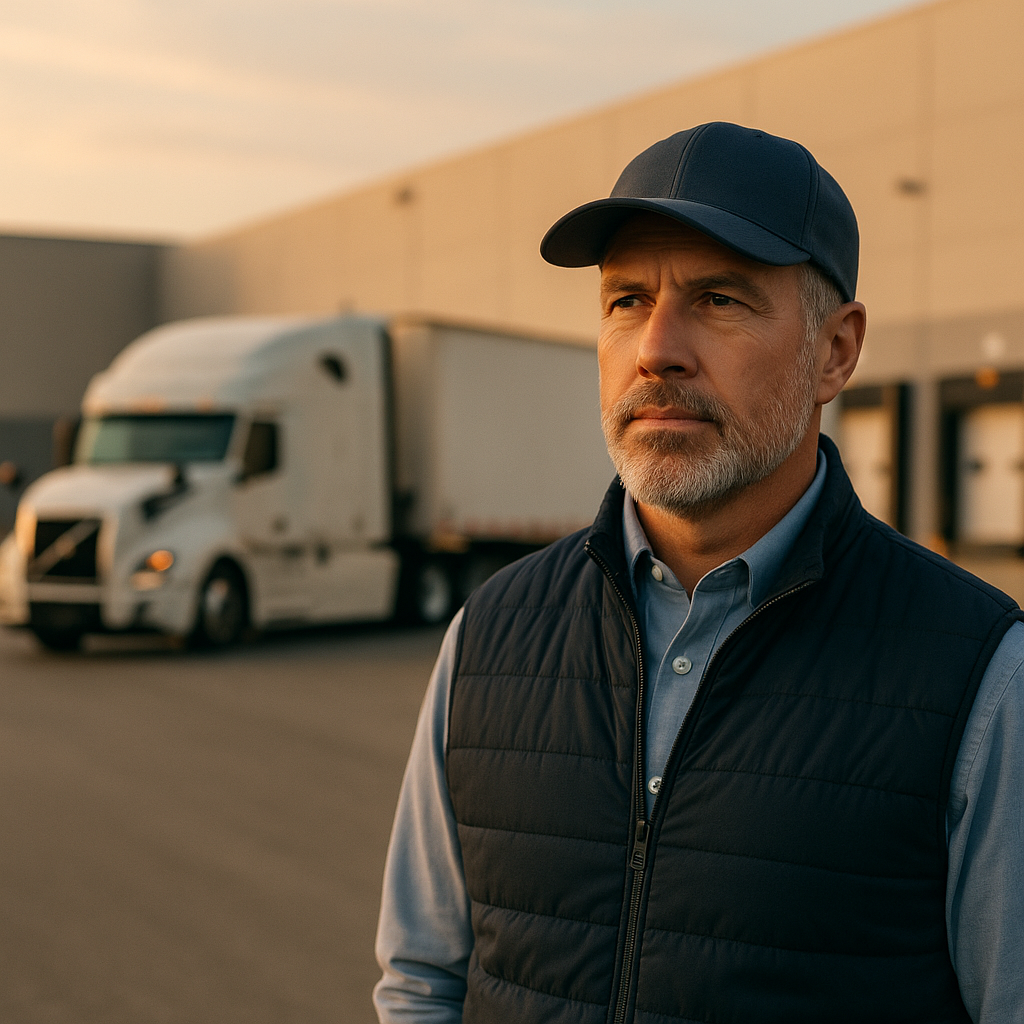

Compare 12 industrial insurance companies, key coverages, and vetting questions—plus commercial truck insurance tips for fleets. Use our checklist.
Industrial insurance companies aren’t selling one magic policy—industrial insurance is a coordinated stack of coverages (property, liability, workers’ comp, downtime, and specialty lines) built to survive a shutdown-level loss. If you’re comparing providers, the fastest way to avoid a painful “cheap quote” is to verify the coverage stack, the exclusions, and how claims (especially business interruption) will actually be adjusted.
If you want a quick refresher on how commercial policies fit together before you compare proposals, start with commercial insurance basics. Then come back and use the scorecard below to shortlist the right markets for your process hazards and downtime risk.
Table of Contents
Reading time: 9 minutes
- Cheap insurance gets expensive in one shutdown
- What “industrial insurance companies” really means (definition + who does what)
- What industrial insurance covers (the core stack to ask for)
- How equipment breakdown insurance works (and why property alone isn’t enough)
- How to compare industrial insurance companies (+ a 12-provider shortlist for 2026)
- Regional note: admitted vs E&S (and why it changes the deal)
- 2026 trend watch: what to do differently at your next renewal
- Frequently Asked Questions
- Conclusion: build the right stack, then negotiate price

Cheap insurance gets expensive in one shutdown
One industrial equipment failure can turn into a seven‑figure total cost once you combine repairs, business interruption, expedited shipping, and contract penalties.
If you run a plant, warehouse, or industrial operation, you already know the chain reaction: a compressor fails, a panel arcs, a forklift hits a rack, or a subcontractor gets hurt—then you’re juggling downtime, claims, customer escalations, and missed ship dates.
This guide is built to help you buy coverage like an operator who understands severity, not like a buyer comparing premiums in a vacuum. We’ll define what “industrial insurance” usually includes, show the coverage stack most programs need, and give you a practical list of industrial insurance companies and specialists to know—plus the questions that prevent silent gaps.
Key takeaways (the parts buyers miss)
- Industrial insurance isn’t one policy: It’s a coordinated stack (property + liability + workers’ comp + downtime + specialty).
- Carrier fit is about appetite and engineering: combustible dust, hot work, and critical equipment matter more than logos.
- Equipment breakdown + BI coordination is a common gap: mismatched triggers create claim disputes.
- Choose on terms and claims handling first: then negotiate premium.
What “industrial insurance companies” really means (definition + who does what)
Industrial insurance is typically built from 5–9 separate commercial policies (not one “industrial policy”) because high-severity losses usually combine property damage, liability, injury, and downtime.
Industrial insurance definition (plain English)
Industrial insurance is a portfolio of commercial coverages designed for higher-hazard operations—manufacturing, processing, warehousing, heavy contracting, energy, chemicals, food & beverage, and metalworking—where the biggest losses come from property damage + liability + injury + downtime.
If you want the fundamentals of how insurance policies are structured (declarations, forms, endorsements, exclusions), the NAIC’s consumer overview is a solid baseline reference: https://content.naic.org/consumer/insurance-basics.
Industrial insurance company vs broker vs MGA (why this matters)
In U.S. commercial insurance, a carrier underwrites the risk and pays claims, a broker/agent markets and services the account, and an MGA/program administrator may have delegated underwriting authority for specific niches.
This is where buyers get burned: you think you “picked a company,” but you actually picked a broker, a program, or a fronting arrangement—and claims control and coverage wording may sit somewhere else. If you want the clean version of who does what, see insurance broker vs insurance company.
- Carrier / insurer: Sets underwriting terms, issues the policy, pays covered claims.
- Broker / agent: Shops markets, negotiates wording, helps with certificates, claims support.
- MGA / program: Specializes in a class (often E&S/specialty) and can move faster on niche risks.
Practical tip: For multi-location industrial risks or anything with heavy contracts and unusual processes, the broker’s ability to negotiate endorsements and structure layered limits can matter as much as the carrier’s brand.
What industrial insurance covers (the core stack to ask for)
Most industrial programs are built on at least 6 core policies—property, business interruption, general liability, workers’ comp, commercial auto, and umbrella/excess—because major losses rarely stay inside one coverage bucket.
A lot of proposals look “complete” at a glance, then you find the gaps: exclusions, sublimits, waiting periods, or mismatched triggers that keep the policy stack from working as one program.
Coverage map (quick scan)
Use this table to sanity-check any quote: policy, what it protects, the common industrial gotcha, and what to ask before binding.
| Policy | What it protects | Industrial gotcha | Ask this before you bind |
|---|---|---|---|
| Property | Buildings, stock, equipment (covered perils) | Valuation, coinsurance, wind/flood, off‑premises power | Replacement cost? Key sublimits? Utility services coverage? |
| Business interruption (BI) | Lost income + extra expense after a covered loss | Waiting periods, restoration period, documentation burden | What triggers BI? How long is the period of restoration? |
| General liability (CGL) | Premises/operations, products/completed ops | Contract terms (AI/primary), action-over, exclusions | Can you meet COI terms without “silent gaps”? |
| Workers’ comp | Employee injury/illness (state-based) | Class codes, mod factor, subcontractor controls | How do you verify subs and handle return-to-work? |
| Commercial auto / fleet | Owned vehicles; sometimes hired/non-owned | Job sites + heavy vehicles drive severity | Limit strategy? Any radius/usage exclusions? |
| Umbrella / excess | Higher limits over GL/auto/EL | Attachment points and gaps between underlying forms | Follow form? Any drop-down limits or exclusions? |
| Equipment breakdown | Mechanical/electrical breakdown, arcing, pressure systems | Often assumed to be included in property | Expediting expense? Spoilage? BI coordination? |
| Environmental liability | Pollution events (on/off-site) | CGL typically excludes pollution | Sudden vs gradual? Transportation pollution needed? |
| Cyber (IT + OT/ICS) | Ransomware, recovery, cyber BI/CBI | OT downtime and vendor access are real | Does cyber BI cover production stoppage? Waiting period? |
Property + BI: the coverage that protects your balance sheet
Commercial property policies commonly hinge on valuation (replacement cost vs ACV), deductibles, and sublimits, and those details can determine whether a “covered loss” is actually survivable.
If you’re benchmarking valuation, deductibles, and property endorsements, see commercial property insurance.
Workers’ comp: underwriters price your controls
Workers’ comp underwriters typically care more about documented training and injury frequency than your stated safety intentions, because frequency is what drives the experience modifier and long-term cost.
If you want a neutral dataset for baseline workplace injury/illness context, the U.S. Bureau of Labor Statistics maintains industry injury and illness data here: https://www.bls.gov/iif/.
- What moves pricing: class codes, mod factor trend, hiring and supervision, return-to-work, and subcontractor controls.
- What underwriters ask for: LOTO, forklift programs, PPE enforcement, hot work permits, and maintenance logs.
Commercial truck insurance and semi truck insurance for industrial fleets
Industrial fleet exposure is often higher-severity than “normal” driving because job sites, yards, docks, and heavy vehicles increase the chance of catastrophic auto losses.
If you run deliveries, service trucks, or any mix of pickups, straight trucks, and tractors, make sure your program treats fleet as a first-class risk (driver selection, radius, vehicle type, and claims controls). This is where commercial truck insurance pricing can swing sharply even if trucking isn’t your primary business.
How equipment breakdown insurance works (and why property alone isn’t enough)
Equipment breakdown insurance is designed to respond to mechanical or electrical breakdown (like motor burnout, arcing, or pressure system failure), which is a different trigger than the “covered perils” that drive most property forms.
What equipment breakdown covers (in plain terms)
Equipment breakdown typically covers direct damage caused by a covered breakdown event and can also be endorsed for related costs like expediting expense, spoilage, and certain downtime impacts.
For a deeper explanation of what’s commonly included/excluded, see equipment breakdown insurance.
Why it’s essential (cash flow reality)
A property policy may respond cleanly to fire or wind, but internal failure scenarios can fall into gray areas where coverage depends on wording, endorsements, and causation arguments.
When equipment breakdown is structured correctly, it often becomes the “saves the quarter” coverage because it can address:
- Repairs or replacement: for covered mechanical/electrical breakdown damage
- Expediting expense: rush shipping, overtime labor, temporary rentals (where covered)
- Spoilage: especially for cold storage and food & beverage (when endorsed)
- Downtime coordination: when aligned with BI/extra expense triggers and waiting periods
Who needs it (fast rule-of-thumb)
Operations with single points of failure, long lead-time machinery, or downtime penalties are typically the best candidates for equipment breakdown as a core part of the stack.
- Plants with one main compressor, one switchgear/panel, or one production line
- Cold storage/food & beverage with spoilage exposure
- Manufacturers with custom or imported equipment and long replacement lead times
- Any operation with real customer chargebacks or contract penalties for late delivery
Buyer tip: Align deductibles and waiting periods across property, BI, and equipment breakdown; mismatched triggers are how you end up “insured” and still writing a big check.
How to compare industrial insurance companies (+ a 12-provider shortlist for 2026)
A defensible comparison of industrial insurance providers should score at least 7 categories—financial strength, appetite fit, risk engineering, claims handling, policy wording, limit capacity, and geographic footprint—because premium alone can’t predict claim outcomes.
7 vetting questions (use this scorecard at renewal)
- Is the carrier financially strong for your severity? Verify ratings and track record in your segment instead of assuming “big brand = best.”
- Is your operation in their appetite today? Appetite changes with loss trends; hot work, combustible dust, chemical storage, and prior losses can move you tiers fast.
- Do they bring real risk engineering? Look for site surveys, practical recommendations, and follow-through—not just a checklist.
- Do they handle complex claims well (especially BI)? Ask how BI is adjusted, what documentation is required, and how disputes are handled.
- How strong are the forms and endorsements? “Same limits” doesn’t mean same coverage; exclusions and manuscript endorsements decide outcomes.
- Can they provide the limits you actually need? Industrial contracts can force higher limits; umbrella/excess structure matters—see umbrella insurance.
- Do they fit your footprint (multi-state/global)? Multi-location and international operations may require local policies and coordinated global programs.
12 industrial insurance companies and specialists to know (not a ranking)
This shortlist is a practical “names you’ll encounter” list—not a best-to-worst ranking—because fit depends on process hazards, locations, loss history, and required limits.
| Provider | Type | Commonly considered for | Strengths to ask about | Watch-outs / questions |
|---|---|---|---|---|
| Hartford Steam Boiler (HSB) | Specialty (equipment breakdown) | Equipment breakdown + inspection services | Breakdown forms, inspection/risk engineering | Coordinate triggers with property/BI |
| Chubb | Carrier | Complex middle-market and large industrial | Claims resources, form quality | Appetite varies by class and loss history |
| Zurich | Carrier | Global industrial and complex liability | Global programs, engineering | Confirm local policy capabilities where needed |
| AIG | Carrier | Large/complex risks, specialty lines | Capacity, multinational coordination | Manuscript terms—review closely |
| Travelers | Carrier | Broad commercial with industrial segments | Service platform, claims | Confirm appetite for higher-hazard processes |
| Liberty Mutual | Carrier | Large commercial + risk engineering | Engineering resources | Validate fit for specific process hazards |
| FM Global | Carrier (property-focused) | High-value property + engineering-driven accounts | Engineering model, property focus | Often best for certain risk profiles and controls |
| Allianz | Carrier | Multinational industrial placements | Global coordination | Confirm local compliance and claims approach |
| AmTrust | Carrier | Certain segments including workers’ comp | Program availability | Verify class appetite and claims approach |
| Sentry | Carrier (mutual) | Business insurance with industry programs | Industry program structure | Confirm industrial appetite specifics |
| Higginbotham | Broker | Middle-market industrial placements | Market access, program design | Team experience in your niche matters |
| Industrial & General Insurance Company (IGI) | Carrier (regional) | Regional placements (e.g., West Africa) | Local market knowledge | Confirm licensing/regulatory fit by country |
How to use this list fast: pick 3–5 likely-fit markets, then compare terms + exclusions + service before you argue about premium.
Regional note: admitted vs E&S (and why it changes the deal)
Excess & surplus (E&S) insurance is written by non-admitted carriers and is often used when admitted markets won’t accept the hazard, limits, or loss history, trading standardized rules for underwriting flexibility.
For tougher-to-place industrial hazards—distressed loss history, unique processes, higher severity classes, or unusual contractual requirements—coverage may land in E&S. The upside is often more flexibility in appetite and manuscript wording; the downside is that state rules and consumer protections differ by jurisdiction.
If you want a plain-English overview of surplus lines, the NAIC has a consumer explanation here: https://content.naic.org/consumer/surplus-lines-insurance.
2026 trend watch: what to do differently at your next renewal
For 2026 renewals, many industrial underwriters are explicitly asking for written controls documentation (maintenance logs, hot work permits, sprinkler/alarm testing, and cyber controls) because preventable-loss frequency drives portfolio profitability.
- More scrutiny on controls and documentation: maintenance logs, hot work permits, dust mitigation, sprinkler/alarm inspection reports, cybersecurity controls.
- Cyber-physical risk is now real money: ransomware isn’t just data loss—it can be production stoppage and missed shipments.
- Specialty/E&S growth for complex hazards: submissions need to be cleaner, and broker experience matters more.
- Faster claims expectations: carriers want better data; insureds want faster indemnity—build your BI documentation plan before a loss.
Frequently Asked Questions
The five FAQs below answer the most common industrial insurance buying questions in 80–150 words each so you can compare providers consistently.
Industrial insurance is a coordinated set of commercial policies built for higher-hazard operations where a single loss can combine property damage, liability, injury, and weeks of downtime. Most industrial programs include property, business interruption (BI) or extra expense, general liability, workers’ compensation, commercial auto, and umbrella/excess, with optional specialty lines like equipment breakdown, pollution, and cyber. The “right” mix depends on your processes, contracts, and the financial impact of a shutdown, not on a generic template. If you need a quick foundation before reviewing exclusions and endorsements, start with commercial insurance basics.
Industrial insurance usually covers four loss buckets: (1) assets through property coverage, (2) downtime through business interruption/extra expense, (3) liability through general liability (and often products/completed operations), and (4) people through workers’ compensation. Many industrial operations also need equipment breakdown (for mechanical/electrical failure), environmental liability (because CGL typically excludes pollution), and cyber coverage when ransomware could stop production. The biggest claim disputes happen when deductibles, waiting periods, and triggers don’t line up across property, BI, and equipment breakdown.
Major industrial insurance providers vary by risk type, but buyers commonly evaluate large commercial carriers (for property, general liability, and multinational capacity), specialty markets (for lines like equipment breakdown), and broker-led placements for layered limits or E&S needs. Names you’ll often encounter in industrial programs include Chubb, Zurich, AIG, Travelers, Liberty Mutual, Allianz, and engineering-driven property markets like FM Global, with specialists like HSB for equipment breakdown. The right shortlist depends on your industry class, locations, controls, loss history, and required limits—not on a universal “best” ranking.
Equipment breakdown insurance typically triggers on mechanical or electrical breakdown—such as motor burnout, electrical arcing, or pressure system failure—rather than external perils like wind or fire that drive many property claims. It can pay for repair or replacement of damaged equipment and may include options like expediting expense, spoilage, and downtime-related costs when coordinated properly with property and business interruption coverage. The key is aligning deductibles, waiting periods, and definitions so you don’t have a “covered” event that still fails to produce a usable BI recovery. See equipment breakdown insurance for examples and common exclusions.
Yes—industrial cyber exposure is often about operational downtime, not stolen consumer data, because ransomware can stop production, lock scheduling systems, or disrupt OT/ICS environments. A strong evaluation focuses on whether the policy includes cyber business interruption (BI), contingent BI, and “operational restoration” support, plus what waiting period applies before BI coverage starts. You also want clarity on vendor access and whether the policy expects specific controls (MFA, backups, segmentation) as conditions for coverage. For a deeper breakdown of what policies typically cover and where gaps show up, see cyber liability insurance.
Conclusion: build the right stack, then negotiate price
Industrial insurance is a severity-and-downtime decision, and a single covered event can become a seven‑figure problem if policy triggers and endorsements aren’t coordinated. Build the coverage stack first, vet providers with the scorecard, then compare quotes on terms, exclusions, claims handling, and engineering—only then push on premium.
Key Takeaways:
- Sanity-check the stack: property, BI, GL, workers’ comp, auto, and umbrella/excess should be designed to work together.
- Close the “gray area” gap: coordinate property/BI with equipment breakdown so internal failures don’t become uninsured downtime.
- Don’t ignore fleets: industrial yards and job sites increase auto severity, so treat fleet strategy as part of total cost of risk.
If your operation runs vehicles (deliveries, service trucks, job-site trucks, or contractor hauling), review your fleet program alongside the industrial stack. For vehicle-heavy operations, start with commercial truck insurance, and if you run pickups + flatbeds, read hotshot insurance.





