
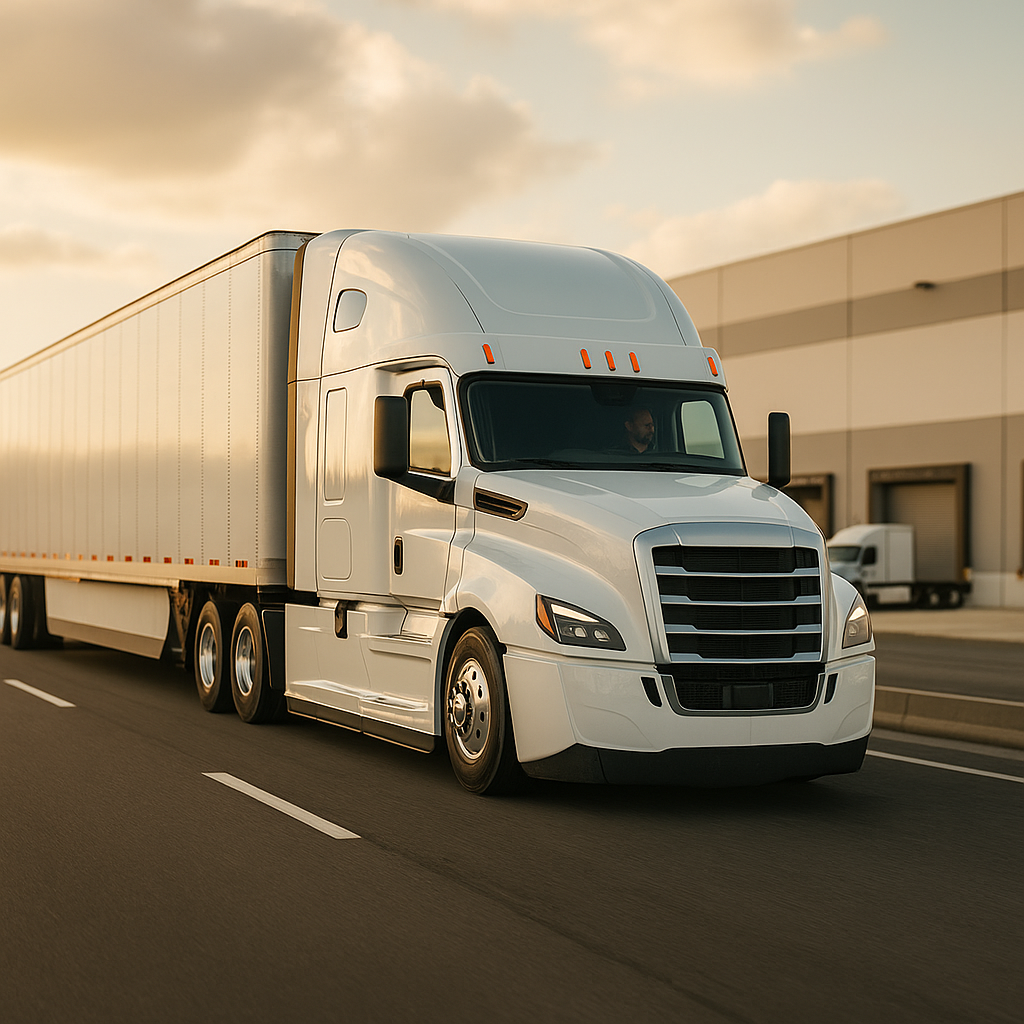

Commercial lines insurance covers business risks—from commercial truck insurance to cyber and liability. Learn 9 policies, claim examples, and a practical checklist.
Commercial line insurance (also called commercial lines insurance) is the set of policies built for businesses—like general liability, property, workers’ comp, and commercial auto—so one accident, lawsuit, fire, or cyber incident doesn’t become a business-ending bill. This guide breaks down 9 common policy types, real claim triggers, and a quick way to spot coverage gaps before a contract or claim forces the issue.
If you operate a truck (even a one-truck setup), commercial lines usually starts with commercial auto or a trucking package; this primer helps you get oriented: trucking insurance basics for owner-operators.
Table of Contents
Reading time: 8 minutes

Introduction: “Commercial line” isn’t one policy—it’s your business survival kit
Commercial lines insurance is a category of business insurance policies (not a single policy) that typically includes general liability, property, workers’ compensation, and commercial auto.
If you’re running a small operation, you already know how fast a “normal week” can turn expensive: a wreck, a cargo dispute, a shop fire, a lawsuit, or a ransomware hit that stops dispatch and billing.
Commercial lines is the bucket these policies live in—what you buy to protect a company’s income, assets, and contracts. In trucking, it often starts with commercial truck insurance and expands based on your equipment, customers, and what your contracts demand.
Soft checklist offer: If you want a simple way to sanity-check your coverage stack, use the checklist in the “2026 trends” section below and compare it to your COIs and contracts.
Key takeaways
Many business contracts require $1,000,000 liability limits (and specific endorsements) before work starts, which is why commercial lines insurance is usually a stack of policies—not a single purchase.
- Commercial lines insurance is a category, not one policy—most businesses combine multiple coverages to close gaps.
- The “right” mix depends on exposures (vehicles, employees, property, contracts, data) and the limits your clients require on a COI.
- Underwriting drives price swings—two similar businesses can pay very different premiums based on loss history, controls, and operations.
- 2026 pressure points (cyber controls, catastrophe weather, tighter contracts) are pushing higher deductibles, more underwriting questions, and stricter eligibility.
What does a commercial line mean in insurance?
Commercial lines insurance refers to property-and-casualty policies designed for businesses, commonly including commercial general liability (CGL), commercial property, workers’ compensation, and commercial auto.
Featured answer (copy/paste definition): Commercial lines insurance refers to insurance policies designed for businesses (not individuals). It typically includes coverage like commercial general liability (CGL), commercial property, workers’ compensation, and commercial auto. Businesses choose the policies that match their operations, contracts, and risk level—because no single policy covers everything.
What it is (plain English)
A “commercial line” is any insurance line meant to cover business operations, business assets, and business liability—the stuff tied to revenue, payroll, and contracts.
If you want a broader orientation first, this overview helps: commercial insurance basics.
Commercial lines vs. personal lines (simple comparison)
| Category | Personal lines | Commercial lines |
|---|---|---|
| Who’s insured | Individuals/households | Businesses (LLCs, corporations, sole props) |
| Typical examples | Homeowners, personal auto, renters | CGL, property, workers’ comp, commercial auto, cyber, umbrella |
| Limits & contracts | Usually lower limits; fewer contract requirements | Higher limits; COIs, additional insured, waiver of subrogation, etc. |
| Underwriting focus | Driver/home details, credit, location | Operations, payroll/revenue, loss runs, safety controls, contracts |
Why it’s regulated differently
In the U.S., most property and casualty insurance—including commercial lines—is regulated primarily at the state level, which is why requirements (especially workers’ compensation and auto) can vary by state. Reference: NAIC overview of property & casualty insurance.
Commercial line coverage: 9 common commercial lines insurance policy types
Most small businesses run into at least 3–5 commercial lines policies, and this section lists 9 of the most common types with practical claim triggers.
Commercial lines is where you build your coverage stack—especially if you have vehicles, employees, tools, a shop/yard, customer property, or contracts that demand proof of insurance (COIs).
If your business touches transportation—hotshot, box truck, or tractor—this guide ties the “commercial lines” concept directly to trucking operations: commercial truck insurance guide.

Quick reference table: 9 policy types at a glance
| Policy type | What it covers | Who typically needs it | Practical “trigger” example |
|---|---|---|---|
| Commercial General Liability (CGL) | Third-party bodily injury, property damage, certain advertising injury | Anyone with customers/vendors on-site or job sites | Customer trips in your office; you damage a client’s property |
| Commercial Property | Building/contents (shop, office, tools on premises), subject to covered perils | Businesses with a location, inventory, tools, or equipment | Fire damages tools and equipment inside the shop |
| Business Interruption (BI) | Lost income + continuing expenses after a covered property loss | Businesses that can’t operate if the location is down | Shop fire shuts you down for 3 weeks |
| Workers’ Compensation | Employee medical + wage replacement for work injuries | Businesses with employees (often required; varies by state) | Driver strains back loading straps; needs treatment + time off |
| Commercial Auto | Liability/physical damage for business-use vehicles; may include hired/non-owned | Any business using vehicles for work | At-fault crash during a delivery run |
| Professional Liability (E&O) | Claims from professional mistakes/negligence in services/advice | Consultants, agencies, accountants, dispatch services, tech | Client claims your error caused financial loss |
| Cyber Liability | Breach response, restoration, notification, some cyber BI (policy-specific) | Any business with data, email, online payments | Ransomware locks your TMS/billing system |
| Umbrella / Excess Liability | Extra limits over underlying liability policies | Businesses with higher-risk ops or contract-driven limits | A severe injury claim blows through your base limits |
| Inland Marine / Equipment | Mobile tools/equipment, property in transit, job-site gear (form-specific) | Contractors, mobile service ops, trucking-adjacent ops | Tools stolen from a job site or while in transit |
What it is (how to think about coverage)
Most businesses start with liability + property, then add specialty coverages based on how you make money and what can realistically go wrong. In trucking, commercial auto/liability is usually foundational, then you build around it (cargo, physical damage, trailer interchange, and more) based on your operation.
Why it’s essential (the cash-flow angle)
Insurance isn’t just “compliance.” It’s what keeps one claim from turning into a forced settlement, a lost contract, or a shutdown because you can’t replace equipment fast enough to keep revenue moving.
- Lawsuit pressure: A claim can become a settlement decision instead of a “right vs. wrong” decision.
- Contract pressure: No COI (or wrong endorsements) can mean “no work.”
- Downtime pressure: Cash flow gets hit twice—lost income plus replacement costs.
Who needs commercial line insurance coverage?
Any business with these exposures is in commercial-lines territory:
- Customers on your premises or job sites
- Vehicles used for work (including rented or employee-owned vehicles)
- Employees (and in some states, certain 1099 arrangements)
- A shop/yard/office, tools, inventory, or equipment
- Client contracts requiring COIs, limits, and endorsements
How underwriting works in commercial lines (and why prices vary)
Commercial lines underwriting prices and eligibility are based on documented risk inputs—operations, payroll/revenue, loss history, and controls—similar to the evaluation factors described in the U.S. Bureau of Labor Statistics underwriter role overview.
Commercial lines pricing can feel “unfair” until you see what the carrier is doing: they’re trying to predict claim frequency and severity from what you do, where you do it, and what your history shows.
What underwriters look at (real-world list)
Expect questions and documentation around:
- Operations: class codes, radius, commodities, job types, subcontracting
- Revenue and payroll: common rating bases for many lines
- Prior claims: loss runs, plus what you changed after losses
- Vehicles and drivers: MVRs, experience, CDL status, violations
- Contracts: required limits, additional insured wording, waivers
- Property details: construction, protection, and catastrophe exposure
If you want a straightforward breakdown of what to prepare, start here: how commercial insurance quotes work.
Why renewals can jump (even when you didn’t “change anything”)
- One large claim (or a pattern of smaller ones)
- Growth: more revenue/payroll, more units, more drivers
- Market tightening in your niche (common in trucking)
- Catastrophe exposure changes (hail/wind/wildfire zones; higher deductibles)
2026 trends + real claim scenarios + a fast checklist to reduce gaps
In 2026, many carriers are tightening terms by requiring basic cyber controls (like MFA and offline backups) and pushing higher property deductibles in catastrophe-exposed areas.
2026 trends businesses should watch
- Cyber is mainstream risk: Underwriters commonly ask about MFA, endpoint protection, backups, and vendor controls before offering strong terms.
- Property catastrophe pressure: In some regions, deductibles rise and eligibility tightens due to hail, wind, wildfire, and convective storm losses.
- Contracts are stricter: More clients require higher limits, additional insured status, and proof of coverage before you can start.
For a baseline emergency planning checklist (useful for both loss prevention and faster recovery), the SBA guidance is a good starting point: SBA emergency preparedness guidance.
Claim example 1: Liability that’s usually covered vs. the mistake that isn’t
- Often covered (CGL): A customer slips in your office/shop and gets injured.
- Often not covered by CGL (E&O instead): A professional mistake (bad advice, dispatch error, service failure) causes a client’s financial loss.
Claim example 2: Ransomware + downtime (where cyber can matter)
A phishing email compromises credentials, ransomware locks your systems, and you can’t invoice, dispatch, or access load documents for days. A cyber policy may help with incident response, restoration, notification costs, and some business interruption, but coverage depends on the form, sublimits, waiting periods, and security requirements.
To keep costs under control while you close real gaps, use this practical checklist: affordable trucking insurance tips.
Fast checklist: choose commercial lines coverage based on your actual exposures
- List exposures: vehicles, employees, customer premises, tools/equipment, locations, customer data, professional services.
- Pull contracts: COI requirements, limits, additional insured wording, waivers of subrogation.
- Pick limits + deductibles: match worst-case scenarios and contract requirements—not just the cheapest premium.
- Update after changes: new trucks, new drivers, new commodities, new locations, new services.
- Document controls: training, maintenance logs, MFA/backups—underwriters reward “boring and controlled.”
Frequently Asked Questions
Commercial lines insurance can cover business liability (CGL), business property and business interruption, employee injuries (workers’ compensation), business-use vehicles (commercial auto), professional mistakes (E&O), cyber incidents, and excess limits (umbrella). Coverage is policy-specific, so a CGL won’t replace E&O, and a property policy won’t replace auto liability. A practical way to scope it is to map policies to exposures: customers on-site (CGL), buildings/tools (property/inland marine), employees (workers’ comp), vehicles (commercial auto), contracts and high limits (umbrella), and data systems (cyber).
Commercial lines differ from personal lines because they insure business operations with contract-driven limits, endorsements, and underwriting based on operations, revenue/payroll, and loss runs. Many business contracts start at $1,000,000 per occurrence for liability and require COIs, additional insured status, and waiver of subrogation language before work begins. Personal lines (home, renters, personal auto) are built for household exposures and usually won’t satisfy commercial contract requirements or business-use vehicle needs. The biggest day-to-day difference is documentation: commercial lines commonly requires COIs, schedules, and updated underwriting info.
Any business with customers, business-use vehicles, employees, contracts, valuable equipment, or a physical location typically needs commercial lines insurance. In trucking, even a one-truck operation commonly needs commercial coverage because brokers and shippers require COIs, and federal filings drive minimum liability requirements for many for-hire interstate carriers. For example, FMCSA financial responsibility rules for many for-hire motor carriers of non-hazardous property start at $750,000 in public liability under 49 CFR §387.9 (higher for certain hazardous materials). State rules can also require workers’ compensation when you have employees.
No— a BOP is a packaged policy inside commercial lines, and it typically bundles general liability + property (with optional add-ons), but it does not replace major lines like commercial auto, workers’ comp, cyber, or professional liability (E&O). A BOP can be a cost-effective foundation if you have a location and basic premises liability, but you still need separate policies for vehicle exposures, employee injuries, and higher-limit contract requirements. For a clear breakdown of what’s included and what’s not, see: business owners policy (BOP) explained.
Conclusion: Build a commercial lines stack that matches your real-world risk
A commercial lines insurance program usually combines multiple policies—often starting with liability and then adding property, auto, workers’ comp, and specialty lines—because no single form covers every business exposure.
The clean way to get this right is simple: list your exposures, pull your contracts, then buy limits and endorsements that match the work you actually do (not generic advice).
Key Takeaways:
- Match policies to exposures (vehicles, people, property, data), then validate against your COI and contract language.
- Expect underwriting to ask for proof (loss runs, payroll/revenue, controls) because that’s what drives price.
- Re-shop and update after changes (new drivers, new units, new locations, new contracts) to avoid surprise gaps.
If you want to pressure-test your current stack against 2026 underwriting and contract requirements, compare options side-by-side and don’t guess.
Related reading





