
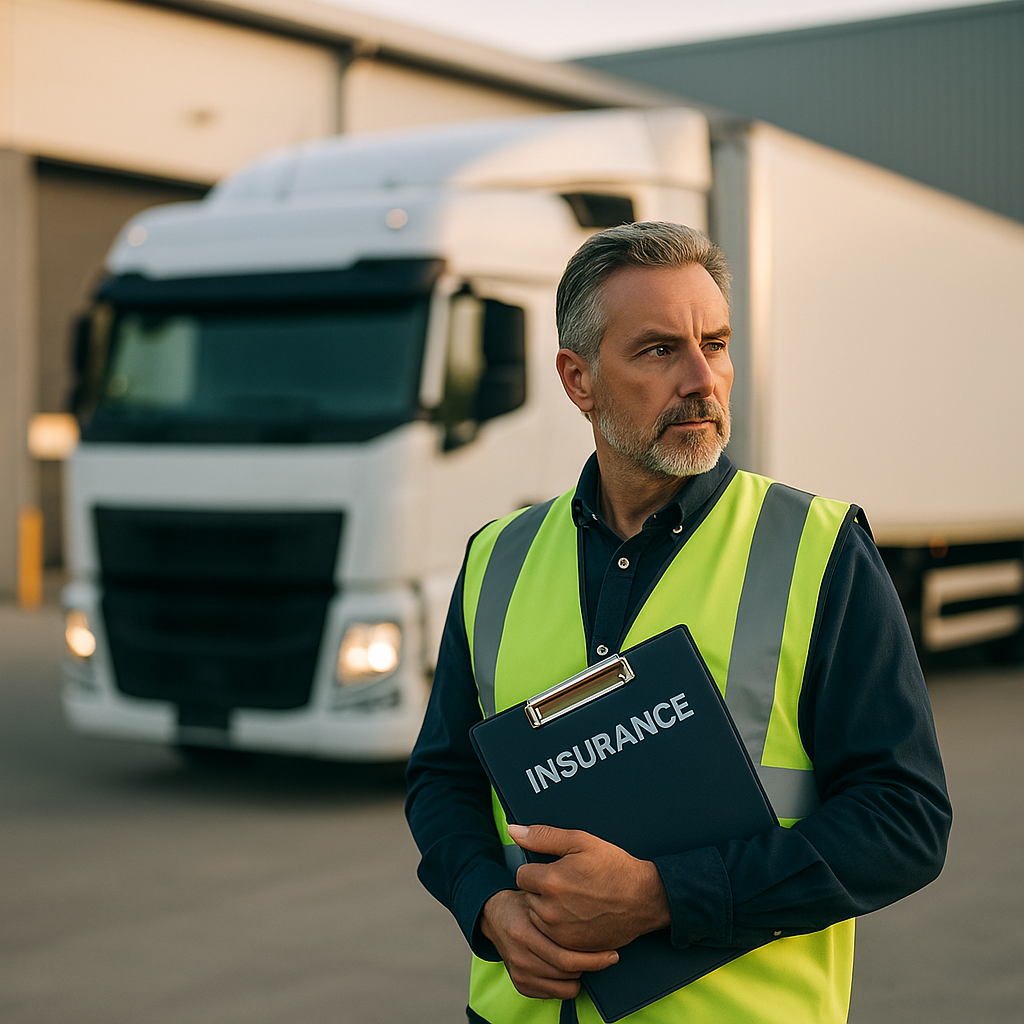

Commercial coverage explained: 9 core policies, 2026 cost ranges, plus trucking insurance and commercial truck insurance tips. Get covered—compare quotes today.
Commercial coverage is the set of business insurance policies that protects you from the biggest cash-flow hits: lawsuits, property losses, shutdowns, vehicle crashes, employee injuries, and cyber incidents. In practice, it’s not one “magic policy”—it’s a mix of coverages you stack based on what you do, what you own, and what your contracts require.
If you want a quick foundation before you compare quotes, start with commercial insurance basics, then come back and build your real-world checklist from this guide.
Table of Contents
Reading time: 9 minutes
- Commercial coverage meaning (and why it’s not optional)
- What does commercial coverage include? (9 core policies)
- What is a business owner’s policy (BOP)?
- What commercial coverage is required by law (and by contract)
- Commercial coverage cost ranges in 2026 (what drives price)
- Frequently Asked Questions
- Conclusion: Build coverage like an owner

Commercial Coverage Meaning (and Why It’s Not Optional)
Commercial coverage is insurance designed for business risks—customers, operations, vehicles, employees, and revenue—so one claim or loss doesn’t wipe out months (or years) of profit.
In the first hour of shopping, most owners realize how wide this gets: liability, property, income interruption, auto, employee injury, and cyber can all sit in different policies. That’s normal—commercial insurance is built like a toolkit.
What it is (plain English)
Commercial coverage typically protects you from:
- Third-party claims: injury or property damage you allegedly caused
- Damage to your business property: building, contents, tools, inventory
- Lost income after a covered loss: when you can’t operate normally
- Vehicle-related losses: crashes, liability, and physical damage
- Employee injuries: when you have staff (often workers’ compensation)
- Data/breach events: ransomware, breach response, notification costs
For a government overview of “required vs recommended” coverage by business type, see the U.S. Small Business Administration’s business insurance page: https://www.sba.gov/business-guide/launch-your-business/get-business-insurance.
Why it’s essential (cash-flow reality)
Most painful losses start costing you money before you ever “lose” a case. Legal defense, downtime, and replacement equipment can hit fast—while payroll, rent, and loan notes keep coming.
Who needs it
If any of these apply, you’re in commercial territory:
- You have customers or the public on your premises
- You sign contracts requiring insurance (COIs, additional insureds, specific limits)
- You own/lease vehicles used for work
- You have employees
- You store customer data or take payments online
- You haul freight or run a small fleet (even one truck)
What Does Commercial Coverage Include? (9 Core Policies)
Commercial coverage usually includes general liability, property, business income, commercial auto, workers’ compensation, and optional policies like cyber, E&O, umbrella, inland marine, and crime depending on your operations and contracts.
Featured-snippet answer (45–60 words): Commercial coverage usually includes a mix of policies that protect your business from liability claims, property damage, income loss from interruptions, vehicle crashes, employee injuries, and cyber/data incidents. Many small businesses start with general liability and property (often in a BOP), then add commercial auto, workers’ comp, cyber, and umbrella limits as needed.
For vehicles used for work, most businesses need a true commercial policy—not a personal auto add-on. The NAIC explains commercial auto at: https://content.naic.org/consumer/auto-insurance/commercial-auto-insurance.
The 9 core coverages to know (scan table)
| Coverage | What it protects | Who typically needs it | Common “gotchas” |
|---|---|---|---|
| Commercial General Liability (CGL) | Third-party injury/property damage claims | Most businesses | Excludes auto, employee injury, many professional errors |
| Commercial Property | Building/contents/inventory | Location-based businesses | Flood/quake often excluded; underinsuring can trigger coinsurance penalties |
| Business Income (Interruption) | Lost income after a covered loss | Any business that can’t “work around” a shutdown | Needs correct limits and waiting periods; some outages aren’t covered |
| Workers’ Compensation | Employee injuries/illness | Employers (varies by state) | Misclassification can trigger audits, premium adjustments, and penalties |
| Professional Liability (E&O) | Mistakes in professional services | Consultants, agencies, licensed pros | CGL usually won’t cover “bad advice” allegations |
| Cyber Liability | Breach response, ransomware, notification costs | Any data-handling business | Social engineering/wire fraud may require separate crime coverage |
| Umbrella / Excess | Extra limits over underlying policies | Contract-driven industries | Underlying limits and scheduled policies must match carrier requirements |
| Inland Marine | Tools/equipment in transit or at jobsites | Contractors, mobile operations | Property policies often limit off-premises equipment coverage |
| Crime | Employee theft, forgery, funds transfer fraud | Any business handling money | Cyber ≠ crime, and crime ≠ cyber—coverage triggers differ |
Commercial auto, commercial truck insurance, and semi truck insurance (same category, different world)
Commercial auto covers business vehicle use, while commercial truck insurance and semi truck insurance are specialized commercial auto programs rated for heavier equipment, for-hire operations, cargo exposure, and wider operating radius.
A quick trucking reality check:
- Your pricing is driven by drivers + equipment + radius + cargo + filings.
- “Just a pickup” can still be a commercial exposure if it’s used for hotshot or for-hire work.
- Broker/shipper contracts can demand limits far above state minimums.
For owned/hired/non-owned, liability vs physical damage, and what’s typically included, see commercial auto coverage explained.
Hotshot insurance: why classification matters
Hotshot insurance pricing often jumps when the risk is classified as for-hire trucking instead of personal or light commercial use, because loss severity and exposure increase with hauling, trailers, and longer radius.
If you’re running loads, insurers typically care about:
- For-hire vs private carriage
- Trailer type and weight
- Operating radius and lanes
- Cargo type (and whether you need cargo coverage)
- Claim history and driver MVRs
If you’re shopping affordable trucking insurance, the fastest win is usually accuracy: correct vehicle use, correct class, and clean documentation—not cutting limits until you’re exposed.
What Is a Business Owner’s Policy (BOP)? (BOP vs Standalone)
A business owner’s policy (BOP) is a packaged policy that typically bundles general liability and commercial property, often with business income included or available by endorsement depending on the carrier.
The NAIC’s overview of business insurance (including packaged policies) is here: https://content.naic.org/consumer/business-insurance.
For a deeper breakdown of what’s usually included and what’s commonly added, see business owner’s policy (BOP) guide.
What it is (plain English)
A BOP is the “combo meal” for many small-to-mid businesses:
- One policy
- Fewer gaps between liability and property
- Often priced better than buying pieces separately (when eligible)
Why it’s essential (and when it’s not)
A BOP is usually a great fit for lower-to-moderate hazard operations that have a location, equipment, or inventory to protect.
A BOP may not fit if you have high-hazard work, many locations, or specialized exposures (for example: heavy trucking fleets or hazardous materials).
BOP vs standalone (quick comparison)
| Category | BOP | Standalone policies |
|---|---|---|
| Best for | Many small businesses | Specialized or complex risks |
| Flexibility | Moderate | High |
| Cost efficiency | Often strong | Depends on customization and underwriting |
| Typical add-ons | Equipment breakdown, crime, some cyber options | Anything you can schedule/endorse |
What Commercial Coverage Is Required by Law (and by Contract)
Commercial insurance requirements come from two places: state law (commonly workers’ compensation and auto) and contracts (landlords, lenders, brokers, shippers) that specify limits and endorsements.
Most owners lose time by asking “what’s required?” and expecting one universal answer. The practical approach is a checklist: confirm your state rules and then read your contracts line-by-line for insurance language.
For workplace injury/illness exposure context and reporting categories, the BLS industry injury resources are here: https://www.bls.gov/iif/.
For a requirements-focused breakdown and what usually varies, see workers’ compensation requirements.
What it is (three buckets)
- Legally required (commonly): workers’ comp (varies by state and worker type) and commercial auto (depending on vehicle ownership/title and use).
- Lender/landlord required: property coverage on financed assets or leased spaces, plus liability limits with specific wording.
- Contract required (clients, brokers, shippers): minimum CGL limits, umbrella/excess, additional insured, waiver of subrogation, and COIs on demand.
Pro tip: avoid COI chaos
Underwriters price and approve coverage faster when you submit clean documentation upfront, because it reduces re-quotes and endorsement surprises.
Before you request quotes, collect:
- 12 months of payroll and revenue
- Vehicle schedule and driver list (DOB and license info)
- Copies of contracts showing required limits/endorsements
- Loss runs (if you’ve had prior coverage)
Commercial Coverage Cost Ranges in 2026 (What Drives Price)
Commercial coverage pricing is determined by rating factors like class code, payroll or revenue, limits, location, claims history, vehicles/drivers, and deductibles, so there isn’t one universal “price list” for 2026.
To see the drivers that usually matter most (and where you can control them), use what affects commercial insurance cost.
Typical 2026 ballparks (small business ranges)
These are broad ranges for many small businesses. Your industry, location, limits, and claims history can swing pricing significantly.
| Policy type | Typical ballpark (often) | What swings it most |
|---|---|---|
| CGL | ~$40–$200/month | Class code, limits, claims |
| BOP (liability + property) | ~$80–$400/month | Property value, location risk, revenue |
| Workers’ comp | Varies (often % of payroll) | Payroll, class code, experience mod |
| Commercial auto | ~$150–$800+/vehicle/month | Drivers, radius, vehicle type, losses |
| Cyber | ~$50–$300+/month | Data volume, controls, industry |
| Umbrella | ~$25–$200+/month | Underlying limits + hazard level |
Trucking note: commercial truck insurance and semi truck insurance are commonly much higher than “regular” commercial auto because of heavier equipment, higher severity losses, federal filings, cargo exposure, and long-haul radius.
How to lower cost without underinsuring
Most sustainable premium reductions come from better risk controls and cleaner underwriting data, not from cutting limits below what your contracts require.
- Bundle smartly: use a BOP where eligible instead of stacking overlapping coverage.
- Raise deductibles carefully: only if your cash reserves can absorb the hit.
- Tighten operations: driver hiring standards, maintenance records, contracts, security, and documented procedures.
- Shop annually: and tell your agent what changed (new safety tech, better parking/security, reduced radius, newer equipment).
Frequently Asked Questions
Commercial coverage includes policies for third-party liability, property damage, business income interruption, commercial auto, and (when you have employees) workers’ compensation, with optional add-ons like cyber liability, professional liability (E&O), crime, inland marine, and umbrella limits. Most small businesses start with CGL plus property (often inside a BOP), then add commercial auto and workers’ comp as needed. Contract requirements (COIs, additional insured, umbrella limits) often drive what you must buy just as much as state law does.
The main types of commercial insurance include commercial general liability (CGL), commercial property, business income/interruption, commercial auto (owned/hired/non-owned), workers’ compensation, professional liability (E&O), cyber liability, umbrella/excess liability, and specialty coverages like inland marine or crime. The “right mix” depends on your class code, assets, vehicles, contracts, and the fastest way your business could lose money. If vehicles are used for work, review commercial auto coverage explained so you don’t confuse personal and commercial protection.
A business owner’s policy (BOP) is a packaged commercial policy that typically bundles general liability and commercial property coverage, often with business income included or available depending on the carrier and form. BOPs are usually cost-effective for eligible small businesses because they reduce gaps between liability and property and simplify underwriting. A BOP may not fit higher-hazard or complex operations (multiple locations, heavy trucking exposures, specialized risks). For typical inclusions and common endorsements, see the business owner’s policy (BOP) guide.
Commercial general liability (CGL) covers third-party bodily injury and property damage claims tied to your business operations or premises, plus certain personal and advertising injury claims. CGL typically does not cover employee injuries (workers’ comp), auto-related claims (commercial auto), many professional errors (E&O), or many cyber/data incidents. CGL is often the first “bankruptcy risk” policy because legal defense costs can start immediately when a claim is filed, even before liability is determined. For exclusions, limits, and plain-English examples, review commercial general liability (CGL) insurance.
Conclusion: Build Coverage Like an Owner
Commercial coverage works best when it matches how you actually operate: your contracts, your vehicles, your payroll/revenue, and your biggest “shutdown” risks.
If you run loads (or plan to grow from one truck to a small fleet), keep learning with trucking insurance guide for owner-operators & small fleets.
When you’re ready to price the right mix in one shot, use get a commercial insurance quote.
Key Takeaways:
- Commercial coverage is a mix of policies (liability, property, income interruption, auto, employee injury, cyber), not one plan.
- Most “requirements” are contractual (landlords, lenders, brokers, shippers) as much as legal.
- Costs are driven by operations (class code, payroll/revenue, drivers/MVRs, radius, losses, deductibles, risk controls).
Build it around your worst-case losses first, then refine limits to match contracts and growth.





