
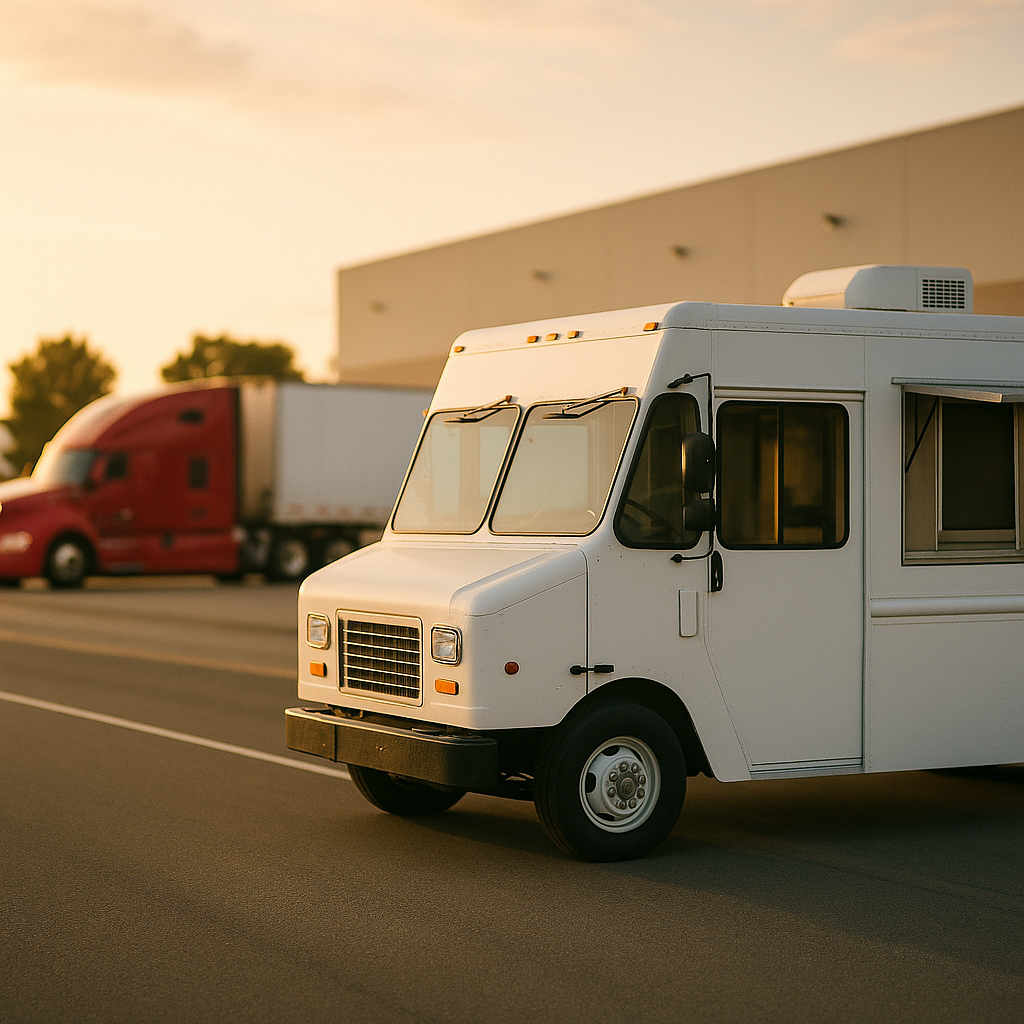
Typical food trailer insurance costs $40–$400/month in 2026. See real cost drivers, coverage options, and COI tips—get covered today.

Food trailer insurance cost in 2026 typically ranges from $40 to $400 per month, depending on your liability limits, equipment value, location, claims history, and whether you also need commercial auto for the tow vehicle. The fastest way to estimate your budget is to separate costs into three buckets: on-site liability (serving customers), equipment/build-out (your kitchen on wheels), and on-the-road auto exposure (towing and business driving).
Most operators start with general liability insurance for food vendors because venues, festivals, and landlords often require proof before you can set up. This guide breaks down pricing in plain English—and shows what to bring when you need a same-day COI.
Table of Contents
Reading time: 7 minutes
- Key Takeaways
- Average Food Trailer Insurance Cost (Monthly vs Annual)
- Cost by Coverage Type (What You’re Actually Paying For)
- Do You Need Separate Insurance for the Trailer and the Tow Vehicle?
- What Drives Food Trailer Insurance Cost the Most
- Frequently Asked Questions
- Conclusion: Budget the Total “Trailer + Tow Vehicle + Equipment” Cost
Key Takeaways
In 2026, most food trailer operators should budget $40–$400 per month for insurance, with price driven primarily by liability limits, equipment/build-out value, and whether commercial auto is needed for the tow vehicle.
- Expect roughly $40–$400/month: Liability-only sits near the low end; property/equipment and higher limits push you up.
- Your tow vehicle is often a separate cost: Commercial auto can be a separate (and sometimes bigger) line item than the trailer itself.
- Equipment value drives premium: Generators, suppression systems, refrigeration, and POS equipment add up fast.
- The cheapest policy can still cost you gigs: If you can’t meet a venue’s contract (limits + additional insured wording), you may not be allowed to vend.
Average Food Trailer Insurance Cost (Monthly vs Annual)
In 2026, a realistic food trailer insurance cost range is $40–$100/month for basic liability, $100–$250/month for a more typical liability-plus-property setup, and $250–$400+/month for higher limits, higher property values, or higher-risk operations.
Typical monthly range (and why it swings so much)
- Low end ($40–$100/month): Usually general liability-only, lower limits, minimal add-ons; often fits seasonal vendors with simpler setups.
- Middle ($100–$250/month): Liability plus some property/equipment coverage, higher limits, and endorsements that match real event requirements.
- Higher end ($250–$400+/month): Fuller package coverage, higher property limits, tougher locations, prior claims, alcohol exposure, or more complex operations.
Monthly billing can help cash flow, but many carriers discount annual pay-in-full. When you compare quotes, don’t just compare the monthly number—compare limits, deductibles, and exclusions apples-to-apples using this guide on how to read an insurance quote (limits, deductibles, exclusions).
Quick budget table (lean vs typical vs “full bundle”)
| Scenario | What’s usually included | Rough budget |
|---|---|---|
| Lean / event-ready | General liability (often $1M/$2M) + basic endorsements | $40–$120/mo |
| Typical year-round trailer | GL + some equipment/property coverage + higher limits depending on venues | $120–$250/mo |
| Full setup / higher exposure | GL/BOP-style package + higher property limits + more endorsements | $250–$400+/mo |
Important: If you’re towing with a business-use pickup or truck, the tow vehicle insurance can add more than the trailer policy itself.
Cost by Coverage Type (What You’re Actually Paying For)
Food trailer insurance is usually a stack of coverages—most commonly general liability for on-site customer risk, property/equipment for the trailer build-out and gear, and commercial auto for business driving and towing exposure.
At a high level, liability coverage is designed to protect you if someone claims your business caused injury or property damage, while property coverage helps repair or replace your stuff after covered losses; see NAIC’s overview of business insurance: https://content.naic.org/consumer/insurance-basics/business-insurance.
General liability (GL): the baseline most venues care about
General liability insurance commonly covers customer injury claims (like slip-and-fall), property damage to a venue, and related legal defense costs for covered incidents.
- Why it matters: Many festivals, markets, and private venues require $1M per occurrence as a contract requirement before you can set up.
- Who needs it: Basically every food trailer operator, even if you only do weekends.
- Cost trap to watch: Additional insured endorsements can create extra fees and delays if you’re constantly changing venues—ask what’s included vs billable.
BOP vs GL-only: when bundling can make sense
A Business Owner’s Policy (BOP) typically bundles general liability with business property coverage (and sometimes business interruption), which can be a cost-effective step up for built-out trailers.
If you’ve got meaningful value inside the trailer—hood systems, refrigeration, a generator, POS tablets—GL-only won’t replace it after a fire, theft, or storm claim. For a quick baseline on bundling, see business owner’s policy (BOP) explained.
Workers’ comp (if you have help)
Workers’ compensation insurance can cover medical costs and lost wages for employee injuries, and state requirements vary widely based on payroll and worker classification.
If you add staff, you’re adding real-world injury exposure (burns, cuts, slips, lifting injuries). Even when not strictly required for a tiny team, one serious injury can wreck a small operation’s cash flow.
Do You Need Separate Insurance for the Trailer and the Tow Vehicle?
In many cases, food trailer operators need separate coverage because auto policies rate on-road business use differently than general liability rates on-site customer service risk.
NAIC explains that commercial auto is built for business vehicle use and can differ materially from personal auto coverage: https://content.naic.org/consumer/insurance-basics/auto-insurance/commercial-auto-insurance.
Tow vehicle: personal auto vs commercial auto
If your pickup or truck is used for business—towing to events, hauling supplies, or transporting employees—a personal auto policy may not match your real-world use, and commercial auto is often the correct fit.

Here’s the practical breakdown on commercial auto insurance basics (for tow vehicles).
Trailer: endorsement vs separate policy (what’s common)
Trailer physical damage and equipment/build-out can be insured in different ways, and you should confirm in writing which policy covers which part of the rig.
- Scheduled/specified trailer coverage: Often added to an auto policy for physical damage/theft.
- Property/equipment coverage: Often placed under a package policy to cover the build-out and contents.
- General liability: Typically responds to on-site serving claims (customer injury or venue property damage).
Bottom line: Auto handles road liability; GL handles on-site liability. The trailer’s physical damage and equipment can be handled different ways—don’t guess.
What Drives Food Trailer Insurance Cost the Most (Add-Ons, Location, and Loss Control)
The biggest drivers of food trailer insurance cost are typically equipment/build-out value, liability limits required by contracts, storage/location risk, claims history, and higher-risk exposures like alcohol service or heavy event schedules.
Equipment & build-out value (the #1 surprise cost driver)
A bare trailer is one thing, but a fully built mobile kitchen can represent tens of thousands of dollars in equipment that needs to be scheduled and valued correctly.
- Generators, propane systems, electrical upgrades
- Refrigeration/freezers, warming cabinets
- Fire suppression and hood systems
- Griddles, fryers, smokers
- POS systems, tablets, cash drawers
If you want coverage that follows your gear (including off-premises use), start with equipment coverage for mobile businesses.
Add-ons that can raise (or save) money
| Add-on | What it helps cover | Who it fits | Cost impact |
|---|---|---|---|
| Higher liability limits | Bigger contract/venue requirements | High-volume events, corporate gigs | Often increases premium |
| Equipment/property coverage | Repair/replace gear after covered losses | Most built-out trailers | Can increase premium significantly |
| Spoilage / breakdown (when available) | Food loss after refrigeration failure | Cold storage-heavy menus | Adds cost; can save your weekend |
| Liquor liability | Alcohol-related claims | Beer/wine service | Usually a noticeable increase |
| Hired/non-owned auto | Staff using rentals/personal vehicles for errands | Growing operations | Moderate increase |
Location, storage, and “event intensity”
Zip code and overnight storage conditions affect pricing because theft, vandalism, and weather losses vary significantly by location and storage setup.
- Theft/vandalism risk: Street storage vs a locked lot with fencing and cameras.
- Storm exposure: Hail, wind, flood zones, and seasonal severity.
- Foot-traffic intensity: Higher crowd density can increase slip-and-fall frequency.
- Local lawsuit environment: Claim severity varies by jurisdiction.
6 practical ways to lower cost without getting underinsured
Rates move over time, so it’s smart to re-shop annually and track broader inflation trends like BLS CPI data: https://www.bls.gov/cpi/.
- Raise deductibles on property/equipment (only if you can absorb the hit).
- Lock down theft risk: hitch lock, wheel boot, GPS tracker, cameras, fenced storage.
- Maintain fire suppression and keep documentation (underwriters like proof).
- Right-size limits to real contracts (don’t overbuy, but don’t underbuy and lose gigs).
- Avoid coverage lapses: lapses can spike pricing at renewal.
- Get COI details right the first time: fewer endorsement changes can reduce admin charges.
Can you get same-day proof of insurance (COI)?
Same-day COIs are often possible when you can provide your legal business name, trailer details, operating locations, required limits, and the exact certificate holder/additional insured wording needed by the venue.
- Business details: LLC vs DBA name, address, best contact info
- Trailer details: VIN/serial (if applicable) and usage
- Values: trailer and equipment/build-out values (be ready to support them)
- Event requirements: limits (often $1M per occurrence), dates, and endorsement wording
If you’re constantly scrambling for event paperwork, this walkthrough on certificate of insurance (COI): what it is and how to get one fast can save a lot of back-and-forth.
Frequently Asked Questions
Most food trailer operators pay $40 to $400 per month in 2026, with the low end usually being general liability-only and the high end typically including equipment/property coverage and higher venue-required limits. A common contract requirement for events is $1,000,000 per occurrence general liability, which can push pricing higher than “bare-bones” policies. Also budget separately for the tow vehicle: if your pickup is used for business towing and errands, commercial auto can become a separate monthly cost that sometimes exceeds the trailer’s GL premium.
Usually, yes—because auto insurance covers on-road liability for business driving/towing, while general liability covers on-site serving risk (customer injury or venue property damage) when you’re parked and operating. Trailer physical damage and the kitchen build-out can be insured either by scheduling the trailer under an auto policy or by adding property/equipment coverage under a package policy, so you should ask your agent to confirm in writing what covers (1) the trailer shell, (2) the build-out, and (3) the contents. For towing specifics, see commercial auto insurance basics (for tow vehicles).
The biggest price drivers are typically equipment/build-out value, liability limits required by venues (often $1M per occurrence), where you operate and store the trailer, prior claims, and your deductibles. Higher-risk exposures—like alcohol service, heavy event schedules, and high-foot-traffic setups—can also raise premiums. Many operators get surprised because the “trailer” isn’t the expensive part; the generator, suppression system, refrigeration, and other gear are. If your equipment moves on and off the trailer, learn how equipment coverage for mobile businesses is usually handled.
Food trailer insurance is often cheaper than food truck insurance, but it’s not guaranteed, because costs depend on the full coverage stack and the value of what you’re insuring. Food trucks can run higher on the auto/vehicle side because the unit is self-propelled and often more expensive to repair, which can increase comprehensive/collision and related coverages. However, a trailer with a high-dollar kitchen build-out can still price high—especially when you add equipment coverage, higher liability limits, and endorsements for venues. If you’re comparing both models, use this food truck insurance guide (trailer vs truck comparison) to see what usually changes.
Conclusion: Budget the Total “Trailer + Tow Vehicle + Equipment” Cost (Not Just One Policy)
Food trailer insurance cost isn’t one number—it’s the sum of on-site liability, equipment/build-out protection, and tow-vehicle coverage. If you want pricing that still lets you work, list your top venues, their required limits, and your real equipment value before you quote.
Key Takeaways:
- Use $40–$400/month as a real 2026 range, then refine based on limits, equipment value, and tow-vehicle needs.
- Match contracts, not guesses: event requirements (often $1M per occurrence) can set your true minimum coverage.
- Reduce friction and fees: get COI details right early, and document theft/fire-loss controls.
For paperwork and premium surprises, keep these bookmarked: certificate of insurance (COI): what it is and how to get one fast and how to lower business insurance premiums.





