24/7 semi truck roadside service—2026 pricing for tires, jump starts, fuel, lockouts & towing. Typical ETAs + what to ask to avoid overcharges.

Semi truck roadside service is 24/7 dispatch for heavy-duty tire help, jump starts, fuel delivery, lockouts, mobile mechanic repairs, and towing—meant to get you moving again with a clear ETA and an itemized bill. In 2026, most roadside charges come from dispatch fees, travel time/miles, labor minimums, and after-hours surcharges, so asking the right questions before a tech rolls is the easiest way to avoid surprise charges.
If you’re trying to keep costs predictable, don’t treat roadside as random bad luck. Treat it like part of your risk plan—right alongside commercial truck insurance and maintenance budgeting (because downtime is still downtime whether it’s covered or not). For a broader baseline, start with these commercial truck insurance coverage choices.
Table of Contents
Reading time: 7 minutes
- Key Takeaways (Save This to Your Notes App)
- What Semi Truck Roadside Service Is (and When You Actually Need It)
- Services Included in Heavy-Duty / Semi Truck Roadside Assistance (What’s Realistic)
- 2026 Pricing: What Semi Truck Roadside Service Usually Costs (and Why)
- Response Times, Dispatch Process, and Safety/Compliance (What to Do While You Wait)
- Frequently Asked Questions
- Conclusion: Get Faster Help Without Guessing on Price
Key Takeaways (Save This to Your Notes App)
Most semi truck roadside service invoices include 3–6 separate line items (dispatch, travel, labor minimums, parts, after-hours, and sometimes shop supplies), so confirming pricing terms before dispatch is the fastest way to avoid surprises.
- Most roadside bills are driven by time + distance + after-hours, not the “simple” fix you think you’re paying for.
- Get faster help by sending a GPS pin, mile marker, tire size (if tire), and clear symptoms on the first call.
- Avoid overcharges by confirming dispatch fee, travel, labor minimum, parts markup, and cancellation/no-access fees upfront.
- Roadside service isn’t the same thing as semi truck insurance or trucking insurance—but smart planning can lower your total cost of risk.

What Semi Truck Roadside Service Is (and When You Actually Need It)
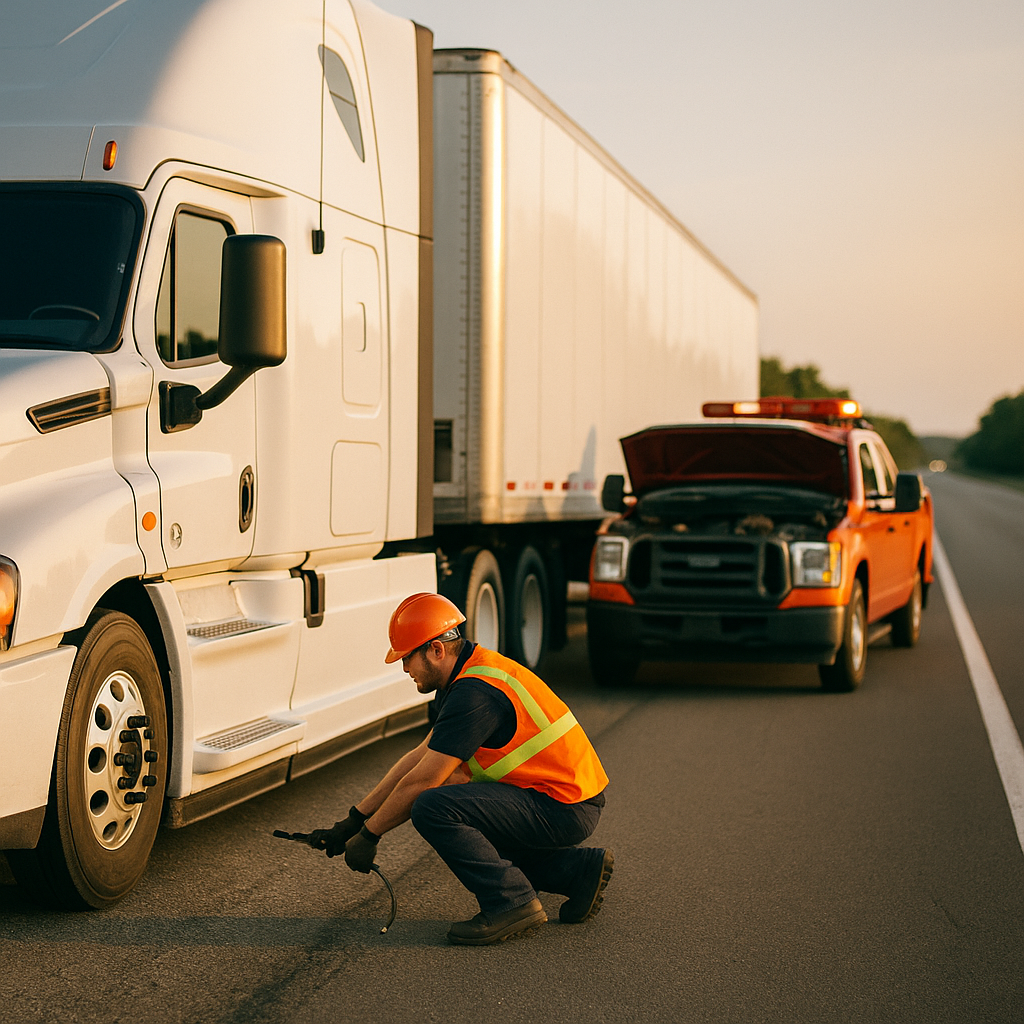
Semi truck roadside service is on-demand heavy-duty dispatch that sends either a mobile repair tech (to fix you where you sit) or a tow/recovery unit (to move you safely when you can’t roll).
What it is
Roadside is built for real-world issues like no-starts, air leaks, tire failures, coolant loss, trailer electrical problems, and breakdowns that turn into a derate. The goal is simple: restore safe, legal movement or make the call to tow before you waste hours and money.
Why it’s essential (business reality)
Downtime is a cost multiplier: missed delivery windows, reschedules, detention arguments, and lost reload opportunities. ATRI publishes annual research on trucking cost categories—including repair/maintenance pressure and the ripple effects of downtime—worth reviewing if you’re serious about cost-per-mile: American Transportation Research Institute (ATRI).
If you run on tight margins, treat roadside planning like fuel strategy: it’s not “optional,” it’s how you stay profitable.
Who needs it
- Owner-operators running spot freight who can’t afford a 6-hour delay
- New authorities learning the hard way that one breakdown can wipe out a week
- Small fleets that need consistent billing and predictable response expectations
Pro tip (cost control)
Budget it like a line item—because it is one. If you want a practical framework for where roadside fits in your numbers, use this breakdown of owner-operator expense categories.
Services Included in Heavy-Duty / Semi Truck Roadside Assistance (What’s Realistic)
Heavy-duty roadside assistance typically covers tires, batteries/jump starts, fuel delivery, lockouts, mobile diagnostics, and towing, but it is not a guaranteed “fix-anything-on-the-shoulder” service.
What’s usually included
- Tire repair/replacement: Steer, drive, and trailer service (often service-only pricing plus the tire)
- Jump starts / battery help: Boosts, testing, and sometimes battery replacement
- Fuel delivery: Diesel (and sometimes DEF), plus delivery and after-hours fees
- Lockouts: Entry assistance when keys are locked in the cab
- Mobile mechanic triage/repairs: Basic diagnostics, hoses/clamps, airlines, minor electrical
- Towing and recovery: When the unit isn’t safe/legal to roll or can’t be repaired roadside
Why it matters (avoid paying for the wrong thing)
A lot of frustration comes from expecting a “roadside fix” when the situation really needs a part that isn’t available at 2 a.m., a safe bay with proper tools, or a tow because you’re not legal/safe to roll. That’s why it helps to understand what mobile truck repair can (and can’t) fix roadside before you authorize dispatch.
Pro tip (faster dispatch = fewer hours billed)
When you request service, send these immediately (text/photo if possible):
- Location: GPS pin + mile marker + direction of travel
- Access notes: Wide shoulder, ramp, rest area, scale lot, etc.
- Equipment: Truck make/model + trailer type
- If tire: Tire size and whether it’s steer/drive/trailer
- Symptoms: “No crank,” “Cranks/no start,” “Air leaking at drive axle,” “Coolant hose burst,” “Derate + check engine”
- Photos (only if safe): Tire sidewall, damage, dash lights

2026 Pricing: What Semi Truck Roadside Service Usually Costs (and Why)
In 2026, semi truck roadside service pricing is usually a stack of 6 common charges: dispatch/service call, travel, labor minimum, parts/consumables, after-hours/holiday surcharge, and (for towing) recovery add-ons like winching or storage.
How roadside pricing is built
- Dispatch/service call: The fee to commit a tech and start the job.
- Travel time/miles: Often the biggest variable in rural lanes.
- Labor minimum: Commonly billed in blocks (not minute-by-minute).
- Parts/consumables: Tires, batteries, hoses, fittings, fluids.
- After-hours/holiday: Night/weekend premium time.
- Towing add-ons: Winching, extra axles, rotator, cleanup, storage.
Heavy-duty labor isn’t cheap because the skill level is real, and after-hours calls add premium time; BLS wage data is a helpful reality check on labor-market pressure in skilled trades: U.S. Bureau of Labor Statistics (BLS).
Typical pricing ranges (reality check)
These are common market ranges you’ll see for many lanes; your exact pricing will vary by location, time of day, and availability.

| Roadside Item | Low | Typical | High (remote/after-hours) |
|---|---|---|---|
| Dispatch / service call | $150 | $250–$400 | $500+ |
| Mobile mechanic labor (hourly) | $150/hr | $180–$250/hr | $300+/hr |
| Jump start | $150 | $250–$450 | $600+ |
| Lockout | $150 | $250–$400 | $550+ |
| Fuel delivery (delivery + fuel) | $200 | $350–$700 | $900+ |
| Tire service (excluding tire cost) | $250 | $400–$750 | $1,000+ |
| Heavy-duty towing | — | Varies heavily | Can spike fast |
For towing specifically, don’t guess—know the variables. This guide to semi truck towing basics helps you understand what you’re really paying for.
Pro tip (the 30-second questions that save you hundreds)
Before you authorize work, ask for an itemized estimate covering:
- Dispatch/service call
- Travel charge (miles/time) and where the tech is coming from
- Labor minimum and billing increments
- After-hours surcharge
- Parts markup policy (and tire/battery pricing if applicable)
- Cancellation/no-access fee
- Payment method required before a tech rolls
Roadside costs also tie back to total cost of risk—the same mindset that affects affordable trucking insurance, claims frequency, and premium pressure over time. If you want the full picture, bookmark what affects the cost of truck insurance.

Response Times, Dispatch Process, and Safety/Compliance (What to Do While You Wait)
A “24/7 roadside” program typically guarantees 24/7 dispatch rather than a fixed arrival time, and real-world ETAs often range from 60–180 minutes in many metro corridors and 2–6+ hours in remote lanes depending on vendor density and call volume.
What affects ETA
- Provider density in your lane (urban vs. rural)
- Time of day (and whether techs are already on calls)
- Weather/traffic
- Parts availability (especially nights/weekends)
- Safe access (shoulder width, ramps, rest areas, scale lots)
How dispatch usually works
A simple dispatch flow looks like: Request → Verify → ETA window → Tech en route → Diagnose → Revised estimate → Repair or tow → Itemized receipt.
Safety and compliance (don’t turn a breakdown into a violation)
FMCSA uses roadside inspections as a core enforcement tool, and an out-of-service condition can mean you’re not legally able to move until the issue is corrected; review the agency’s overview here: FMCSA roadside inspections.
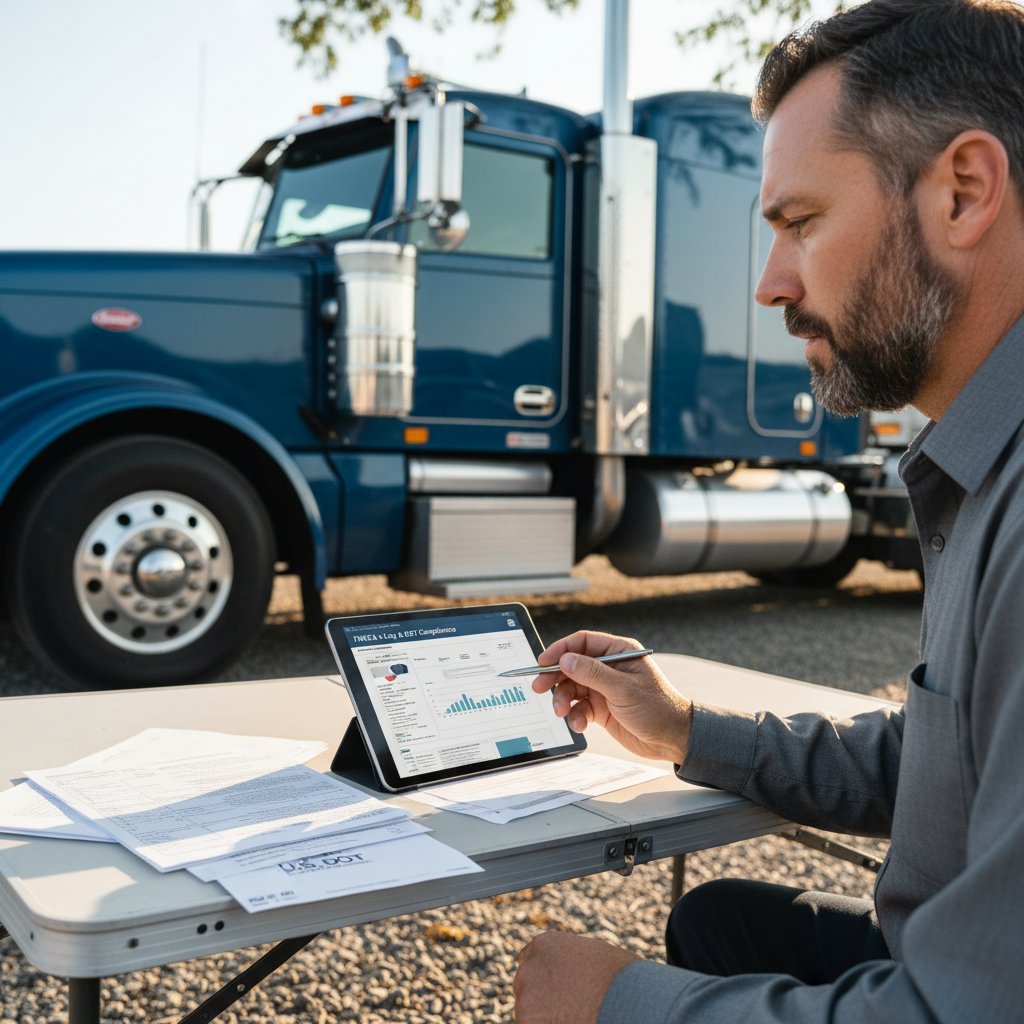
For a practical overview of what “being compliant” looks like when things go sideways, keep this bookmarked: DOT compliance during a breakdown.
Pro tip (the “while you wait” checklist)
- Get to the safest location possible (ramp, wide shoulder, rest area) if the truck is controllable.
- Make yourself visible and follow your safety policy and local requirements (triangles, flashers, PPE).
- Notify dispatch/broker early if appointment time is at risk—document everything.
- Don’t let anyone pressure you into rolling if the unit isn’t safe.

Frequently Asked Questions
Semi truck roadside service usually includes tires, jump starts/battery help, fuel delivery, lockouts, mobile mechanic triage, and towing/recovery, with dispatch available 24/7. Typical arrival time depends on vendor density, traffic, weather, and whether the call is after-hours; in many lanes, ETAs fall into a 1–3 hour window but can run longer in remote areas. The fastest way to improve ETA is giving a GPS pin, mile marker, direction of travel, safe-access notes, and clear symptoms (plus tire size if it’s a tire call) before the tech is assigned.
Semi truck roadside assistance in 2026 commonly costs $250–$400 for a dispatch/service call plus $180–$250 per hour for mobile labor, with totals driven by travel, labor minimums, after-hours fees, and parts like tires or batteries. Tire service labor (excluding the tire) often lands around $400–$750, while fuel delivery frequently runs $350–$700 including delivery and fuel. Always request an itemized estimate that spells out dispatch, travel, labor minimum, parts markup, and cancellation/no-access fees before authorizing work.
Roadside assistance can be worth it for owner-operators if it reduces downtime volatility and prevents high after-hours bills, especially when your lanes include rural stretches where travel charges spike. The decision comes down to three numbers: your expected breakdown frequency, the average cost per event in your lanes, and the membership caps/exclusions (tow-mile limits, eligible services, and approved vendors). If you’re tracking costs like a business, treat roadside as part of operating costs—not “bad luck”—and compare it against your cash-flow risk alongside trucking insurance and maintenance reserves.
If you have a steer tire failure on the shoulder, the correct move is to prioritize safety first by stopping in the safest location you can, making yourself visible, and avoiding risky shoulder work in traffic. Steer tire failures are higher risk because vehicle control is affected and shoulder conditions vary, so professional tire service or a tow is often the safest option. For prevention, warning signs, and next steps, use this truck tire blowout guide, and document the incident with photos and receipts for claims or broker disputes.
Conclusion: Get Faster Help Without Guessing on Price
The easiest way to control semi truck roadside service costs is confirming 7 terms before dispatch: service call fee, travel, labor minimum, after-hours surcharge, parts pricing/markup, cancellation/no-access fees, and payment method. Pair that with a fast-dispatch info pack (GPS pin, mile marker, symptoms, photos), and you’ll cut delays and billing surprises.
Key Takeaways:
- Ask for an itemized estimate before anyone turns a wrench.
- Send the right info (GPS pin, tire size, symptoms) to reduce billed hours.
- Know when to tow so you don’t pay for a “roadside fix” that can’t happen.
If you’re planning ahead for the next derate or aftertreatment issue, bookmark DPF regeneration roadside realities. And if you’re comparing risk controls that affect premiums over time—whether you’re shopping commercial truck insurance, semi truck insurance, hotshot insurance, or trying to keep affordable trucking insurance realistic—review what affects the cost of truck insurance.