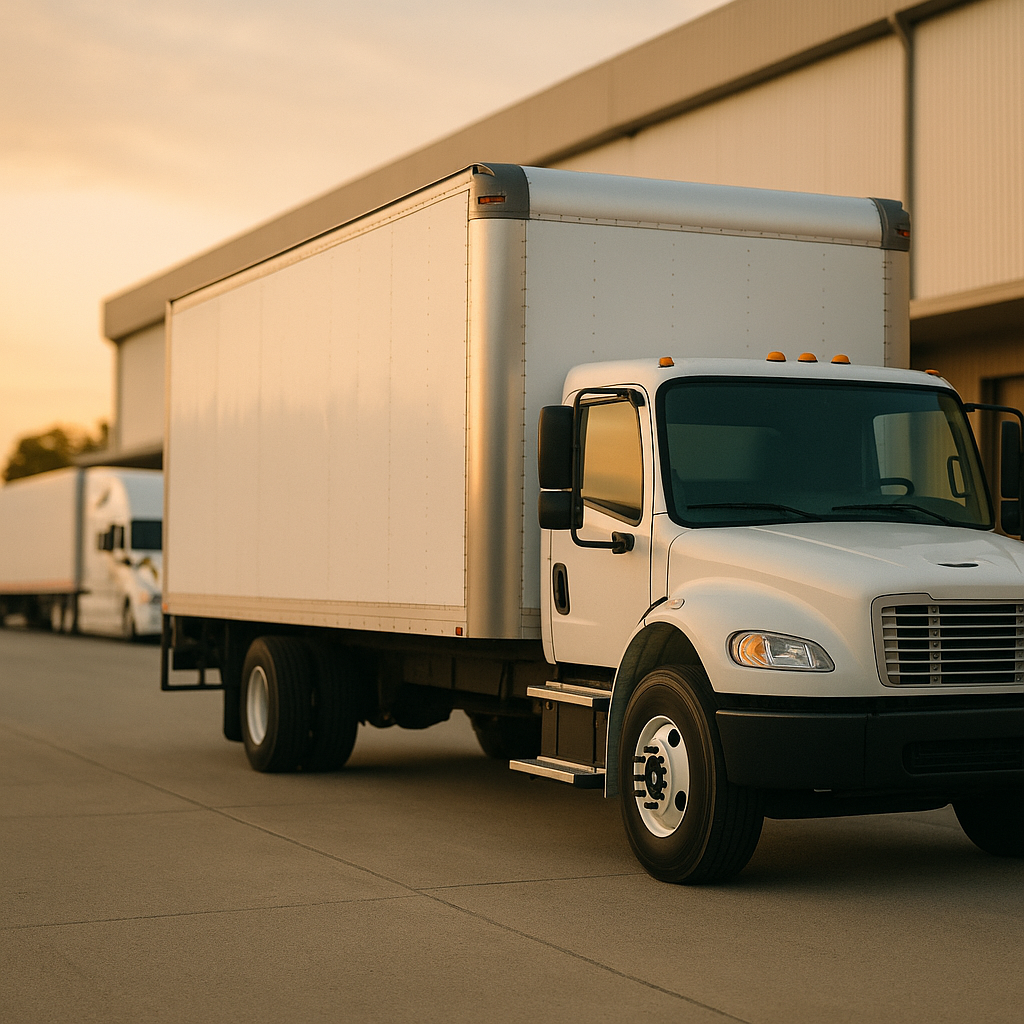
Typical 26ft box truck insurance runs $250–$2,600/mo in 2026. See coverages, deductibles, down payments, and ways to save. Get quotes.

If you’re asking how much is insurance for a 26ft box truck, the budgeting range most operators see in 2026 is $250 to $2,600+ per month, depending on liability-only vs a full package (liability + physical damage + often cargo), your ZIP code, operating radius, cargo, driver history, limits, and deductibles.
For broader context beyond 26-foot pricing, review this box truck insurance cost breakdown so you can see how packages and underwriting variables move the number.
Table of Contents
Reading time: 8 minutes
- Key takeaways
- How much is insurance for a 26ft box truck in 2026 (monthly + annual)
- How much is insurance for a 26ft box truck: what drives the rate
- What coverages you need for a 26ft box truck (and “full coverage”)
- How much is insurance for a 26ft box truck: ways to control the monthly bill
- Frequently Asked Questions
- Conclusion
Key takeaways
In 2026, how much is insurance for a 26ft box truck typically lands between $250 and $2,600+ per month because insurers price the operation (radius, territory, cargo, and loss history) more than the truck’s length.
- Expect a wide spread: New venture status, garaging ZIP, operating radius, and package choice (liability-only vs full package) are the biggest “spread makers.”
- “Full coverage” isn’t a standard trucking term: Most agents mean auto liability + comprehensive/collision, and often motor truck cargo (sometimes general liability too).
- Cash flow gets hit twice: You’re budgeting the premium and the down payment + installment fees, which can make “monthly” pricing feel misleading.
- You can lower premiums without going barebones: Tighten radius, choose a deductible you can actually pay, avoid lapses, and document safety improvements when carriers credit them.
How much is insurance for a 26ft box truck in 2026 (monthly + annual)
A typical 26ft box truck insurance cost per month in 2026 ranges from $250 to $2,600+, with “full package” setups sometimes reaching $4,000+/mo for tough risks or higher-value operations.
Before you compare quotes, make sure everyone is quoting the same thing: liability-only vs liability + physical damage, and whether cargo and general liability are included.
Typical cost ranges (liability-only vs full package)
| Package (Common Setup) | Low (Best-Case) | Typical | High (Tough Risk) | Notes |
|---|---|---|---|---|
| Liability-only (commercial auto liability) | $250–$700/mo | $700–$1,400/mo | $1,400–$2,600+/mo | Often seen with new ventures, urban routes, or higher-risk lanes/cargo |
| “Full package” (liability + comp/collision + often cargo) | $600–$1,200/mo | $1,200–$2,500/mo | $2,500–$4,000+/mo | Physical damage & cargo swing with truck value, deductible, and commodity |
Annualizing it: Multiply a monthly estimate by 12, then add any installment/finance fees if you aren’t paying in full.
If you want more 26-foot-specific monthly tier examples, see 26-foot box truck insurance price tiers.
Cost by operator profile (what most people miss)
New venture vs established pricing is one of the biggest reasons two similar 26-foot box trucks get wildly different premiums.
New venture (0–12 months) vs established (12+ months continuous coverage)
A “new venture” in commercial auto underwriting commonly means 0–12 months of continuous commercial coverage in the same type of operation (and sometimes a newly formed business or authority).
Insurers typically price new ventures higher because there’s less data on hiring discipline, dispatch habits, maintenance routines, and claim frequency.
- Who this affects: New box truck businesses, new entities, or operators returning after a lapse.
- What helps: A tight, consistent story (radius, lanes, and cargo) and proof of experience and safety habits.
Metro vs rural: why your ZIP code can change the bill
Garaging location and operating territory are core commercial auto rating variables, and dense metro ZIP codes often price higher due to claim frequency, theft/vandalism exposure, and traffic conditions.
Ask your agent a direct question: “Are you rating me primarily on garaging ZIP, operating radius, or lanes?” It usually explains why quotes differ by thousands.
How much is insurance for a 26ft box truck: what drives the rate
Commercial truck insurers primarily price a 26ft box truck based on driver history (MVR/claims), continuous coverage, territory, operating radius, cargo type/value, and selected limits/deductibles.
For the deeper underwriting view (and what moves the premium the most), read what affects the cost of truck insurance.
Driver + business profile
Driver and business profile usually includes MVR, prior losses, violations, years of experience, and continuous commercial insurance history.
From an insurer’s perspective, your loss history and driving record are among the strongest predictors of future claims, so they can move the rate more than the truck itself.
- Watch out for lapses: A coverage gap often triggers higher pricing or fewer carrier options.
- If you’re adding a driver: One avoidable violation can raise the entire account’s premium.
Operation details (how you actually make money)
Operational details—like for-hire vs private carrier, radius, cargo, and stops per day—are underwriting inputs that can change eligibility and pricing by carrier.
- For-hire vs private carrier: Hauling for others is rated differently than moving your own goods.
- Radius: Local (0–50/100 miles), regional, multi-state—often a major pricing lever.
- Cargo type/value: General freight is rated differently than high-value electronics or household goods.
- Stops per day: More stops often means more backing, dock, and minor collision claims.
Truck + equipment details (asset value = premium pressure)
If you carry physical damage coverage, insurers rate comp/collision using the truck’s year, value, VIN, security/parking, and loss trends for similar units.
Higher truck values typically mean higher physical damage premium because the carrier is pricing a bigger possible repair/total-loss check.
What coverages you need for a 26ft box truck (and “full coverage”)
A typical “full coverage” 26ft box truck insurance package usually means commercial auto liability + comprehensive/collision, and many for-hire operations also add motor truck cargo (plus general liability when contracts require it).
If you want a plain-English walkthrough of the building blocks, start with commercial truck insurance basics.
Commercial auto liability (the foundation)
Commercial auto liability pays for injuries and property damage you cause to others while operating the truck, and it’s the core coverage most commercial operations must carry.
If you operate interstate/for-hire, federal insurance filing rules may apply; FMCSA’s overview is here: https://www.fmcsa.dot.gov/registration/insurance-filing-requirements.

- Contract reality: Many brokers/shippers require limits above minimums, so “cheapest legal” may not be usable for work.
Physical damage (comprehensive + collision)
Physical damage coverage (comprehensive and collision) typically covers theft, vandalism, weather, animal strikes, and collision damage to your truck, subject to deductible and policy terms.
Lenders commonly require physical damage on financed trucks, and even paid-off owners use it to protect cash flow from a total loss.
- Deductible tip: Pick a deductible you could pay immediately if the claim happened today.
Cargo insurance vs general liability (they’re not the same)
Motor truck cargo covers the freight you’re hauling (loss/damage) and is often required by brokers, while general liability covers non-auto third-party claims like property damage at a customer site.
Two common surprises: auto liability doesn’t cover cargo, and cargo doesn’t cover a dock-worker slip-and-fall.
“Hotshot insurance” and “semi truck insurance” — where they overlap
Hotshot and semi truck policies are typically structured around different vehicle configurations and operations, but the carrier still prices the same fundamentals: territory, radius, cargo, and loss history.
A 26ft box truck can be cheaper or more expensive than those setups depending on what you haul, where you run, and how clean your record is.
How much is insurance for a 26ft box truck: ways to control the monthly bill
To control a 26ft box truck insurance cost per month without creating coverage gaps, the highest-impact levers are radius, deductibles, continuous coverage, verified safety controls, and matching limits to contract requirements.
For a longer checklist you can apply at renewal, see how to save on truck insurance.
Deductible sensitivity (illustrative example)
A deductible is the amount you pay out of pocket before physical damage or cargo coverage pays (depending on the claim), and higher deductibles usually reduce premium while increasing your cash risk.
| Deductible Choice | What Usually Happens to Premium | Cash-Flow Risk After a Claim |
|---|---|---|
| $1,000 | Higher | Lower out-of-pocket hit |
| $2,500 | Medium | Manageable if you keep a reserve |
| $5,000 | Lower | Painful if you don’t have cash saved |
Limits sensitivity (contract reality)
Liability and cargo limits should be quoted to match your broker/shipper and lender requirements, because a cheaper limit that fails a COI requirement isn’t a usable quote.
- Simple rule: Match contracts first, then tune deductibles and optional coverages to manage the price.
Down payment vs monthly payments (budgeting truth)
Commercial auto policies commonly require a down payment at binding (often 20%–35% depending on carrier/financing), with the remainder split into installments plus fees.
Illustrative math: An $18,000 annual premium with 25% down is $4,500 due upfront, then the remainder is paid in installments (plus any fees).
10 practical levers that can lower premiums
- Shop multiple markets: You want multiple carriers, not just one price.
- Tighten the radius: Don’t buy “nationwide” if you’re local.
- Keep continuous coverage: Lapses often raise pricing and reduce options.
- Document safety: Maintenance logs, training, and driver files matter.
- Use dashcams/telematics when credited: Ask what proof the carrier needs for discounts.
- Reduce backing risk: High stop counts create a lot of “small” claims.
- Secure parking: Theft and vandalism losses can spike your renewal.
- Match cargo to the policy: Don’t haul excluded commodities “just once.”
- Use defensible stated value: Overinsuring can increase premium and invite underwriting questions.
- Re-shop at renewal: Bring updated lanes, mileage, and loss-control improvements.
What to have ready for accurate quotes
Accurate quotes come from accurate inputs, so have these details ready before you bind.
- Truck: VIN, year, purchase price, GVWR, add-ons (liftgate/reefer), overnight parking
- Ops: garaging ZIP, radius, states, cargo types/values, COI requirements
- Drivers: license class, years of experience, MVR, claims
- Coverage: requested limits, deductibles, effective date, owned vs financed
Compliance and safety records still matter at renewal
DOT and safety history can affect pricing and carrier appetite, especially after claims or violations that change your risk profile.
For a practical view of how compliance and safety history can follow you, see DOT record and trucking insurance.
Frequently Asked Questions
In 2026, insurance for a 26-foot box truck typically costs $250 to $2,600+ per month depending on whether you buy liability-only or a full package (liability + physical damage + often cargo), plus your garaging ZIP, operating radius, cargo type/value, limits, deductible, and new-venture status. To compare prices fairly, have every agent quote the same limits and deductibles, the same radius (local vs regional), and the same cargo description. Two quotes that look “$1,000 apart” are often quoting different packages.
Most 26ft box truck operators need commercial auto liability at minimum, and financed/leased trucks typically require physical damage (comprehensive + collision) to protect the lender’s collateral. If you haul for-hire, many brokers require motor truck cargo (often $50,000–$100,000+ depending on the contract). Some customers also require general liability for non-auto incidents at job sites. The “right” package is the one that matches your contracts and how you actually operate.
Often yes, because cargo insurance and general liability cover different risks and many broker/shipper contracts require one or both. Motor truck cargo covers the freight you’re hauling if it’s damaged or stolen (subject to policy terms, limits, and exclusions), while general liability covers third-party claims not caused by driving, like accidental property damage at a customer dock or an injury allegation on site. Auto liability does not replace either one, so treating them as interchangeable can create expensive gaps.
You don’t need a CDL just because a box truck is 26 feet long, because CDL rules are generally based on weight rating (GVWR/GCWR) and configuration, not length alone. A common threshold is 26,001+ lbs GVWR/GCWR for many CDL-required vehicles, but your exact requirement depends on the unit’s ratings and how you operate. FMCSA’s CDL overview is here: https://www.fmcsa.dot.gov/registration/commercial-drivers-license. From an insurance perspective, CDL-required setups, heavier ratings, and certain operations can change eligibility and pricing.
The biggest pricing drivers for box truck insurance are usually new venture status/continuous coverage, driver MVR and claims, garaging and operating territory, operating radius, cargo type/value, and your chosen limits and deductibles. A single factor like a metro garaging ZIP or a prior at-fault loss can move your premium more than the truck’s age. If you want the compliance angle, review DOT record and trucking insurance to see how safety history can impact underwriting decisions.
Conclusion: What you’ll pay (and how to control it)
In 2026, a realistic answer to how much is insurance for a 26ft box truck is $250–$2,600+ per month, with the biggest swings coming from package choice, location, operating radius, and driver/business history.
The fastest way to stop guessing is to compare apples-to-apples quotes using the same limits, deductibles, radius, and cargo description.
Key Takeaways:
- Match quotes to your contracts (limits/cargo/GL) before chasing the lowest premium.
- Budget for down payment + fees, not just the “monthly” number you see in a quote.
- Use controllable levers like radius, defensible stated value, secure parking, and deductible strategy.
If you also want state-by-state examples of how territory can change pricing, compare commercial truck insurance cost in Texas and commercial truck insurance cost in Florida.