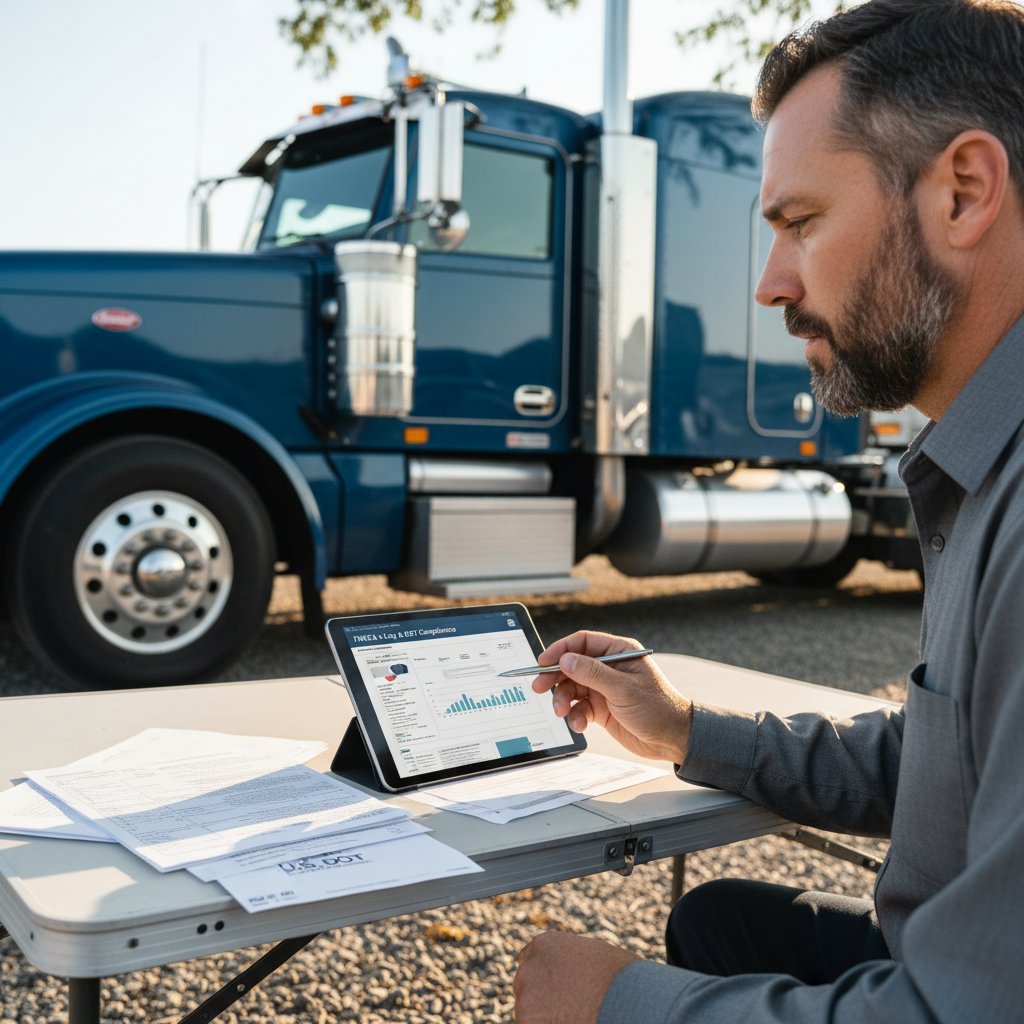
Learn how to get DOT number and MC number in 2026: who needs what, fees, filings (BOC-3, insurance, UCR), and timelines. Start now.

If your truck is ready but your authority isn’t active, learning how to get DOT number and MC number (and how to switch from Pending to Active) is the difference between booking loads and bleeding cash.
Featured snippet: To get a USDOT number, register your company in FMCSA’s system and submit your operating details (USDOT is typically issued quickly). If you’re a for-hire interstate carrier, also request operating authority (often called an MC number) and pay the fee, then complete BOC‑3, insurance filings, and UCR to activate.
Before you start, use this FMCSA authority checklist for new carriers so you don’t miss the filings that keep you stuck in “pending.”
Table of Contents
Reading time: 8 minutes
- DOT number vs. MC number: what each one does (and who needs what)
- What you need before you apply (fast checklist)
- How to get a DOT number and MC number (7 steps)
- Activate your authority: filings, timeline, common roadblocks (plus a 2026 note)
- Frequently Asked Questions
- Conclusion: Get active first, then stay compliant
Key takeaways
A USDOT number is a safety and compliance identifier, while MC operating authority is legal permission to haul for-hire in many interstate setups, and your authority isn’t usable until FMCSA shows it as “Active.”
- USDOT is your safety/compliance ID: It’s tied to inspections, audits, and compliance tracking.
- USDOT is free: FMCSA states there’s no charge to obtain the USDOT number itself (avoid “USDOT service” sites that sell the same submission).
- MC authority isn’t “done” until it’s ACTIVE: Most delays come from BOC‑3 and insurance filings not posting correctly.
- Your biggest real cost is usually insurance: The application fee is smaller than the premium required to activate.
DOT number vs. MC number: what each one does (and who needs what)
A USDOT number is the FMCSA identifier used to track a carrier’s safety and compliance record, while operating authority (often called an MC number) is FMCSA permission to transport regulated freight for-hire in specific categories.
What it is (plain English)
- USDOT number: The ID tied to your safety record—inspections, audits, compliance tracking, and many enforcement checks.
- MC number / Operating Authority: Permission to operate as a for-hire carrier in certain categories (property, passenger, broker, etc.).
If you want a deeper breakdown (and the common “I applied for the wrong thing” scenarios), use: DOT vs MC number differences.
Why it’s essential (business reality)
Brokers, shippers, and some factoring companies often verify your authority status before they onboard you, and one wrong selection (private vs. for-hire, cargo type, authority type) can cost weeks of downtime.
Who needs it (quick rule of thumb)
FMCSA publishes a starting point for who needs a USDOT number here: FMCSA: Who needs to get a USDOT number?
- You likely need a USDOT number if you operate in interstate commerce and meet FMCSA criteria.
- You likely need MC operating authority if you’re for-hire and hauling interstate in a setup that requires authority.
- State note: Some states also require a DOT number for certain intrastate operations, so check your state’s motor carrier rules.
What you need before you apply (fast checklist)
FMCSA registration requires consistent legal identity and operating details (name, address, EIN/SSN, operation type, cargo, and equipment), and mismatches between your application and later BOC‑3/insurance filings are a common reason authority stays “Pending.”
Why it matters
Rushing this part usually creates expensive rework like name/address mismatches, incorrect classifications, and delays that push activation back days or weeks.
Pre-application checklist (copy/paste)
Business identity
- Legal business name (exactly as registered)
- DBA (if used)
- EIN (or SSN if sole proprietor)
- Business address, phone, email
Operations
- Private vs. for-hire
- Interstate vs. intrastate
- Cargo type (don’t select hazmat “just in case”)
- Equipment type (hotshot, power-only, dry van, reefer, flatbed, etc.)
- Estimated annual miles / operating radius
Compliance planning (you’ll need this right after)
- Process agent for BOC‑3
- Insurance agent who can file with FMCSA
- UCR plan + renewal reminder
If you’re still deciding your setup (EIN, LLC, costs, lanes, and operating model), this will help you avoid do-overs: Starting a trucking business (owner-operator setup).
Image placeholder: Printable pre-application checklist box graphic.
How to get a DOT number and MC number (7 steps)
You can get a USDOT number at no charge by applying through FMCSA’s official registration system and, if your operation needs it, request operating authority by paying $300 per authority type as noted by FMCSA.
Step 1: Use the official FMCSA registration system
Start in FMCSA’s official registration flow and avoid “look-alike” sites that charge fees for free steps; set aside uninterrupted time so you don’t submit inconsistent answers.
Step 2: Enter your business details (double-check these)
- Legal name spelling: Match IRS/state registration exactly.
- Address formatting: Keep suite numbers and punctuation consistent.
- EIN/SSN: Confirm accuracy before submitting.
Step 3: Enter your operation details (don’t over-select)
- Operation type: Private vs. for-hire.
- Cargo categories: Select only what you will haul.
- Equipment classification: Be honest and specific.
Step 4: Submit for your USDOT number
USDOT issuance is often quick when the information is clean; save a confirmation PDF/screenshot so you have a record of what you submitted.
Step 5: Request operating authority (MC) if you need it
If your operation requires operating authority, request the correct authority type and pay the fee; FMCSA states the cost is $300 per operating authority requested: FMCSA: How do I get operating authority (MC number)?
Step 6: Get your “pending” authority moving with the required filings
This is where most new carriers stall—your status won’t go Active until the required filings are posted and matched to your registration details.

Step 7: Verify status before you book loads under your authority
- Verify your authority status shows as Active.
- Verify your insurance is displayed where brokers and FMCSA tools expect it.
- Keep digital copies of key documents so shipper packets don’t slow you down.
Image placeholder: 2–3 annotated screenshots of the FMCSA registration flow with arrows on fields that commonly cause errors.
Frequently Asked Questions
A carrier typically needs a USDOT number when operating in interstate commerce and meeting FMCSA criteria, and FMCSA states there is no charge to obtain the USDOT number itself. Exact requirements depend on what you haul, your vehicle weight/class, and whether you cross state lines, so confirm using FMCSA’s guidance: FMCSA: Who needs to get a USDOT number? Some states also require DOT registration for certain intrastate operations, so check your state’s motor carrier rules before you assume “intrastate means no DOT.”
An MC number is commonly used to refer to FMCSA operating authority, which is the legal permission for a carrier to haul for-hire in specific authority categories (for example, property or passenger). Not every operation needs it; whether you do depends on your operation type (private vs. for-hire), what you haul, and whether your trips are interstate. If you want the common “who needs what” scenarios in plain English, use: DOT vs MC number differences.
A USDOT number is often issued quickly after you submit an accurate application through FMCSA, but delays happen when your business details or operation selections are inconsistent. The most common time-wasters are simple: name/address formatting that doesn’t match later filings, selecting cargo/equipment you don’t actually run, or choosing the wrong operation type. Even if the USDOT number comes back fast, your ability to haul under your own authority depends on completing activation items like BOC‑3, insurance filings, and UCR (when required).
To activate operating authority, carriers typically must have a BOC‑3 filing on record and an insurance filing submitted by the insurer posted with FMCSA, and many interstate carriers must also complete UCR registration annually. If any of those items are missing or mismatched to your registered legal name/address, your authority can remain in “Pending” even after you pay the application fee. For an insurance-first overview (because that’s usually the biggest cost and the most common blocker), see: commercial truck insurance.
Conclusion: Get active first, then stay compliant
Getting a USDOT number is only the start; getting your MC authority to Active is what makes you a working carrier. If you follow the right order—apply cleanly, then complete BOC‑3, insurance filings, and UCR—you’ll avoid the most common “pending” delays.
Key Takeaways:
- Apply with consistent legal name/address so BOC‑3 and insurance filings match on the first try.
- Plan on $300 per authority type for operating authority plus the insurance premium needed for activation.
- After activation, stay ahead of ongoing requirements (records, updates, and annual items like UCR).
If you’re budgeting startup costs, don’t underestimate insurance—pricing can swing hard based on radius, commodity, equipment, and experience. For deeper cost planning, read: Trucking insurance cost breakdown.