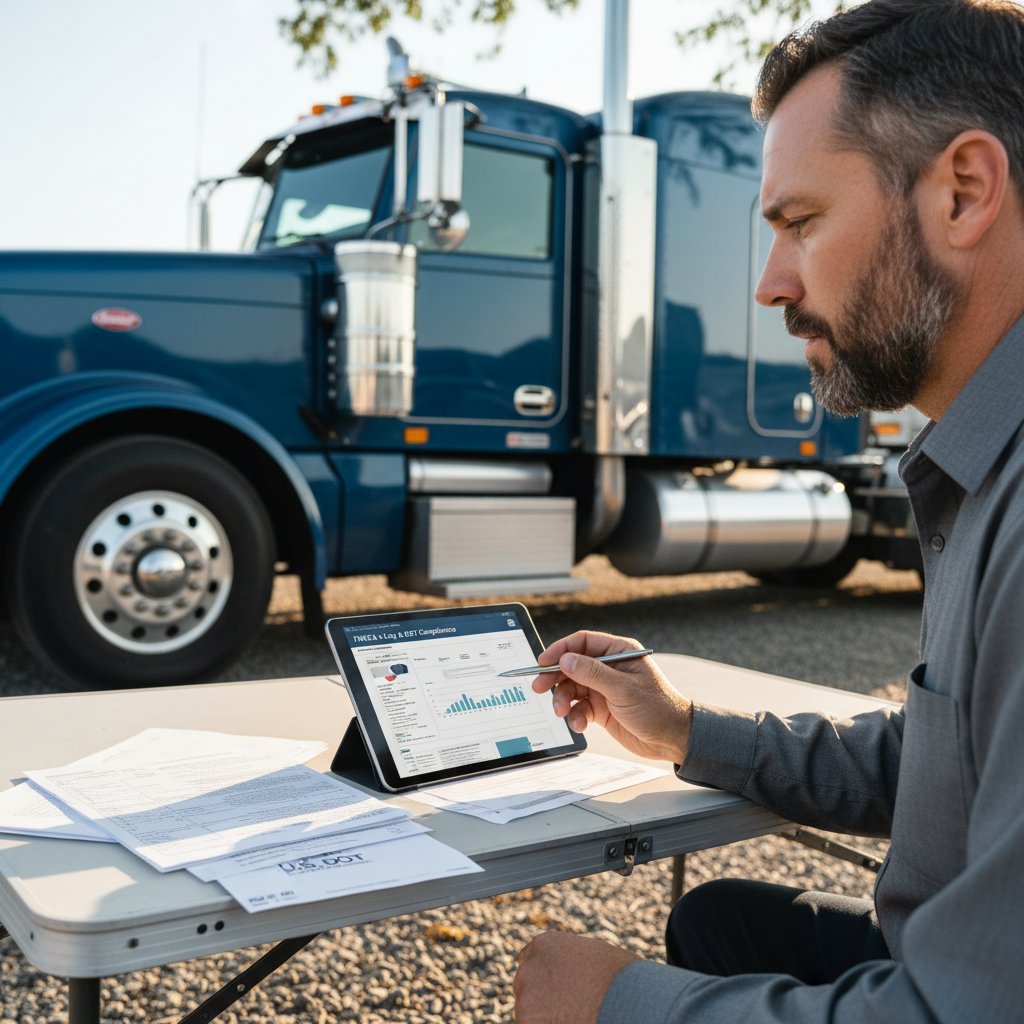
Compare insurance agents online for trucking insurance: verify licenses, avoid spam, and lock in affordable commercial truck coverage fast. Get quotes today.
Insurance agents online can help you compare trucking insurance faster, but only if you verify licensing, confirm the underwriting carrier, and quote apples-to-apples on limits, cargo, and filings. For most owner-operators, the safest “fast” approach is: (1) confirm the agent’s state producer license, (2) confirm who will actually insure you (the carrier “paper”), and (3) compare the same liability, cargo, and deductibles across every quote.
When you’re under a broker packet deadline, a wrong radius, commodity, or filing can park your truck just as fast as a high premium. If you want to start with pricing and options, use this workflow to compare commercial truck insurance quotes while you follow the verification steps below.
Key Takeaways:
- Verify licensing first: State-licensed producers are legitimate; anonymous “quote sites” often aren’t.
- Comparison usually means independent: Captive agents can be great, but they’re typically one-carrier.
- Trucking details drive acceptance: DOT/MC info, radius, garaging ZIP, commodities, drivers, and filings affect underwriting.
- Affordable isn’t just cheap: The right structure at the lowest sustainable cost-per-mile beats the lowest monthly payment.
Table of Contents
Reading time: 8 minutes
What Online Insurance Agents Actually Do for Owner-Operators
Online insurance agents are state-licensed insurance producers who sell policies and help clients select coverage, and the U.S. Bureau of Labor Statistics lists this as the core job of insurance sales agents (BLS).
In plain English, a good online agent collects your trucking details, shops carrier options (if they’re independent), explains limits and exclusions, and coordinates binding—by phone, email, and e-signatures.
What they handle for commercial truck insurance
For most owner-operators, the work isn’t “getting a price”—it’s building a policy that brokers and shippers will accept and that will actually respond after a loss.
- Auto liability: The first limit most brokers check on a COI (often $1M CSL in many contracts).
- Cargo: Needs to match your commodities, limits, and contract requirements.
- Physical damage: Protects your tractor (and sometimes trailer), especially if you can’t self-insure.
- Non-trucking liability / bobtail: Depends on lease/dispatch setup and what’s covered off-dispatch.
- Filings: Forms like BMC-91/BMC-91X that prove financial responsibility for authority.
If you want a quick refresher on what each coverage does before you start comparing quotes, review these commercial truck insurance basics.
Why the details matter in trucking
Small input changes can move premium and eligibility because underwriting is built around exposure (where you run, what you haul, and who drives).
- Operation: For-hire vs. private carrier, and interstate vs. intrastate.
- Radius: 1–50 air miles, regional, or 500+ miles (don’t pay for exposure you don’t run).
- Equipment + freight: Reefer, dry van, flatbed, or hotshot changes cargo and claims patterns.
- New venture: New authority often has fewer carrier options and stricter underwriting questions.
Pro tip to ask early
Ask: “Which carriers can you quote for my exact operation in my state?” If the answer is vague, you may be getting one quote dressed up as a comparison.
The 7 Options When You Work With Insurance Agents Online
Insurance agents online typically sell through seven distribution models—independent, captive, wholesale broker, marketplace, carrier-direct, program/MGA, or a local agency that works remotely—and each model changes carrier access and how your data is handled.
You’re not only choosing a person; you’re choosing the channel behind them, and that affects how many carriers get shopped and how many follow-up calls you’ll get.
Your 7 options (quick definitions)
- Independent agent (trucking-focused): Often appointed with multiple carriers and can shop options.
- Captive agent: Represents one carrier; strong service, but not “market shopping.”
- Trucking insurance broker (wholesale access): May place through specialty markets via wholesalers.
- Online marketplace: Fast form fill, but your info may route to multiple agencies.
- Carrier direct online: DIY purchase works best for simpler risks.
- Program administrator / niche MGA: Specialty programs built for certain segments or commodities.
- Local agency that works remote: Same agency model, just digital communication.
True comparison vs “one quote”
Comparing “agents” only helps if you’re actually comparing carriers, not just different salespeople quoting the same company.
If you want the clearest explanation of the difference, read this breakdown of an independent vs captive insurance agent model.
Pro tip to avoid lead spam
Before you submit any form, look for a clear statement like “How many partner agencies will contact me?” If they won’t say, assume it’s more than one.
How to Find (and Verify) Licensed Insurance Agents Online in 5 Minutes
Producer licensing is regulated at the state level, and the National Association of Insurance Commissioners (NAIC) notes that licensing and oversight are handled by state insurance departments (NAIC producer licensing).
That means “licensed in Texas” doesn’t automatically mean “licensed where you live or garage your truck,” and it doesn’t guarantee they can legally solicit or service your policy in your state.
Step-by-step: 5-minute legitimacy check
- Get the agent’s full legal name + agency name (not just a first name and a free email).
- Ask what state(s) they’re licensed in and request a license number if available.
- Verify on your state DOI site using the NAIC directory of state insurance department resources.
- Ask how your data will be used (privacy policy + whether your info is sold/shared).
- Confirm the underwriting carrier (the company “paper”) and how COIs/filings will be handled.
Why this protects your authority and contracts
For-hire operations often need filings and certificates fast, and a wrong filing or misclassified operation can delay broker onboarding and stop revenue immediately.
Because insurance rules and rating factors vary by location and operation, it helps to check this reference on state-by-state trucking insurance requirements before you bind.
Red flags (walk away)
- Payment pressure: “Pay by wire / gift card / crypto.”
- No identity: Refuses to provide a license number, legal name, or business address.
- No carrier transparency: Won’t tell you who the underwriting carrier is.
- Too fast to be real: Quotes without asking radius, commodities, garaging ZIP, drivers, or filings.
How to Compare Insurance Agents Online (Checklist + Cost Controls)
Comparing insurance agents online works best when you score each agent on licensing, carrier access, coverage clarity, fees, and service deliverables like COIs and endorsements.
You’re not hiring a friend—you’re hiring someone to reduce business risk, protect contracts, and keep you compliant when a broker asks for a COI in an hour.
A simple scorecard you can reuse
| Category | Agent A | Agent B | Agent C |
|---|---|---|---|
| Licensed in my state + verified | |||
| Trucking questions asked (radius/commodity/filings) | |||
| Carrier access for my operation | |||
| Quote turnaround time | |||
| Explains exclusions/endorsements clearly | |||
| Fees disclosed upfront (agency/broker fees) | |||
| Post-bind service (COIs, endorsements, renewals) | |||
| Review patterns (service + claims support) |
Cost controls that actually move trucking premiums
Affordable trucking insurance usually comes from accurate exposure data (radius, garaging, commodities), consistent prior coverage, and smart deductibles—not from “gaming” the application.
- Radius: Don’t pay for 500+ mile exposure if you run local or regional.
- Garaging ZIP: Rate and theft trends can change by ZIP.
- Prior insurance: Lapses can trigger higher pricing or fewer carrier options.
- Deductibles: Choose deductibles you can actually pay after a claim.
- Drivers: MVR/experience impacts both acceptance and cost.
- Cargo profile: Some commodities are tougher markets than others.
For a practical list of levers you can negotiate without creating coverage gaps, use these affordable trucking insurance tips.
Pro tip: request apples-to-apples quotes
When you request quotes, keep these identical across every agent so you’re comparing the same product:
- Auto liability limit (example: $1,000,000 CSL)
- Cargo limit + deductible
- Physical damage deductible
- Trailer coverage (owned vs non-owned, if applicable)
- Filing requirements (if needed for authority or contracts)
If one quote is “cheaper” because cargo dropped or a deductible quietly jumped, it’s not savings—it’s a different policy.
Frequently Asked Questions
Find an insurance agent online for trucking by filtering for (1) your state, (2) your operation type (for-hire, hotshot, power-only, local vs OTR), and (3) proof of an active producer license on your state Department of Insurance (DOI) lookup. Start with agencies that list a real business name, address, and clear trucking experience (filings, COIs, cargo requirements). Then verify the license using your state DOI site; the NAIC directory can point you to the right DOI lookup page: https://content.naic.org/state-insurance-departments.
Online insurance agents are legit when they have an active state producer license, disclose the underwriting carrier (the company “paper”), and clearly explain how your data will be used or shared. Verify licensing before sending driver licenses, VINs, or loss runs, and be cautious with quote forms that trigger multiple agencies calling at once. To screen faster, look for review patterns tied to service items truckers feel immediately (COI turnaround, endorsement speed, renewals) and use this guide on online insurance agent reviews and vetting to spot lead-farming traps.
An independent insurance agent is typically appointed with multiple insurance carriers, which allows real carrier comparison instead of a single-company quote. This matters in trucking because appetite changes fast by commodity, radius, driver history, and “new venture” status, so one carrier may decline you or price you out. Independent access can also help at renewal when premiums jump and you need alternatives without changing your whole operation. If you want the cleanest explanation of how the model affects your options, see this independent vs captive insurance agent guide.
Yes, you can sometimes buy commercial truck insurance online without an agent, but it works best for straightforward risks with simple coverage needs and no confusing filings or contract requirements. Trucking gets complicated when you need certificates of insurance (COIs) on short notice, have specific cargo requirements, or need endorsements that brokers expect. If you’re a new authority, hauling broker freight, or unsure about exclusions, an experienced agent often saves money by preventing coverage gaps and application errors that can lead to claim disputes or rejected COIs.
Conclusion: Choose Speed, But Don’t Trade Away Coverage
Insurance agents online can help you move fast, but the only “fast” that matters is coverage that binds correctly and passes broker and shipper checks. Verify licensing, confirm the underwriting carrier, and force apples-to-apples quoting so you’re comparing real value—not hidden coverage cuts.
Key Takeaways:
- Verify the license: Use your state DOI lookup (via the NAIC directory) before sharing documents.
- Confirm the carrier “paper”: Always know which insurance company will underwrite the policy.
- Quote apples-to-apples: Keep liability, cargo, deductibles, and filings the same across every quote request.
If you’re running hotshot or changing equipment and lanes, start with this hotshot insurance guide. Before you bind or renew, run a final gut-check with this semi truck insurance coverage checklist.