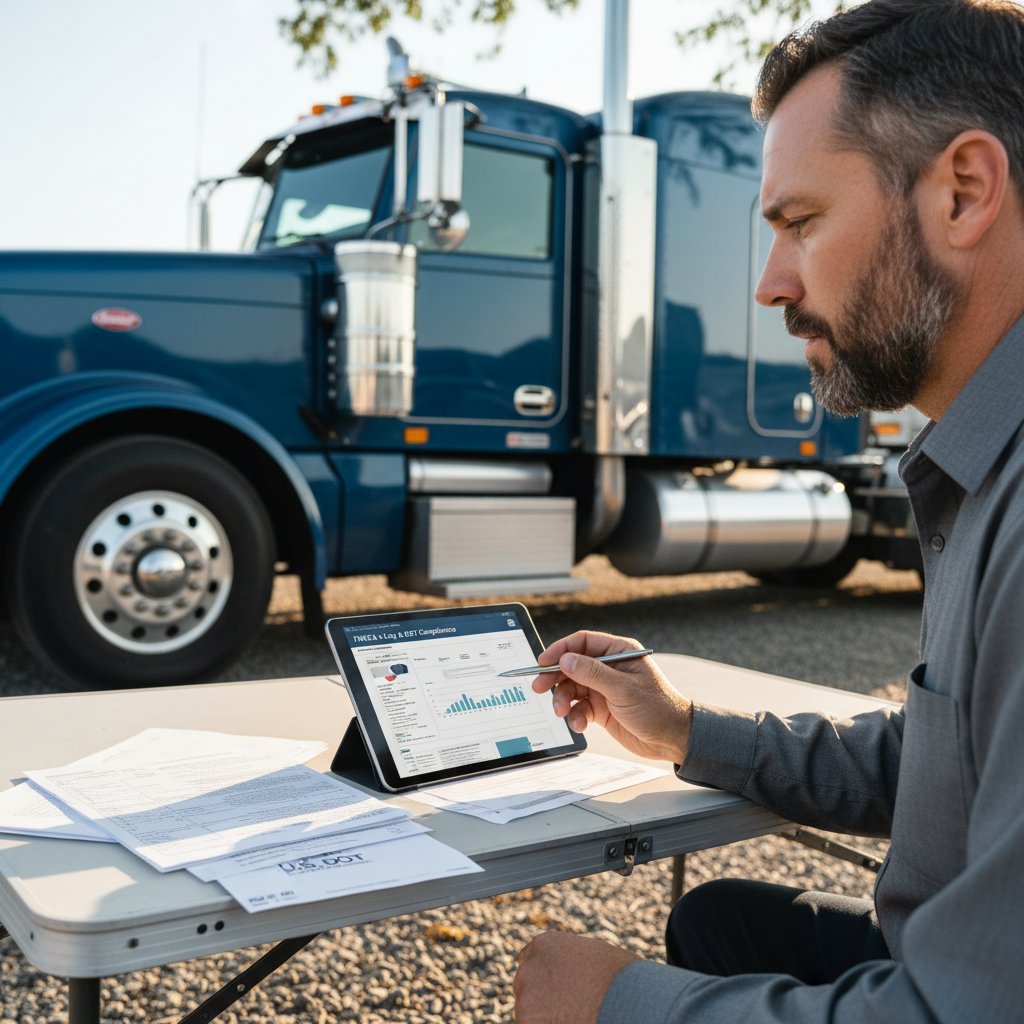
Compare 2026 auto insurance minimums across all 50 states, including FMCSA limits, intrastate truck rules, proof requirements, and compliance basics.
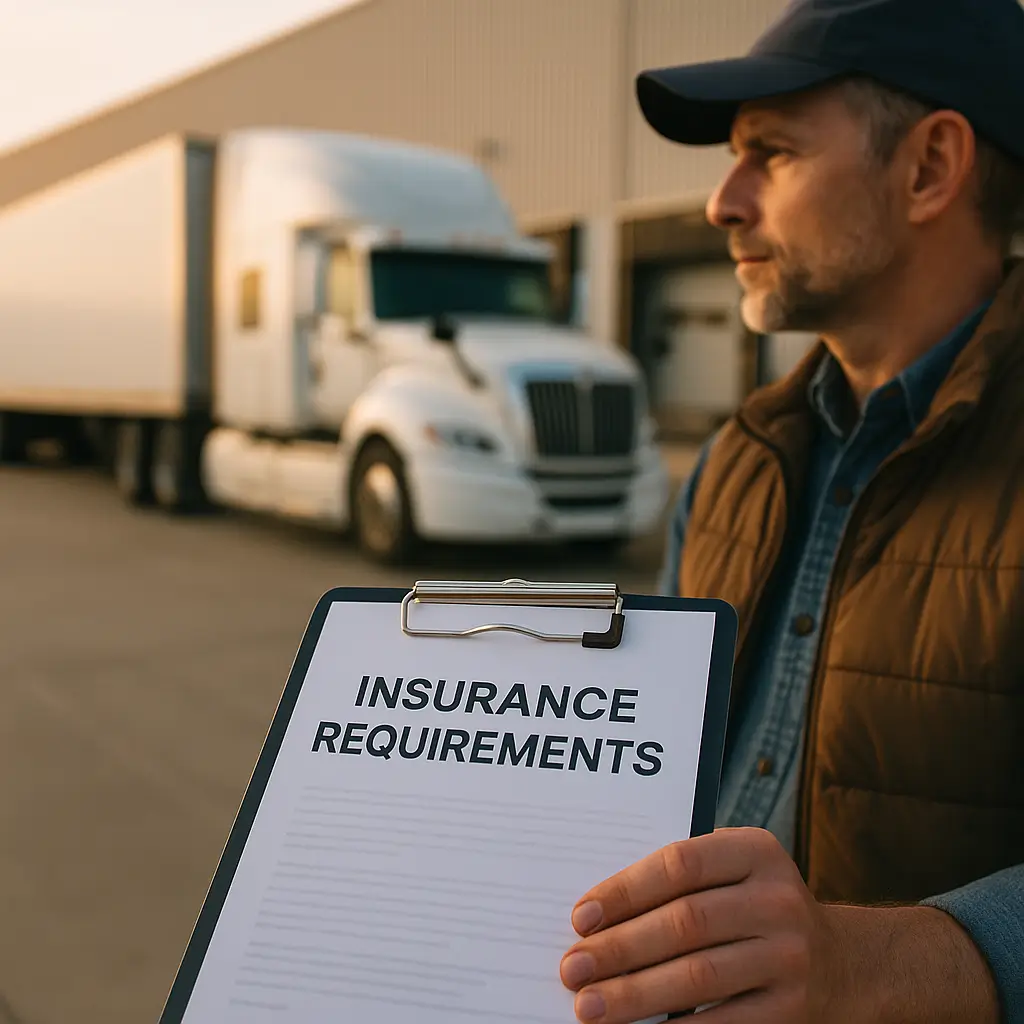
Insurance requirements for commercial truck insurance in 2026 usually come down to three things: the legal minimums (FMCSA or your state), the coverages brokers and shippers demand to tender freight, and the proof you can produce fast (COIs and required filings).
For most interstate owner-operators, that means meeting federal liability rules, keeping your filings active, and carrying a broker-ready COI—then layering cargo and other coverages based on what you haul. If you want a quick foundation before you compare limits and endorsements, start with Commercial truck insurance basics.
Table of Contents
Reading time: 11 minutes
- Key takeaways
- FMCSA insurance requirements for trucking insurance (interstate authority)
- State intrastate insurance requirements (plus a 50-state “where to verify” lookup)
- What brokers and shippers require (even when it’s not “the legal minimum”)
- Proof of insurance requirements: what to carry and what to show
- Next steps: lock in compliance, then shop for the right limits
- Frequently Asked Questions
- Conclusion
Key takeaways
FMCSA’s interstate public-liability minimum for most for-hire property carriers is $750,000 under 49 CFR Part 387, but many brokers still expect $1,000,000 liability and separate cargo limits on your COI.
- Federal rules set the baseline: Interstate carriers must meet FMCSA minimums and keep required filings active to maintain authority.
- Intrastate rules can differ: States may enforce different limits, forms, and permit requirements for in-state operations.
- Proof is more than an insurance card: Most setups require an ACORD COI plus verifiable active filings where applicable.
- Cheap can get expensive: A “lowest price” policy can cost you loads if your COI doesn’t match broker packets or your operation.
FMCSA insurance requirements for trucking insurance (interstate authority)
FMCSA requires interstate for-hire motor carriers to maintain minimum financial responsibility under 49 CFR Part 387—commonly $750,000 in public liability for non-hazardous property—and to keep required insurance filings active to maintain operating authority.
What it is (plain English)
When people say “FMCSA insurance,” they usually mean auto liability (public liability) that meets federal minimums plus the carrier/insurer paperwork that proves coverage to the government.
In practice, your insurer (or their filing service) submits forms such as BMC-91/BMC-91X for liability; certain carrier types (for example, household goods) can also have cargo-related filing requirements (often referenced as BMC-34).
Why it’s essential (cash flow + compliance)
- No active filing = no authority: If your filing drops, your authority can go inactive, and brokers will see it.
- Wrong limits = fewer loads: You can be “legal” and still get rejected if your COI doesn’t match the broker’s packet.
Watch a quick breakdown of how auto liability works when you’re setting up new trucking authority:
Who typically needs it
- Owner-operators running interstate under their own authority (MC number)
- Small fleets crossing state lines
- Many hotshot operators once they’re operating for-hire in regulated commerce
For a deeper breakdown of how these federal rules apply specifically to single-truck operators, see FMCSA insurance rules for owner-operators.
Pro tip (avoid expensive downtime)
Before you pay a down payment, confirm your agent is ordering the correct filings and tell you exactly when they’ll show as active. For the step-by-step process, see FMCSA insurance filings (BMC-91X/BMC-34).
External reference: FMCSA’s insurance filing requirements overview: FMCSA insurance filing requirements
State intrastate insurance requirements (plus a 50-state “where to verify” lookup)
Intrastate insurance requirements are set by each state (not FMCSA), and many states enforce trucking liability minimums—often in the $750,000 to $1,000,000 range—through state registrations, permits, or filings (commonly Form E/Form F-style processes). Keep in mind that states also set their own auto insurance minimums by state, which may differ from FMCSA’s interstate thresholds.
What it is (plain English)
If you operate only within one state, you may fall under that state’s motor carrier rules instead of (or in addition to) FMCSA rules. The agency could be a state DOT, DMV, public utilities commission, or state police—so the “right” website varies.
Why it’s essential
You can be compliant for interstate authority and still get jammed up intrastate if your state requires a different filing, a state permit, or different proof tied to your registration.
Who needs to double-check intrastate rules
- Carriers running in-state only
- Hotshot operators doing regional work who never cross state lines
- Operators pulling state-regulated commodities, oversize/overweight permits, or specialized intrastate authorities
Hotshot note (don’t assume “hotshot” means “not regulated”)
“Hotshot” describes the equipment and style of hauling—not whether you’re regulated. Your correct setup depends on weight ratings, for-hire status, and whether you operate under authority. Use the Hotshot insurance guide to sanity-check your operation before you bind coverage.
50-state verification table (official agency domains)
Use this as a starting point to find your state’s official intrastate motor carrier insurance requirements. Agency pages move—once you land on the domain, search for “motor carrier,” “intrastate authority,” or “commercial vehicle.”
For a consolidated view of minimum limits across all 50 states, see LogRock’s state-by-state insurance requirements table.
Optional (District of Columbia): https://dmv.dc.gov
Practical checklist for verifying your state rules
- Search the official site: Use the phrase “intrastate motor carrier insurance requirements.”
- Confirm whether a state filing is required: Some states use state-specific forms or electronic submissions.
- Confirm who it applies to: Rules can differ for for-hire vs private carrier.
- Save proof: Screenshot or download the page for your compliance folder.
What brokers and shippers require (even when it’s not “the legal minimum”)
Many U.S. broker packets commonly require $1,000,000 auto liability and $100,000 to $250,000 motor truck cargo on the Certificate of Insurance, even if the legal minimum for your authority is lower.
What it is
This is the “getting loaded” side of insurance requirements—coverage that’s driven by contracts, not statutes. Typical add-ons (depending on freight) include:
- Motor Truck Cargo: Cargo coverage that brokers and shippers often require to tender loads.
- General Liability (GL): Third-party injury/property claims that can happen off the roadway (yard, dock, customer site).
- Physical Damage: Comp/collision for your truck and sometimes scheduled equipment.
- Higher liability limits: Some shippers won’t work with anything below $1M liability.
Why it’s essential
- Speed matters: A broker can reject your carrier setup in minutes if your COI doesn’t match.
- Cargo claims are brutal: One high-value loss can wipe out a year of profit (or end a contract relationship).
Not sure whether $750K or $1M is the right limit for your operation? This breakdown helps you decide:
Pro tip (reduce “setup friction”)
Ask your agent for a “broker-ready” COI template that can be updated same-day for new certificate holders. For a quick cargo overview, see Cargo insurance for owner-operators.
Proof of insurance requirements: what to carry and what to show
In commercial trucking, “proof of insurance” typically means an ACORD Certificate of Insurance (COI) plus verifiable active filings (such as BMC-91X for liability), because roadside checks and broker onboarding often validate coverage beyond an insurance ID card.
What it is
For day-to-day operations, plan on having:
- COI: Showing liability limits and (if applicable) cargo limits, named insured, policy dates, and certificate holder.
- Filing status: Confirmation your required filings are active for your authority/permits. If you’re not clear on how auto filing works for commercial carriers, review the setup checklist before you bind coverage.
- Lease/dispatch documentation (when applicable): Especially if you switch between leased-on work and personal use.
Why it’s essential
- Roadside = time pressure: Scrambling for documents can turn a simple stop into downtime.
- Brokers want updates fast: New certificate holder requests are often “same-day or you lose the load.”
Pro tip (keep it simple)
Keep two copies: (1) a downloadable PDF on your phone that works offline, and (2) a paper copy in your permit book.
Not sure what else belongs in that permit book? See the full list of what to keep in your truck for roadside inspections.
Here’s how to send your own COI quickly so you never lose a load over a slow certificate:
If you’re leased-on or you bounce between “in dispatch” and “off duty,” get crystal-clear on off-dispatch liability. This mix-up causes a lot of denied expectations: Bobtail vs non-trucking liability.
Next steps: lock in compliance, then shop for the right limits
A practical compliance check for insurance requirements takes about 10 minutes if you verify your operating type (interstate vs intrastate), confirm required filings, and store COIs offline before you start chasing rate quotes.
Action steps (10 minutes)
- Confirm your operation type: interstate, intrastate, or both.
- Verify your state rules: use the table above and save the official requirement page.
- Store proof offline: COI + any filing confirmations on your phone and in your truck.
- Quote based on freight: commodities, lanes, and broker packets—not just legal minimums.
Related reading (keep your premium in check)
Frequently Asked Questions
An insurance ID card proves a vehicle is insured for registration and roadside purposes — it’s the card you’d show a state trooper. A Certificate of Insurance (COI) is a standardized ACORD document that shows your actual coverage limits, policy dates, named insured, and certificate holder.
Brokers require a COI — not an ID card — because they need to confirm your liability and cargo limits match their onboarding packet before they’ll tender freight. In commercial trucking, your COI is your working credential; your ID card is just the legal minimum for the road.
You generally need auto liability that meets FMCSA minimum financial responsibility (commonly $750,000 for non-hazardous for-hire property carriers under 49 CFR Part 387) and an active liability filing (often BMC-91X) before your authority can show as active and brokerable.
After that, many brokers also require cargo (often $100,000+) and sometimes GL, depending on the freight. The key is making sure the filing can be submitted correctly before you bind coverage.
No — cargo insurance is not required by FMCSA to activate authority for most general freight operations. The federal requirement is auto liability (commonly $750,000 under 49 CFR Part 387) plus an active BMC-91X filing.
However, most brokers and shippers require cargo coverage, commonly $100,000–$250,000, before they’ll dispatch loads to you. Household goods carriers and some specialized operations can also have cargo-related filing requirements, so confirm your exact setup with your agent.
FMCSA’s minimum financial responsibility for carriers transporting certain hazardous materials is significantly higher than the $750,000 threshold for general freight. Under 49 CFR Part 387, certain hazmat classifications require $1,000,000 to $5,000,000 in public liability depending on commodity and quantity.
If you’re hauling anything that requires a hazmat placard, confirm your limits with your agent before you bind. A standard $750K policy may not meet the requirement or broker packet.
Most brokers will not dispatch you until your filing shows as active in FMCSA’s system. Filing processing times vary, but many BMC-91X filings show active within 24–72 hours after the insurer submits them, while some take longer.
The safest approach is to confirm exactly when the filing was submitted and check your authority status at SAFER before trying to book loads. Running without an active filing creates a compliance risk and a broker rejection issue.
Hotshot operators are required to carry commercial truck insurance when they operate as a regulated motor carrier—typically when hauling for-hire and meeting federal/state commercial vehicle thresholds, including 10,001+ lbs GVWR/GCWR under 49 CFR § 390.5, interstate commerce, or certain cargo/hazmat triggers.
The right answer depends on your operation: interstate vs intrastate, authority status, weight ratings, and broker contracts. Use the Hotshot insurance guide to match coverage to how you run.
Even a one-day lapse can break broker onboarding and can put your operating authority at risk because insurers file cancellations with FMCSA, commonly via Form BMC-35 under 49 CFR § 387.317, and your filing status can show inactive once coverage is no longer in force.
Operationally, the hit is fast: canceled loads, failed broker setups, and tougher underwriting, which often means higher down payments and stricter terms. If you’re trying to budget the restart, review semi truck insurance cost to understand what typically drives the new premium after a lapse.
The named insured is the legal entity listed as the policyholder on your insurance policy and on the COI — typically your LLC, corporation, or your personal name if you operate as a sole proprietor.
It matters because brokers cross-check the named insured on your COI against your MC authority registration. If the names don’t match exactly, such as with DBAs, recent name changes, or spelling differences, the broker’s compliance team can flag it and delay or reject onboarding.
Affordable trucking insurance means lowering premium while still meeting legal and contract requirements—most commonly by improving driver history (clean MVR/PSP), keeping operations consistent (radius, commodities, garaging), and choosing deductibles you can actually fund during a claim.
Underwriters also price stability: fewer coverage changes, clear dispatch records, and solid maintenance practices. If you want practical tactics that don’t sabotage coverage, use affordable trucking insurance tips and consider verified safety programs like ELD and telematics discounts where they earn real credits.
Conclusion: Meet the minimums, then build a COI that gets you loaded
Staying compliant in 2026 means meeting FMCSA or state intrastate minimums (often starting at $750,000 liability), keeping required filings active, and carrying proof that matches your real operation.
Once the compliance box is checked, your next priority is simple: structure limits and certificates so brokers can approve you without back-and-forth.
Key Takeaways:
- Verify the right rule set: interstate (FMCSA) vs intrastate (state agency) before you bind.
- Don’t ignore contracts: broker-required COI limits can be higher than legal minimums.
- Make proof easy: keep COIs and confirmations offline on your phone and in the truck.
If you tighten up your filings, proof, and broker packet limits now, you’ll avoid the most expensive kind of downtime: the preventable kind.
If you’re trying to confirm your insurance requirements, update your filings, or build a COI that works for your broker packet, LogRock can help you review your operation, identify gaps, and get a quote based on how you actually run — not just the legal minimums.