
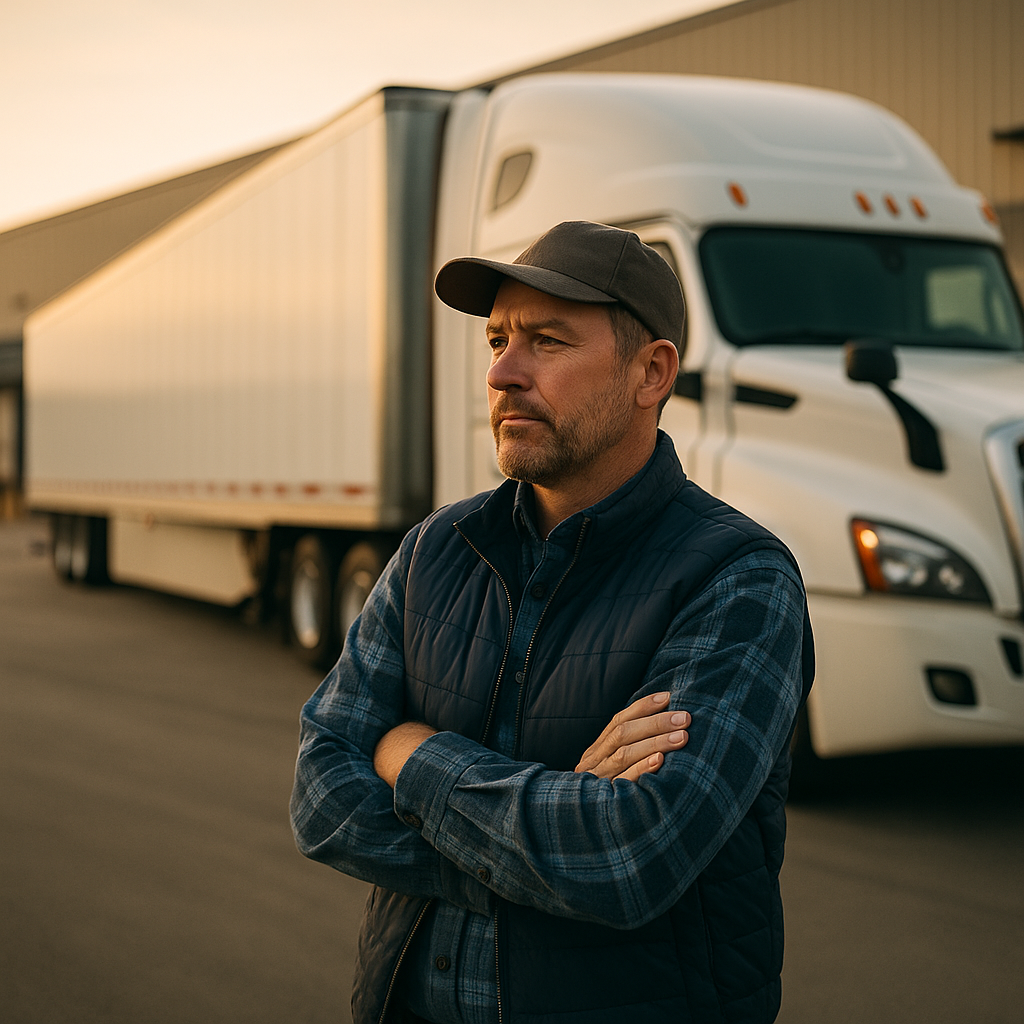

Dry van insurance for owner operators: 7 coverages, broker-ready limits, and 2026 cost drivers—avoid gaps and compare commercial truck insurance quotes today.
Dry van insurance for owner operators usually means building a broker-ready stack that includes primary auto liability, motor truck cargo, and physical damage—because brokers often expect $1,000,000 liability and $100,000+ cargo on general freight loads. Dry van looks “simple” until a shipper rejects your certificate, your cargo wording doesn’t match the load, or a claim gets denied on a predictable exclusion.
If you want a practical baseline before you start comparing quotes, review these trucking insurance fundamentals for owner-operators so you know what you’re buying (and what you’re not).
Table of Contents
Reading time: 9 minutes
- Introduction: Dry van is “general freight”… until a broker rejects your COI
- Key takeaways (save this before you call for quotes)
- (1) What “Dry Van” Means to Insurers
- (2) The 7 Core Coverages for Dry Van Owner Operators
- (3) Dry Van Insurance Requirements: FMCSA minimums vs broker limits
- (4) How Much Does Dry Van Insurance Cost in 2026?
- Frequently Asked Questions
- Conclusion: Build a broker-ready stack (without paying for nonsense)
Introduction: Dry van is “general freight”… until a broker rejects your COI
Dry van insurance problems usually show up at dispatch—when a broker rejects your COI for limits/wording, or when a claim is denied because the commodity or theft language doesn’t match what you actually hauled.
Dry van work looks straightforward: you’re not hauling hazmat, you’re not running a reefer, and you’re not doing heavy haul. But when you’re the one paying the bills, dry van insurance becomes a cash-flow issue fast—because one missing coverage, one wrong limit, or one poorly worded commodity can get you kicked off a load, stuck at a shipper, or paying a claim out-of-pocket.
This guide breaks down:
- the 7 coverages dry van owner-operators actually use,
- what limits brokers commonly expect,
- what changes if you’re leased-on vs running your own authority,
- and realistic 2026 cost ranges—so you can shop commercial truck insurance like a business owner, not like a guesser.

Key takeaways (save this before you call for quotes)
The fastest way to avoid re-quotes and rejected certificates is to align your application details, your contracts, and your limits before you shop carriers.
- Your setup drives the policy: leased-on vs own authority, FTL vs LTL-style multi-stop, and drop & hook change what’s “required” in real life.
- Brokers set the “real” limits: FMCSA minimums are a baseline—contracts often demand higher liability and cargo.
- Cargo claims get denied for predictable reasons: unattended truck, wrong commodity, wrong theft language, or limits that don’t match peak load value.
- Affordable trucking insurance isn’t magic: it’s tight underwriting info, clean MVR/claims, controlled radius/lanes, and no coverage lapses.
(1) What “Dry Van” Means to Insurers (and why your operation matters more than your trailer)
To most trucking insurance markets, “dry van” is rated as general freight (non-perishable, non-hazmat freight in an enclosed trailer), but underwriters price the risk based on your lanes, miles, stop count, and cargo exposure—not just the trailer type.
What it is (plain English)
Insurers usually treat dry van as general freight, but they’ll still want specifics: where you run, how often you stop, where you park overnight, and what commodities you actually haul.
Why it’s essential (business reality)
Two dry van operators can have totally different premiums:
- Operator A: dedicated lane, drop & hook at a secured DC, low-theft commodities.
- Operator B: mixed loads, lots of urban pickups, overnight parking at “wherever you can fit,” higher theft exposure.
If you want your quote to come in clean, your application has to describe the operation accurately—the same way you’d explain it to a broker or at a DOT audit.
Who needs this section
Any owner-operator shopping trucking insurance for general freight dry van, power-only pulling customer trailers, mixed broker freight, or stepping up from hotshot into a semi should care about how the operation is classified.
Practical point: if you recently moved up from hotshot insurance (pickup + gooseneck) into semi truck insurance (tractor + van), expect underwriters to treat it like a new risk profile even if you’ve “been trucking for years.”
Leased-on vs own authority: who’s responsible for what?
Your lease agreement and dispatch status usually determine which policy responds first, which is why this is one of the most expensive areas to “assume.”
Use this breakdown as a starting point, then verify your exact responsibilities in this owner-operator insurance responsibilities guide.
- Leased-on (under a motor carrier’s authority): the carrier often carries primary liability while you’re under dispatch; you may still need bobtail/NTL off dispatch and often physical damage.
- Own authority: you’re the carrier, so you need broker-ready COIs, required filings, and limits that match contracts.
(2) The 7 Core Coverages for Dry Van Owner Operators (with typical “broker-ready” expectations)
Most dry van owner-operators build insurance in layers, and the “broker-ready” stack usually includes primary auto liability, motor truck cargo, physical damage, and general liability, with add-ons based on dispatch status and trailer control.
What it is (the short list)
Here are the seven coverages you’ll see over and over:
- Primary auto liability
- Motor truck cargo
- Physical damage (comprehensive + collision)
- General liability
- Trailer interchange (when you pull non-owned trailers under agreement)
- Non-trucking liability / bobtail (mostly leased-on)
- Occupational accident (common for contractors)
Why it’s essential (how you actually lose money)
- Broker rejects your certificate (wrong limit / wrong wording).
- Cargo claim denied (exclusion you didn’t know you had).
- You can’t replace a windshield/hood/headlights without wrecking the week’s profit.
- A trailer gets damaged in a drop yard and everyone points fingers.
Coverage cheat sheet (use this when comparing quotes)
| Coverage | What it typically pays for | Who usually asks for it | Common “starting point” limits (varies) | Common gotchas |
|---|---|---|---|---|
| Primary Liability | Injuries/property damage you cause to others | FMCSA baseline + brokers/shippers | $1M CSL is a common broker expectation (not a universal law) | Wrong radius/garaging info can blow up pricing |
| Motor Truck Cargo | Damage/theft to the freight you’re hauling | Brokers/shippers | Often $100k+ for general freight; match your max load value | Exclusions: unattended vehicle, certain commodities, vague theft language |
| Physical Damage | Repairs to your tractor (comp/collision) | Lender/lessor (and you) | Based on tractor value + deductible | ACV vs stated value misunderstandings |
| General Liability | Non-auto claims (loading dock/property damage, etc.) | Shippers/contracts | Often $1M per occurrence | Not the same as auto liability |
| Trailer Interchange | Damage to non-owned trailers under interchange agreement | Drop & hook customers | Based on trailer value | Not needed for every power-only job—depends on the agreement |
| NTL/Bobtail | Liability when you’re off dispatch | Carriers (leased-on) | Varies | Grey areas: deadhead to maintenance, personal use boundaries |
| Occ/Acc | Injury benefits for you (contractor) | Carriers/leases; personal risk management | Plan-based | Not workers’ comp; read definitions carefully |
Pro tip (cargo: where owner-operators get burned)
Cargo coverage is where “dry van” operators get surprised, because general freight is not always low-risk.
Before you buy, read a deeper breakdown of motor truck cargo coverage and common exclusions so you’re not learning your policy after a theft claim.
(3) Dry Van Insurance Requirements: FMCSA minimums vs broker limits (plus certificates, filings, and “proof”)
Dry van insurance “requirements” come from two places—FMCSA legal financial responsibility rules and broker/shipper contracts—and contract limits are often higher than federal minimums.
What it is
There are two “requirement” systems:
- Legal requirements (federal/state) to operate as a motor carrier (especially interstate).
- Contract requirements from brokers, shippers, and leasing carriers.
They overlap—but they’re not the same thing.
Why it’s essential
You don’t get paid when:
- you can’t get dispatched because your COI isn’t broker-ready,
- your authority gets delayed due to insurance filing issues,
- your commodity description doesn’t match what you’re actually hauling.
Federal baseline (interstate) — keep it clean and documented
FMCSA publishes insurance filing requirements and financial responsibility basics here: https://www.fmcsa.dot.gov/registration/insurance-filing-requirements.
Use that as the baseline, then build up to broker expectations.
Broker-ready COI checklist (what actually speeds up dispatch)
When a broker asks for proof of insurance, they’re usually checking:
- Named insured matches your authority and business name
- Effective dates (no lapse)
- Limits match their contract
- Commodity description isn’t vague or mismatched
- If required: Additional Insured / waiver of subrogation language
If you’re running your own authority, also expect “proof” questions and verification. Brokers may check your DOT/MC snapshot on SAFER: https://safer.fmcsa.dot.gov/.
Non-trucking liability / bobtail: the most common leased-on gap
If you’re leased-on, the carrier’s primary liability may only apply while you’re under dispatch, so “off dispatch” is where coverage misunderstandings turn into uncovered claims.
Get crystal clear on how non-trucking liability vs bobtail coverage works—especially grey areas like deadhead to maintenance, repositioning, or mixed personal/business use.
Straight talk: “I wasn’t under dispatch” is not a claims strategy—your policy wording decides.
(4) How Much Does Dry Van Insurance Cost in 2026? (realistic ranges + cost drivers + 3 common setups)
Dry van insurance cost in 2026 typically ranges from about $3,500–$9,000/year for many leased-on setups to $8,000–$18,000/year for established own-authority operators, with new ventures often reaching $15,000–$25,000+ depending on lanes, losses, and equipment value.
What it is
Your total premium is usually the sum of several line items (liability, cargo, physical damage, GL, etc.). That’s why you’ll see huge ranges online—because people are comparing totally different operations.
ATRI’s operational cost research consistently shows insurance as a major cost bucket for carriers (see their “Operational Costs of Trucking” materials): https://truckingresearch.org/.
2026 cost ranges (realistic planning numbers)
These are planning ranges, not promises. Your MVR, garaging ZIP, authority age, lanes, and loss history matter more than the word “dry van.”
- Leased-on dry van (you buy NTL/bobtail + physical damage + occ/acc): often $3,500–$9,000/year depending on tractor value and selected coverages.
- Own authority, established (general freight, clean history): often $8,000–$18,000/year for a solid broker-ready stack.
- Own authority, new venture / new authority / tougher lanes: can push $15,000–$25,000+ depending on exposure and losses.
Line-item thinking (how to read a quote)
| Line item | What moves it the most | How to control it (without getting cute) |
|---|---|---|
| Liability | MVR, claims, radius, lanes, authority age | Keep underwriting info accurate; avoid lapses; manage radius |
| Cargo | Commodity mix, theft exposure, limit | Match limit to max load; secure parking; correct commodity wording |
| Physical damage | Tractor value, deductible, comp claims | Pick a deductible you can actually fund; protect the unit |
| GL | Contract needs, operations | Buy what contracts require; don’t pay for unneeded endorsements |
To understand why your quote is high (and what you can change), use this breakdown of what affects trucking insurance rates.
The biggest levers to lower premium (without creating coverage gaps)
- No lapses. A lapse can cost you more than a clean year of “saving money.”
- Right-size your radius and lanes. “All 48” when you really run regional is a self-inflicted wound.
- Be honest about commodities. Underwriters price what you say you haul; claims get ugly when reality doesn’t match the app.
- Pick deductibles based on cash reserves. If you can’t stroke a $5,000 check tomorrow, don’t pick a $5,000 deductible.
- Use safety tech if it earns credits. Dash cams and telematics can help in some markets—ask what actually impacts pricing.
Operational examples: what to buy for 3 common dry van setups
Example A — Leased-on regional FTL (home weekends): Typical stack: NTL/bobtail + physical damage + occ/acc (plus anything the carrier requires). Watch the boundary: under dispatch vs off dispatch.
Example B — Own authority, long-haul broker freight: Typical stack: primary liability (often $1M CSL by contract), cargo sized to max load, physical damage, general liability. Add trailer interchange only if you’re truly doing drop & hook under agreement.
Example C — Multi-stop “LTL-style” day cab work: More stops = more exposure. Liability and cargo pricing can rise. Make sure your cargo wording matches what’s on the dock (not what you wish it was).
Frequently Asked Questions
Most dry van owner-operators need primary auto liability, motor truck cargo, and physical damage as the core coverages, with limits sized to contracts and load value (cargo is commonly $100,000+ for general freight). Add general liability when a shipper/broker contract requires it, trailer interchange when you’re under a written interchange agreement (common in drop & hook), and non-trucking liability/bobtail if you’re leased-on and need protection off dispatch. Many contractors also carry occupational accident for injury benefits, but it isn’t workers’ comp.
In 2026, many established own-authority dry van operators plan around $8,000–$18,000 per year for a broker-ready insurance stack, while new ventures or higher-exposure lanes can land at $15,000–$25,000+. Leased-on operators who only buy a smaller set of coverages (like NTL/bobtail, physical damage, and occ/acc) can often be lower, commonly $3,500–$9,000/year depending on tractor value and deductibles. Your MVR/claims, operating radius, garaging ZIP, lanes, commodity mix, and authority age usually drive price more than “dry van” alone.
For broad consumer-friendly context on auto insurance regulation and market structure, see NAIC resources: https://content.naic.org/.
FMCSA sets the federal baseline for financial responsibility and insurance filings for interstate motor carriers, but brokers and shippers commonly require higher limits by contract, especially for liability and cargo. A frequent contract expectation for general freight is $1,000,000 CSL auto liability and cargo limits that match your max load value (often $100,000+), but your contracts decide what’s “required” to get loaded. Use FMCSA’s insurance filing requirements as your legal baseline, then match your COI to your broker/shipper agreement: https://www.fmcsa.dot.gov/registration/insurance-filing-requirements.
Physical damage coverage is usually worth it even on a paid-off truck because one comp/collision loss (deer, hail, theft, at-fault crash, vandalism) can create a five-figure repair bill plus weeks of downtime. The decision should be based on your tractor’s actual cash value, how much lost revenue you can absorb, and whether you can fund the deductible immediately (for example, $2,500 or $5,000)—not just whether a lender requires it. If you’re comparing deductibles and value settlement options, this guide on physical damage coverage for semi trucks (comp vs collision, deductibles, value) helps you price the tradeoffs like an owner.
Conclusion: Build a broker-ready stack (without paying for nonsense)
Dry van insurance for owner operators works best when you match your coverages and limits to your real operation—lanes, stop count, commodities, dispatch status—and then document it cleanly on the application and COI. That’s how you avoid re-quotes, rejected certificates, and preventable claim denials.
Key Takeaways:
- Match cargo limits to peak load value and make sure commodity wording is accurate.
- Don’t confuse FMCSA baseline requirements with broker contracts; contracts often demand higher limits.
- Choose deductibles you can actually pay tomorrow, not what looks good on the quote.
If you’re tightening cost without creating gaps, keep building your playbook with affordable trucking insurance tactics and, for own authority operators, get the paperwork right with DOT insurance filings and BMC-91/91X basics.





