
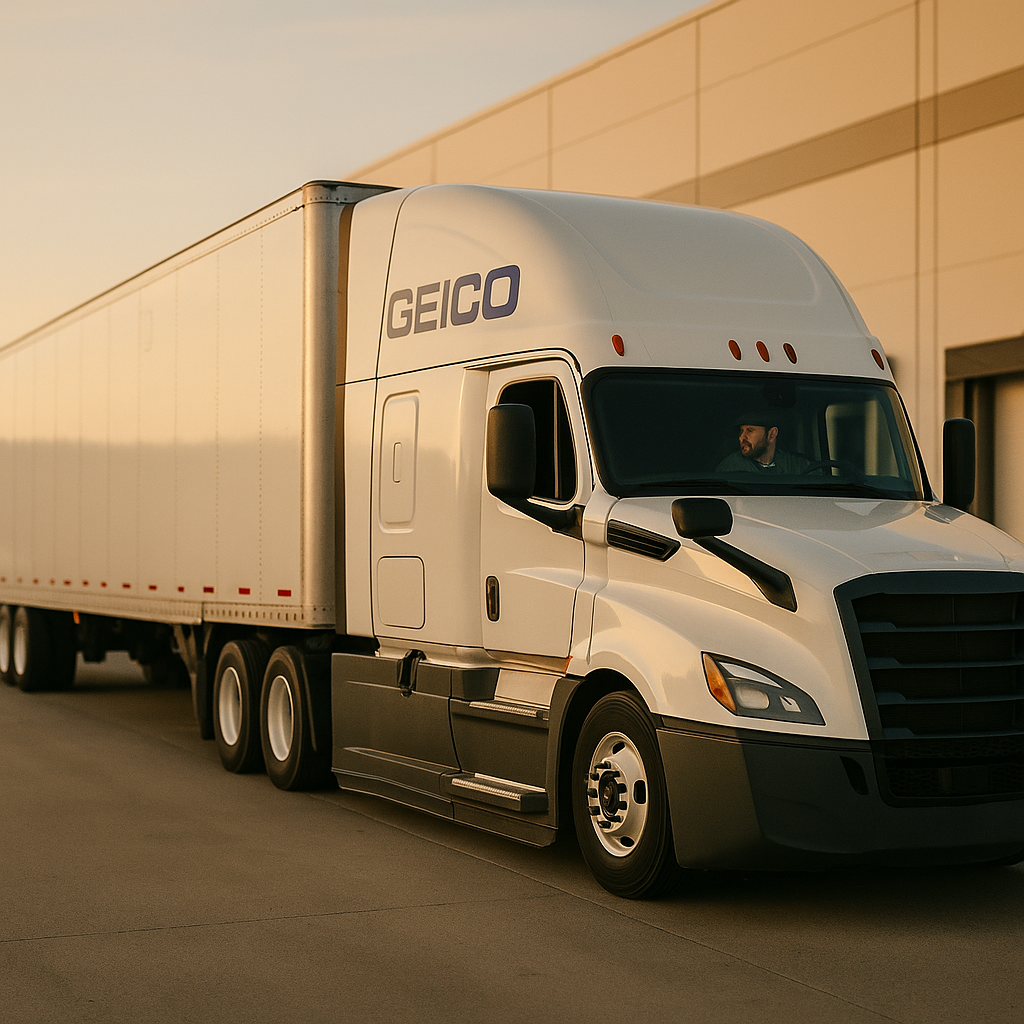

Learn GEICO small fleet commercial auto policies for 2–9 vehicles—7 key coverages, cost drivers, discounts, and a quote checklist. Get smarter now.
GEICO small fleet commercial auto policies are typically built for businesses insuring 2–9 vehicles on one account, with coverages and pricing based on fleet risk instead of a single unit. That “2–9” setup can simplify admin, but it only helps if you compare quotes on the same coverage spec (limits, physical damage, HNOA, and downtime add-ons).
One fender-bender can turn into a five-figure problem fast—tow bill, rental, missed routes, an angry customer, and a contract that suddenly requires higher limits yesterday. Before you price-shop, make sure you’re comparing commercial auto built for business use (employees, tools, job sites, delivery routes), not a personal policy that can leave you exposed. If you need a quick refresher, start with these commercial auto insurance basics.
Featured snippet: What counts as a small fleet with GEICO?
- A “small fleet” is typically 2–9 vehicles insured on one commercial auto account.
- GEICO marketing commonly references small fleets up to 9 vehicles (availability and eligibility vary by state and risk profile).
- The goal is streamlined servicing (drivers/vehicles in one place) and pricing based on fleet risk—not a single unit.
Table of Contents
Reading time: 9 minutes
- Introduction: small fleet insurance is a cash-flow decision
- Key takeaways
- Small fleet commercial auto with GEICO: who it’s for (and when it’s not)
- 7 coverage parts to look for in GEICO small fleet commercial auto policies
- How much does GEICO small fleet commercial auto cost?
- Discounts + “DriveEasy Pro-style” telematics
- Compliance + filings + quoting
- Frequently Asked Questions
- Conclusion: build your policy spec, then compare apples to apples

Introduction: small fleet insurance is a cash-flow decision, not a checkbox
Small fleet commercial auto insurance protects revenue by reducing “downtime loss” when one of your 2–9 vehicles is in the shop and you can’t run routes or service calls.
When you’re running a small fleet, you don’t have “spare capacity”—you have downtime and lost revenue. That’s why the best approach is to treat your policy like a specification sheet: define the coverages and limits you actually need, then shop carriers on an apples-to-apples basis.
Use this guide as your “policy spec” so you can request quotes with confidence instead of guessing.
Key takeaways
A GEICO small fleet is commonly described as 2–9 vehicles on one commercial auto account, but eligibility and program details can vary by state and underwriting rules.
- Small fleet usually means 2–9 vehicles on one commercial auto account; GEICO often references small fleets up to 9 vehicles.
- Your “must-have” list is usually liability + physical damage + the HNOA gap (hired/non-owned), then add-ons based on downtime risk.
- “Affordable” comes from clean driver screening, correct classifications, right deductibles, and route radius—not from underinsuring limits.
- If you’re in trucking insurance territory (for-hire, filings, semis/hotshots), confirm whether you need commercial truck insurance beyond basic commercial auto.
Small fleet commercial auto with GEICO: who it’s for (and when it’s not)
A small fleet commercial auto policy is a business auto policy covering multiple vehicles—usually with shared drivers, garaging, operations, and coverages under one account.
What it is (plain English)
GEICO positions commercial auto for a wide range of small businesses, and their commercial truck messaging commonly calls out small fleets up to 9 vehicles. Exact eligibility, coverages, and program availability can vary by state and risk profile.
For a broader “2–9 vehicles” playbook, use our small fleet insurance guide.
Why it’s essential (business risk)
- One unit down = missed jobs or missed loads
- One uncovered claim scenario = legal fees + settlement pressure
- One contract requiring higher limits = lost account if you can’t produce proof quickly
Who needs it
Typical 2–9 vehicle operations include:
- Contractors: HVAC, plumbing, electrical, roofing (vans/pickups)
- Local delivery/courier (cargo vans, light box trucks)
- Service fleets (technicians running daily routes)
- Light trucking (straight trucks), and in some cases hotshot-style operations (see note below)
Pro tip (avoid a common mismatch)
If your “fleet” includes semis, for-hire hauling, or anything that triggers broker/shipper compliance requirements, you may need true commercial truck insurance (and possibly filings). That’s a different conversation than a contractor running three vans—and it affects pricing, limits, and underwriting.
7 coverage parts to look for in GEICO small fleet commercial auto policies
A practical small fleet commercial auto checklist usually starts with liability + physical damage + HNOA, then adds UM/UIM, MedPay/PIP, downtime add-ons, and endorsements based on your actual operations.
For standard definitions of common auto coverages, the NAIC overview is a useful baseline reference: https://content.naic.org/consumer/auto-insurance
Small fleet coverage checklist (start here)
1) Auto liability (CSL or split limits)
2) Physical damage (comp + collision)
3) UM/UIM (where available/required)
4) MedPay or PIP (state dependent)
5) Hired & Non-Owned Auto (HNOA)
6) Towing/labor + rental reimbursement (downtime plan)
7) Endorsements for real exposures (tools, trailers, hired auto physical damage, etc.)
1) Auto liability (CSL vs split limits) — what most contracts care about
Auto liability pays for injuries and property damage your driver causes to other people, and it’s the coverage most likely to be tested in a serious crash claim.
If you’re bidding work, delivering to customers, or operating under broker/shipper requirements, liability limits are often the first line item they’ll demand.
Use this guide to think clearly about limits (and avoid buying the wrong structure): commercial auto liability limits (CSL vs split).
- Who tends to need higher limits: delivery fleets in congested metros, fleets with more drivers, and operations with heavier vehicles or more highway time.
Pro tip (limit decision rule): Choose limits based on the largest loss you can’t survive—not the smallest premium you can tolerate.
2) Physical damage (comprehensive + collision)
Physical damage coverage typically includes collision (your vehicle hits something or rolls) and comprehensive (theft, vandalism, weather, animal strikes, glass).
If you finance or lease vehicles, the lienholder usually requires physical damage. Even if units are paid off, this coverage is often the difference between a bad month and a business-ending cash crunch when a vehicle is totaled.
- Who needs it most: any fleet without spare vehicles and higher-value vans/work trucks with upfitted bodies.
- Deductible strategy: don’t pick a deductible that wrecks cash flow—higher deductibles only work if you can actually fund them.
3) Uninsured / underinsured motorist (UM/UIM)
UM/UIM can pay when your driver is hit by someone who has no insurance or not enough insurance to cover the loss (rules vary by state).
Medical bills don’t care whether the other driver carried adequate limits, and UM/UIM can prevent an accident from turning into a multi-month cash drain.
4) MedPay / PIP (state-dependent)
MedPay and PIP are no-fault medical coverages offered or required in certain states, and the benefits and rules vary by jurisdiction.
This coverage can reduce friction after a crash and help cover immediate medical needs, especially when you have crews, helpers, or frequent riders.
5) Hired and Non-Owned Auto (HNOA) — the #1 small fleet gap
HNOA is liability coverage for business use of rented vehicles (hired) and employee-owned vehicles (non-owned), and it’s one of the most common small-fleet coverage gaps.
This is where fleets get blindsided: a supervisor runs parts in their personal car, causes a crash, and the claimant’s attorney pursues the business.
If your team ever uses personal cars or rentals for work, read: hired and non-owned auto insurance (HNOA).
6) Towing/labor, rental reimbursement, and downtime planning
Towing/labor and rental reimbursement are add-ons that can help cover roadside/towing costs and temporary transportation while a unit is down (availability and form language vary by carrier and state).
For small fleets, downtime is a profit killer—one van down can mean missed service calls or failed delivery windows.
- Simple downtime math: if a unit generates $600/day gross and a breakdown costs 3 days, that’s $1,800 in lost revenue before repairs.
7) Endorsements (tools/equipment, trailers, hired auto physical damage, etc.)
Endorsements are policy add-ons that address specific exposures like permanently installed tools, specialty bodies, or trailer-related needs.
Most small fleets don’t lose money on “insurance theory”—they lose money on the one thing they assumed was covered.
How much does GEICO small fleet commercial auto cost? (2–9 vehicle scenarios)
Commercial auto premiums are primarily driven by underwriting inputs like drivers (MVRs), garaging location, vehicle type/value, operating radius, class of business, mileage, and loss history.
If you want to control cost, you need to know what moves the needle. Start here: how commercial auto insurance is priced.
What drives small fleet pricing
- Driver MVRs, age, experience, prior claims
- Garaging ZIP, theft/vandalism exposure
- Operating radius (local vs multi-state)
- Vehicle type/value (cargo vans vs heavier units)
- Business class and use (service calls vs delivery frequency)
- Miles driven and time of day
If you’re crossing into true commercial truck insurance (for-hire loads, higher GVWR equipment, interstate ops), pricing may look more like trucking insurance than “contractor vans.”
Illustrative cost scenarios (ranges, not quotes)
These ranges are illustrative and can be higher or lower based on state, drivers, loss runs, vehicle values, and operations.
| Fleet size | Contractor pickups (local service) | Local delivery vans (route-based) | Mixed fleet (pickups + vans) |
|---|---|---|---|
| 2 vehicles | $3,000–$8,000/yr | $5,000–$12,000/yr | $4,000–$10,000/yr |
| 5 vehicles | $8,000–$22,000/yr | $14,000–$35,000/yr | $11,000–$28,000/yr |
| 9 vehicles | $14,000–$40,000/yr | $25,000–$65,000/yr | $20,000–$55,000/yr |
How to get a tighter number fast
- Driver roster + license info (and be honest about violations)
- VINs, garaging addresses, estimated annual miles
- A clear operations description (radius, delivery vs service, job sites)
- Prior loss runs (if you have them)
- Required contract limits (so you’re not re-quoting later)
Discounts + “DriveEasy Pro-style” telematics: what actually lowers premiums
Small fleet discounts and telematics savings generally come from measurable risk reduction—cleaner driving behavior, fewer claims, better controls, and consistent documentation—rather than from “buying less coverage.”
Small fleets get discounts when they reduce measurable risk. Some carriers (including GEICO in certain markets) promote telematics and safety tools; availability and program rules vary.
Discount levers that usually matter for 2–9 vehicles
- Multi-vehicle/account-level pricing (fleet structure)
- Paid-in-full (sometimes)
- Higher deductibles only if you can fund them
- Driver screening (MVR checks) and written driver policies
- Claims-free history and documented safety practices
- Secure parking/garaging controls (where relevant)
Telematics rollout (do it without torching driver morale)
If you’re considering a program similar to DriveEasy Pro, treat it like an ops project:
- Start with a pilot vehicle and one coachable driver
- Tell drivers what’s tracked (speeding, harsh braking, mileage, time-of-day are common)
- Use “exception reporting,” not micromanagement
- Review weekly for 30 days, then monthly
If you want to implement telematics without wasting time, see telematics for commercial fleets.
Compliance + filings + quoting: when you need more than a declarations page
FMCSA insurance filings and federal financial responsibility rules apply only to certain regulated for-hire interstate trucking operations, not to every local contractor fleet.
Not every small fleet is DOT-regulated. But if you’re for-hire trucking—even “small”—compliance can force specific limits and filings.
FMCSA/DOT filings (only for certain operations)
If you operate as a for-hire motor carrier in interstate commerce, federal financial responsibility and filing rules can apply; the FMCSA overview is here: https://www.fmcsa.dot.gov/registration/insurance-filing-requirements.
Reality check: many local service fleets (contractors running vans/pickups) won’t need FMCSA filings. But if you’re hauling freight for-hire or operating equipment that pushes you into motor-carrier territory, confirm requirements before you bind.
Verify authority/insurance status (for motor carriers)
For regulated operations, the FMCSA SAFER system is a common public lookup tool: https://safer.fmcsa.dot.gov/. This is a verification step—not a replacement for reading your policy and confirming filings.
Quote checklist + renewal playbook (small fleet-proof)
A clean quote is easiest when you provide complete schedules, clear operations details, and contract requirements up front.
- Build your vehicle schedule (VINs, value, garaging)
- Build your driver roster (licenses, experience, violations)
- Define operations (radius, job sites, delivery frequency, interstate)
- Decide limits/deductibles and required endorsements (especially HNOA)
- Prepare proof requirements for customers (COIs, additional insured, waiver of subrogation, etc.)
For the paperwork side, keep this bookmarked: certificate of insurance (COI) guide.
Renewal strategy (don’t wait)
Starting 30–45 days early gives you time to fix misclassifications, update vehicles/drivers, document safety improvements (training/telematics results), and avoid a lapse that can trigger re-underwriting.
If you want a quick compliance refresher for trucking-style operations, read: DOT and FMCSA compliance insurance basics.
Frequently Asked Questions
Small fleet commercial auto insurance is business auto coverage for multiple vehicles under one account—commonly 2–9 vehicles. It helps keep coverages consistent across the fleet and simplifies admin like adding/removing vehicles, managing drivers, and producing proof of insurance for customers or vendors. Most small fleets start by selecting liability limits, then add physical damage (comp/collision) and close common gaps like HNOA when employees use personal vehicles or rentals. If your operation includes for-hire trucking or requires filings, you may need additional compliance steps beyond a standard commercial auto setup.
Commercial auto pricing often reflects multi-vehicle or account-level rating that many businesses consider a “fleet discount,” but the exact discounts and eligibility vary by state, vehicle type, operations, and loss history. Ask specifically about levers that commonly affect 2–9 vehicle accounts, including paid-in-full options, deductible choices, driver screening (MVR checks), documented safety practices, and telematics participation where available. The fastest way to confirm what applies to your business is to quote with a consistent coverage spec and compare line items, not just the total premium.
In practice, “small fleet” usually means 2–9 vehicles insured under one commercial auto account. GEICO commercial messaging commonly references small fleets up to 9 vehicles, but definitions can vary by insurer, state, and underwriting guidelines. As vehicle count rises, underwriting often tightens because exposure increases: more drivers, more time on the road, more stop-and-go routes, and a higher chance of frequent claims. If you’re hovering near the top end (7–9 units), confirm how adding vehicles changes rating, driver requirements, and coverage options.
To get a small fleet quote quickly, gather (1) a vehicle list with VINs and garaging addresses, (2) a driver roster with license details and violations, (3) a clear operations description (radius, delivery vs service, job sites, interstate/for-hire), (4) prior losses or loss runs if available, and (5) the liability limits required by contracts. Also confirm whether you need HNOA coverage for rentals or employee-owned vehicles; see hired and non-owned auto insurance (HNOA). Providing complete info up front reduces re-quotes and last-minute COI emergencies.
Conclusion: build your “policy spec,” then compare apples to apples
A solid small fleet policy isn’t about buying every add-on—it’s about matching coverage to your real exposures, protecting cash flow, and meeting contract requirements without scrambling. Once your spec is clear, you can compare GEICO and other options on equal footing.
Key Takeaways:
- Define the fleet: most “small fleet” setups are 2–9 vehicles on one account.
- Protect cash flow first: liability + physical damage + HNOA are common non-negotiables.
- Plan for downtime: towing/rental add-ons and operational backups matter when you have no spare unit.
If you want to keep building your playbook, start with telematics for commercial fleets and DOT and FMCSA compliance insurance basics.





