
2026 F350 hot shot trucking insurance cost is often $600–$1,700/mo. See coverages, price drivers, sample budgets, and save—get a quote.
F350 hot shot trucking insurance cost in 2026 usually falls into three planning bands: $6,000–$15,000+ per year for liability-only, $8,000–$20,000+ for liability + cargo, and $12,000–$30,000+ for a fuller package (liability, cargo, physical damage, and common add-ons). New authority, wide lanes, higher-value cargo, and financed trucks typically push you toward the high end.
If you want a quick baseline before you start calling agents, use these hot shot insurance cost planning bands first, then quote your exact lanes and cargo.
👉 Ready to save on your hot shot truck insurance?
Watch the video below for a quick overview of hot shot insurance rules, how much it costs, and practical ways to save. Or give us a call: (704) 290-3630
Table of Contents
Reading time: 10 minutes
- Is an F-350 different (insurance-wise) from a semi?
- F350 hot shot trucking insurance cost in 2026 (annual + monthly)
- What coverage is required for hot shot trucking (and what’s optional)
- What drives F350 hot shot insurance cost the most (plus sample budgets, state swings, and savings)
- Frequently Asked Questions
- Conclusion: Budget the coverage you’ll actually need
Is an F-350 different (insurance-wise) from a semi?
For-hire hot shot operations using an F-350 are typically underwritten as commercial truck insurance because the risk comes from miles, lanes, cargo, and claims exposure, not just the badge on the hood.
Hot shot operators get burned when they assume “it’s just a pickup, so it should be cheap.” If you’re hauling for-hire, insurers still view you through the commercial lens—because the exposure is commercial (traffic hours, brokered freight, tight delivery windows, more miles, more chance of claims).
If you need the big-picture foundation first, start here: commercial truck insurance basics.
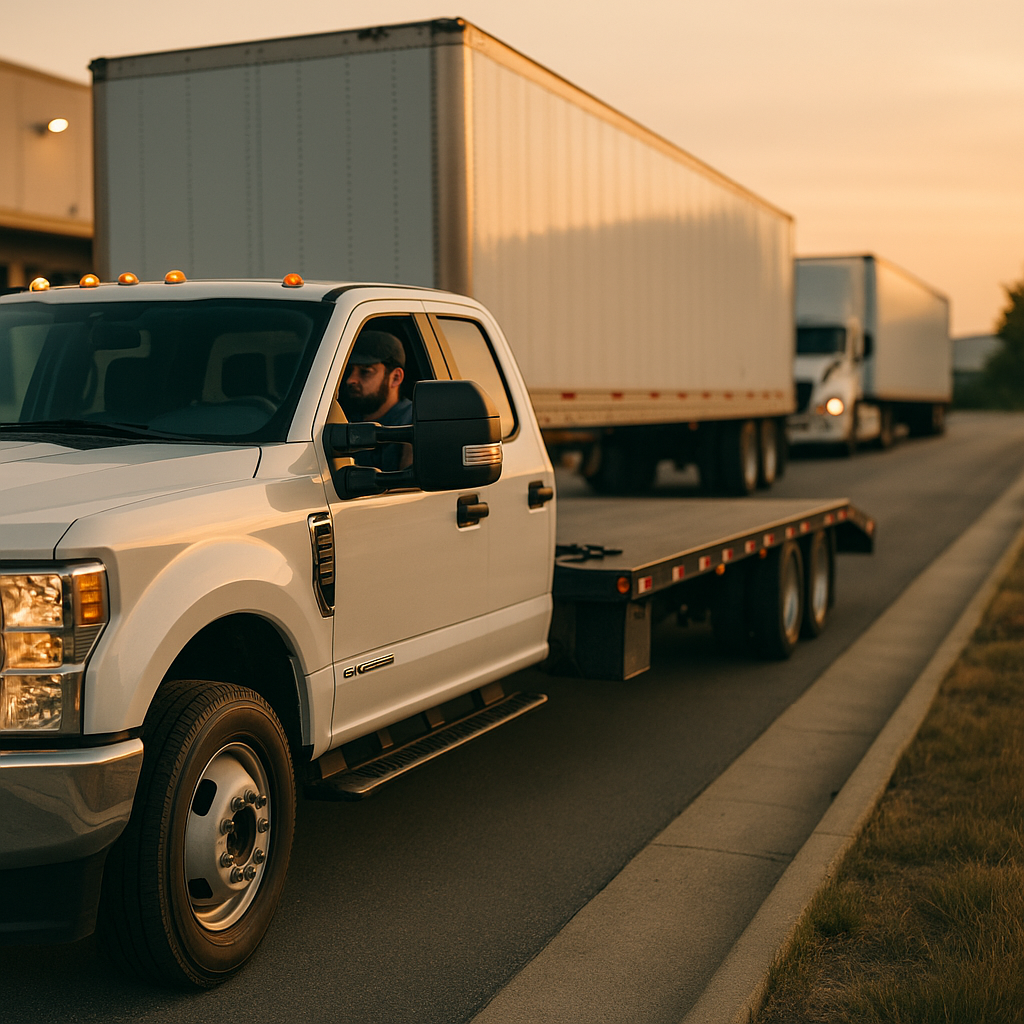
Image placeholder: Ford F-350 dually with gooseneck flatbed used for hot shot trucking
What it is (plain English)
An F-350 hot shot policy is still trucking insurance because you’re moving freight for money. The truck is smaller than a semi, but you’re still sharing the road with four-wheelers, running interstates, deadheading, dealing with docks and jobsites, and showing up to inspections with paperwork that has to match reality.
Why it’s essential (business reality)
Your premium is basically the price of staying in business after the day goes sideways:
- A rear-end claim can turn into a lawsuit.
- A load shift can become cargo damage.
- A theft at a truck stop can become a cargo claim.
- A financed truck usually means physical damage is non-negotiable.
Who needs it
- New authority hot shot owner-operators running under their own MC/DOT
- Established hot shots adding a newer/financed F-350
- Anyone hauling brokered freight that requires proof of coverage (COIs, endorsements, waivers)
Pro tip: Underwriters care more about your operation than the truck model: combined weight rating, trailer type (gooseneck/flatbed/lowboy), cargo class, radius, and driver history.

F350 hot shot trucking insurance cost in 2026 (annual + monthly)
In 2026, many F-350 hot shot owner-operators budget roughly $600–$1,700 per month (or about $6,000–$30,000+ per year) depending on limits, cargo, truck value, radius, and authority age.
Insurance is a top operating cost in trucking, so you’ll want to budget it like fuel and maintenance—not like a “maybe.” ATRI’s Operational Costs of Trucking research regularly shows insurance as a major cost line in trucking economics; see ATRI here: https://truckingresearch.org/2025/10/operational-costs-of-trucking/.
Typical 2026 ranges (3 planning bands)
Image placeholder: Table showing 2026 F-350 hot shot insurance cost ranges by coverage package
| Package (Typical Hot Shot Setup) | Annual range (2026) | Monthly “budget range” | Best fit for |
|---|---|---|---|
| Liability-only | $6,000–$15,000+ | $500–$1,250+ / mo | Leased-on ops or rare cases where cargo/PD aren’t required (uncommon for brokered freight) |
| Liability + cargo | $8,000–$20,000+ | $670–$1,670+ / mo | Most brokered general freight hot shots |
| Fuller package (liability + cargo + physical damage + common add-ons) | $12,000–$30,000+ | $1,000–$2,500+ / mo | New authority, financed trucks, broader lanes, higher-value cargo, or “broker-proof” setups |
If you budget by month (because the bills don’t care about annual math), this breakdown helps: hot shot insurance monthly cost breakdown.
What pushes you to the low end vs. high end
You tend to land lower when you have:
- Clean MVR (speeding/unsafe driving hurts), fewer claims
- Regional radius (not running coast-to-coast)
- General freight (not high-theft/high-severity commodities)
- Higher deductibles that your cash reserves can actually handle
- Continuous prior insurance (no gaps)
You tend to land higher when you have:
- New authority (new venture surcharge)
- Wide lanes, metro-heavy routes, or higher-claim environments
- Higher cargo limits (or riskier cargo classes)
- A newer/financed F-350 with physical damage required
- Tickets, accidents, or lapses
Reality check: Your first month can feel brutal because many policies require a bigger down payment up front, plus installment fees. That’s usually cash-flow timing, not the “true average monthly” cost.
What coverage is required for hot shot trucking (and what’s optional)
For most for-hire interstate carriers hauling non-hazardous property, federal rules require minimum public liability of $750,000 (49 CFR §387.9), and insurers typically file proof of coverage with FMCSA (commonly via BMC-91/BMC-91X filings) for regulated operations.
A lot of “affordable trucking insurance” quotes look affordable because they’re missing something you’ll need the minute a broker asks for your COI—or the minute you file a claim.
For deeper definitions of each piece of hotshot insurance, use: hot shot insurance coverages explained.
What it is (plain English)
A hot shot insurance “package” is usually a stack of policies and endorsements that can include:
- Primary auto liability
- Motor truck cargo
- Physical damage
- Add-ons like general liability, non-trucking liability/bobtail, and sometimes trailer interchange
Why it’s essential (FMCSA + broker reality)
If you’re running for-hire interstate, there are insurance filing requirements and your insurer files proof with FMCSA; start with FMCSA’s overview here: https://www.fmcsa.dot.gov/registration/insurance-filing-requirements.
Even when statutory minimums vary by operation, brokers and shippers commonly expect:
- $1,000,000 auto liability (common contract requirement)
- Cargo coverage (limits vary by commodity and contract)
- Physical damage if the truck is financed (lender requirement is common)
Who needs what (practical cheat sheet)
| Coverage | Required? | What it protects | Who typically needs it |
|---|---|---|---|
| Primary liability | Required for for-hire | Injuries/property damage you cause | Essentially everyone hauling for pay |
| Cargo | Commonly required by broker/shipper | The freight you’re hauling | Most brokered freight |
| Physical damage (comp/collision) | Often required if financed | Your F-350 (and sometimes scheduled equipment) | Financed/newer trucks; anyone who can’t self-insure the truck |
| General liability (GL) | Often required by contracts | Jobsite/dock risks not covered by auto | Construction lanes, many shipper contracts |
| Non-trucking liability / bobtail | Depends on dispatch/lease | Driving when not under dispatch (varies by policy) | Leased-on ops; anyone with “off-duty” driving exposure |
| Trailer interchange | Only if you pull non-owned trailers | Damage to a trailer you don’t own | Power-only or certain broker arrangements |
Pro tip: If you run load boards and bounce between brokers, you want a setup that doesn’t force you to rewrite the policy mid-year just to meet a new contract.
What drives F350 hot shot insurance cost the most (plus sample budgets, state swings, and savings)
Hot shot insurance premiums are primarily driven by authority age, MVR/claims, operating radius, cargo class and limits, and (if you carry it) physical damage based on truck value and deductibles.
Underwriters price hot shot risk using the same fundamentals they use for semi truck insurance—just applied to a pickup-based operation.
If you want a dedicated checklist of discount/savings levers, keep this open in another tab: how to save on truck insurance.
Top rating factors (ranked)
- Authority age (new authority): Brand-new MC usually means higher pricing until you’ve shown stable operations and continuous coverage.
- MVR + claims history: Tickets, preventable accidents, and claim frequency act like multipliers.
- Operating radius + lanes: Local/regional usually beats multi-state long-haul; metro-heavy lanes often cost more.
- Cargo class + cargo limit: Higher-theft or higher-value freight generally costs more to insure than general freight.
- Truck value + deductible (physical damage): A financed newer F-350 with a low deductible typically costs more than an older paid-off truck with a higher deductible.
- Garaging ZIP + storage/security: Where you park matters; secured parking can help versus street parking.
Market context: Commercial auto pricing is affected by claim severity (vehicle repair costs, medical costs, litigation). For high-level context, see NAIC’s commercial vehicle insurance materials: https://content.naic.org/sites/default/files/publication-cml-mv-commercial-vehicle.pdf.
Sample line-item budgets (F-350 hot shot scenarios)
Image placeholder: Bar chart comparing Scenario A vs Scenario B
These are illustrative budgets to help you forecast cash flow. Your quotes will vary by state, lanes, record, and cargo.
Scenario A: New authority, financed newer F-350, multi-state runs
Assumptions: New authority (0–6 months), financed truck (higher insured value), multi-state lanes (500+ mile radius), and limits typical for brokered freight.
| Line item | What it does | “Budget share” (typical) |
|---|---|---|
| Primary liability | Third-party injuries/property damage | 45–60% |
| Cargo | Freight damage/theft | 10–20% |
| Physical damage | Your truck | 15–30% |
| GL / bobtail / add-ons | Contract + off-dispatch exposure | 5–15% |
Why it costs more: new venture + broader exposure + financed asset = more risk on paper.
Scenario B: Established authority (12+ months), paid-off older truck, regional radius
Assumptions: 12+ months continuous coverage, paid-off/older truck (lower stated value), regional lanes (often < 300 miles), and higher deductibles where cash reserves allow.
| What changes | Business impact |
|---|---|
| Liability can rate lower with stability | Better renewal options and sometimes more markets willing to quote |
| Physical damage can drop with lower truck value/higher deductible | Frees cash flow (but only if you can absorb the deductible) |
| Cargo depends heavily on commodity/limit | Don’t underinsure just to “save” if your freight/contracts require more |
New authority: how to reduce the hit (without playing games)
New-venture hot shot insurance typically costs more because the carrier has limited operating history to price, so stability signals (radius, cargo, and continuous coverage) matter early.
- Keep your radius tighter for the first 6–12 months
- Start with simpler cargo classes (general freight is usually easier than high-theft categories)
- Run clean: slow down, avoid preventables, keep maintenance tight
- Avoid coverage lapses—a lapse can reset progress with some markets
Operational tip: verify your authority and insurance status on FMCSA tools; for a quick snapshot, use SAFER: https://safer.fmcsa.dot.gov/.
State-to-state price swings (why “where you run” matters)
Insurance pricing often changes materially by garaging ZIP and regular lanes because traffic density, theft rates, weather exposure, and litigation trends vary by region.
- Garaging ZIP + regular lanes usually matter more than your LLC mailing address.
- If your lanes regularly include higher-risk metro corridors, underwriting will typically price it.
- Even “occasional” runs can impact pricing if they show up frequently in your dispatch pattern.
Related reading (state guides): Texas hot shot insurance cost and Florida hot shot insurance cost.
10 practical levers to lower your premium
Image placeholder: 10-item savings checklist
- Quote apples-to-apples (same limits/deductibles on every quote).
- Shop multiple markets (some carriers like hot shots; some don’t).
- Increase deductibles only if you have the cash reserve.
- Tighten your radius early (especially with new authority).
- Keep cargo classes simpler until renewal if your business model allows.
- Add safety tech (dash cam, telematics) if discounts apply.
- Keep driver files clean and updated (MVR, experience, training).
- Park smarter (secured yard beats street parking).
- Don’t cheap out on cargo if the broker/shipper requires more.
- Re-shop at renewal—and again at 6/12 months as your authority matures.
Common mistakes that make hot shot insurance more expensive
Hot shot premiums often spike when operators create avoidable underwriting red flags like lapses, mismatched filings, or contract-driven mid-term rewrites.
- Buying minimums that don’t meet broker requirements (forces mid-year rewrites)
- Understating radius/cargo (creates claim disputes and underwriting problems)
- Letting the policy lapse (often triggers higher down payments and worse terms)
- Not listing drivers correctly (coverage issues)
- Financing the truck but skipping physical damage (force-placed coverage can be expensive)
If you want a quick “what not to do” list, see: common trucking insurance mistakes that raise rates.
Frequently Asked Questions
These FAQs summarize common hot shot budgeting and coverage questions using 2026 planning ranges (often $6,000–$30,000+ per year depending on package, authority age, lanes, and truck value).
In 2026, many hot shot operators budget $6,000–$15,000+ per year for liability-only, $8,000–$20,000+ for liability + cargo, and $12,000–$30,000+ for a fuller package (liability, cargo, physical damage, and common add-ons). Authority age (new venture), operating radius, garaging ZIP, cargo class/limits, and MVR/claims history are usually the biggest pricing factors. If you want a quick baseline before you quote, start with these hot shot insurance cost planning bands and then match every quote to the same limits and deductibles.
A common 2026 planning range for F-350 hot shot insurance is about $600–$1,700 per month, with higher totals for new authority, wide multi-state lanes, higher cargo limits, and financed trucks that need physical damage. The “first month” can be higher than your average monthly math because many policies require a larger down payment plus installment fees. If you budget month-to-month, use this guide: hot shot insurance monthly cost breakdown.
Most for-hire hot shot operations need primary auto liability, and brokers commonly require $1,000,000 liability even when federal minimums can be lower (for many non-hazardous property carriers, the federal public liability minimum is $750,000 under 49 CFR §387.9). Cargo coverage is typically required by broker/shipper contracts, and if your F-350 is financed, physical damage is often required by the lender. Depending on your contracts and off-dispatch driving exposure, you may also need general liability and bobtail/non-trucking liability.
The biggest mistakes are coverage lapses, misrepresenting operating radius or cargo, and buying limits that don’t match broker requirements—then paying to rewrite the policy mid-term. Those issues can increase down payments, reduce available markets, and create claim problems if the policy doesn’t match the real operation. If you want a detailed checklist of avoidable errors (lapses, wrong radius, wrong limits), see: common trucking insurance mistakes that raise rates.
Conclusion: Budget the coverage you’ll actually need
F350 hot shot trucking insurance cost in 2026 is usually predictable once you lock in your lanes, cargo class/limits, authority age, and whether you need physical damage for a financed truck. The fastest way to stop overpaying is to quote apples-to-apples, keep coverage continuous, and tighten your operation early so you earn better renewals.
Key Takeaways:
- Budget range: Many F-350 hot shots land around $600–$1,700/month, with broader lanes and new authority pushing higher.
- Coverage reality: Brokers often expect $1M liability + cargo, and financed trucks commonly require physical damage.
- Best “levers”: Keep coverage continuous, tighten radius early, and keep cargo classes straightforward until you have renewals under your belt.
If you’re quoting this week, gather your VIN, garaging ZIP, lanes/radius, cargo type/limits, CDL/experience details, and prior insurance history—then quote consistently using the same limits and deductibles.