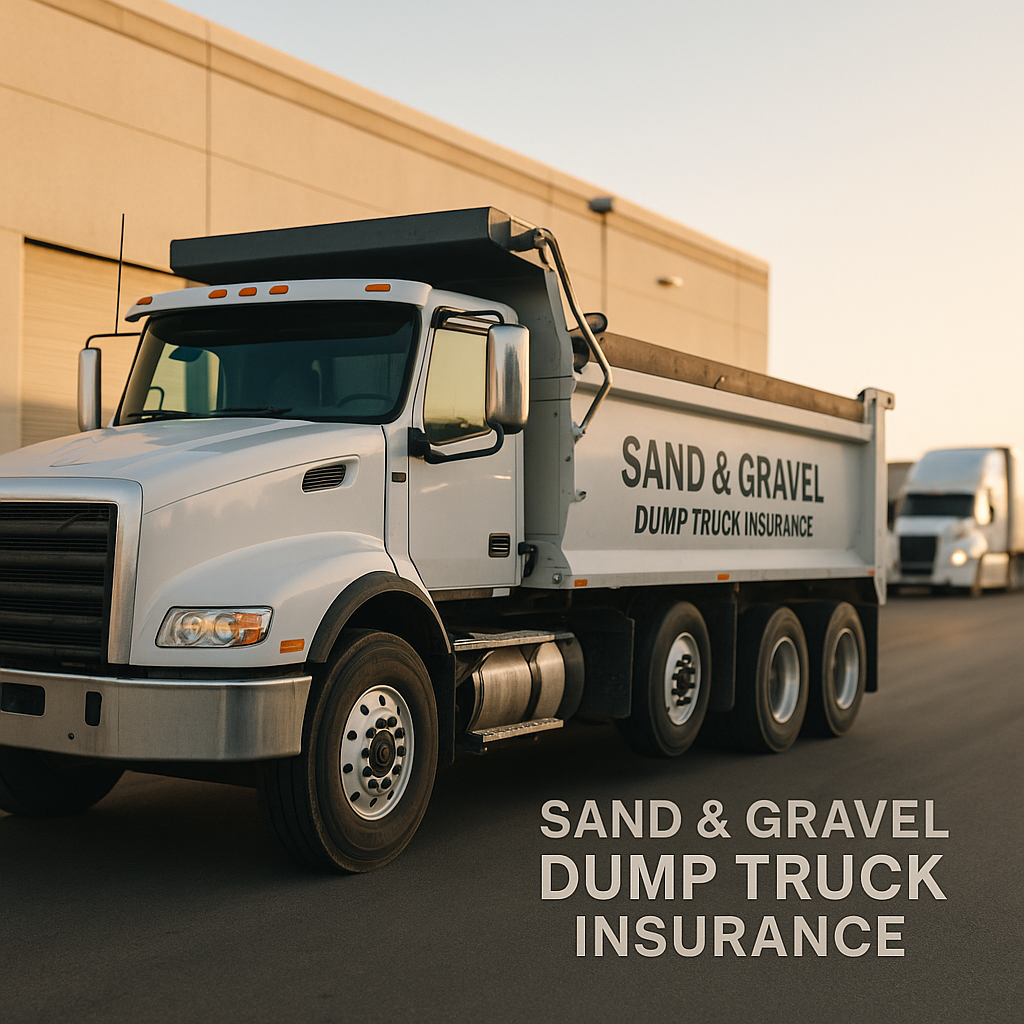
Sand and gravel dump truck insurance: 6 key coverages + 2026 cost ranges by axle type and a quote checklist to avoid gaps. Get quotes now.
Sand and gravel dump truck insurance is commercial truck insurance built for aggregate hauling risks like backing claims, jobsite injuries, and tip-over losses at pits and quarries. Most sand and gravel dump truck operations carry commercial auto liability, physical damage, and general liability, plus workers’ comp/occ-acc depending on the business, and many contracts also require cargo and umbrella/excess liability.
If you’re new to the niche, start by understanding how commercial dump truck insurance is structured—then tailor your coverage to sand/gravel exposures, your authority (interstate vs intrastate), and your jobsite contracts.
Table of Contents
Reading time: 8 minutes
- Introduction (read this before you bind a policy)
- What is sand and gravel dump truck insurance (and who needs it)?
- The 6 core coverages for sand & gravel dump trucks (with real-world triggers)
- Federal vs state requirements, filings, and COIs (what actually gets you on the job)
- How much does sand & gravel dump truck insurance cost in 2026? (ranges + quote checklist)
- Frequently Asked Questions
- Conclusion: Match coverage to your axle setup, contracts, and authority
Introduction (read this before you bind a policy)
In sand and gravel hauling, a single coverage gap can turn one jobsite incident into weeks of downtime and out-of-pocket costs. A tip-over at the pit, a backing claim in a tight staging area, or a contract that requires endorsements you don’t have can all hit at the same time.
Quick gut-check before you buy: don’t quote based on “what’s legal” alone—quote based on your contracts (limits + endorsements) and how you actually operate (jobsite %, radius, commodities).
👉 Prefer watching a quick video about dump truck insurance?
Watch the video below for a quick overview of dump truck insurance rules, how much it costs, and practical ways to save. Or give us a call: (704) 290-3630
Key takeaways
- Your baseline: auto liability + physical damage, with general liability common because aggregates work happens on jobsites, not just highways.
- Contracts drive coverage: COIs, additional insureds, waiver of subrogation, and umbrella limits often go beyond minimum requirements.
- 2026 pricing is range-based: axle setup, radius, jobsite exposure, and new venture status can move premium quickly.
- Cheap isn’t affordable: a low premium that creates denied claims or downtime is usually the most expensive option.
What is sand and gravel dump truck insurance (and who needs it)?
Sand and gravel dump truck insurance is a commercial trucking insurance setup designed for aggregate operations where frequent stops, backing, uneven ground, and dumping increase claim frequency and severity. It’s typically built to satisfy (1) legal requirements, (2) broker/shipper/GC contract requirements, (3) lender requirements, and (4) the operational reality of downtime and lawsuits.
What it is (plain English)
Think “commercial auto + business protections” configured for pits, quarries, and construction jobsites. That usually means your policy has to work in three different worlds at once:
- Compliance: state and/or federal requirements (depending on how you operate)
- Contracts: COIs and endorsements that match jobsite paperwork
- Survival: coverage that keeps your truck repaired and your business rolling
Why aggregates hauling is rated differently than general freight
Underwriters often rate sand/gravel differently than dry van or general freight because aggregates hauling has more jobsite losses and more “fixed-object” incidents. Common exposures include:
- Jobsite frequency: backing, blind spots, tight turns, and loader/crew traffic
- Dumping severity: tip-over/rollover potential on uneven ground
- Debris allegations: rocks cracking windshields, tailgate leaks, and spills
Who needs it (specific)
- Owner-operators running their own authority
- Small fleets hauling sand, gravel, dirt, base, riprap, millings, and similar materials
- End dump, belly dump, side dump, and straight dump operations
- Operators who are leased on but still responsible for certain coverages off-dispatch
If you’re unsure whether you need a company policy, a leased-on setup, or a non-trucking approach, read this breakdown of owner-operator insurance for dump trucks before you buy. It can help you avoid paying for filings you don’t need—or missing the ones you do.
The 6 core coverages for sand & gravel dump trucks (with real-world triggers)
Most sand and gravel dump truck insurance programs are built around six coverages—commercial auto liability, physical damage, general liability, motor truck cargo, workers’ comp/occupational accident, and umbrella/excess—to satisfy legal and contract requirements. Your exact mix depends on authority, contracts, and whether you have employees.
Pro tip: If you sometimes do other work (like hauling equipment or switching to a different operation style), disclose it during quoting—class changes and undisclosed operations can create claim disputes later.
Coverage table (what protects what)
| Coverage | What it protects | Common “why it’s required” | Typical claim example in aggregates |
|---|---|---|---|
| Commercial Auto Liability | Injuries/property damage you cause with the truck | Law + contracts | Backing into a loader, hitting a parked unit at the pit |
| Physical Damage (Comp/Collision) | Your truck/trailer repairs | Lender + business survival | Tip-over while dumping, collision on-site |
| General Liability (GL) | Off-truck liability (premises/operations) | Contracts (GC/municipal) | Spillage creates a slip hazard; property damage not tied to auto use |
| Motor Truck Cargo | Damage to cargo you’re hauling (as defined by policy) | Contract-driven | Load spills; claim disputes over contamination (often excluded) |
| Workers’ Comp / Occ-Acc | On-the-job injuries | State law / contract model | Driver injury on-site while tarping, climbing, or basic maintenance |
| Umbrella/Excess | Extra limits over auto/GL (depending on structure) | Big jobs + risk transfer | Severe injury claim exceeds base liability limits |
1) Commercial auto liability (the foundation)
Commercial auto liability pays for bodily injury and property damage to others when you’re legally liable for a crash or incident involving your covered vehicle. In aggregates hauling, the “loss” isn’t always a highway wreck—many claims start with backing, tight turning, and jobsite traffic.
- Who needs it: Any commercial dump truck operation (intrastate or interstate)
- What to watch: Contracts often require a specific limit (commonly $1,000,000 CSL) even if a state minimum is lower.
2) Physical damage (comp/collision) for your truck (and trailer if you have one)
Physical damage (comprehensive and collision) helps pay to repair or replace your truck after covered losses like collision, theft, vandalism, or weather damage. For dump operations, physical damage is where tip-overs, fixed-object hits, and on-site collisions show up.
- Who needs it: Anyone who can’t replace the truck out-of-pocket
- Practical deductible rule: pick a deductible you can fund without stopping operations.
3) Motor truck cargo (often contract-driven in sand/gravel)
Motor truck cargo insurance is designed to cover certain damage to cargo you’re responsible for during transit, subject to policy terms, limits, and exclusions. In aggregates hauling, cargo is often low value per load, but contracts may still require proof of cargo coverage.
- Why it’s tricky: many disputes in sand/gravel revolve around contamination, quality, or “wrong material delivered,” which may be excluded.
- When it matters most: specialty materials, higher-value loads, or contract-required cargo limits.
4) General liability (GL): jobsite/off-truck exposure
General liability (GL) covers certain third-party bodily injury and property damage claims arising from your premises/operations that aren’t strictly an “auto use” loss. Aggregate haulers regularly work on property they don’t control—quarries, jobsite entrances, staging areas—where slip/fall and property damage allegations can happen.
If you want the deeper breakdown (including COIs and endorsements like additional insured), read general liability for jobsite trucking operations.
5) Workers’ comp (or occupational accident)
Workers’ compensation is typically state-regulated coverage that pays benefits for covered employee injuries, while occupational accident is sometimes used in specific owner-operator/contractor models depending on state rules and contract structure. Injuries are common in aggregates work because drivers climb, tarp, check loads, walk uneven ground, and do minor repairs.
- If you have employees: assume workers’ comp applies (confirm state requirements).
- If you’re a one-truck owner-operator: confirm what your contracts require and what your state allows.
6) Umbrella/excess liability (for bigger contracts)
Umbrella/excess liability increases your available liability limits above underlying policies like auto liability and/or GL, depending on how it’s written. Municipal and GC projects often require higher limits, and umbrella coverage can be the difference between surviving a severe claim and shutting down.
Federal vs state requirements, filings, and COIs (what actually gets you on the job)
Interstate motor carriers operating under their own authority must meet FMCSA financial responsibility rules and may need insurance filings (such as BMC-91/BMC-91X for liability or BMC-34 for cargo) submitted electronically by the insurer. This is where many dump-truck operators get stuck: the policy exists, but the paperwork doesn’t match the job.
If you run interstate with your own authority: FMCSA filings
FMCSA’s overview of insurance filing requirements is here: https://www.fmcsa.dot.gov/registration/insurance-filing-requirements. If you want the plain-English version tailored to trucking operators, keep this saved: FMCSA insurance requirements and filings.
Important: buying a policy and having filings properly submitted are not the same thing. Confirm filings are accepted before you start hauling under your authority.
If you’re intrastate only: state rules + contracts still matter
Intrastate operators often deal with state DOT/PUC rules instead of (or in addition to) FMCSA filings, and those requirements vary by state. Even when legal minimums are lower, shippers and GCs can still require higher limits and specific endorsements—so quote to your contracts, not just the legal minimum.
COIs and endorsements (how you actually get paid)
A certificate of insurance (COI) is the proof most jobsites require before you can roll in and get loaded or tipped. To avoid same-day delays, have these items ready:
- Exact certificate holder details: legal name + address (GC, quarry, broker, municipality)
- Additional insured: confirm if required (often GL; sometimes auto)
- Common endorsements: waiver of subrogation, primary/noncontributory, and any project-specific wording
- Turnaround: aggregates work often expects same-day COIs
How much does sand & gravel dump truck insurance cost in 2026? (ranges + quote checklist)
In 2026, sand and gravel dump truck insurance commonly ranges from about $7,000–$12,000 per year for a single-axle liability-focused setup to $20,000+ for heavier vocational operations and “full package” programs with physical damage and contract-driven add-ons. There is no honest single “average” because axle setup, jobsite exposure, radius, and new venture status move pricing quickly.
Insurance is consistently a major operating cost in trucking, and ATRI’s cost research hub is a good reference point for broader operating cost context: https://truckingresearch.org/.
2026 cost ranges by axle setup (typical estimates)
Assumptions for these ranges: 1–3 power units, typical local/regional radius, relatively clean loss history, standard contract limits, and stable operations. New ventures and high-loss states can price above these ranges.
| Setup (common in aggregates) | Liability-focused annual range | “Working owner” package range (liability + physical damage + common add-ons) |
|---|---|---|
| Single-axle dump | ~$7,000–$12,000 | ~$10,000–$16,000 |
| Tandem-axle dump | ~$9,000–$16,000 | ~$13,000–$20,000 |
| Tri-axle / heavier vocational | ~$11,000–$20,000+ | ~$16,000–$28,000+ |
For a deeper breakdown of what actually drives those ranges, see what affects the cost of truck insurance.
What moves your premium the most in sand/gravel
- New venture / new authority: underwriters price uncertainty and early-loss frequency.
- Jobsite % of time: more backing and uneven-ground work increases exposure.
- Radius and states traveled: local vs regional changes frequency and severity.
- Truck value + deductible strategy: physical damage can swing totals hard.
- Loss history + MVR: one preventable can impact pricing for years.
- Contracts: additional insureds, umbrellas, and strict risk transfer language can change the program structure.
Same-day quote checklist (what underwriters will ask)
Bring this list to your quoting call and you’ll get faster, cleaner quotes:
- Truck details: VIN, year/make/model, stated value, garaging ZIP, dump body type (end/side/belly/straight), safety tech (cameras, telematics)
- Drivers: CDL info, years’ experience (specifically in dump/vocational class), MVR, prior claims
- Operations: commodities (sand, gravel, dirt, riprap, millings), average haul radius, states, jobsite vs road % of time, seasonality
- Contracts: required limits, additional insured wording, waiver of subrogation, primary/noncontributory, umbrella requirements
- Coverage choices: liability limit, physical damage deductible, GL needs, cargo requirement, hired/non-owned if applicable
Vetting tip: You can verify DOT/MC status using FMCSA’s SAFER snapshot tool: https://safer.fmcsa.dot.gov/.
If you want a dedicated “what to submit + how to compare” guide, use this: dump truck insurance quotes checklist.
Frequently Asked Questions
Many sand and gravel operators need $1,000,000 commercial auto liability for jobsite contracts, and the rest of the insurance stack is usually built around filings, COIs, and how the truck is used (own authority vs leased on). Use the answers below to sanity-check your coverage before you bind.
Most sand and gravel haulers need commercial auto liability and physical damage as the baseline because those cover the biggest third-party loss potential and your own truck repairs. Because aggregate work happens on jobsites, general liability is commonly required by GCs and municipalities for COIs and endorsements like additional insured. Cargo and umbrella/excess are usually contract-driven, especially on larger projects. If you have employees, workers’ comp is typically required by state rules; if you’re an owner-operator, occupational accident may be used in certain models depending on state and contract structure.
Sand and gravel dump truck insurance in 2026 often starts around $7,000–$12,000 per year for a single-axle, liability-focused setup and can exceed $20,000+ for heavier vocational/tri-axle operations or “full package” programs with physical damage and contract-required GL/umbrella. Your price is driven by axle class, truck value, deductible choices, jobsite percentage (backing exposure), radius/states traveled, driver experience in-class, and loss history. For broader market context on commercial auto performance, NAIC’s commercial vehicle market overview is here: https://content.naic.org/sites/default/files/publication-cml-mv-commercial-vehicle.pdf
Non-trucking liability is sometimes required when you’re leased onto another motor carrier and your lease places dispatched/on-duty liability under the motor carrier’s policy, while you still need coverage for off-dispatch use. If you operate under your own authority, non-trucking liability often doesn’t fit the same way because the truck is generally being used for commercial purposes tied to your business. The correct answer depends on the lease agreement, how dispatch is defined, and how the truck is actually used day-to-day—match the policy language to the lease, not assumptions.
An MCS-90 is a federal endorsement attached to certain motor carrier liability policies to demonstrate financial responsibility under FMCSA rules, and it’s commonly misunderstood as “extra insurance.” It is not physical damage coverage and it does not replace properly structured liability limits for your operation. Whether it applies depends on your authority, filing requirements, and how the policy is written; FMCSA’s filing overview is here: https://www.fmcsa.dot.gov/registration/insurance-filing-requirements. For a practical explanation and misconceptions to avoid, see MCS-90 endorsement explained.
Conclusion: Match coverage to your axle setup, contracts, and authority
Sand and gravel dump truck insurance is a vocational risk setup where jobsite exposure and contract paperwork matter as much as the truck itself. The best program is the one that satisfies filings/COIs, includes the endorsements your contracts require, and keeps you rolling after a physical damage or liability loss.
Key Takeaways:
- Quote to your contracts (limits + endorsements), not just minimum requirements.
- Build around the baseline: auto liability + physical damage, then add GL/cargo/umbrella when the job requires it.
- Use a repeatable intake checklist so quotes are truly comparable (limits, deductibles, and endorsements).
To keep tightening your program, review dump truck insurance quotes checklist and how to save on truck insurance before you renew.