
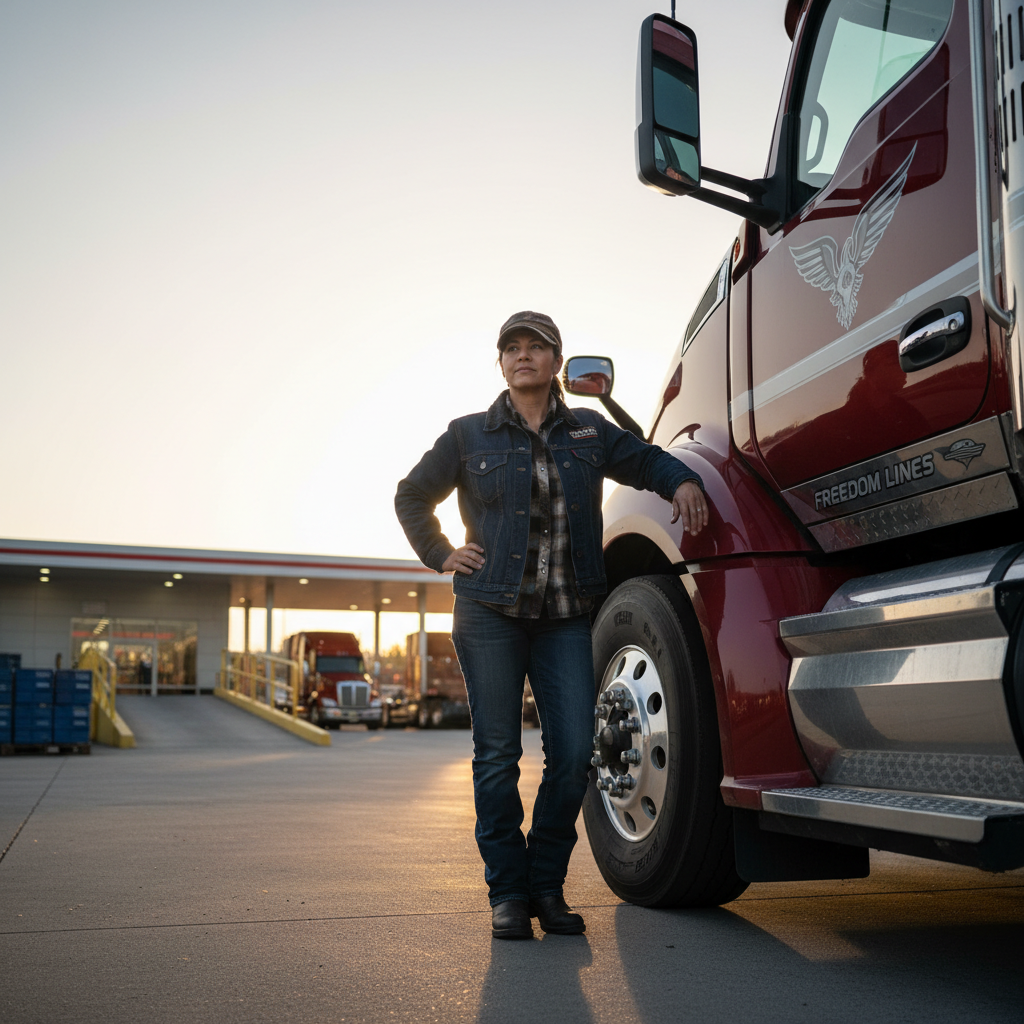
As an owner-operator with your own authority, you're not just a driver; you're the CEO of a business. And in this business, one bad day on the road-one at-fault accident-can wipe out everything you've worked for. A single lawsuit from a highway collision can easily top seven figures, blowing past your cash reserves and threatening your personal assets if you're not properly structured. This isn't just about a bent bumper; it's about financial survival.
This is where Truck Liability Insurance (also known as Primary Auto Liability or Commercial Auto Liability) comes in. It is the single most critical, non-negotiable policy you will buy.
This article is a no-fluff business guide. We'll break down what this insurance actually covers, why the $750k federal minimum is a trap, and how it's different from the other policies you need to be truly protected.
Truck Liability Insurance Essentials
- This is Your "License to Haul": Primary Auto Liability is federally mandated by the FMCSA. You cannot legally operate your truck under your own authority without it.
- It Protects Others: This policy pays for bodily injury and property damage you cause to other people (the "third party") in an at-fault accident.
- It Does NOT Cover You: It does not pay to repair your own truck (that's Physical Damage coverage) or your customer's freight (that's Motor Truck Cargo coverage).
- $1M is the Real Minimum: The federal minimum is $750k, but virtually every broker and shipper will require you to show $1,000,000 on your Certificate of Insurance (COI) before they give you a load.
What is Primary Auto Liability? The Policy That Keeps You Legal
This is the foundation of your entire insurance package.
1. What It Is (In Plain English)
Primary Auto Liability is the core policy for your trucking business. It's the "commercial auto liability" that covers your operations while you are under dispatch and hauling freight for business.
- Why It's Essential (The Business Risk): If you rear-end a car, run a stop sign, or cause any accident, this policy pays for the other party's medical bills, car repairs, and your legal defense costs (up to your policy limit). Without it, you are 100% personally responsible for those costs, and you would lose your operating authority instantly.
- Who Needs It: Every single motor carrier operating under their own authority (MC Number).
2. Federal vs. Broker Requirements: Why $750k Isn't Enough
This is a critical distinction that new owner-operators must understand. The legal minimum is not the business minimum.
- The Legal Floor: The FMCSA (Federal Motor Carrier Safety Administration) sets the legal minimums. For general freight, this is $750,000 in liability coverage.
- The Business Reality: No reputable broker or shipper will give you a load with the legal minimum. To protect their own liability, they require you to carry $1,000,000 (one million).
- Pro Tip (Veteran Advice): Don't even bother quoting a $750k policy. It wastes your time and signals to brokers that you're a rookie. Start at $1M to be "contract-ready." If you haul hazardous materials (hazmat), the FMCSA minimum jumps to $1M or $5M, depending on the cargo.
Understanding the Gaps: What Your Liability Policy Doesn't Cover
A common, and costly, mistake is assuming your "liability" policy covers everything. It doesn't. It is specifically designed only to pay for damages you cause to others.
Here's what it does not cover:
- Your Rig: If you roll your truck or get in an accident, your liability policy will pay $0 to fix your tractor or trailer. You need a separate Physical Damage policy for that.
- Your Cargo: If you have an accident and the $100,000 of freight you're hauling is destroyed, your liability policy will not pay for it. You need a separate Motor Truck Cargo policy.
- Non-Driving Accidents: If your driver damages a warehouse dock or a customer slips and falls near your truck, your auto liability policy won't cover it. You need General Liability for that.
Common Points of Confusion for Owner-Operators
Getting the right policy is critical. Confusing these terms can leave you uninsured.
Primary Liability vs. General Liability (Road vs. Dock)
| Feature | Primary Auto Liability (PAL) | General Liability (GL) |
|---|---|---|
| Main Purpose | Covers at-fault accidents while driving. | Covers non-driving business operations. |
| Example Coverage | You rear-end a car on the highway. | Your driver damages a shipper's dock. |
| FMCSA Required? | Yes. (Federally Mandated) | No. |
| Broker Required? | Yes. (Typically $1M limit) | Often. (Common in contracts) |
Primary Liability vs. Non-Trucking Liability (NTL)
This is the most important distinction for an owner-operator.
Primary Liability (PAL): This is for you-the business owner with your own motor carrier authority. Your PAL policy is your main coverage and should be written to cover your truck 24/7 for business use.
Non-Trucking Liability (NTL): This is for an owner-operator who is leased-on to another carrier's authority. The carrier's PAL covers you only when you're under their dispatch. NTL is the cheap, limited policy you buy to cover you only when you're using the truck for personal, non-business use (like driving to the grocery store on your day off).
Pro Tip (Veteran Advice): If you have your own authority, you need Primary Liability. NTL is not the correct coverage and will leave you 100% exposed when hauling a load.
Your Questions Answered: "People Also Ask" FAQs
A: This is your biggest insurance expense. For a new authority, a $1M liability policy can cost between $9,000 and $20,000+ per year. The final price depends on your state, driving record (MVR), cargo, radius of operation, and claims history.
A: You are personally and professionally responsible for the remaining amount. If a claim settles for $1.5M, your policy pays $1M, and the lawyers will come after your business assets (other trucks, bank accounts) for the remaining $500,000.
A: This is an extra policy that sits on top of your primary liability. It's designed to protect you from that exact scenario. For a relatively low cost, you can add another $1M, $2M, or $5M in coverage. This is a smart move for any established business that has assets to protect.
A: It's a direct link. Your CSA score-especially the "Crash Indicator" and "Unsafe Driving" BASICs-is what underwriters use to predict how likely you are to have a future claim. A high CSA score will result in a higher premium, or even a non-renewal.
The Logrock Difference: Liability Built for Business Owners
We know you're not just a "trucker"; you're a business owner managing cash flow, compliance, and cost-per-mile. We don't just sell you a one-size-fits-all policy; we act as your business partner.
- Meet All Requirements: We make sure you have the $1M limit brokers demand.
- Get Competitive Rates: We shop top-rated carriers to find you the best price.
- Expert Guidance: We know the difference between PAL, NTL, and GL, and we'll build the right package for an owner-operator with their own authority.
- Fast & Easy: We offer fast, easy quoting and can often get you covered the same day.
Secure the Foundation of Your Trucking Business
Your Liability Truck Insurance is the foundation of your entire operation. It's what keeps you legal, what gets you loads, and what protects you from a catastrophic financial loss that could end your business.
Don't guess or settle for the bare minimum. Let Logrock make it simple, affordable, and stress-free.



