Need 1 ton truck commercial insurance for hot shot work? See 2026 costs, required coverages, FMCSA filings, and savings tips—get a quote today.
1 ton truck commercial insurance hot shot pricing in 2026 typically ranges from $6,000–$15,000/year for liability-only, $8,000–$20,000/year for liability + cargo, and $12,000–$30,000+/year for a full package (liability, cargo, and physical damage). Your authority status (leased-on vs. own authority), operating radius, commodity, garaging ZIP, and MVR/claims history usually decide whether you land on the low end or get priced out.
If you want a fast “what do I actually need?” checklist, start with this hot shot insurance coverages checklist.
👉 Ready to save on your hot shot truck insurance?
Watch the video below for a quick overview of hot shot insurance rules, how much it costs, and practical ways to save. Or give us a call: (704) 290-3630
Table of Contents
Reading time: 9 minutes
- What counts as “hot shot” with a 1-ton truck (and why underwriters care)
- Hot shot commercial insurance coverages (1-ton checklist)
- 2026 cost: 1-ton hot shot insurance price ranges + mini calculator
- FMCSA authority + insurance filings for hot shot (BMC-91 explained)
- Frequently Asked Questions
- Conclusion: getting the right 1-ton hot shot coverage (without overpaying)
Introduction (read this before you buy a policy)
Hot shot insurance mistakes most often happen when a pickup-and-trailer operation is rated like personal use instead of a for-hire motor carrier exposure.
Hot shot money can look good on paper—until one claim, one denied load, or one “wrong classification” quote turns your week’s profit into a month-long setback.
This guide is built for 1-ton dually + gooseneck/flatbed operators—both leased-on and own authority—and it includes a mini cost calculator, a filings walkthrough, and the common mistakes that get hot shot drivers overcharged.
Key takeaways
- If you haul for-hire, personal auto insurance usually won’t cut it: Most personal policies exclude commercial hauling or for-hire use.
- Your authority status changes everything: Leased-on vs. own authority can change what you need and what you might be double-paying for.
- Cost is mostly driven by radius, commodity, new venture status, and MVR/claims: Not the badge on the grille.
- The cheapest policy is the one that still pays: Exclusions (unattended theft, securement, wrong-use classification) are where hot shot claims die.

What counts as “hot shot” with a 1-ton truck (and why it matters to underwriters)
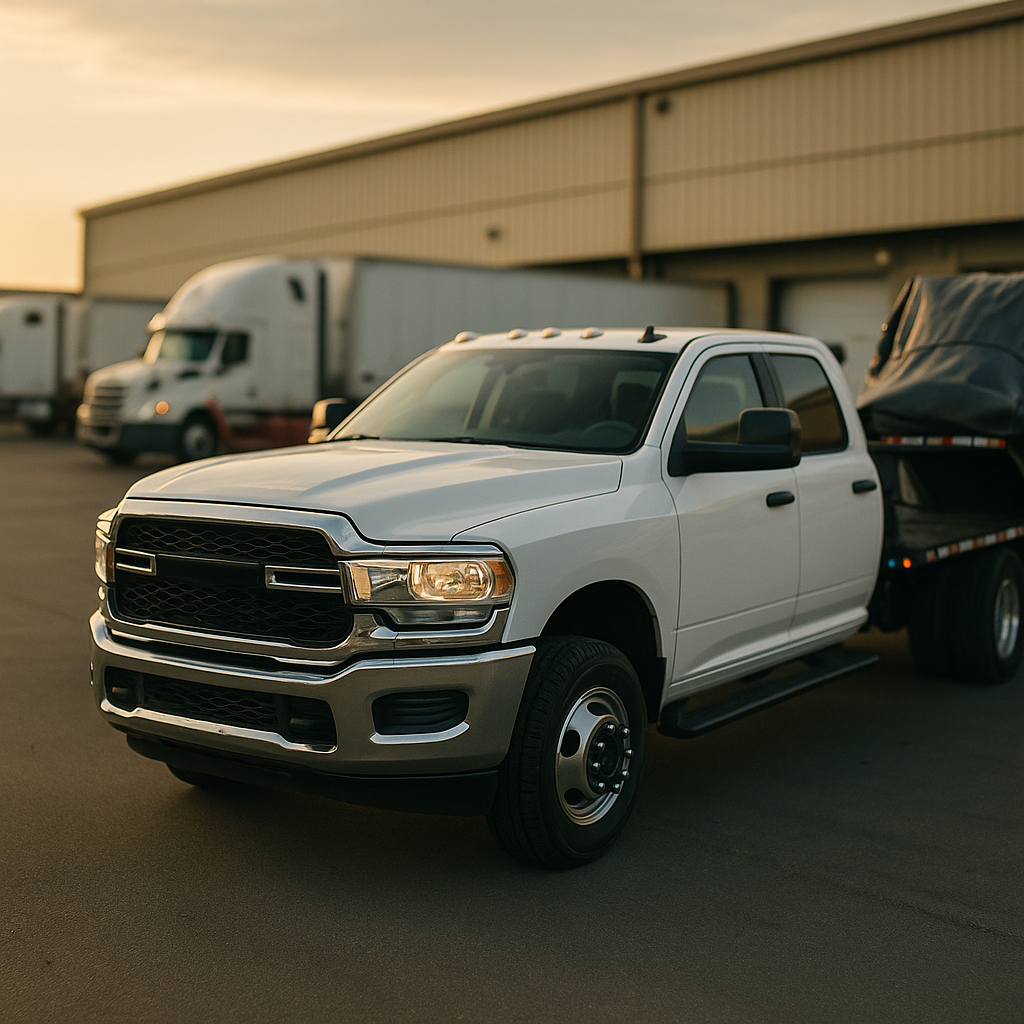
Hot shot trucking is typically a Class 3–5 pickup (often a 1-ton / 3500 / F-350) pulling a flatbed or gooseneck to haul freight for-hire, which underwriters rate closer to commercial trucking than personal towing.
What it is (plain English)
A hot shot setup is basically “pickup + trailer, paid to haul.” You might run:
- 30’–40’ gooseneck
- Flatbed / low-pro / sometimes enclosed
- General freight, equipment, building materials, oilfield-related loads, and more
Why it matters (business risk)
Insurance companies don’t price you like a weekend tow rig because a single at-fault crash can create six-figure exposure fast, even before cargo claims and legal fees show up.
If you’re still fuzzy on the difference between personal coverage and true trucking coverage, read commercial truck insurance basics first.
Who needs commercial coverage
You usually need a commercial policy (or to be properly covered under a carrier’s policy) when you are:
- Getting paid to haul (even part-time)
- Using load boards or brokers
- Running under your own authority or leased-on but responsible for specific coverages in your lease
Pro tip (avoid misquotes)
When you request quotes, be clear on for-hire vs. private carriage, your operating radius, your commodity, and whether you’re leased-on vs. own authority.
Misclassification is a top reason hot shot quotes look “cheap” and then fall apart at binding—or worse, at claim time.
Hot shot commercial insurance coverages (1-ton checklist)
A typical 1-ton hot shot insurance package includes auto liability, motor truck cargo, and physical damage, with optional add-ons like general liability, trailer physical damage, and non-trucking liability depending on how you run.
Coverages you’ll see on real hot shot policies
| Coverage | What it protects | Who typically needs it | Common gotcha |
|---|---|---|---|
| Primary Auto Liability | Injuries/property damage to others | Own-authority for-hire (and often required by contracts) | Limits set too low for broker lanes |
| Motor Truck Cargo | The freight you’re hauling | Most brokered hot shot work | Exclusions: unattended theft, improper securement |
| Physical Damage (Comp/Collision) | Your 1-ton truck | Anyone who can’t afford a total loss (and most financed units) | Deductible too low = higher premium |
| Trailer Physical Damage | Your owned trailer | Most hot shot operators | Trailer not scheduled / undervalued |
| General Liability (GL) | Non-auto business liability | Common broker/shipper requirement | Not the same as auto liability |
| Non-Trucking Liability (NTL/Bobtail) | Off-dispatch driving (varies by contract) | Many leased-on operators | Doesn’t cover you while hauling/under dispatch |
Leased-on vs. own authority: who needs what
Leased-on: the motor carrier may provide liability while you’re dispatched, but you may still need physical damage, NTL/bobtail, and trailer coverage depending on the lease.
Own authority: you’re typically responsible for primary liability, cargo, and often GL, plus any required filings.
To avoid buying the wrong off-dispatch coverage, read non-trucking liability (bobtail) explained before you sign.
Pro tip: cargo coverage that actually responds
Before you bind cargo, ask what cargo form you’re getting (broad vs. restricted) and confirm the policy language on:
- Unattended vehicle theft: Some forms restrict or exclude unattended theft unless specific conditions are met.
- Securement: Claims can get messy when the loss ties back to straps/chains, edge protection, or inspection practices.
- Commodity restrictions: Vehicles, hazmat, and high-theft electronics may be excluded or sub-limited.
2026 cost: 1-ton hot shot insurance price ranges + mini calculator
In 2026, most 1-ton hot shot operators see annual premiums between $6,000 and $30,000+ depending on whether they buy liability-only, add cargo, and insure the truck/trailer for physical damage.
Typical 2026 ranges for 1-ton hot shot operators
Most hot shot operators land in these bands (assuming for-hire operations and common broker requirements):
- Liability-only: ~$6,000–$15,000/year (≈ $500–$1,250/month)
- Liability + cargo: ~$8,000–$20,000/year (≈ $670–$1,670/month)
- Full package (liability + cargo + physical damage + trailer): ~$12,000–$30,000+/year (≈ $1,000–$2,500+/month)
For a deeper breakdown of packages and what pushes you up or down, see this hot shot insurance cost breakdown.
Mini cost calculator (DIY estimate in 60 seconds)
Use this as a quick ballpark before you start calling agents:
- Authority status: leased-on is often different from own authority (and the lease controls who buys what).
- Radius: local (0–100 miles) is usually the baseline, regional (101–500) typically costs more, and multi-state/long-haul trends higher.
- Commodity: general freight/materials is often easier than high-theft or specialized cargo.
- Limits: many broker lanes want $1,000,000 auto liability and $100,000 cargo as a common starting point (commodity can demand more).
- Equipment values + deductibles: truck/trailer ACV and the deductible choice can move premium quickly.
- Driver profile: experience, MVR, claims history, and prior insurance (lapses can hurt).
Rule of thumb: If you’re new authority + multi-state + higher cargo limits, expect to trend toward the top of the ranges.
Realistic 1-ton example (cost build-up)
Example operator:
- 1-ton dually + 40’ gooseneck
- $1M liability, $100k cargo
- Truck value $60k, trailer value $25k
- 500-mile radius, general freight
- Clean MVR, 2 years experience
Expect: often mid-range—unless you’re brand new authority (which can bump you materially). If you’re financing the truck or trailer, physical damage is often non-negotiable.
For broader benchmarking on operating cost categories, ATRI tracks industry costs annually: ATRI Operational Costs of Trucking.
FMCSA authority + insurance filings for hot shot (BMC-91 explained)
FMCSA insurance filings are electronic proof of financial responsibility (such as BMC-91 or BMC-91X) that an insurer submits to activate and maintain a for-hire motor carrier’s operating authority.
COI vs. filing (what they are)
- COI (certificate of insurance): Proof you show brokers/shippers to meet contract requirements.
- FMCSA filing: Proof filed with FMCSA (electronically) to support your authority and comply with financial responsibility rules.
FMCSA’s overview of filing requirements is here: FMCSA insurance filing requirements.
Why it’s essential (getting active + getting paid)
If your authority isn’t active—or your filings aren’t accepted—you can’t legally operate under that authority, and you’ll burn time (and cash) while the truck sits.
If you want the “what is it and when do I need it” version, keep this bookmarked: BMC-91 filing guide.
Who needs filings (leased-on vs. own authority)
Own authority: your insurer files; you still verify the filing was accepted and matches what you’re operating.
Leased-on: the motor carrier typically handles authority/filings, but your lease can still require you to carry specific coverages (like physical damage or NTL/bobtail).
Pro tip (questions that help you avoid double-paying)
Before you buy anything, ask the carrier for a one-page breakdown of:
- Who provides primary liability and when it applies (under dispatch vs. off)
- Who provides cargo coverage and what the limit is
- Whether you must carry NTL/bobtail
- Whether your trailer is covered and at what value
Frequently Asked Questions
Yes—if you’re hauling for-hire, you typically need commercial coverage because personal auto policies commonly exclude business or for-hire hauling and can deny claims tied to that use. Leased-on hot shot drivers may be covered for auto liability while under dispatch on the motor carrier’s policy, but the lease often leaves you responsible for physical damage (truck/trailer), trailer physical damage, and sometimes non-trucking liability for off-dispatch use. When in doubt, match the policy to how you operate and what your contracts require, not what feels “close enough.”
Hot shot “requirements” usually come from a mix of FMCSA financial responsibility rules (for own-authority interstate for-hire carriers) and broker/shipper contract requirements. FMCSA minimum public liability for many for-hire interstate carriers is $750,000 (commonly referenced under 49 CFR 387.9), but many broker lanes require $1,000,000 auto liability on the certificate. Cargo insurance is often contract-driven (for example, $100,000 cargo is a common starting point), and financed equipment typically needs physical damage coverage.
In 2026, hot shot insurance for a 1-ton truck commonly falls into three broad bands: $6,000–$15,000/year for liability-only, $8,000–$20,000/year for liability + cargo, and $12,000–$30,000+/year for a full package that includes physical damage and trailer coverage. The fastest premium movers are new authority/new venture status, operating radius (local vs. multi-state), commodity, garaging ZIP, equipment value, and MVR/claims history. For a detailed package comparison, see the hot shot insurance cost breakdown.
The biggest pricing drivers for hot shot insurance are usually new venture/new authority, operating radius, commodity (including theft exposure), garaging location, liability and cargo limits, deductibles, equipment value, and MVR/claims history. Carriers also look at prior insurance history because lapses can increase perceived risk. If you want an underwriting-style breakdown and practical levers you can control, read what affects truck insurance rates, then use how to save on commercial truck insurance to spot savings that don’t gut your coverage.
Conclusion: getting the right 1-ton hot shot coverage (without overpaying)
Profitable hot shot operations treat insurance like a tool: the right coverages, the right limits for the lanes, and paperwork that won’t stall loads.
When you match your policy to authority status, radius/commodity, and contract requirements, you avoid the two big money leaks: overbuying the wrong coverage and underbuying the coverage that actually pays.
Key Takeaways:
- Build the policy around your operation: leased-on vs. own authority changes who provides liability, cargo, and filings.
- Quote with clean inputs: radius, commodity, and “for-hire” classification errors are a fast way to get junk numbers.
- Protect cash flow: cargo/securement language and physical damage deductibles can make or break a claim outcome.
If you want faster, cleaner quotes, gather your details first with insurance quote checklist for trucking.