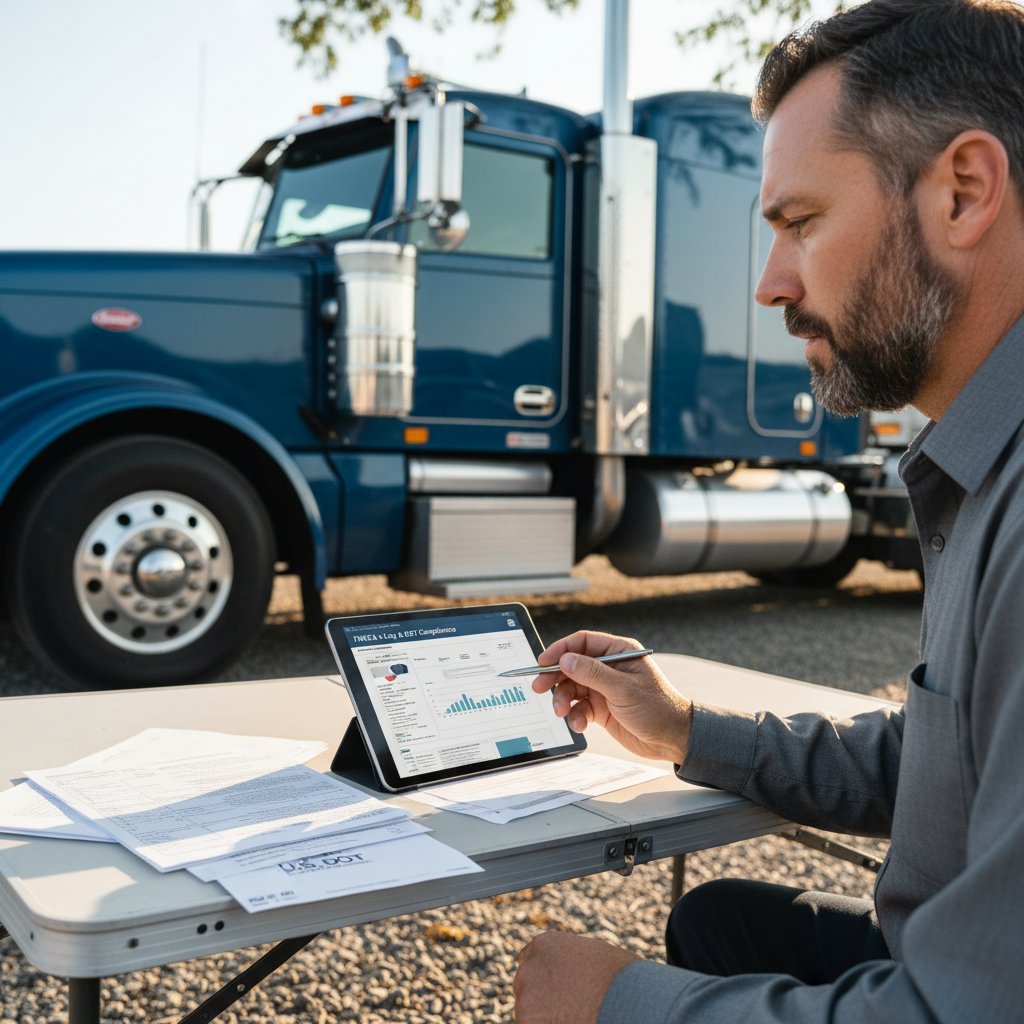
See the average cost of commercial auto insurance in 2026, with monthly vs annual examples, trucking cost notes, and a checklist to lower premiums. Get a quote.
Average cost of commercial auto insurance is one of the fastest-moving line items in a business budget, and in 2026 it can swing dramatically based on drivers, radius, vehicle class, and coverage choices. Most small businesses with light-duty vehicles often land around $150–$300 per vehicle per month, but high-mileage, dense-metro, heavy, or for-hire operations can run $800+/month per vehicle.
You don’t lose sleep over insurance theory—you lose sleep over cash flow, downtime, and renewals that blow up your job margins. Below is a practical budgeting guide with apples-to-apples comparisons, real levers that move premiums, and a checklist you can use before you shop.
Table of Contents
Reading time: ~8 minutes
- 2026 average cost of commercial auto insurance (monthly + annual)
- Commercial auto cost per month vs per year (apples-to-apples)
- Average cost by vehicle type (pickup vs box truck vs semi)
- Average cost by industry (who pays more and why)
- Average commercial auto insurance by state (how to use it)
- Fleet vs single-vehicle policies (what changes the price)
- What affects commercial auto insurance rates most (top factors)
- How to lower commercial auto insurance costs (practical checklist)
- 2026 rate trends (why renewals can feel brutal)
- Frequently Asked Questions
- Why Logrock (practical help, not fluff)
- Conclusion & get a commercial auto quote you can defend
Key takeaways: essential average cost of commercial auto insurance
Most small businesses with light-duty commercial vehicles budget around $150–$300 per vehicle per month in 2026, but limits, drivers, mileage, location, and vehicle class can push pricing far outside that range.
- “Average” is misleading: liability-only vs liability + comprehensive/collision, vehicle type, business use, and territory can swing pricing hard.
- Trucking and for-hire typically cost more: heavier units and higher-severity claims often mean higher premiums, and FMCSA financial responsibility rules may apply for for-hire motor carriers.
- Fastest levers to control cost: driver quality (MVR), vehicle class/value, radius/mileage, and liability limits/deductibles—plus starting renewal early.
2026 average cost of commercial auto insurance (monthly + annual)
A realistic 2026 budgeting range for light-duty commercial auto is often $150–$300 per vehicle per month ($1,800–$3,600 per year), while high-risk operations can run from under $100/month to $800+/month per vehicle depending on exposure and coverage.
Quick answer: typical ranges per vehicle
The “average” premium depends on whether you’re insuring light vehicles (service pickups, vans) or higher-severity operations (delivery fleets, box trucks, towing, for-hire trucking). Many small businesses see something like:
- Typical light-duty range: $150–$300/month per vehicle (≈ $1,800–$3,600/year)
- Broader reality: under $100/month (low-mileage, low-risk) to $800+/month (high-mileage, high-risk, heavy/for-hire)
| Budget Band (Per Vehicle) | Monthly Premium | Annual Premium | What This Usually Looks Like |
|---|---|---|---|
| Low | $100–$150 | $1,200–$1,800 | Local, low mileage, clean drivers, liability-only or higher deductibles |
| Typical | $150–$300 | $1,800–$3,600 | Most contractors/service businesses with owned vehicles + standard coverages |
| High | $300–$900+ | $3,600–$10,800+ | Delivery-heavy routes, dense metros, newer vehicles, claims history, heavier/for-hire exposure |
Important: those are per-vehicle numbers. Your policy total is per vehicle and driven by the drivers attached to those vehicles.
Why you’ll see different “averages” online
If you’ve been shopping, you’ve seen wildly different numbers. That’s usually because different sources measure different risk mixes and coverage levels.
- Mean vs median: a few very expensive policies can pull the “average” up.
- Coverage included: liability-only vs liability + comprehensive/collision changes the number a lot.
- Vehicle class mix: including box trucks and semis pushes “average” higher than pickup-heavy groups.
- Industry mix: a florist route isn’t the same risk as expedited delivery or towing.
If you want a useful quote, compare apples-to-apples: same limits, same deductibles, same driver list, same garaging, same radius.
Commercial auto cost per month vs per year (apples-to-apples)
“Per month” commercial auto pricing is often a payment plan on an annual premium, and monthly billing can include installment fees and different down-payment requirements that change your true cost.
Monthly payment vs annual premium (what changes)
- Installment fees: monthly billing often adds fees that annual pay can avoid.
- Down payment: higher-risk accounts may require a larger down payment to bind coverage.
- Mid-term changes: add a driver, change vehicles, expand territory—and your “monthly” number shifts.
Business move: ask for the annual premium equivalent and a fee breakdown so you can compare quotes cleanly.
Side-by-side examples (1 vehicle, 3 vehicles, 10 vehicles)
These are simple math examples to help you budget (your real quote will vary):
| Fleet Size | Per Vehicle / Month | Estimated Policy Total / Month | Estimated Policy Total / Year |
|---|---|---|---|
| 1 vehicle | $200 | $200 | $2,400 |
| 3 vehicles | $200 | $600 | $7,200 |
| 10 vehicles | $200 | $2,000 | $24,000 |
Reality check: fleet pricing isn’t always linear. With more vehicles, insurers weigh loss history, driver turnover, and controls (like telematics and training) more heavily—so pricing can improve or get worse.
Average cost by vehicle type (pickup vs box truck vs semi)
Vehicle class is a major commercial auto price driver because it affects claim severity and repair costs, and heavier or for-hire units generally produce higher premium bands than light pickups and vans.
| Vehicle Type | Typical Relative Cost | Why It Prices This Way |
|---|---|---|
| Sedans / small vans / light pickups | $ (lower) | Lower weight, often local use, generally lower severity (not always lower frequency) |
| Work vans / service trucks | $$ | Higher miles, job-site risk, tight routes, backing claims |
| Box trucks | $$$ | Higher severity + bigger repair bills, more delivery exposure, higher annual mileage |
| Heavy / for-hire (tractors, semis) | $$$$ (highest) | Highest severity exposure + contract requirements; often paired with other trucking coverages |
Light vehicles (sedans, small vans, pickups)
This is the contractor/service commercial auto world: local runs, tools in the back, stopping often.
Pro tip: if you’re “mostly local,” your annual mileage and radius matter. Don’t guess—track it for 30–60 days using GPS logs, dispatch data, or mileage apps so you don’t overstate exposure.
Work vans, box trucks, and service fleets
This is higher commercial use: more starts/stops, more time pressure, more tight backing situations.
The premium hurts, but downtime hurts more. Comprehensive and collision can feel expensive until you’re paying out-of-pocket to get rolling again after a loss.
For-hire and heavy vehicles (tractors, semis, specialty)
For-hire trucking liability can trigger federal insurance filing requirements, and FMCSA financial responsibility rules may apply to for-hire interstate motor carriers depending on the operation and authority.
If you’re for-hire interstate, start with FMCSA’s overview of insurance filing requirements here: https://www.fmcsa.dot.gov/registration/insurance-filing-requirements.
Pro tip: if you’re shopping semi truck insurance or trying to find affordable trucking insurance, the biggest savings are usually in driver quality, radius/mileage controls, and deductible strategy—not in stripping coverage until it’s unusable.
Average cost by industry (who pays more and why)
Commercial auto insurers rate both the vehicle and the operation, so two identical vans can price differently when one is controlled local service and the other is high-volume delivery in a dense metro.
Lower-risk industries (typically)
These operations often have fewer miles, fewer stops, and more predictable routes. Think professional services with light driving or controlled local service trades.
Pricing tends to be lower when mileage, hours, and routing are easier to control.
Higher-risk industries (typically)
These operations tend to stack exposure: more miles, more congestion, tighter schedules, heavier vehicles, towing, or for-hire work.
Last-mile delivery, towing, courier/expedite, construction fleets with rotating drivers, and most commercial trucking operations typically land in higher pricing bands because frequency rises and losses get bigger.
Average commercial auto insurance by state (how to use it)
State “average” commercial auto pricing is directional and not quote-accurate, because your garaging ZIP code, vehicle type, driver list, and mileage/radius usually matter more than a statewide average.
Why state-to-state pricing varies
- Traffic density: more vehicles around you often means more accidents.
- Claim severity and legal environment: litigation trends can raise liability costs.
- Repair costs: parts and labor pricing varies by region.
- Weather/cat exposure: hail, floods, and storms impact losses.
- Theft rates: certain vehicles and regions get hit harder.
How to use a state table without getting fooled
Use state comparisons as a rough “hotter vs cooler” indicator—not as a budget.
- Garaging address: often bigger than state factor.
- Vehicle and use: delivery vs service vs for-hire matters.
- Driver list: quality and experience show up fast in pricing.
- Limits/deductibles: different quotes aren’t comparable without matching these.
Business move: if you operate in multiple states, keep unit lists and garaging locations accurate. Incorrect garaging can create incorrect pricing and, in the worst case, claim headaches.
Fleet vs single-vehicle policies (what changes the price)
Fleet underwriting usually starts to shift at 3+ vehicles, because insurers begin rating your driver controls, loss history, and processes—not just a single unit and a single driver.
How fleets are rated (and why per-vehicle averages can drop or rise)
At fleet size, insurers look for whether you run a tight system or chaos—and one bad hiring decision can spike losses and renewals.
- Loss runs: claims history and how you manage claims.
- Driver turnover: churn makes outcomes worse.
- MVR pulls and monitoring: consistency beats “once a year.”
- Telematics/dash cams: credits may apply, but only if you use the data.
- Written safety process: simple is fine; consistent is what matters.
Trucking cost callout (why it’s often higher than “commercial auto”)
Trucking auto liability often prices higher than general commercial auto because heavier units increase severity, long radius increases exposure, contracts may require higher limits, and federal rules can apply for for-hire carriers.
FMCSA’s insurance filing overview is here: https://www.fmcsa.dot.gov/registration/insurance-filing-requirements.
If you’re budgeting commercial truck insurance cost, the generic “average commercial auto” number online may be too low for your reality.
What affects commercial auto insurance rates most (top factors)
Commercial auto premiums are most sensitive to driver MVRs, vehicle class/value, mileage/radius, garaging territory, claims history, and selected limits/deductibles, and these inputs can move price more than shopping an extra carrier or two.
1) Drivers (MVR, experience, hiring practices)
Your driver list is your risk profile, and one bad MVR can raise premium and shrink carrier options.
- Keep rosters current: remove inactive drivers where appropriate.
- Standardize hiring: consistent rules tend to underwrite better than “case-by-case.”
2) Vehicles (value, weight/class, safety tech)
Newer, higher-value vehicles cost more to insure for physical damage because repairs cost more.
Advanced driver-assistance systems (ADAS) can reduce crash frequency, but they can also raise repair costs after a loss—so pricing isn’t always a straight discount.
3) Operations (mileage, radius, business type, garaging)
A 50-mile radius service operation is not priced like a 500-mile operation with night driving and heavy traffic.
Pro tip: don’t inflate your radius “just in case.” Quote it accurately, then update if the business truly changes.
4) Coverage choices (limits, deductibles, comprehensive/collision)
Higher limits generally cost more, but underinsuring liability is how a single claim becomes a business-ending event.
Pro tip: raising deductibles can reduce premium only if you can actually absorb that deductible without parking the vehicle.
How to lower commercial auto insurance costs (practical checklist)
The most repeatable ways to lower commercial auto insurance costs are starting renewal 30–60 days early, tightening driver controls, accurately rating mileage/radius, and choosing deductibles you can fund, rather than cutting coverage until claims don’t pay.
“Cheapest” isn’t the goal. Predictable and defensible is the goal—premium that matches your risk and won’t wreck you in a claim.
- Start renewal early (30–60 days). Last-minute shopping usually means fewer options and worse pricing.
- Tighten the driver list. Remove non-driving owners/employees from rated positions when appropriate.
- Run MVRs and enforce standards. Put it in writing so it’s consistent.
- Control mileage and radius. Route tighter, reduce deadhead, and document it.
- Use telematics/dash cams (if you’ll act on the data). Hardware alone doesn’t fix risk—coaching does.
- Right-size deductibles. Higher deductibles can help if cash reserves support them.
- Audit vehicles. Remove sold units immediately; update VINs and garaging addresses accurately.
- Bundle intelligently. Sometimes auto + GL + umbrella reduces total spend; sometimes it doesn’t—run the numbers.
- Improve claims handling. Report fast, document well, and use preferred repair options if available.
- Compare quotes apples-to-apples. Same limits, same deductibles, same drivers, same use.
Stop guessing—get a commercial auto quote that matches your real operation
Rates swing based on drivers, radius, vehicles, and limits. We’ll help you quote it cleanly so you can budget—and avoid ugly surprises at renewal.
- Apples-to-apples quote comparison
- Coverage matched to your contracts
- Clear next steps
2026 rate trends (why renewals can feel brutal)
Commercial auto renewals can rise even without claims when repair costs, liability severity, and insurance inflation increase loss costs, which pushes insurers to reprice books of business at renewal.
- Repair costs: parts and labor remain elevated, affecting physical damage pricing.
- Liability severity: medical costs and litigation can turn a “simple” crash into a large loss.
- Insurance inflation signals: broad inflation measures (like CPI) can help explain cost pressure; see BLS CPI overview: https://www.bls.gov/cpi/.
What to do: treat renewal like a project. Clean the driver list, confirm mileage/radius, document safety controls, and start early.
Frequently Asked Questions
Many small businesses with light-duty vehicles commonly budget about $150–$300 per vehicle per month for commercial auto insurance in 2026, but pricing can fall under $100/month for low-mileage local risks or exceed $800/month for high-mileage delivery, dense-metro garaging, poor MVRs, prior losses, heavy units, or for-hire exposure. To make the number meaningful, match quotes on the same liability limit, the same comprehensive/collision deductibles, the same driver list, and the same radius/mileage assumptions. If any of those change, the “average” won’t describe your account.
A practical annual budgeting range for light-duty commercial auto is often $1,800–$3,600 per vehicle per year, based on the common $150–$300/month range. Annual cost can climb quickly when you add comprehensive and collision for newer vehicles, increase liability limits, operate in higher-priced territories, run higher mileage, or insure drivers with violations/accidents. Also remember that “$X/month” quotes can include installment fees; ask for the annual premium and fees so you’re comparing true cost.
The biggest commercial auto rate factors are driver MVR/experience, vehicle class and value, annual mileage and radius, garaging ZIP code, claims history, and selected limits/deductibles, and fleets are also judged on safety controls and turnover. A single driver with a poor record can raise rates more than a newer truck, and a larger radius (or inaccurate “just in case” radius) can push you into a higher exposure band. To control price, keep rosters clean, document real mileage, and standardize hiring and coaching.
Trucking businesses typically pay more than general commercial auto because heavy/for-hire operations have higher claim severity, higher mileage, and stricter contract and regulatory requirements, which raises premium. If you’re a for-hire motor carrier operating interstate, federal financial responsibility rules and insurance filings may apply; FMCSA’s insurance filing overview is here: https://www.fmcsa.dot.gov/registration/insurance-filing-requirements. Many trucking accounts also need coverages beyond auto liability (like cargo or physical damage) depending on the operation, which changes the total budget.
You can often lower commercial auto insurance costs by starting renewal 30–60 days early, tightening driver controls (MVR standards), accurately rating mileage/radius, and choosing deductibles you can fund, instead of cutting coverage until it fails in a claim. Remove inactive drivers, audit vehicles so sold units aren’t still listed, and consider telematics/dash cams only if you’ll coach drivers using the data. Finally, compare quotes on identical limits and deductibles; mismatched quotes can make a “cheaper” option look better than it really is.
Commercial auto insurance is often more expensive than personal auto because business driving typically increases exposure through higher mileage, job-site risks, deliveries, and business liability, which raises expected losses. That said, not every commercial account is expensive—low-mileage local service vehicles with strong drivers and clean loss history can sometimes price closer to personal auto depending on limits and physical damage. The key difference is that commercial policies are built to match business use and contractual requirements, which can change limits and coverages.
You may need commercial auto insurance if a personal vehicle is used for business purposes that your personal auto policy restricts, such as deliveries, transporting tools for a trade, or regular business driving tied to a company. Many businesses address employee-owned vehicles with Hired and Non-Owned Auto (HNOA) liability, which can protect the business when employees drive personal cars for work. The correct setup depends on ownership, who is driving, and what the vehicle is used for, so it’s worth reviewing with your agent before a claim exposes a gap.
Many small businesses choose $1,000,000 combined single limit (CSL) on commercial auto liability because serious injury claims can exceed low limits quickly, and contracts often require at least that amount. The “right” limit depends on your contracts, vehicle size, passenger exposure, routes, and worst-case loss scenario. If you service larger customers, work in dense metros, or run heavier vehicles, you may also need higher limits and/or an umbrella policy to protect the business balance sheet.
Commercial auto insurance premiums are often deductible business expenses when the vehicle and policy are used for business purposes, but the exact tax treatment depends on how the business is structured and how vehicles are owned and used. For example, owner-operators, LLCs, and corporations can have different documentation and allocation requirements. Keep clear records (policy, invoices, vehicle use logs), and confirm the correct treatment with your tax professional to stay consistent with IRS guidance for your situation.
Why Logrock (practical help, not fluff)
Logrock’s quoting process is built to match the operation you actually run, which means we focus on drivers, radius/mileage, vehicles, and limits so your quote is comparable and defensible at renewal.
- Quotes that are truly apples-to-apples (same limits and deductibles)
- Coverage aligned to real contract requirements
- A plan to reduce premium by tightening drivers, radius/mileage, and safety controls
- Trucking-aware guidance when commercial truck insurance realities apply
Conclusion: Get a commercial auto quote you can defend
The average cost of commercial auto insurance is useful for budgeting, but your real number is driven by four inputs: drivers, vehicle class/value, mileage/radius/territory, and limits/deductibles. Control those inputs, and you control the outcome.
Key Takeaways:
- Budget $150–$300/month per light-duty vehicle as a common starting point (higher for heavy/for-hire).
- Compare quotes apples-to-apples (same limits, deductibles, drivers, and use) or you’ll buy the wrong policy for the wrong reason.
- Most savings come from driver quality and operational controls, not just cutting coverage.
If you want pricing that matches your operation and your contracts, get a clean quote comparison before renewal deadlines compress your options.