
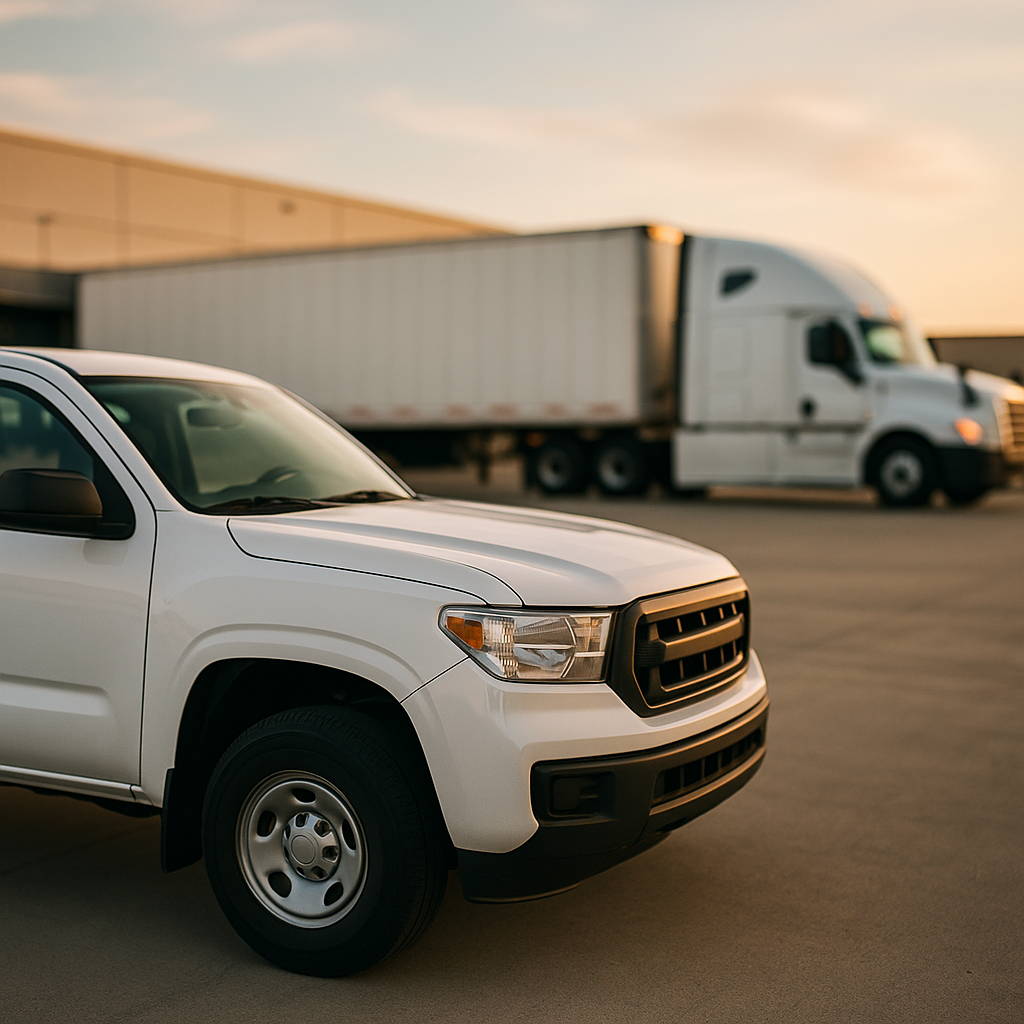

The average pickup truck insurance cost per month in 2026 is about $150 to $240 for full coverage and $70 to $170 for liability-only. ZIP code, driving record, truck trim, deductibles, and work use are the main cost drivers. High-risk situations can exceed $250 a month.
If you’re pricing the average pickup truck insurance cost per month for 2026, here’s the range most drivers actually see: about $150–$240/month for full coverage, while liability-only often lands around ~$70–$170/month. Your ZIP code, driving record, truck trim/value, deductibles, and whether you use the pickup for work are the biggest levers.
If you’re deciding between personal and business-use coverage, start with pickup truck insurance coverage and pricing for a deeper breakdown of what changes when the truck makes you money.
Table of Contents
Reading time: 9 minutes
- Key takeaways (save this before you shop)
- 2026 national benchmarks: what pickup insurance costs per month
- Liability-only vs full coverage: the coverage level that changes your bill
- Cost by pickup type (midsize vs half-ton vs heavy-duty vs EV)
- Personal use vs business use: when you need commercial insurance
- Frequently Asked Questions
- Conclusion

Key takeaways (save this before you shop)
In 2026, many U.S. drivers see full-coverage pickup insurance around $150–$240 per month, while liability-only commonly falls around ~$70–$170 per month, depending on state, ZIP, and driver profile.
- Coverage level drives the bill: Liability-only can be far cheaper than full coverage, but it won’t repair or replace your truck.
- Your ZIP code matters as much as your truck: Theft, hail, repair costs, and lawsuit trends can swing pricing fast.
- Business use changes the rules: Jobsite driving, deliveries, towing, or for-hire hauling can push you toward commercial coverage.
- Fastest way to lower cost: Compare multiple carriers using the same limits and deductibles (apples to apples).
2026 national benchmarks: what pickup insurance costs per month (and why “average” is messy)
National “average” pickup premiums vary because price studies use different states, liability limits, deductibles, and driver profiles, so the same truck can look cheaper or more expensive depending on the assumptions.
A practical way to budget is to focus on ranges and then quote your exact ZIP with identical coverage settings across carriers.
| Coverage type | Typical monthly range (pickup) | What it means in plain English |
|---|---|---|
| Liability-only | ~$70–$170/mo | Pays for damage/injuries you cause—not your truck |
| Full coverage (liability + comp + collision) | ~$150–$240/mo | Adds protection for theft, weather, and crash damage to your pickup |
| High-risk / high-cost situations | $250+/mo | Tickets/claims, expensive trims, high-theft ZIPs, low deductibles, business exposure |
To sanity-check your pickup quote against the broader market, compare it to the overall average car insurance cost per month; many pickups price similarly, but higher trims and higher repair costs can push them up.
If you want a credible “why this matters” source for household budgets, the Bureau of Labor Statistics tracks insurance as a consumer spending category in its Consumer Expenditure tables: https://www.bls.gov/cex/tables.htm.
Image placeholder: Chart showing average pickup truck insurance cost per month in 2026
Suggested: liability-only vs full coverage monthly ranges ($70–$170 vs $150–$240).
Liability-only vs full coverage: the coverage level that changes your monthly bill the most
Liability-only insurance pays other people’s injuries and property damage you cause, while full coverage usually means liability plus comprehensive and collision that can repair or replace your pickup after theft, hail, fire, or a crash.
If you want the cleanest explainer for what’s included (and what isn’t), use full coverage vs. liability-only insurance.
What “full coverage” usually includes (what it is)
Most insurers use “full coverage” as a shorthand for a bundle:
- Liability: Bodily injury + property damage you cause.
- Collision: Damage to your truck from a crash (even if you’re at fault).
- Comprehensive: Theft, hail, fire, vandalism, falling objects, and animal hits.
Full coverage also includes deductibles for comp/collision, and lower deductibles usually raise your monthly premium.
Why it’s essential (business reality)
If your pickup is financed or leased, lenders typically require comprehensive and collision until the loan is paid off. Even if you own it outright, the real question is cash flow: can you replace the truck tomorrow without wrecking savings or your business pipeline?
Who needs it
- Financed/leased pickups: Almost always required by the lender.
- Work trucks: Contractors, deliveries, and jobsite travel where downtime costs money.
- Higher-risk ZIP codes: Hail corridors and higher-theft areas.
Pro tip: Don’t choose a deductible you couldn’t pay this week without using a credit card.
Cost by pickup type (midsize vs half-ton vs heavy-duty vs EV)
Pickup insurance pricing tracks replacement cost, repair complexity, and typical use (miles and towing), which is why heavy-duty and EV pickups often price higher than midsize trucks in the same ZIP code.
| Pickup type / segment | Typical full coverage range (monthly) | Why it trends that way |
|---|---|---|
| Midsize (Tacoma/Ranger/Colorado class) | $130–$220 | Often lower MSRP and repair costs (varies by trim) |
| Half-ton (F-150/Silverado 1500/Ram 1500 class) | $150–$260 | Wide trim spread; higher value trims push premiums up |
| Heavy-duty (2500/250 class) | $170–$300+ | Higher replacement cost; often used for towing/work miles |
| EV pickups | $180–$320+ | Battery/parts costs and specialized repairs can raise comp/collision |
EV pickups deserve a separate look because the costs usually show up in comprehensive and collision (battery packs, calibration, limited repair networks). If you’re cross-shopping, read electric vehicle insurance cost factors before assuming it’ll price like a gas truck.
Image placeholder: Table comparing insurance costs by pickup type (gas vs EV)
Suggested: screenshot-style table mirroring the segment ranges above.
Personal use vs business use: when you need commercial insurance (and when you’re risking a denied claim)
Business use can require a commercial auto policy when the pickup’s risk profile changes (deliveries, employee drivers, for-hire hauling), and misclassifying the use can trigger coverage disputes at claim time.
Start with commercial auto insurance, then match the policy to what you do in a normal week (not your “best week”).
Common “business use” scenarios that can raise rates (what it is)
- Driving between multiple job sites daily
- Carrying tools/materials regularly
- Deliveries (even part-time)
- Employee drivers using your pickup
- Frequent towing (equipment trailers, enclosed trailers)
Why it’s essential (claim + compliance risk)
A personal auto policy may still work with the right usage classification or endorsement, but if you’re rated as “pleasure use” while doing true commercial activity, you’re betting your claim on an argument you don’t want to have after a crash.
If you’re operating for-hire—especially across state lines—filings and minimums can apply under federal rules, and FMCSA is the safest place to confirm the filing side: https://www.fmcsa.dot.gov/registration/insurance-filing-requirements.
Hotshot / for-hire hauling with a pickup: different rules can apply (who needs it)
If you’re running hotshot-style loads under motor carrier authority (or leased on), you’re not just insuring a pickup—you’re insuring a business operation and liability exposure. That’s why hotshot insurance and trucking-type policies are a different conversation than a standard personal auto policy.
Why your premium changes by state (and even ZIP code)
State and ZIP pricing changes because losses and claim severity change: theft rates, hail/wind risk, medical costs, traffic density, repair labor rates, and lawsuit frequency all push premiums up or down.
For a solid state-by-state context hub, NAIC’s consumer education pages are a good starting point: https://content.naic.org/cipr-topics/auto-insurance.
| Cost tier | What you’ll usually see | What drives it |
|---|---|---|
| Lower-cost areas | $120–$200/mo full coverage | Less congestion, lower losses, lower repair/medical costs |
| Mid-range | $150–$260/mo full coverage | Typical suburban/metro mixes |
| Higher-cost areas | $200–$320+/mo full coverage | Dense cities, high theft, severe weather, higher claim severity |
Image placeholder: Map showing regional differences in pickup insurance costs
Suggested: 3-tier shading (lower/mid/higher-cost) with example monthly ranges.
7 factors that most affect pickup truck insurance cost (quick decision checklist)
- Driving record (tickets, at-fault accidents, DUI)
- Annual mileage (commute + work miles)
- Truck value & trim (higher MSRP = higher physical damage cost)
- Where it’s parked (garage vs street; theft frequency)
- Deductibles (lower deductible = higher premium)
- Liability limits (higher limits cost more, but reduce catastrophic risk)
- Coverage lapses (gaps can trigger higher pricing)
Frequently Asked Questions
The average pickup truck insurance cost per month in 2026 is commonly about $150–$240 for full coverage, while liability-only often runs around ~$70–$170, depending on your state and driver profile. Your ZIP code (theft and hail risk), driving history (tickets/claims), truck trim/value, and your comp/collision deductibles are the biggest pricing levers. Business use can also increase cost or require a different policy type. For a ZIP-accurate number, quote multiple carriers using the same limits and deductibles.
Pickup truck insurance is often similar to car insurance, but it can be higher when the truck is a high-trim model with expensive repairs, higher theft risk, or higher replacement cost. A midsize pickup with good safety tech and lower annual mileage can price like (or below) many sedans and SUVs in the same ZIP. The fairest comparison is quoting both vehicles with identical liability limits and the same comp/collision deductibles.
Liability-only insurance for a pickup truck often falls around $70–$170 per month, depending on your state minimums, the liability limits you choose, and your driving record. Liability-only is designed to pay for other people’s injuries and property damage you cause, and it typically does not pay to repair or replace your pickup after a crash, theft, or hail loss. If your truck is financed, the lender will usually require comp and collision.
Pickups that are usually cheaper to insure tend to be mid-priced trims with strong safety features, widely available parts, and lower theft rates in your ZIP code. In many markets, midsize trucks can price lower than heavy-duty or luxury trims because the replacement cost and repair complexity are lower. The most accurate approach is quoting the exact model/trim with identical coverages across carriers, since one “premium” package can change the price a lot.
Pickup truck insurance is usually high because of tickets/accidents, high annual mileage, a high-theft or hail-heavy ZIP code, an expensive trim level, low deductibles, or higher liability limits. Even one moving violation can increase premiums for years depending on the carrier and state rating rules. If you want to understand the “how much can a ticket move my rate?” side, see how tickets affect insurance rates and compare quotes with the same coverage settings.
Occasional personal towing usually has limited impact on your auto premium, but frequent or heavy towing can signal higher exposure and may increase cost. If you’re towing for pay, hauling loads for-hire, or using the pickup as part of a regular business operation, the bigger issue is often policy fit rather than a small surcharge. The safest move is to disclose how you tow/haul and how often, because misclassification is one of the easiest ways to create claim problems.
You may need commercial insurance if your pickup is used for deliveries, employee driving, or for-hire hauling, while some business use can be covered on a personal policy with the correct classification or endorsement. The practical rule is simple: if the truck’s use changes the risk (more miles, jobsite driving, customers’ property, paid hauling), ask your insurer to confirm coverage in writing. If you’re unsure where the line is, start with commercial auto insurance and compare policy options before you have a claim.
Conclusion: Budget the range, then quote your exact ZIP and real-world use
Most pickup owners land in the $150–$240/month zone for full coverage in 2026, but that number swings quickly with deductibles, ZIP code risk, tickets, truck trim/value, and business use. If you want the best price without claim drama, quote multiple carriers with identical coverage settings and be honest about how the truck is used.
Key Takeaways:
- Full coverage vs liability is usually the biggest monthly price difference.
- ZIP code + driving record can outweigh the brand of the truck.
- Business use should be disclosed and matched to the correct policy type.
For savings tactics that don’t backfire at claim time, read How to lower auto insurance premiums and Insurance deductible guide: choosing a deductible you can actually afford.





