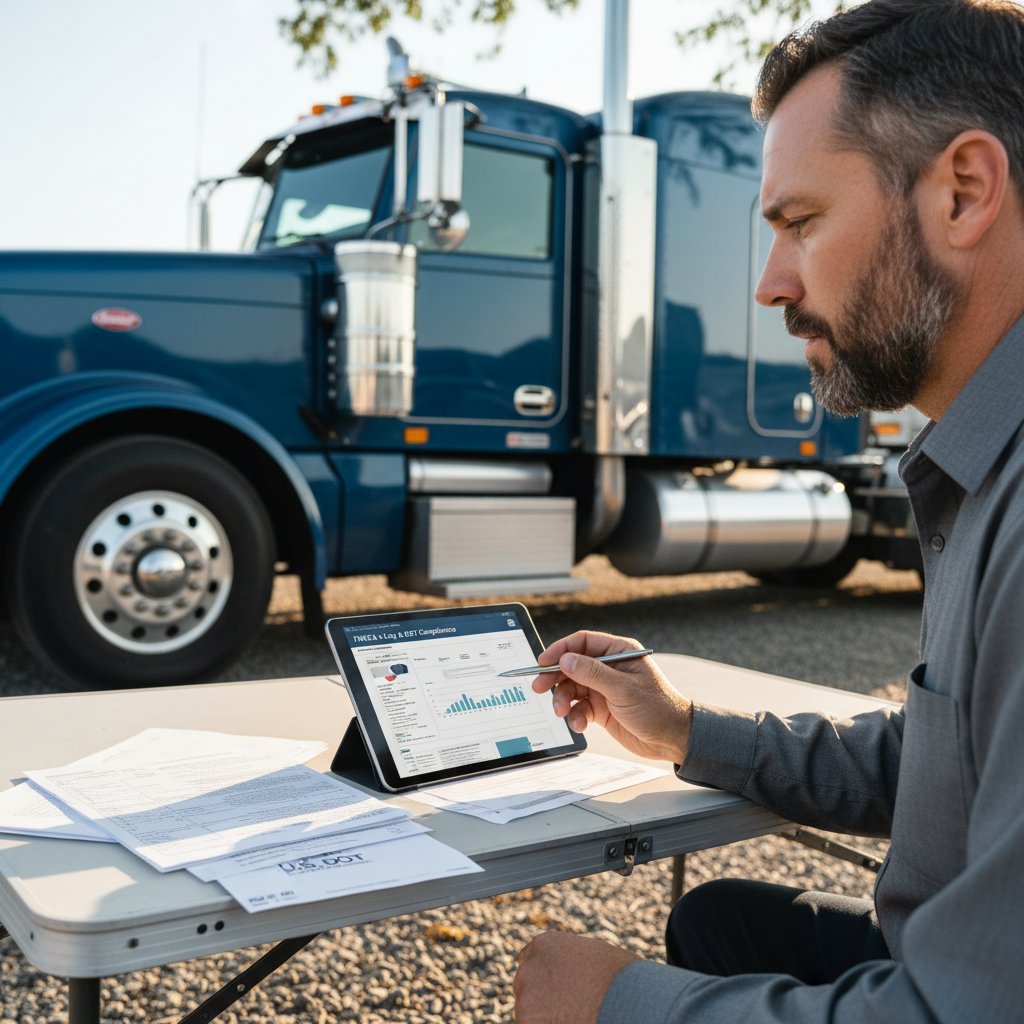
2026 business auto insurance cost is often $220–$1,200+/month per vehicle. See pricing by industry, vehicle, coverage, and location—then lower premiums without creating coverage gaps. Get a quote.
Business auto insurance cost in 2026 typically lands around $220–$1,200+ per month per vehicle, but “same truck, different price” is common because insurers rate use, garaging ZIP, and driver history more than your logo on the door.
Featured snippet (copy/paste ready): In 2026, business auto (commercial auto) insurance commonly costs about $220–$1,200+ per month per vehicle, depending on your industry, vehicle type, driver records, annual mileage, coverage limits, deductibles, and garaging location. Light local use with clean drivers sits at the low end; higher-risk work (delivery, towing, for-hire trucking) pushes costs up fast.
Running a small operation means every fixed cost has to earn its keep. If your premium jumps at renewal, it hits cash flow like a slow-paying customer—except insurance is due on time, every time. This guide gives you realistic 2026 ranges, what actually drives cost, and the levers that reliably lower premiums without leaving you exposed after a serious claim.
Key takeaways (quick scan)
- Biggest price drivers: driver MVRs + claims history + vehicle class + garaging ZIP + mileage/radius + limits/deductibles.
- Liability-only vs. “full coverage” (comp/collision) can change monthly cost more than most owners expect—especially on newer or financed vehicles.
- Fast savings wins: tighten driver standards, right-size deductibles, improve garaging/security, and shop multiple carriers with consistent inputs.
- If you run a box truck, hotshot, or semi, you’re often in trucking/commercial truck territory—budget higher and describe operations precisely to avoid misrating.
Table of Contents
Reading time: 11 minutes
- Average Business Auto Insurance Cost in 2026 (Monthly + Annual)
- Cost by Industry: What Different Businesses Pay
- Cost by Vehicle Type (Sedans, Vans, Pickups, Box Trucks, Heavy Trucks)
- Cost by Location: State/City Differences and Why Garaging ZIP Matters
- How Coverage Choices Change Your Business Auto Insurance Cost
- Business Profile Factors That Drive Rates
- 9 Ways to Lower Business Auto Insurance Cost (Without Gaps)
- How to Get an Accurate Quote (Checklist + Mistakes)
- Frequently Asked Questions
- Why Logrock (What You Get Beyond a Price)
- Conclusion & Get a Quote
Average Business Auto Insurance Cost in 2026 (Monthly + Annual)
In 2026, business auto insurance commonly costs $220–$1,200+ per month per vehicle, with higher-risk operations (delivery, towing, heavier trucks, dense metro garaging) running $1,200–$2,500+ per month when full coverage is needed.
These are planning ranges, not promises. Underwriters price your account based on your specific drivers, vehicles, and where the vehicles are actually garaged.
Typical price ranges (what many small businesses actually pay)
| Risk Tier (General) | Typical Use Case | Liability Only (Monthly / Vehicle) | Full Coverage (Monthly / Vehicle) |
|---|---|---|---|
| Lower | Light local driving, clean records, sedan/pickup | $220–$450 | $350–$700 |
| Typical | Service vans, small delivery, mixed drivers | $400–$800 | $650–$1,200 |
| Higher | High-mileage delivery, towing exposure, urban garaging, heavier vehicles | $800–$1,500+ | $1,200–$2,500+ |
Average vs. median (why “average” can mislead): a small number of high-risk accounts (heavy vehicles, bad losses, high-theft ZIPs) can pull the “average” up. Many small businesses land closer to the middle—unless they’re in a high-frequency claims class.
Rule-of-thumb budgeting (simple)
- 1 vehicle / light use: plan $4,000–$9,000 per year.
- Typical operations (service/delivery, mixed drivers): plan $8,000–$20,000 per vehicle per year in many markets.
- Commercial truck / trucking-style operations: often higher depending on radius, power unit value, and loss history.
2026 cost trend: why premiums change year to year
Commercial auto premiums move when claim costs move, and the biggest pressure points are repair inflation, medical/severity trends, theft/vandalism, and carrier underwriting cycles.
- Repair inflation: parts, labor, and sensor calibration on newer vehicles.
- Medical and settlement severity: injuries and legal timelines drive bigger payouts.
- Theft trends: certain metros and vehicle types get hit harder.
- Market cycles: when carriers tighten, rates climb and eligibility shrinks.
For macro pricing movement, the U.S. Bureau of Labor Statistics publishes CPI data for motor vehicle insurance: https://www.bls.gov/cpi/.
Cost by Industry: What Different Businesses Pay
Commercial auto insurers rate by business use class (service, delivery, towing, for-hire, jobsite use), and that single classification can shift pricing from $220–$450 to $800–$2,500+ per month per vehicle even before you change vehicles.
Insurers don’t just insure “a vehicle.” They insure an operation—miles, stops, backing exposure, time pressure, cargo/equipment, and driver turnover.
Lower-risk industries (examples)
- Real estate teams (light local miles)
- Consulting/professional services (occasional client visits)
- Low-mileage sales routes
Why it prices lower: fewer miles, fewer drivers, less stop-and-go, and fewer tight backing situations.
Mid-risk industries (examples)
- HVAC, plumbing, electrical, landscaping
- Cleaning services with multiple stops
- Catering and local food delivery (not for-hire trucking, but lots of stop-and-go)
Why it’s often higher than expected: more backing/parking exposure, more drivers rotating, and more small claims that add up.
Higher-risk industries (examples + niche sectors)
- Construction fleets (jobsite risk, tools/equipment, heavy pickups)
- Towing (high claim severity)
- Last-mile delivery (frequency + fatigue)
- For-hire transport and trucking-style classes (box trucks, hotshots, semis)
Niche sectors many guides skip (underwriters don’t):
- Cannabis distribution (where legal): theft target + compliance requirements.
- Food trucks: vehicle + equipment value, event driving/parking exposure.
- IT/AV installation fleets: dense urban stops + loaded vehicles (theft exposure).
Pro tip: If you’re trying to keep commercial truck insurance affordable, your #1 job is accurate classification (radius, vehicle weight/class, and true use). Misstating operations can look cheaper today and turn into a claims fight later.
Cost by Vehicle Type (Sedans, Vans, Pickups, Box Trucks, Heavy Trucks)
Vehicle class affects both claim frequency and severity, which is why a sedan can price at $220–$700 per month while a box truck or hotshot-style setup can run $900–$3,000+ per month with similar drivers and limits.
In trucking-style accounts, this effect is amplified because heavier units and higher miles increase both the chance of a claim and the size of the claim.
Why vehicle class changes premiums
- Repair cost: newer tech and sensors increase severity.
- Weight/impact: heavier vehicles tend to create larger third-party losses.
- Theft likelihood: some makes/models are targeted more.
- Use case: delivery, tools, passengers, or for-hire work changes underwriting.
Scenario modeling (apples-to-apples estimates)
Assumptions: clean-ish drivers (no recent major violations), 1–2 drivers per vehicle, local radius, typical suburban garaging unless noted, and “common” business limits; estimates are not quotes.
| Scenario | What You’re Running | Estimated Monthly Range (Per Vehicle) | Why It Lands There |
|---|---|---|---|
| #1 Contractor pickup | 1 pickup, tools, local miles | $250–$650 | Pickup + jobsite exposure, usually manageable risk |
| #2 Cleaning company | 2 cargo vans, multiple stops/day | $450–$1,100 | Stop-and-go + backing claims add up |
| #3 Local delivery | 1 box truck, urban routes | $900–$2,200 | Box truck severity + dense traffic |
| #4 HVAC small fleet | 5 service vans, mixed drivers | $600–$1,400 | Driver variance + frequent driving |
| #5 Food truck | 1 food truck, events + weekends | $700–$1,800 | Special-use vehicle + busy event parking |
| #6 Hotshot / heavier hauling | 1-ton pickup + trailer, for-hire style ops | $1,200–$3,000+ | Closer to trucking risk profile (miles, weight, severity) |
Don’t compare semi/hotshot pricing to standard business auto and assume the higher number is “a rip-off.” It’s different rating, different loss severity, and often different contract/compliance requirements.
Cost by Location: State/City Differences and Why Your Garaging ZIP Matters
Garaging ZIP code is a primary rating factor in commercial auto, and the same vehicle and drivers can price far differently when moved from a low-theft ZIP to a dense, high-theft metro ZIP.
Location isn’t just the state you’re in. Underwriters look at where the vehicle sleeps, how congested the area is, theft/vandalism patterns, weather, and the local repair-cost environment.
What drives location-based price differences
- Traffic density & crash frequency
- Theft/vandalism rates
- Weather exposure (hail, flood, ice)
- Litigation environment
- Repair labor rates and parts availability
Garaging vs. mailing address: rating usually follows garaging. If the truck sleeps in a different ZIP than your office, don’t “round it.” A mismatch can trigger audit issues and ugly claim questions.
Practical takeaway: if you can legally and operationally move garaging to a more secure setup (fenced yard, cameras, controlled keys), it can reduce theft losses—and that can help pricing over time.
How Coverage Choices Change Your Business Auto Insurance Cost
Liability limits, comp/collision, and deductibles can change business auto insurance cost by hundreds to over $1,000 per month per vehicle, especially on newer financed vehicles and heavier classes.
The goal isn’t “max coverage” or “minimum coverage.” It’s right-sized coverage that matches your real risk and your contracts.
For a plain-language baseline on commercial auto concepts, the NAIC consumer resource is a solid reference: https://content.naic.org/cipr-topics/commercial-auto-insurance.
Liability limits (and why minimum coverage can backfire)
Definition: Auto liability pays for bodily injury and property damage you cause to other people.
- Why it matters: one serious injury claim can burn through low limits fast.
- Contract reality: many customers, brokers, and GCs require higher limits than state minimums.
Tip: If contracts force higher limits, price both setups: (1) higher auto limits and (2) moderate auto limits plus umbrella/excess (when available). Sometimes umbrella is more efficient—sometimes it isn’t.
Physical damage: comprehensive vs. collision
- Collision: you hit something (or something hits you).
- Comprehensive: theft, vandalism, hail, animal strike, fire, and more.
If the vehicle is financed or leased, physical damage is often required by the lender. Even when it’s not required, replacing a work vehicle out-of-pocket can wreck cash flow.
Endorsements that add cost (and often prevent gaps)
- Towing & labor
- Rental reimbursement / downtime options (varies by carrier/state)
- Tools/equipment: bolted equipment can be treated differently than cargo or business property—don’t assume it’s covered.
Hired and Non-Owned Auto (HNOA): If employees use personal cars for errands or you rent/borrow vehicles, HNOA can close a common liability gap (“we don’t own it” doesn’t stop a lawsuit).
Business Profile Factors That Drive Rates (Drivers, Claims, Fleet Size, Operations)
Underwriters typically price commercial auto using five core variables—drivers, loss history, vehicle class/value, mileage/radius, and garaging/operations—and changing just one can move premiums by hundreds of dollars per vehicle.
This is why two identical vans can price differently: the drivers and the operation behind those vans aren’t identical.
Drivers (MVR, experience, who’s actually driving)
- Years licensed and commercial experience
- Violations (speeding, reckless, DUI)
- Prior at-fault accidents
- Driver-to-vehicle ratio (more rotation usually means more risk)
Business reality: one risky driver can raise the premium for the entire account.
Claims history (frequency vs. severity)
- Frequency: lots of small claims can be worse than one fluke claim.
- Severity: one large injury loss can impact pricing for years.
Practical policy: set a claims threshold (example: handle very small damage out-of-pocket if it’s clearly cheaper than the long-term premium hit). Run the math instead of guessing.
Operations (mileage, radius, parking, night driving)
- Annual mileage and driving radius
- Urban vs. rural routes
- Night driving
- Jobsite parking and security
In trucking-style accounts, radius + lanes + parking are huge. Secure yards and disciplined routes reduce both real risk and underwriter concern.
Fleet size (when “fleet” helps—and when it doesn’t)
Fleet programs can help when operations are stable and driver management is consistent. They can hurt when turnover is high, claims stack up, and garaging/usage is inconsistent.
9 Ways to Lower Business Auto Insurance Cost (Without Creating Coverage Gaps)
Lowering business auto insurance cost usually comes from reducing claim frequency (driver behavior and operations) and buying coverage efficiently (deductibles, classification, and limits), not from stripping coverage until you’re exposed.
These are the levers that tend to work across most small-business accounts.
1) Shop multiple carriers (and keep your quote data consistent)
If you change mileage, radius, drivers, or garaging between quotes, you’re not comparing rates—you’re comparing different risks.
2) Use telematics/usage-based programs (if you can manage them)
Telematics can reward safer driving and lower mileage, but only if you enforce standards. If you ignore the data, savings usually fade.
3) Tighten driver standards (often the #1 lever)
- Pull MVRs before hire
- Enforce no-phone policies
- Seatbelt compliance
- Document training (even basic training helps defensibility)
4) Raise deductibles strategically
Higher deductibles often lower premium, but only choose a deductible you can pay without missing payroll or stalling operations.
5) Right-size the vehicle for the job
If a half-ton pickup does the job, don’t run a heavier class “just because.” Weight/class tends to push severity and price.
6) Improve garaging and theft prevention
- Locked yard or controlled parking
- Cameras and lighting
- Immobilizers / GPS tracking
- Key control (no keys left in vehicles)
7) Bundle only when it actually improves the total deal
Bundling can reduce total spend, but don’t accept worse coverage terms or exclusions just to “bundle.” Compare apples-to-apples.
8) Compare pay plan choices
Pay-in-full can reduce fees and sometimes earns discounts. If you must pay monthly, understand finance charges so “cheap per month” doesn’t hide a higher total cost.
9) Re-rate after changes (don’t wait until renewal)
New drivers, new vehicles, new routes, and new contracts are rating triggers. Update the policy as you grow to avoid misclassification and surprise audits.
How to Get an Accurate Quote (What to Gather + Common Mistakes)
A commercial auto quote typically requires VINs, garaging addresses, driver details, mileage/radius, coverage limits/deductibles, and prior loss history, and missing details can lead to re-priced premiums at binding or after audit.
Accurate inputs = accurate pricing = fewer surprises later.
Quote checklist (what you’ll need)
- Vehicle VINs, year/make/model, and ownership (owned/leased/financed)
- Garaging addresses (where it sleeps)
- Estimated annual mileage + driving radius
- Driver list: license numbers, DOB, years licensed
- Loss runs (if you had prior commercial coverage)
- Desired limits + deductibles
- Contracts requiring specific limits or additional insureds
Mistakes that inflate quotes (or create claim problems)
- Understating mileage or radius
- Using a “mailbox” address instead of true garaging
- Leaving off drivers who “only drive sometimes”
- Not disclosing delivery/for-hire use (big issue for trucking-style risks)
Frequently Asked Questions
In 2026, the average commercial auto insurance cost for many small businesses falls around $220–$1,200+ per month per vehicle, with delivery, towing, heavier units, or dense metro garaging often pushing higher. The biggest swing factors are industry/use class, vehicle class/value, driver MVRs, claims history, annual mileage/radius, liability limits, and comp/collision deductibles. If you want a number you can actually budget around, ask for quotes using the same assumptions (same drivers, same mileage/radius, same garaging) so you’re comparing apples-to-apples.
Most businesses can budget business auto insurance per month in tiers: $220–$450 for lower-risk/light use, $400–$1,200 for typical service or mixed operations, and $800–$2,500+ for higher-risk work like delivery, towing, urban routes, or heavier vehicles with full coverage. Monthly payment can also change based on your pay plan and down payment, so two policies with the same annual premium may look different “per month.” Always compare annual cost plus fees, not just the installment amount.
The factors that most often drive business auto insurance cost are (1) driver MVRs and experience, (2) claims history (frequency and severity), (3) vehicle type/class and value, (4) garaging ZIP (theft/traffic), (5) annual mileage and radius, and (6) liability limits and physical-damage deductibles. The most controllable levers are driver selection/policies, mileage/radius discipline, secure garaging, and deductible strategy. The least controllable are market cycles and local claim/litigation trends, which can raise pricing even when your operation stays stable.
Commercial auto insurance is usually more expensive than personal auto because business use typically involves more miles, more drivers, heavier vehicles, and higher liability exposure, all of which raise claim frequency and severity. A single low-mileage vehicle used occasionally for work may price closer to a personal policy, but the gap widens quickly once you add multiple drivers, delivery/stop-and-go routes, jobsite exposure, or a heavier vehicle class. The right comparison is commercial-to-commercial with the same limits and deductibles.
Businesses can save on auto insurance fastest by shopping multiple carriers with consistent quote data, tightening driver standards (MVR checks, no-phone, seatbelts), choosing deductibles that match cash reserves, improving garaging security (locked yard, cameras, key control), and right-sizing coverage to contracts and real risk. Telematics can also help when you actively manage the results. The “unsafe” savings move is cutting liability limits or deleting comp/collision on vehicles you can’t afford to replace, because one loss can cost far more than the premium difference.
Commercial auto insurance for a single vehicle commonly ranges from about $220 to $1,200+ per month, depending on the vehicle class, driver record, garaging ZIP, mileage/radius, and whether you carry full coverage (comp/collision). A pickup with light local use and clean drivers may fall closer to the low end, while a box truck doing urban delivery can run much higher. For accuracy, get 3–5 quotes using the same driver list, the same mileage/radius assumptions, and the true garaging address; treat “too cheap” outliers as possible misclassification or missing coverage.
Commercial auto typically covers vehicles owned by the business (scheduled autos) for liability and, if selected, physical damage. Hired and Non-Owned Auto (HNOA) is liability coverage for situations where the business rents/borrows vehicles or when employees use their personal cars for business tasks. HNOA does not usually cover damage to the employee’s vehicle; it’s designed to protect the business from third-party lawsuits arising out of that driving. If your team runs errands or visits job sites in personal cars, HNOA is a common gap-closer.
Often yes, because frequent business use can trigger exclusions or coverage limitations on a personal auto policy, especially for deliveries, carrying tools/equipment, transporting people, or any for-hire activity. If you personally own the car but use it regularly for business, you may need a business-use endorsement or a commercial policy depending on the insurer and the use. If employees drive personal cars for company errands, the business usually needs HNOA to reduce lawsuit exposure. The safest move is to confirm coverage in writing before a loss.
You usually need VINs, year/make/model, true garaging addresses, estimated annual mileage and radius, a full driver list (DOB and license details), a clear description of operations (service vs delivery vs jobsite vs for-hire), desired liability limits and deductibles, and prior loss runs if you’ve had commercial coverage. Accurate inputs reduce the chance of a premium change at binding or after audit. If contracts require higher limits or additional insureds, bring those requirements up front.
Why Logrock (What You Get Beyond a Price)
A properly written commercial auto policy matches your real operations—vehicle class, radius, garaging, drivers, and use—because misclassification is a common reason policies get re-rated, audited, delayed, or disputed when a serious claim happens.
Most businesses don’t fail because they paid $80/month too much. They fail because a claim exposes a gap and drains cash reserves.
- Correct classification: your policy matches what you actually do (the fastest way to avoid claim headaches).
- Coverage that matches contracts: so you don’t lose work over insurance requirements.
- Practical risk control: driver standards, deductible strategy, and garaging/security that can reduce costs over time.
If you’re running commercial truck insurance, trucking insurance, hotshot insurance, or semi truck insurance, you want a policy built around operational reality—not a generic “business auto” template.
Conclusion & Get a Quote
Business auto insurance cost isn’t random. It’s a priced reflection of drivers + operations + vehicle class + location + coverage choices. Start with a realistic range, then control what you can: driver discipline, clean quoting data, smart deductibles, secure garaging, and regular market shopping.
Key Takeaways:
- Budget $220–$1,200+/mo per vehicle as a planning range (higher for heavier or higher-risk ops).
- Your biggest levers are drivers, claims, vehicle class, garaging ZIP, mileage/radius, and limits/deductibles.
- Real savings come from reducing risk and rating correctly, not cutting coverage blindly.
Related Reading (pending internal links): Editorial note — add 2–3 internal Logrock links here once internal URLs are available (e.g., commercial auto basics, trucking insurance costs, fleet insurance).