
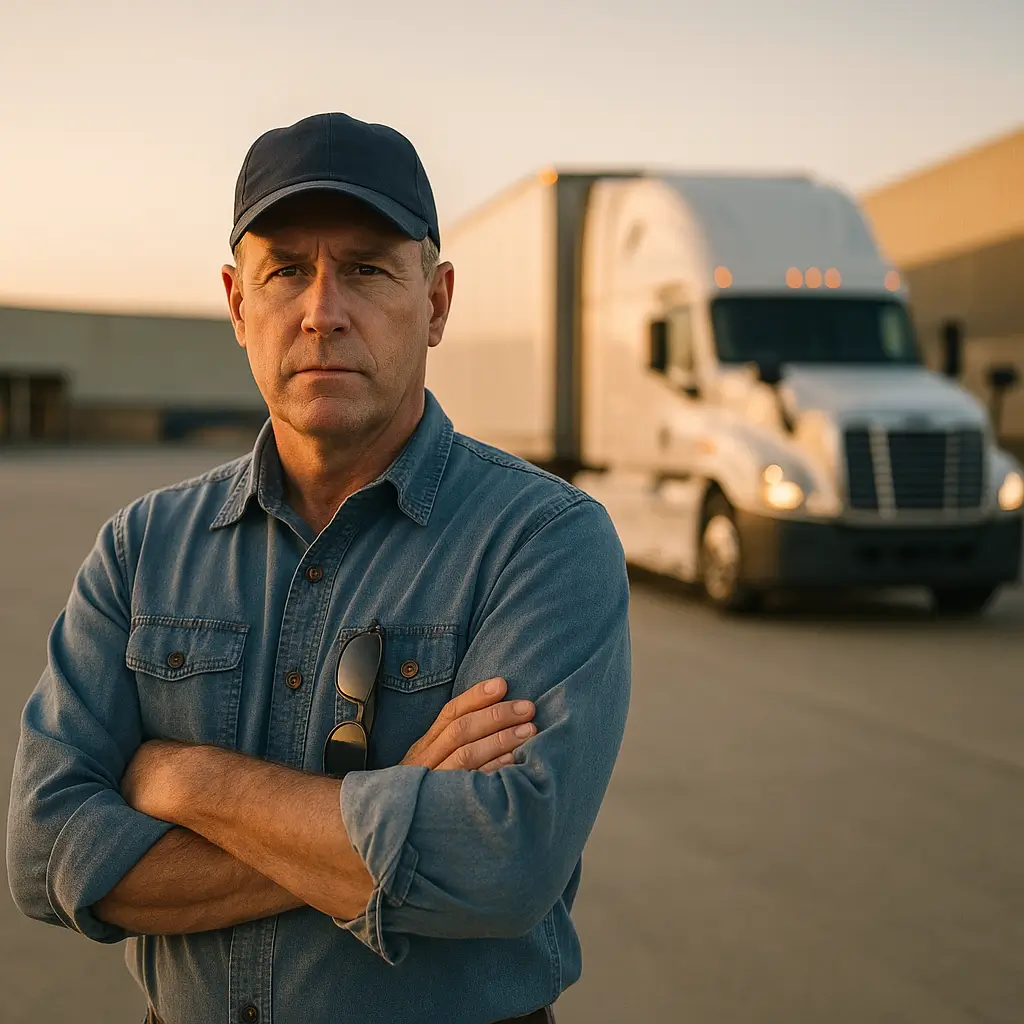

Learn Alabama commercial auto insurance requirements, including 25/50/25 minimums, FMCSA rules, cost factors, contract coverage, and a quote checklist.
Commercial auto insurance Alabama rules start with the state’s 25/50/25 liability minimum, but many real-world jobs (and some federal trucking operations) require higher limits to stay compliant and contract-ready. In Alabama, 25/50/25 means $25,000 bodily injury per person, $50,000 per accident, and $25,000 property damage—yet one serious injury claim can exceed that fast.
If you want a quick refresher on what a policy actually covers (liability vs physical damage, common exclusions, and who needs it), review commercial auto insurance basics and then come back here.
Table of Contents
Reading time: 7 minutes

Key takeaways (save this to your notes)
Alabama’s commonly referenced auto liability minimum is 25/50/25, but FMCSA-regulated for-hire interstate operations can require $750,000 to $5,000,000 depending on the operation and cargo.
- 25/50/25 is a legal floor: It’s not a “safe” amount for serious injuries, and it often won’t satisfy commercial contracts.
- FMCSA can override state minimums: For-hire interstate trucking, passenger carriers, and some hazmat operations may need higher federal limits and filings.
- Misclassification is expensive: Insuring business use on a personal policy (or the wrong commercial class) is a common reason claims get disputed.
- Shop three quote tiers: Quote minimum compliance, contract-ready, and high-limit with the same deductibles for an apples-to-apples comparison.
Do you need commercial auto insurance in Alabama?
Commercial auto insurance is typically required by insurers and contracts when a vehicle is used for business activities like deliveries, service calls, hauling tools, or transporting goods for pay.
Most people get hung up on this: “It’s my truck—why can’t I insure it personally?” Because underwriting is based on business use, drivers, radius, and what you haul, not just who holds the title.
The fastest way to avoid a coverage denial
Personal auto policies can exclude or restrict business use, and “for-hire” use is often a hard stop. If you want a clear comparison (and the common exclusion traps), read commercial auto vs. personal auto in Alabama.
Who usually needs it (real Alabama scenarios)
These are common situations where commercial auto is the safer (and more insurable) fit.
- Business-titled vehicles: Truck/van titled to an LLC or corporation.
- Multiple drivers: Employees driving, permissive use, or frequent driver changes.
- Service work: HVAC, plumbing, electrical, landscaping, mobile repair, janitorial routes.
- Daily hauling: Tools, materials, equipment, and trailers tied to job sites.
- For-hire hauling: Hotshot, general freight, or any paid transport arrangement.
Practical underwriting tip: If an agent doesn’t ask about radius, driver list, and cargo/use, the policy may be priced “cheap” but built wrong.
Alabama commercial auto insurance requirements (state minimums)
Alabama’s baseline liability minimum is commonly stated as 25/50/25 (or $75,000 CSL in some contexts), and the Alabama Department of Revenue references 25/50/25 in a dealer blanket liability FAQ.
State reference: https://www.revenue.alabama.gov/faqs/what-are-the-insurance-requirements/
For a sense of what small fleets in the state are actually paying, see our breakdown of Alabama small fleet insurance rates.
Want a quick visual breakdown of what Alabama owner-operators are actually paying? Watch this:
Alabama’s baseline liability minimums: 25/50/25 (what the numbers mean)
25/50/25 is shorthand for bodily injury and property damage liability limits.
Here’s a quick explainer on what auto liability actually pays for: What Exactly Does Auto Liability Insurance Cover?
| Coverage | Alabama baseline minimum (liability) | What it pays for |
|---|---|---|
| Bodily injury (per person) | $25,000 | Injuries to one third party |
| Bodily injury (per accident) | $50,000 | Total injuries to all third parties in one crash |
| Property damage | $25,000 | Damage you cause to vehicles and property |
What “minimum required” does (and doesn’t) protect
State minimum liability is designed to protect other people, not your business assets.
- It does: Pay third-party injury and property damage (up to the limit).
- It doesn’t: Repair your truck/van (that’s comprehensive/collision), replace your lost income, or guarantee you’ll meet contract requirements.
Proof you’ll be asked for (COIs matter in the real world)
A certificate of insurance (COI) is the most common proof of coverage requested by general contractors, shippers, and property managers, and many require exact wording like additional insured or primary & non-contributory.
To avoid delays and “wrong certificate” rejections, review certificate of insurance (COI) explained.
When FMCSA federal limits override Alabama minimums (trucking, hotshot, passenger)
FMCSA financial responsibility rules can require minimum liability limits of $750,000 to $5,000,000 for certain for-hire interstate carriers, passenger carriers, and hazmat operations, which is higher than Alabama’s 25/50/25 baseline.
FMCSA source: https://www.fmcsa.dot.gov/registration/insurance-filing-requirements
If you want the practical “what forms get filed and when” version, use FMCSA insurance filing requirements.
Not sure whether the state minimum or a higher limit is right for your operation? This breaks it down:
What it is (the federal layer)
FMCSA minimums are tied to how you operate—for-hire vs. private carriage, interstate vs. intrastate, passenger vs. property, and hazmat type/quantity.
Why it’s essential (brokers don’t care about your state minimum)
Contracts often require $1,000,000 auto liability even when a lower legal minimum exists, and some freight classes require more than $1M or specific filings.
This is where commercial truck insurance, trucking insurance, semi truck insurance, and hotshot insurance become about earning revenue—not just buying a policy.
For hotshot-specific limits and filings, see commercial auto liability for hotshot drivers. To understand which filings apply to your authority, see commercial auto insurance filings.
Federal minimums (simplified table—verify for your operation)
FMCSA minimums vary by operation type, and you should confirm the exact requirement for your authority, cargo, and route.
| Operation type (examples) | Common FMCSA minimum (liability) | Notes |
|---|---|---|
| For-hire interstate (general freight) | $750,000 | Many contracts still require $1,000,000 |
| Hazmat (certain types/quantities) | $1,000,000 to $5,000,000 | Depends on hazmat classification and quantity |
| For-hire passenger | $1,500,000 to $5,000,000 | Often tied to seating capacity and operation |
Reality check: “Affordable trucking insurance” has to be affordable and accepted by brokers and shippers, or you’ll be insured but unable to book loads.
Building a contract-ready commercial auto policy (without wasting money)
A contract-ready commercial auto policy usually combines liability with add-ons like physical damage and HNOA so your business can meet COI requirements and survive downtime after a claim.
Once you’ve met the legal baseline, the next goal is simple: don’t let insurance be the reason you can’t take a job, and don’t leave your balance sheet exposed.
If your business needs more than auto coverage, see our guide to Alabama commercial insurance essentials.
Coverages that keep you in business
Many Alabama businesses end up with a “liability-only” setup that looks cheap but doesn’t protect the vehicle or the workflow.
- Liability: The foundation for third-party injuries and property damage.
- Physical damage (comp + collision): Often required by lenders/leasing, and practical when the vehicle has real value.
- Uninsured/underinsured motorist: Useful when the at-fault driver can’t pay enough to cover injuries.
- Towing/labor + rental/downtime options: Especially important for one-vehicle operations.
- Hired & non-owned auto (HNOA): Helps when employees use personal cars for work, or you rent/borrow vehicles.
If your business uses employee-owned vehicles or rentals, read hired and non-owned auto insurance before you sign a COI-heavy contract.
Who needs more than the minimum (quick scenarios)
- Solo contractor with a financed work truck: Liability plus comprehensive/collision is often non-negotiable.
- Service fleet with multiple drivers: Higher liability, tighter driver controls, HNOA, and consistent COI handling.
- For-hire hotshot or semi: You’re often in trucking insurance territory where federal and contract limits drive the decision.
Time-saving move: Ask for the exact insurance language your GC/broker requires before binding coverage, then verify the COI matches it.
Frequently Asked Questions
Alabama commercial auto questions usually come down to three things: the 25/50/25 baseline, whether you’re truly “commercial” vs personal use, and whether FMCSA or contract limits apply.
Alabama’s baseline auto liability minimum is commonly referenced as 25/50/25, meaning $25,000 bodily injury per person, $50,000 per accident, and $25,000 property damage. That’s a legal starting point, but many commercial contracts require higher limits and a COI with specific wording. If you operate for-hire interstate (including hotshot), carry passengers for a fee, or haul certain hazmat, FMCSA rules may require much higher limits (often $750,000 to $5,000,000 depending on the operation). State reference example: Alabama DOR insurance FAQ.
Commercial auto insurance cost in Alabama depends on rating factors like vehicle type/weight, garaging, operating radius, annual mileage, driver MVRs, claims history, deductibles, and the liability limit you choose (25/50/25 vs $1,000,000, for example). The most practical way to budget is to quote three tiers with the same deductibles: minimum compliance, contract-ready, and high-limit. That way, you see what each step in protection actually costs instead of guessing. For a clean breakdown of what changes price (and what doesn’t), read commercial auto insurance cost factors.
Yes, and most commercial policies expect you to list every regular driver by name. Leaving a driver off the policy — even a part-time or seasonal one — can create a coverage dispute if that driver is behind the wheel during a loss. Update your driver list whenever staffing changes rather than waiting for renewal.
Many business vehicles need commercial auto insurance when they’re titled to a business, used primarily for work (service calls, deliveries, hauling tools/materials), or driven by employees or multiple drivers. Personal auto policies can restrict business use and commonly exclude “for-hire” activity, which can create claim disputes if the vehicle is misclassified. A good agent will document details like who drives, where you operate (radius), what you haul, and how the vehicle is used day-to-day—because that’s what determines whether the policy will actually respond in a loss. If you’re unsure where your situation falls, compare the differences in commercial auto vs. personal auto in Alabama.
A COI is proof of your coverage that a general contractor, shipper, or property manager requests before you can work with them. In Alabama, many contracts require specific language on the COI — like being named as an additional insured or having coverage listed as primary and non-contributory — and a mismatch between what your policy says and what the contract requires is one of the most common reasons a COI gets rejected. Confirm the exact wording your contract requires before you bind coverage, not after.
Yes—FMCSA financial responsibility minimums can be higher than Alabama’s 25/50/25 for certain for-hire interstate carriers, passenger carriers, and hazmat operations, with commonly referenced minimums ranging from $750,000 up to $5,000,000 depending on the operation and cargo. These limits can apply even if your vehicle is based in Alabama, because the trigger is often the type of authority and interstate activity. The safest workflow is to confirm your operation type first, then match your policy limit and required filings to that authority. Start with FMCSA’s official guidance: FMCSA insurance filing requirements.
SR-22 requirements in Alabama are typically tied to individual driver violations, such as a DUI or driving without insurance, rather than to the commercial policy itself. If a driver on your policy needs one, it can affect eligibility and rates. This is separate from any FMCSA filings your operation may need federally.
Hotshot operations are usually for-hire and often interstate, which can trigger FMCSA minimums well above Alabama’s 25/50/25 baseline, plus specific filings tied to your authority type. If you’re hauling for pay in a pickup-and-trailer setup, treat this as a trucking insurance decision, not a standard commercial auto one. For more detail, see commercial auto liability for hotshot drivers.
Conclusion: Buy for “legal + contract-ready,” not just 25/50/25
Alabama’s commonly referenced liability minimum is 25/50/25, but many commercial contracts and FMCSA-regulated operations require higher limits such as $750,000 or $1,000,000+. The right policy is the one that’s correctly classified, produces an acceptable COI, and keeps your vehicle repairable after a loss.
Key Takeaways:
- Use 25/50/25 as the baseline, then price out contract-ready limits so you’re not losing jobs over insurance.
- If you’re for-hire interstate, confirm whether FMCSA minimums and filings apply before you bind coverage.
- Quote three tiers with consistent deductibles so you can choose based on risk—not guesswork.
If you need higher limits without rebuilding your whole program, an excess layer can help—see umbrella insurance for business. If you run multi-state, keep a compliance baseline with commercial truck insurance requirements by state.
If you’re trying to figure out whether your Alabama commercial auto policy actually meets your contracts — or whether FMCSA limits apply to your operation — LogRock can help you review your coverage, driver list, and COI wording before it becomes a problem. Talk to our team to compare minimum, contract-ready, and high-limit options side by side.





