
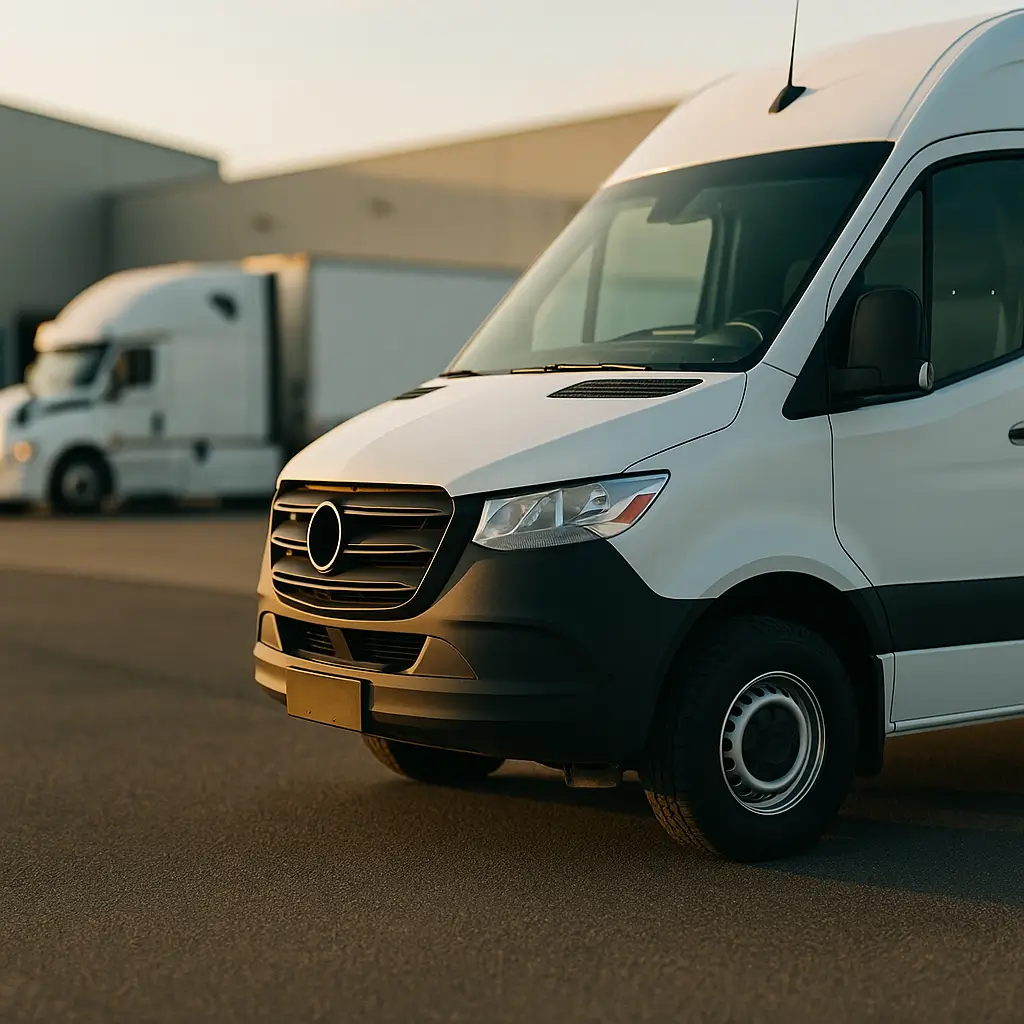

Sprinter van commercial insurance can cost $120–$800+/mo. See coverages, DOT/MC triggers, and savings tips.
Commercial insurance for Sprinter van owners typically costs $120 to $800+ per month per van in 2026, depending on use (contractor vs courier vs passenger-for-hire), operating radius, garaging ZIP, driver history, vehicle value, and liability limits required by contracts.
Before selecting limits, review the full Sprinter van insurance requirements by use type so your quote matches contractor, courier, or passenger-for-hire exposure.
If you want the big-picture view across all cargo vans, start with commercial van insurance benchmarks for 2026, then come back here for the Sprinter-specific checklist and the mistakes that cause premium spikes or claim denials.
Table of Contents
Reading time: 8 minutes
- Introduction (read this before you shop)
- Key takeaways
- When you need commercial (not personal) insurance for a Sprinter van
- How much is commercial insurance for a Sprinter van in 2026?
- Coverage checklist: what a Sprinter van needs for business use
- DOT number, MC authority, and for-hire passenger rules (Sprinter vans)
- Frequently Asked Questions
- Conclusion: Get the right Sprinter coverage (and prove it fast)

Introduction (read this before you shop)
Commercial insurance for a Sprinter van typically costs $120–$800+ per month per van in 2026 for most U.S. small-business use-cases, with courier and passenger-for-hire operations usually rating higher than local contractor use.
The swing comes down to what you do, how far you run, how many miles you drive, where the van is garaged overnight, your drivers’ MVRs, and the liability limits your customers or brokers require.
This guide is built for real-world decisions: what coverage you actually need, where people get surprised at claim time, and how to keep premiums under control without cutting protection that matters.
Key takeaways
Most expensive Sprinter insurance mistakes show up in three places: misclassifying for-hire work, skipping cargo coverage, and leaving $10,000–$30,000 of tools uninsured.
- Don’t “wing it” with a personal policy: For-hire delivery, tools/equipment, employees driving, or passenger work can create gaps that appear at claim time.
- Price follows exposure: Local contractor use can be relatively affordable; courier and passenger-for-hire operations typically rate higher because miles and claim severity increase.
- Cargo + tools are separate problems: Comp/collision protects the van—not your customer’s freight and not your tools.
- DOT/MC questions are about what you do and where you run: If you cross state lines or operate for-hire, confirm USDOT/authority and filing requirements before you take the load.
When you need commercial (not personal) insurance for a Sprinter van
A Sprinter needs commercial auto insurance when it’s used for business activities like for-hire delivery, transporting passengers for pay, or operating with business drivers/mileage that personal auto policies often restrict or exclude.
What it is (plain English)
Commercial insurance for sprinter van use means the policy is written and rated for business operations—more business mileage, more time on the road, and higher-risk use classes (deliveries, job sites, passengers, and customer property exposure).
Why it’s essential (claims + contracts)
Personal auto policies commonly limit or exclude certain business activities—especially for-hire delivery and passenger-for-pay. The NAIC notes that personal auto insurance usually does not cover vehicles used for work, while business auto coverage can include higher limits and extra protections for work vehicles. The real risk isn’t the premium difference; it’s a post-accident investigation where the carrier says the vehicle use was misclassified.
If you want a clean shopping workflow that prevents quote “bait-and-switch” re-rating, use how to compare van insurance quotes apples-to-apples.
Who needs it (quick checklist)
You’re usually in commercial territory if any of these are true:
- You deliver goods for pay (courier, medical delivery, routed delivery, gig/platform work).
- You haul tools/materials as part of your trade (HVAC, electrical, plumbing, remodeling, mobile mechanic).
- The van is titled to an LLC, or you advertise/wrap the vehicle for business.
- You have employees or subcontractors driving it.
- You transport passengers (airport runs, shuttle, Sprinter limo-style service).
If you run multiple vans or operate as an LLC, see the full breakdown of cargo van business insurance for costs and coverage across a fleet.
Pro tip (avoid a very common mistake)
Underwriters care about use classification. “Contractor hauling own tools locally” and “for-hire courier running 30,000 miles/year across multiple states” aren’t priced—or covered—the same.
How much is commercial insurance for a Sprinter van in 2026?
For 2026 budgeting, most Sprinter van commercial insurance quotes fall in the $120–$800+ per month range per van, with local contractor use trending lower and courier/passenger-for-hire trending higher.
2026 cost range by common Sprinter use-case
Use these planning ranges as a starting point (your ZIP, drivers, limits, and loss history can move the number a lot):
| Sprinter use-case | Typical monthly range (per van) | What usually drives the price |
|---|---|---|
| Local contractor / mobile service (own tools, local radius) | $120–$350/mo | Garaging ZIP, comp theft risk, driver MVR, vehicle value |
| Courier / delivery (higher miles, more road exposure) | $250–$650/mo | Annual miles, radius, loss history, liability limits required by clients |
| Passenger-for-hire (shuttle/airport/private transport) | $400–$800+/mo | Passenger exposure, higher liability expectations, operational scrutiny |
For new Sprinter operators comparing total startup costs—not just insurance—this complete breakdown covers everything you need to budget for:
To understand why Sprinter quotes can swing so much, review what drives commercial auto pricing.
Owner-operators running their own routes should also review Sprinter van insurance for owner-operators for annual cost context.
Cost drivers specific to Sprinter vans
- Higher vehicle value = higher comp/collision: newer Sprinters can be expensive to repair.
- Cargo theft/break-in exposure: especially in certain metros and overnight parking situations.
- Use type matters most: courier and passenger-for-hire usually rate higher than trades.
- Radius and miles: local-only vs multi-state runs changes exposure fast.
- Driver profile: age, years licensed, commercial experience, MVR/claims.
What you should have ready for accurate quotes (so you don’t get re-rated later)
- VIN, year, trim, and whether it’s leased/financed
- Business type + whether you are for-hire
- Driver list (named drivers), DOBs, license info, MVR details
- Annual miles + operating radius (local vs regional)
- Overnight parking details (secured lot vs street)
- Max cargo value (if you carry customer property)
Coverage checklist: what a Sprinter van needs for business use
A practical Sprinter business insurance setup usually includes commercial auto liability, physical damage (comprehensive + collision), and separate coverage for tools and/or cargo when you carry valuable property.
For cost ranges and limit guidance specific to delivery work, see our breakdown of cargo insurance for a Sprinter van.
Commercial auto liability
What it is: Pays for injuries and property damage you cause to others (other vehicles, pedestrians, buildings).
Why it’s essential: Many customers and brokers care less about “state minimum” and more about contract limits and credible proof of insurance. For delivery/courier, liability is the foundation of the packet you’ll be asked to send.
Who needs it: Anyone operating a Sprinter for business.
Not sure what your liability coverage actually pays out in a real claim? This video explains what commercial auto liability covers and where it stops:
Physical damage (comprehensive + collision)
What it is: Covers the van itself for collision, theft, vandalism, hail, fire, and other covered losses.
Why it’s essential: If your Sprinter is financed/leased, it’s usually required. Even if it’s paid off, one total loss can erase months of profit.
Pro tip: Choose a deductible you can pay immediately. If $2,500 would wreck cash flow, don’t pick it just to shave premium.
Tools and equipment (the biggest Sprinter gap): inland marine
Inland marine insurance is commonly used to cover mobile tools and equipment for $10,000–$30,000+ of gear that travels with your business, including theft losses that auto insurance often doesn’t cover at meaningful limits.
Many owner-operators assume “full coverage” protects what’s inside the van. That’s usually wrong: auto comp/collision is built to protect the vehicle, not your business contents.
For a deeper setup guide on tools coverage, speak with a commercial lines agent familiar with your trade to confirm the right form and coverage limits for your specific gear.
Quick comparison: auto physical damage vs inland marine
| Question | Auto physical damage | Inland marine (tools/equipment) |
|---|---|---|
| Covers the Sprinter itself? | Yes | No |
| Covers tools/gear inside? | Sometimes minimal/limited | Yes (designed for it) |
| Covers gear off-site (jobsite/storage)? | Usually no | Often yes (depends on form) |
| Best for | Vehicle loss | Business gear loss |
Where this ties into trucking insurance (if you’re scaling up)
If you’re moving from a Sprinter into bigger equipment (box truck, straight truck, or tractor-trailer), the insurance conversation shifts into higher limits, different filing requirements, and more scrutiny on for-hire operations. The goal stays the same: affordable coverage that won’t blow up at claim time because the use was misclassified. If you’re still comparing van types before scaling, see commercial insurance for cargo vans for a side-by-side view.
DOT number, MC authority, and for-hire passenger rules (Sprinter vans)
FMCSA generally requires a USDOT number for interstate commerce when a vehicle/combination has a GVWR/GCWR of 10,001+ lb, transports placarded hazmat, or carries 8+ passengers for compensation (or 15+ passengers not for compensation).
Sprinters can feel like a gray area because what counts as interstate commerce under FMCSA rules can depend on the movement, route, and business purpose—not just the vehicle badge.
The same van can shift from “local contractor work” one day to “interstate for-hire delivery” the next — and the compliance and insurance expectations shift with it.
If you’re unsure whether your Sprinter operation triggers a USDOT requirement, this breakdown walks through the registration decision step by step:
Do I need a USDOT number for a Sprinter van?
The best starting point is FMCSA’s official guide: https://www.fmcsa.dot.gov/registration/do-i-need-usdot-number.
- Local-only work in one state: you may fall under state rules (not FMCSA), depending on weight and operation.
- Crossing state lines for business: your odds of needing a USDOT number increase—especially if you meet the 10,001+ lb criteria (including towing combinations).
When MC authority and federal insurance filings may apply
For-hire interstate motor carriers that meet FMCSA thresholds can be subject to authority and insurance filing requirements, and minimum financial responsibility limits are commonly $750,000 for non-hazardous property carriers under 49 CFR Part 387 when applicable.
FMCSA’s insurance filing overview is here: https://www.fmcsa.dot.gov/registration/insurance-filing-requirements.
Even when federal filings aren’t required, brokers/shippers/platforms can still require proof of specific limits before they tender work. For a plain-English walkthrough that connects the steps, see DOT and FMCSA compliance basics.
Passenger-for-hire (airport runs, shuttles, private transport)
Passenger work is underwritten differently because injuries can be severe and multi-claim. Expect more scrutiny on driver history/training, higher liability expectations, and different regulatory triggers depending on where/how you operate. For a full breakdown of limits and carrier expectations, see commercial passenger van insurance.
Before confirming filing obligations, review the cargo van insurance requirements that apply to interstate and for-hire operations.
Common mistakes that raise premiums (or get claims denied)
- Misclassifying for-hire delivery as “personal” or vague “business use”
- Not disclosing all drivers (a permissive-use situation can turn into a claim fight)
- Assuming “full coverage” includes tools or customer cargo
- Street-parking in high-theft areas with weak comp coverage
- Letting coverage lapse (gaps can get priced aggressively for new ventures)
How to lower costs without cutting protection
- Shop at renewal with clean loss history; don’t auto-renew out of habit.
- Tighten your radius/mileage estimates to reality (don’t guess).
- Improve theft controls (secured parking, cameras, alarms) and document them.
- Raise deductibles only to the level your cash reserves can handle.
- Keep driver standards tight (MVR checks, no “just this once” drivers).
Frequently Asked Questions
These FAQs answer the most common pricing, coverage, and DOT/authority questions for commercial insurance for a Sprinter van in 2026.
For a Sprinter van in 2026, a realistic planning range is $120–$800+ per month per van, and the biggest drivers are use class (contractor vs courier vs passenger), operating radius, annual miles, garaging ZIP, driver MVR/claims, vehicle value, and the liability limits your customers require.
Liability-only can price lower, but adding comprehensive/collision (and higher limits) can push premiums up quickly—especially in high-theft ZIP codes or for high-mileage delivery routes.
A Sprinter used for business should carry commercial auto liability at a minimum, and financed/leased vans typically also need comprehensive and collision to satisfy lender requirements.
If you carry customer property (courier/delivery), you may need cargo coverage by contract, and if you carry valuable gear you should add inland marine so tools and equipment (often $10,000–$30,000+) aren’t left uninsured after a break-in.
Sometimes—FMCSA requirements depend on whether you operate in interstate commerce and whether your vehicle/combination meets the federal triggers, including 10,001+ lb GVWR/GCWR, placarded hazardous materials, or certain passenger operations.
The most reliable starting point is FMCSA’s decision tool at https://www.fmcsa.dot.gov/registration/do-i-need-usdot-number, then confirm how your state treats intrastate operations if you stay local.
You should carry the liability limit your contracts require and that protects your business assets, because delivery facilities, brokers, and passenger work often demand higher limits than state minimums.
When FMCSA financial responsibility rules apply to for-hire interstate property carriers, the federal minimum is commonly $750,000 for non-hazardous property under 49 CFR Part 387, but many customers still require higher limits on top of that. For a clear breakdown of limits and how liability actually pays claims, read commercial auto liability insurance explained.
Probably not safely. Most personal auto policies exclude or significantly limit for-hire delivery use—even occasional or part-time work. If you’re paid to deliver goods, your personal carrier can deny a claim and cancel your policy for misrepresentation. The safer move is a commercial policy rated for your actual use, which often costs less than people expect for low-mileage or local-only operations. For edge cases, see cargo van insurance for personal use.
It depends on the platform and how you operate. Many gig platforms provide limited coverage while you’re actively on a delivery, but that coverage often does not apply between deliveries or to vehicle damage to your van. If you run a Sprinter full-time for platform deliveries—especially for for-hire arrangements—a commercial auto policy gives you consistent coverage that does not depend on the platform’s policy language. Check what your contract requires before assuming the platform’s coverage is enough.
Both cover property in transit, but they are built for different operations. Motor truck cargo insurance is designed for for-hire carriers transporting customer goods—it is what brokers and shippers usually require in a carrier packet. Inland marine is designed for your own tools and gear that travel with the vehicle. If you’re a contractor hauling your own $20,000 in tools, inland marine is usually the right fit. If you’re a courier responsible for customer freight, motor truck cargo is what you need. Some Sprinter operations need both.
It depends on how the policy is written. Commercial auto policies typically let you list named drivers, and some extend coverage to permissive-use operators. However, unlisted drivers—especially employees or subcontractors with poor MVRs—can create coverage gaps or claim disputes. If employees or contractors drive your Sprinter, disclose that at application and list them on the policy.
The carrier can deny the claim. Use classification is the foundation of how your policy was rated and what risks it agreed to cover. If you told your insurer the van was used for local contractor work but you were running for-hire deliveries, that can be treated as material misrepresentation. Getting the classification right at application is far cheaper than finding out the wrong way at claim time.
Generally no. Most Sprinter configurations have a GVWR under 26,001 lb, which keeps them below the federal CDL threshold. However, if you tow a trailer that pushes the gross combination weight rating (GCWR) above 26,001 lb, or if you carry 16 or more passengers for compensation, CDL requirements can apply. Check your vehicle’s GVWR on the door jamb and confirm with your state’s DMV before assuming no CDL is needed — especially if your operation involves towing.
More than most operators expect. Underwriters rate theft exposure, accident frequency, and claim severity by where the van is garaged overnight — not just where it operates. A Sprinter parked on the street in a high-theft urban ZIP code can cost substantially more to insure than the same van stored in a secured lot or lower-risk area. If you have access to off-street or secured overnight parking, document it and disclose it to your agent — it can move the rate.
Your commercial auto policy generally follows the vehicle across state lines, but your compliance obligations may change. Operating interstate for business — especially at or above the 10,001+ lb GVWR threshold — can trigger FMCSA registration requirements for authority and filings that didn’t apply when you stayed local. Before expanding your radius, notify your insurer of the territory change and confirm whether your authority, USDOT registration, or liability filings need to be updated. Taking an interstate load before that is sorted can create both a compliance gap and a coverage dispute if something goes wrong.
Yes, in most cases. Commercial auto policies can be endorsed to add vehicles as your operation grows. Adding a second Sprinter typically requires the same information as the first: VIN, year, use class, driver list, and estimated annual miles. Your premium will adjust, and any new drivers added to the policy will usually have their MVR pulled as part of the process. Contact your agent before the second van goes into service — there should be no gap between the day you take possession and the day coverage is confirmed.
Conclusion: Get the right Sprinter coverage (and prove it fast)
A Sprinter that earns income should be insured with correctly classified commercial auto coverage and separate limits for liability, the vehicle, and any customer cargo or business tools.
The fastest way to get this right is to nail the use classification (contractor vs for-hire delivery vs passenger), match limits/deductibles across every quote, and add the “missing” policies (cargo and/or inland marine) that actually protect what’s inside the van.
Key Takeaways:
- Budget realistically: $120–$800+/mo per van is a common 2026 range, and use type + miles drive the swing.
- Separate what you’re protecting: comp/collision protects the van; inland marine protects tools; cargo protects customer goods.
- Get compliance right early: interstate + 10,001+ lb and for-hire operations can trigger USDOT/authority and filing requirements.
Related reading:
- When you haul customer property, understand cargo insurance for for-hire deliveries.
- Comparing Sprinter vs Transit/ProMaster? Use commercial insurance for cargo vans.
- Comparing insurers for your van operation? See the best commercial insurance providers for cargo vans.
If you operate a Sprinter for courier work, contractor jobs, or passenger-for-hire services, the right coverage is built around what you actually do — not just what the vehicle is. LogRock can help you confirm your use classification, match your limits to what contracts actually require, and identify whether cargo or inland marine coverage belongs in your setup before a claim exposes the gap.
Speak with LogRock and request a Sprinter van insurance quote




