
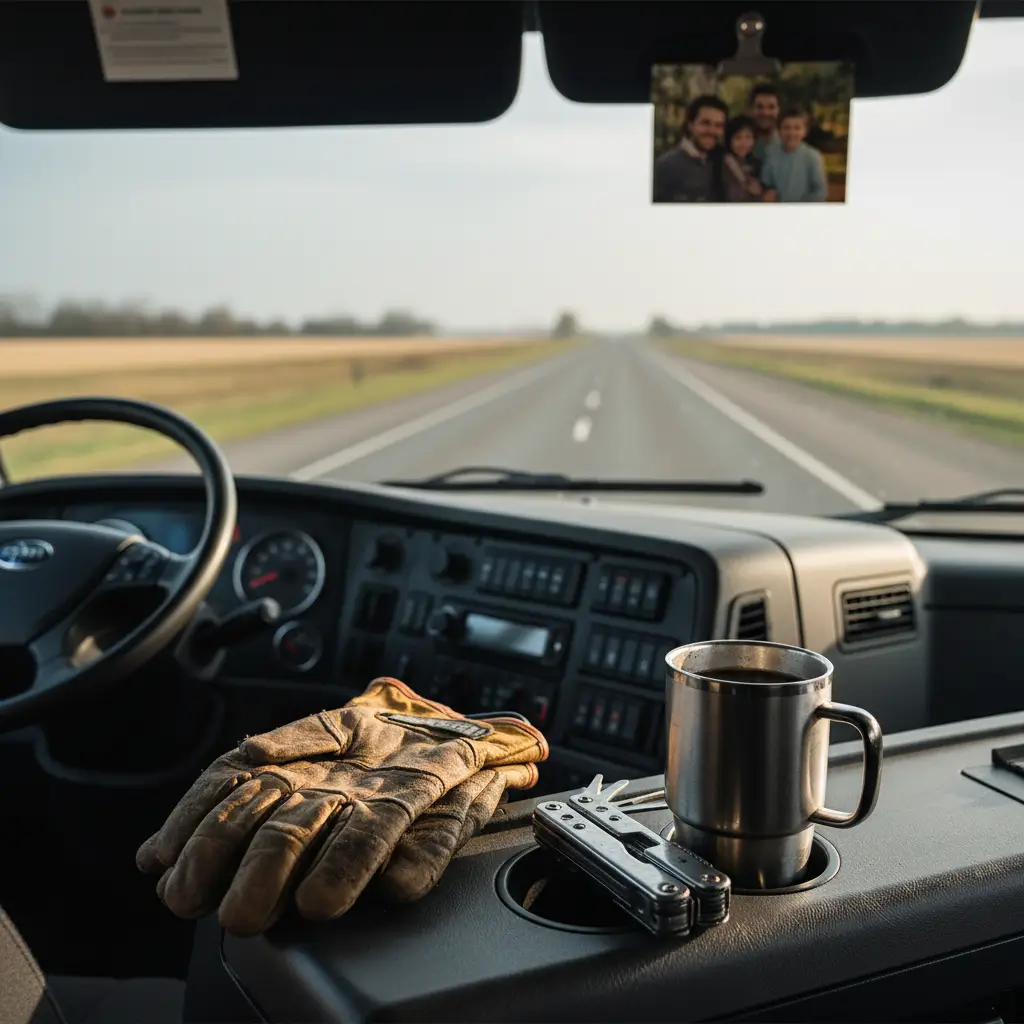

Compare 6 essential taxi cab insurance coverages, 2026 cost ranges, key rate factors, and practical ways to lower commercial auto premiums.
Commercial insurance for taxi cabs is a commercial auto policy rated for for-hire passenger driving, and it’s typically required by city taxi authorities, airports, and contracts (not just state minimums). If you carry passengers for a fare (street hail, dispatch, or contract work), a personal auto policy often won’t match the risk or the licensing rules, which is where coverage disputes and permit issues start.
To ground yourself before you compare prices, start with commercial auto insurance basics for taxi operators so you know what you’re actually being quoted and what limits matter.
Table of Contents
Reading time: 11 minutes
- What is commercial insurance for taxi cabs (and why personal auto usually fails)
- 6 core coverages in commercial insurance for taxi cabs (required + common add-ons)
- How much does commercial taxi insurance cost in 2026? (and what drives it)
- Taxi insurance requirements: why they vary by city, state, airport, and operation
- Taxi vs ride-hail vs commercial truck insurance: where operators get burned
- Frequently Asked Questions
- Conclusion: Get the right taxi coverage (and prove it to regulators)

What is commercial insurance for taxi cabs (and why personal auto usually fails)
Commercial taxi insurance is a commercial auto policy underwritten and rated for for-hire passenger transport, which has higher exposure due to dense traffic, frequent stops, and passenger injury risk. Many personal auto policies aren’t priced or written for “carrying passengers for a fare,” and that mismatch is where claim arguments and denials can happen when you’re on the clock.
Taxi vs personal auto: the for-hire problem
What it is (plain English): Taxi coverage is commercial auto designed for paid rides, not commuting.
Why it matters: If a claim happens while you’re working and your insurer decides the use was for-hire, you can end up fighting about coverage when you need the vehicle (and income) back fast.
For an independent overview of how commercial auto differs from personal auto, see the NAIC consumer page: https://content.naic.org/consumer/commercial-auto-insurance.
Before you shop, review personal vs commercial auto insurance differences so you know exactly what you’re risking with the wrong policy.
Who typically needs commercial taxi insurance
- Independent taxi drivers (owner-operators): Single-vehicle, full-time or part-time for-hire work.
- Small taxi fleets (even 2–10 cars): Multi-driver exposure and higher annual mileage.
- Taxi companies leasing vehicles to drivers: Ownership, permissive use, and driver control issues.
- Regulated operators: Anyone who must file proof of insurance with a city/airport authority.
For a deeper look at coverage tiers and monthly cost ranges, see our commercial taxi insurance guide.
Taxi vs livery vs black car vs ride-hail (TNC)
Taxi is usually street hail + dispatch, livery/black car is typically pre-arranged, and TNC (Uber/Lyft-style) coverage changes based on app status and state rules. The classification you’re rated for is what keeps a claim from turning into a “this wasn’t disclosed” coverage dispute.
6 core coverages in commercial insurance for taxi cabs (required + common add-ons)
The six coverages most commonly included or required in commercial insurance for taxi cabs are auto liability, PIP/Med Pay (where applicable), UM/UIM, physical damage, passenger accident (often local-rule driven), and general liability. If you’re comparing quotes, match the same limits and deductibles first, because tiny differences in liability structure can change the price by thousands.
If you’re unsure how limits work, read how commercial auto liability limits work before you decide between CSL vs split limits.
Coverage checklist table (use this when shopping)
| Coverage | What it covers | Usually required? | Who typically requires it |
|---|---|---|---|
| Auto liability (BI/PD) | Injuries/property damage you cause | Yes | City/taxi authority, airport, state, contracts |
| PIP / Med Pay (varies) | Medical costs regardless of fault (state-dependent) | Sometimes | State law / optional |
| UM/UIM | If the at-fault driver has no/low insurance | Often | State law / smart add-on |
| Physical damage (comp + collision) | Damage to your taxi | If financed/leased | Lender/lessor; practical necessity |
| Passenger accident (varies) | Passenger injury benefits (structure varies) | Often in regulated cities | Taxi authority/airport rules |
| General liability (GL) | Non-auto business claims | Sometimes | Regulators, landlords, contracts |
Before diving into each coverage, this quick breakdown explains exactly what auto liability pays — and what it does not:
1) Auto liability (bodily injury + property damage)
Auto liability pays when you’re legally responsible for someone’s injuries or property damage, and it’s the foundation of taxi licensing in many jurisdictions. This is also the claim category that can bankrupt a small operator after one severe passenger injury.
- Pro tip: Confirm whether your quote is CSL (combined single limit) or split limits, because that changes how protection applies in a serious injury claim.
2) PIP / Medical Payments (where applicable)
PIP/Med Pay can cover medical bills regardless of fault depending on your state and policy structure, and taxi losses often involve “minor injury” treatment that still turns into claim frequency. Don’t confuse PIP/Med Pay with passenger accident coverage; they’re triggered differently and can pay different benefits.
3) Uninsured/Underinsured motorist (UM/UIM)
UM/UIM protects you if you’re hit by a driver with no insurance or not enough insurance, and urban taxi driving increases exposure to uninsured drivers and hit-and-run losses. Even when not required by law, it’s often worth pricing because it protects your business from someone else’s bad insurance decision. Even when not required by law, it is often worth pricing because uninsured motorist coverage for commercial drivers can protect your business from someone else’s bad insurance decision.
4) Physical damage (comprehensive + collision)
Physical damage pays to repair or replace your taxi after a covered loss, and it’s usually required if the vehicle is financed or leased. Deductibles should match your cash reserves, because a “cheap” premium can backfire if the deductible forces you off the road during a slow month.
5) Passenger accident / no-fault passenger coverage (often local-rule driven)
Passenger accident coverage provides defined benefits for passenger injuries, and many regulated taxi markets or airport pickup programs require it by rule. Passengers are your product and also your highest-severity exposure, so this is one of the first coverages to verify against your permit checklist.
6) General liability (GL) + business add-ons
General liability covers non-auto claims (like slip-and-fall at an office/dispatch location) and is sometimes required by contracts, landlords, or regulators. Keep GL and auto liability straight so you don’t buy the wrong coverage for an auto crash. For a full breakdown of when GL applies and what it costs, see general liability for commercial vehicle businesses.
How much does commercial taxi insurance cost in 2026? (and what drives it)
In 2026, many taxi operators see annual commercial taxi insurance premiums around $7,000–$25,000+ per vehicle per year, with territory, liability limits, and claims history doing most of the pricing work. Taxi insurance is priced as a high-frequency, higher-severity business because you drive more hours, stop more often, and carry passengers who can claim injury. For broader context on how commercial auto rates are structured across vehicle types, see commercial auto insurance rates in 2026.
For context on the job and why exposure differs from casual driving, the U.S. Bureau of Labor Statistics tracks taxi drivers and chauffeurs here: https://www.bls.gov/ooh/transportation-and-material-moving/taxi-drivers-and-chauffeurs.htm.
Typical 2026 cost ranges (use as a budget band, not a promise)
- Owner-operator (1 vehicle): roughly $7,000–$25,000+ per vehicle/year depending on city, limits, and loss history.
- Small fleets: can be lower per vehicle with strong controls, or higher if losses stack up.
Some consumer sources cite monthly averages (often near ~$900+/month in certain markets), but treat those as directional only; one example is MoneyGeek’s discussion: https://www.moneygeek.com/insurance/business/commercial-auto/taxi/.
For broader industry context on commercial auto pricing and loss trends, see the Insurance Information Institute’s commercial lines data: III commercial lines facts and statistics.
The biggest rating factors (what underwriters price)
Commercial taxi premiums are mostly driven by measurable exposure: where you garage, how much you drive, who you hire, and what your losses look like. If you want the deeper breakdown, use what affects commercial insurance costs.
- Garaging ZIP / territory: often the largest pricing factor in dense cities.
- Hours on road + annual mileage: more exposure generally means more premium.
- Driver quality: MVRs, experience, violations, and stability.
- Loss runs / claims history: frequency and repeat patterns raise rates.
- Vehicle type & repair costs: parts, sensors, and shop costs matter.
- Limits, deductibles, and add-ons: higher limits and lower deductibles cost more.
Here is a closer look at the rating factors underwriters actually use to price commercial vehicle policies:
Per-mile budgeting (quick math that keeps you honest)
Insurance cost per mile is calculated as annual premium ÷ annual miles, and it’s a clean way to compare quotes across different driving patterns. Example: $12,000 premium ÷ 60,000 miles = $0.20/mile.
6 levers that usually reduce premium without wrecking coverage
- Shop 3+ markets: include at least one taxi/livery specialist.
- Raise deductibles strategically: only if you can absorb the out-of-pocket cost.
- Tighten driver eligibility: set minimum experience and MVR standards.
- Dash cams + telematics + coaching: reduces frequency and helps defend claims.
- Documented maintenance: predictable fleets underwrite better and crash less.
- Avoid lapses: coverage gaps often trigger pricing penalties.
For a focused playbook, use how to lower commercial auto insurance premiums.
Taxi insurance requirements: why they vary by city, state, airport, and operation
Taxi insurance requirements are usually set by local taxi authorities and airport permitting programs, and those rules often require limits higher than state minimums plus specific certificate wording. In many states, personal auto minimums can be as low as 25/50/25 (or similar), while taxi permits commonly require $300,000–$1,000,000+ CSL depending on the city, airport, and contract.
What usually varies (and what to verify)
- Minimum liability limits: often higher than state minimums.
- Passenger accident coverage: sometimes mandatory by local rule.
- General liability: sometimes required for offices, leases, or contracts.
- Certificate wording: certificate holder / additional insured language can be strict.
- Proof format and filings: some programs have exact submission rules.
A real example (Portland)
Portland’s municipal code shows how specific local rules can get about insurance requirements and documentation: https://www.portland.gov/code/16/40/130.
If your operation also includes app-based rides, review how commercial rideshare insurance is structured differently — TNC coverage changes based on app status, and many taxi policies do not automatically cover it.
Interstate vs intrastate (when federal rules might matter)
Most taxi operations are local, but if your business crosses state lines or is classified as a for-hire motor carrier in a way that triggers federal insurance filings, FMCSA guidance is the place to start: https://www.fmcsa.dot.gov/registration/insurance-filing-requirements.
Action step: Before you bind coverage, confirm the exact limits, required coverages, and certificate wording with your regulator/airport program and your agent—then make every quote match that checklist.
Taxi vs ride-hail vs commercial truck insurance: where operators get burned
Coverage gaps most often happen when an operator’s real-world work (taxi + TNC + contract driving) doesn’t match the policy classification used to rate the insurance. Misclassification is one of the fastest paths to a denied claim, rescission, or a non-compliant certificate when a city or airport audits your documents.
If you do taxi + TNC, disclose it (or you’re gambling)
Some commercial taxi policies exclude certain app-based uses or require specific endorsements, and TNC coverage can change depending on whether the app is off, on and waiting, or actively on a trip. Disclose every platform and every use case (street hail, dispatch, airport, contract, app) so your rating matches your reality. TNC coverage rules are state-specific; the NAIC has published guidance on transportation network company insurance requirements.
Why this matters even if you also run trucks (hotshot/semi)
Some owners run multiple business lines (taxis + delivery + hotshot), but the coverage packages aren’t interchangeable. Commercial truck insurance is commonly built around cargo, radius, weight class, and motor-carrier operations, while taxi insurance is priced around passenger injury exposure and dense urban driving.
- Trucking vs taxi: the “liability” line item isn’t the same risk, even when the limit number looks similar.
- Don’t chase price alone: cutting limits can backfire fast after one severe injury claim.
If your operation uses rentals, driver-owned vehicles, or other non-owned autos, get clear on hired & non-owned auto coverage before you assume “the policy will handle it.”
If you are still unsure how auto liability and general liability differ in practice, this video breaks it down:
Provider selection checklist (beyond “who’s cheapest”)
- Certificates fast: can they meet city/airport COI rules quickly?
- For-hire passenger expertise: do they routinely write taxi/livery in your territory?
- Exclusions: any restrictions around airports, night hours, permissive use, or driver eligibility?
- Payment terms: down payment and installments that fit your cash flow.
- Real underwriting: asking for driver lists and loss runs upfront is usually a good sign.
Frequently Asked Questions
Most taxi operators should budget $7,000–$25,000+ per vehicle per year for commercial taxi insurance in 2026, with territory, liability limits, and loss history driving most of the range. A clean way to sanity-check affordability is per-mile budgeting: annual premium ÷ annual miles. For example, $12,000 per year divided by 60,000 miles is $0.20 per mile. If you drive fewer miles or fewer hours, your per-mile cost can spike even when the annual premium is lower, so compare quotes using the same mileage assumptions and the same limits.
Taxi cab insurance requirements depend on your city/taxi authority/airport program, and many jurisdictions require liability limits above state minimums plus specific certificate wording. Auto liability is almost always required, and some markets also require passenger accident coverage and/or general liability for business operations. As a practical benchmark, personal auto minimums in many states can be as low as 25/50/25, while taxi permits commonly require $300,000–$1,000,000+ CSL depending on local rules and contracts. Verify the exact limits and COI language with your regulator before binding.
Personal auto insurance usually does not cover taxi work because carrying passengers for a fee is commonly outside personal auto underwriting intent and can trigger for-hire exclusions. If a crash happens while you’re working (street hail, dispatch, or contract fares), a personal policy can lead to a coverage dispute right when you need repairs and income. The safer route is a commercial policy rated for taxi/livery use, with limits that meet your city or airport permit rules and a certificate that matches their wording. To see how the policies differ, review personal vs commercial auto insurance differences.
You can often reduce commercial taxi insurance costs by improving the factors insurers actually rate: driver quality, claim frequency, and documented controls. The most reliable levers are tighter driver screening (clear MVR standards), dash cams/telematics with coaching, and strategic deductibles only when you have cash reserves to absorb losses. Also avoid coverage lapses, keep maintenance records, and compare quotes apples-to-apples with identical limits and deductibles. For a step-by-step playbook, see how to lower commercial auto insurance premiums.
A combined single limit (CSL) gives you one pool of money to cover both bodily injury and property damage in a single claim — for example, a $1,000,000 CSL means up to $1M applies however the loss breaks down. Split limits cap each category separately, such as bodily injury per person, bodily injury per accident, and property damage. Taxi regulators and airports often prefer CSL because it is simpler to verify on a certificate and more flexible in a serious multi-passenger claim. When comparing quotes, confirm which structure each carrier uses because a split-limit policy can look cheaper but perform differently after a severe passenger injury.
Most commercial taxi policies can cover permissive use, but the terms depend on how the policy is rated and how drivers are listed. If you lease your taxi to another driver or share vehicles across shifts, confirm whether every regular driver must be scheduled and whether each driver meets the insurer’s MVR requirements. An unlisted or ineligible driver can create a coverage dispute after a loss. If you operate a small fleet or lease vehicles, ask your agent how permissive use, hired auto, and non-owned auto exposures are handled.
Commercial taxi insurance premiums are generally treated as a deductible business expense when the vehicle is used for for-hire taxi operations. Keep invoices, payment records, and policy documents for your bookkeeping. If a vehicle has any personal use, you may need to prorate expenses. Tax treatment can vary by business structure and location, so confirm details with a CPA or tax advisor familiar with transportation businesses.
It depends on how the app classifies your operation and whether your taxi policy includes or excludes app-dispatched rides. Traditional taxi policies are often written for street hail and dispatch work; some policies exclude or restrict TNC or app-based rides unless specifically endorsed. Before you activate any platform, disclose it to your agent and get written confirmation that coverage applies during every app phase, especially while the app is on and you are waiting for a match.
PIP and passenger accident coverage can both involve medical costs, but they work differently. PIP is a no-fault benefit in states that require or offer it and can apply to drivers and passengers depending on the state. Passenger accident coverage is often a separate benefit structure required by local taxi authorities or airport programs. Do not assume PIP satisfies a passenger accident requirement — check your permit checklist and confirm with your agent.
Many commercial taxi insurers can issue a certificate of insurance the same day or within 24 hours once coverage is bound, but city and airport programs often require exact certificate holder wording, additional insured language, and cancellation notice language. Share the regulator’s COI requirements with your agent before binding so they can confirm the carrier can issue an acceptable certificate. Delays usually happen when the required wording does not match the carrier’s standard COI template.
Conclusion: Get the right taxi coverage (and prove it to regulators)
Commercial insurance for taxi cabs has to do two jobs: pay real claims and keep you compliant with city/airport rules. The fastest way to overpay (or underbuy) is to shop quotes before you confirm your permit requirements and certificate wording.
Key Takeaways:
- Budget realistically: many operators land in the $7,000–$25,000+ per vehicle/year range, driven by territory, limits, and loss runs.
- Match classification to reality: disclose taxi, dispatch, airport, and any TNC/app use to avoid coverage gaps.
- Compare quotes correctly: same limits, same deductibles, same vehicle/driver schedule, same use.
Related reading (build your quote process):
- How to compare commercial insurance quotes the right way
- General liability vs auto liability (what each one actually covers)
If you want fewer surprises, get your requirements (limits + certificate wording) together first—then request quotes using the same checklist across carriers.
If you’re trying to get your taxi permit or airport certificate squared away, LogRock can help you review your coverage requirements, match your classification to the right policy, and get you a compliant COI fast. Talk to our team to ask questions, identify gaps, and request a quote built for for-hire passenger work.
Speak with LogRock and request a taxi insurance quote




