
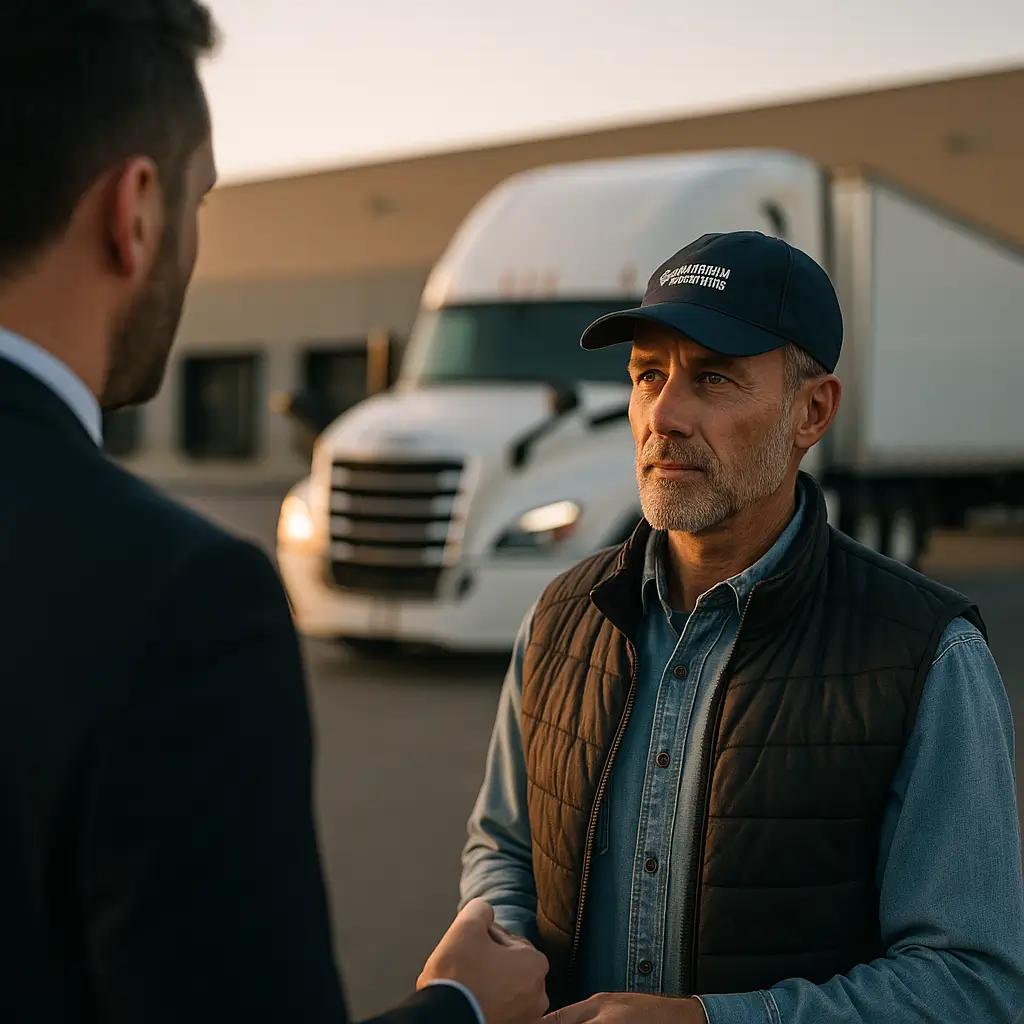

Compare 15 commercial insurance companies, carriers, brokers, and MGAs for 2026, including auto, general liability, property, and trucking coverage.
If you’re shopping commercial insurance companies, the fastest way to get burned is to pick a “big name” without checking underwriting fit, claims handling, and certificate turnaround. The best commercial insurer is the one that will write your exact risk, issue contract-ready certificates quickly, and pay claims consistently under the policy form you actually need.
Table of Contents
Reading time: 8 minutes
- Key takeaways (save this before you shop)
- Carriers vs brokers vs MGAs (and why this changes your results)
- Rankings 101: DPW, market share, and why “best” depends on the line
- Which commercial insurance companies are “best” by coverage line (including trucking insurance)
- How to choose among commercial insurance companies (shortlist + quote comparison)
- Frequently Asked Questions
- Conclusion

Key takeaways (save this before you shop)
Commercial insurance is typically purchased as multiple policies—commercial auto, general liability (GL), workers’ comp (WC), property, cyber, and umbrella—because each line covers different claim types and contract requirements.
- “Largest” doesn’t mean “best for you”: Market share and DPW show scale, not whether a carrier likes your class, radius, or loss history.
- Channel matters: You’re often choosing a carrier through a broker or an MGA, and that changes your access to specialty markets.
- Compare forms, not just premium: One exclusion or missing endorsement can turn “affordable” into expensive on claim day.
- Trucking is its own animal: Trucking insurance often needs filings, cargo terms, and trucking-specific endorsements that a basic commercial auto quote may not include.
Carriers vs brokers vs MGAs (and why this changes your results)
In the U.S., a carrier is the licensed insurer that underwrites the risk and pays claims, while brokers/agents and MGAs are distribution channels that place coverage with one or more carriers.
A lot of commercial insurance frustration comes from a simple mix-up: people think they’re choosing a “company,” but they’re really choosing a channel and an underwriter. For the full breakdown, see Insurance broker vs carrier explained.
Carriers (insurance companies)
Definition: The carrier is the entity that issues the policy and ultimately pays covered claims (using its balance sheet and reinsurance).
- What you’re really buying: underwriting appetite, policy form, endorsements, claims handling, and service (certs + billing + endorsements).
- Best fit: straightforward operations, clean loss runs, stable finances, and exposures that match the carrier’s target classes.
If you want to evaluate specific options, see LogRock’s overview of commercial insurance carriers and what each brings to the table.
Brokers and agents (the shopping and placement layer)
Definition: A broker/agent shops carriers and places coverage, and can access specialty markets you usually can’t reach directly.
- Why it matters: complex risks (multi-state, multiple lines, heavy auto, high payroll, strict contracts) often need a broker to get “yes” answers.
- Real-world example: Contractors and fleets commonly need additional insured + waiver of subrogation wording turned fast, or work/hauls stop.
Working with a commercial insurance broker is often the fastest way to access specialty markets unavailable direct, especially for complex or multi-state operations.
If you’re evaluating agents and brokers for your operation, this breakdown covers what separates a strong agent from the wrong fit:
MGAs / program administrators (often the “best fit” for niches)
Definition: An MGA may quote and bind under delegated authority from a carrier, meaning you deal with the MGA day-to-day but the carrier is still the “paper.”
Ask these four questions before you bind:
- Who is the underwriting carrier (the paper)?
- Who handles claims? (Carrier adjusters, TPA, or program claims team.)
- What’s the AM Best financial strength rating? (AM Best rating is commonly requested.)
- Is the form standard or heavily manuscripted? (Manuscript exclusions can quietly gut coverage.)
Rankings 101: DPW, market share, and why “best” depends on the line
Direct premiums written (DPW) is the total premium an insurer writes during a period before reinsurance adjustments, and it’s commonly pulled from NAIC-reported statutory data for “largest carrier” rankings.
The catch is simple: commercial insurance isn’t one product. A carrier can be huge in property or WC and still be uncompetitive (or uninterested) in commercial auto.
Where rankings come from (and how to sanity-check them)
If you want sources that are easy to cite and consistent, start with NAIC-reported data summaries and ranking tables:
For a practical “how to read the table” walkthrough (instead of treating rankings like a “best of” award), use Commercial lines ranking methodology guide.
What “largest commercial insurance companies” can tell you
Rankings can help you identify insurers that often have deeper claims infrastructure, broader loss control resources, multi-state servicing ability, and capacity for higher limits.
Rankings don’t guarantee better pricing for your class, willingness to write your territory/radius, or fewer exclusions.
For a primer on how commercial lines insurance is structured across auto, liability, property, and WC, review LogRock’s policy-type breakdown before using rankings as a shopping guide.
Extra context (industry footprint)
For a neutral overview of the insurance carrier industry, the U.S. Bureau of Labor Statistics provides background here: U.S. Bureau of Labor Statistics — Insurance Carriers Industry Profile.
Which commercial insurance companies are “best” by coverage line (including trucking insurance)
The “best” commercial insurer changes by coverage line because underwriting rules, claim frequency, and required endorsements are different for auto, GL, WC, property, cyber, and umbrella.
Instead of chasing one carrier for everything, build a shortlist per line and then check if bundling actually improves coverage and pricing (it sometimes does, sometimes doesn’t).
Commercial auto vs commercial truck insurance (fleets, delivery, contractors, trucking)
FMCSA financial responsibility rules for for-hire interstate motor carriers commonly require at least $750,000 in public liability — see the FMCSA financial responsibility requirements for the full breakdown by operation type and commodity — and many operations are written at $1,000,000 due to contracts and commodity requirements, so trucking placements often start with compliance and certificates—not just price.
Before you quote, review the full commercial truck insurance requirements — including FMCSA minimums, state-level filings, and endorsement expectations.
Commercial truck insurance is commercial auto plus trucking-specific needs like filings, cargo terms, trailer interchange, and non-trucking liability/bobtail (depending on operation). If your operation touches DOT/FMCSA requirements, start with Commercial truck insurance (FMCSA + auto liability) before you assume a standard BOP-style quote fits.
What underwriters usually price first:
- Drivers: MVRs, experience, hiring standards
- Loss runs: typically 3–5 years
- Operations: radius, lanes, commodities, garaging ZIP
- Equipment: vehicle type (cargo van vs straight truck vs tractor-trailer)
- Safety: cameras, telematics, written program, inspections
- Contracts: limits, additional insured wording, cert turnaround expectations
If you’re a niche operator, read Hotshot insurance coverage overview so you don’t buy a policy that looks cheap but doesn’t satisfy how you actually haul.
General liability (GL) and umbrella/excess
Commercial general liability (CGL) covers third-party bodily injury and property damage arising from operations and completed work, while umbrella/excess increases limits above scheduled underlying policies like GL and auto.
GL is often contract-driven, so the “best” GL market is usually the one that likes your class code and subcontractor model—not the one with the flashiest brand.
- Watch endorsements: additional insured, waiver of subrogation, primary & noncontributory
- Operational red flags: lots of subcontracting, higher-hazard work, or jobsites with strict insurance specs
For a clearer picture of how auto liability and general liability work differently for trucking operations, watch:
Workers’ comp (WC)
Workers’ compensation is statutory coverage for employee work injuries, and requirements and rating rules vary by state, payroll class code, and experience modification (E-mod). Experience modification (E-mod) and payroll class codes are managed through state rating bureaus — in most states, that’s NCCI (National Council on Compensation Insurance).
A low rate doesn’t help much if claims handling is sloppy, because one badly managed claim can impact E-mod and total cost for years.
- Quote-ready inputs: payroll by class, job descriptions, locations/states
- Audit reality: misclassification and messy records lead to surprise bills
Commercial property (and inland marine for tools/equipment)
Commercial property typically covers buildings, contents, and business interruption (if included), while inland marine often covers movable tools and equipment that leave the premises.
Property underwriting can swing hard based on roof age, construction type, protection class, and CAT exposure (wind/hail, wildfire, flood zones).
Cyber and professional liability (E&O)
Cyber insurance commonly covers breach response costs and may cover ransomware and business interruption depending on policy triggers, while E&O covers financial harm from professional mistakes or failure to perform services.
In these lines, specialization and contract wording usually matter more than brand recognition, so read triggers, exclusions, and retroactive dates carefully.
How to choose among commercial insurance companies (shortlist + quote comparison)
A repeatable quote process uses five steps—exposure summary, must-have coverage features, side-by-side comparison, financial strength validation, and scheduled re-shopping—to reduce gaps, compliance issues, and audit surprises.
Most buyers lose money in one of two ways: they overbuy limits they don’t need, or they underbuy (or buy the wrong form) and only find out during a claim.
For trucking operations, see the detailed breakdown of trucking insurance broker vs direct writer tradeoffs before you decide which channel to use.
Step 1: Define exposures like an underwriter would
Bring this to every quote request so markets can actually compete (and so you don’t get “apples to oranges” proposals):
- Vehicles: VINs, garaging, radius, driver list
- Payroll: by class code and state (WC)
- Revenue: by operation type
- Locations: address, construction details, values
- Contracts: cert wording requirements (AI/WOS/PNC)
- Loss history: loss runs, typically 3–5 years
Step 2: Decide your “must-have” policy features before pricing
Write these down first so you don’t negotiate against yourself after the cheapest quote shows up:
- Property: replacement cost vs ACV, wind/hail deductibles
- GL: completed ops, subs, AI/WOS wording
- Auto: hired/non-owned, symbol 1 vs scheduled, comp/collision deductibles
- Trucking: filings, cargo terms, trailer interchange, non-trucking liability/bobtail
Before you write down your must-have features, this walkthrough explains how to think about limits so you’re not over- or under-buying:
Step 3: Compare quotes side-by-side (not “monthly payment”)
A structured comparison makes coverage gaps obvious; use How to compare business insurance quotes if you want a checklist you can reuse every renewal.
When you’re ready to start, use LogRock’s commercial insurance quote walkthrough to understand what to expect from the process before you submit.
| Category | What to compare | Why it matters |
|---|---|---|
| Limits | Per-occurrence / aggregate / combined single limit | Sets the payout ceiling on worst-case losses |
| Deductibles | Property, comp/collision, cargo | Controls your cash-flow hit per claim |
| Exclusions | Key exclusions and carve-backs | This is where “cheap” can become unusable |
| Endorsements | Additional insured, waiver of subro, primary/noncontributory | Makes you contract-compliant and improves claim defense |
| Claims handling | Reporting method, after-hours, litigation approach | Speed and fairness when it counts |
| Certificates | Turnaround time + wording control | Keeps you working/hauling without delays |
Step 4: Validate financial strength and claims reality
Don’t stop at logos—ask who handles claims, how to report a loss, and what the carrier’s financial strength rating is (especially if you’re binding through an MGA).
Step 5: Re-shop on your schedule (and after material changes)
Re-shop annually, and also any time you add units, expand to new states/lanes, take on higher-value loads, sign stricter contracts, or add employees.
Before you start collecting quotes, it helps to know what underwriters are actually looking at when they price your risk:
Related reading for trucking buyers
Frequently Asked Questions
The largest commercial insurance companies are usually identified using direct premiums written (DPW) and market share based on NAIC-reported statutory data (often summarized by the Insurance Information Institute). Size can signal claims infrastructure and capacity for large accounts, but it doesn’t guarantee the carrier will price your class well or even quote your operation. Always check the carrier’s underwriting appetite for your specific line (commercial auto vs GL vs WC vs property) and your risk details (territory, radius, loss runs, and contracts). Source: Insurance Information Institute — Commercial Insurance Rankings
Most major property & casualty insurers offer commercial insurance, but appetite varies by industry, state, and line, so “offers commercial” doesn’t mean “will write your risk.” Many businesses buy through brokers or MGAs that can place coverage with multiple carriers, especially for higher-hazard classes like trucking, construction, and certain manufacturing. If you’re in transportation, a basic “commercial auto” quote may not include the filings, cargo terms, and endorsements used in trucking insurance; review Hotshot insurance coverage overview if you haul hotshot or for-hire loads.
The commercial insurance market size is commonly described using written premium totals across commercial lines (auto, property, liability, workers’ comp, and more), and the cleanest way to keep definitions consistent is to reference NAIC industry analysis and NAIC-reported data. Different publications may use different line groupings or time periods, so methodology matters more than one headline number. For consistent terminology and reporting context, use NAIC’s industry analysis resources: NAIC Industry Analysis
You should buy commercial insurance direct only when the risk is simple (single state, low hazard, minimal auto exposure), while a broker is usually the better option when you need multiple lines, have multi-state operations, run vehicles, or need contract-ready certificates and endorsements. Brokers and MGAs can also unlock markets that won’t quote you direct, which is common in trucking and higher-hazard classes. No matter the channel, compare quotes on policy form, exclusions, endorsements, limits, and deductibles—not just the lowest down payment—using How to compare business insurance quotes.
An MGA (managing general agent) quotes and binds coverage under delegated authority from a licensed carrier — so you deal with the MGA day-to-day, but the carrier is the entity that actually issues the policy and pays claims. It matters a great deal who the carrier is: check the AM Best financial strength rating, confirm who handles claims (carrier adjusters, a third-party administrator, or the MGA’s own team), and ask whether the policy form is standard or heavily manuscripted. A program-specific manuscript form can quietly remove standard coverages that a standard ISO form would include.
AM Best financial strength ratings (FSRs) measure an insurer’s ability to meet its ongoing policyholder obligations. The ratings range from A++ (Superior) down through categories like A (Excellent), B++ (Good), and lower. For most commercial insurance purchases, you generally want a carrier rated A- or better — this signals strong capitalization and consistent claims-paying ability. Carriers rated below B+ may still write coverage, but they carry higher financial risk. If you’re binding through an MGA, always ask what carrier is on the policy and look up that carrier’s rating at ambest.com.
Underwriters typically request 3–5 years of loss runs, and your claims history is one of the heaviest factors in pricing — more so than almost anything else. High frequency (many small claims) often concerns underwriters more than a single large loss. Clean loss runs, a documented safety program, and consistent hiring standards can meaningfully lower your rate. If you have losses, be prepared to explain what changed operationally to prevent recurrence.
Most commercial contracts — especially construction subcontracts and broker/shipper agreements in trucking — require three key endorsements: (1) Additional insured (AI) — names the other party on your GL or auto policy; (2) Waiver of subrogation (WOS) — prevents your insurer from going after the other party if they’re partly at fault; and (3) Primary and noncontributory (PNC) — makes your policy respond first before any coverage the other party carries. Without these, a certificate of insurance may be rejected and work or loads can stop. Confirm these are on the policy form before you bind, not after.
Re-shop annually at a minimum, and also any time you have a material change in your operation: adding vehicles or drivers, expanding to new states or lanes, taking on higher-value cargo, signing stricter contracts with new AI/WOS/PNC requirements, or adding payroll. Carriers also adjust their appetite by class and territory each year, so the market that was cheapest last renewal may not be competitive this year. Bringing clean loss runs and underwriting-ready documents (driver list, vehicle schedule, radius, contracts) to every renewal positions you for better offers.
Turnaround time varies significantly by carrier and channel. Direct writers and standard carriers typically issue COIs within 24 hours of binding; many can generate them instantly via an online portal. For specialty or non-admitted placements (often through MGAs), it may take 24–72 hours depending on the program’s servicing model. If you have a contract that requires specific additional insured language, primary & noncontributory wording, or a waiver of subrogation, confirm those are on the certificate template before you bind — re-issuing a cert with corrected endorsements can add delays. If fast cert turnaround is mission-critical for your operation, ask about it explicitly when you compare carriers.
Typically no. A BOP bundles property and GL for qualifying small businesses, but it usually excludes commercial auto (especially commercial trucks), workers’ compensation, and trucking-specific coverages like cargo, filings, and trailer interchange. Trucking and fleet operations need a commercial package that explicitly includes commercial truck insurance with the right filings and endorsements — not a BOP that leaves the most significant exposure (the vehicles) uninsured. If a quote comes in looking unusually affordable, verify exactly what lines are included and what’s been excluded.
Sometimes, but not always — and “bundling discount” should never override coverage quality. Some carriers offer commercial package policies (CPPs) that combine GL, property, and sometimes auto under one policy with a modest premium reduction. However, trucking insurance is rarely bundled this way because it requires specialized markets that may not write GL or property at competitive rates. In practice, many operations buy from two or more carriers: one for trucking and one for GL, property, or WC. The better question isn’t “can I bundle?” but “does bundling with this carrier give me better forms and pricing than placing each line with the right specialist?” Compare the policy forms side by side before consolidating just for convenience. See LogRock’s overview of commercial lines insurance for a breakdown of how each line works.
Commercial auto insurance is a broad category that covers vehicles used for business purposes — delivery vans, contractor pickup trucks, company cars. Commercial truck insurance is a more specific program designed for trucking operations that need FMCSA filings, cargo coverage, trailer interchange, non-trucking liability, and endorsements tied to how you haul. A standard commercial auto policy may not include any of these trucking-specific elements. If your business involves DOT-regulated operations, for-hire hauling, or any FMCSA authority, you need a commercial truck program — not just commercial auto. Review commercial truck insurance requirements before requesting quotes.
Conclusion: Choose the right insurer for your line, not just the biggest logo
The smartest way to evaluate commercial insurance companies is to separate carrier vs broker vs MGA, use rankings to understand scale (not “best”), and match the market to the coverage line you’re actually buying.
If you’re transportation-focused, start with commercial truck insurance requirements and endorsements, then layer GL, property, umbrella, cyber, and WC as needed.
Key Takeaways:
- Use rankings correctly: DPW/market share helps you gauge scale, not underwriting fit.
- Shop by line: The best commercial auto market may not be the best property or WC market.
- Compare forms: Exclusions and endorsements decide claim outcomes and contract compliance.
If you’re comparing commercial insurance companies for your operation — whether you run a fleet, haul as an owner-operator, or manage multiple coverage lines as a contractor — LogRock can help you review your exposures, identify gaps, and get quotes from carriers that actually write your risk. Talk to our team before you bind.
When you’re ready to quote, bring underwriting-ready info (loss runs, drivers, radius, contracts) so you get real apples-to-apples options.





