
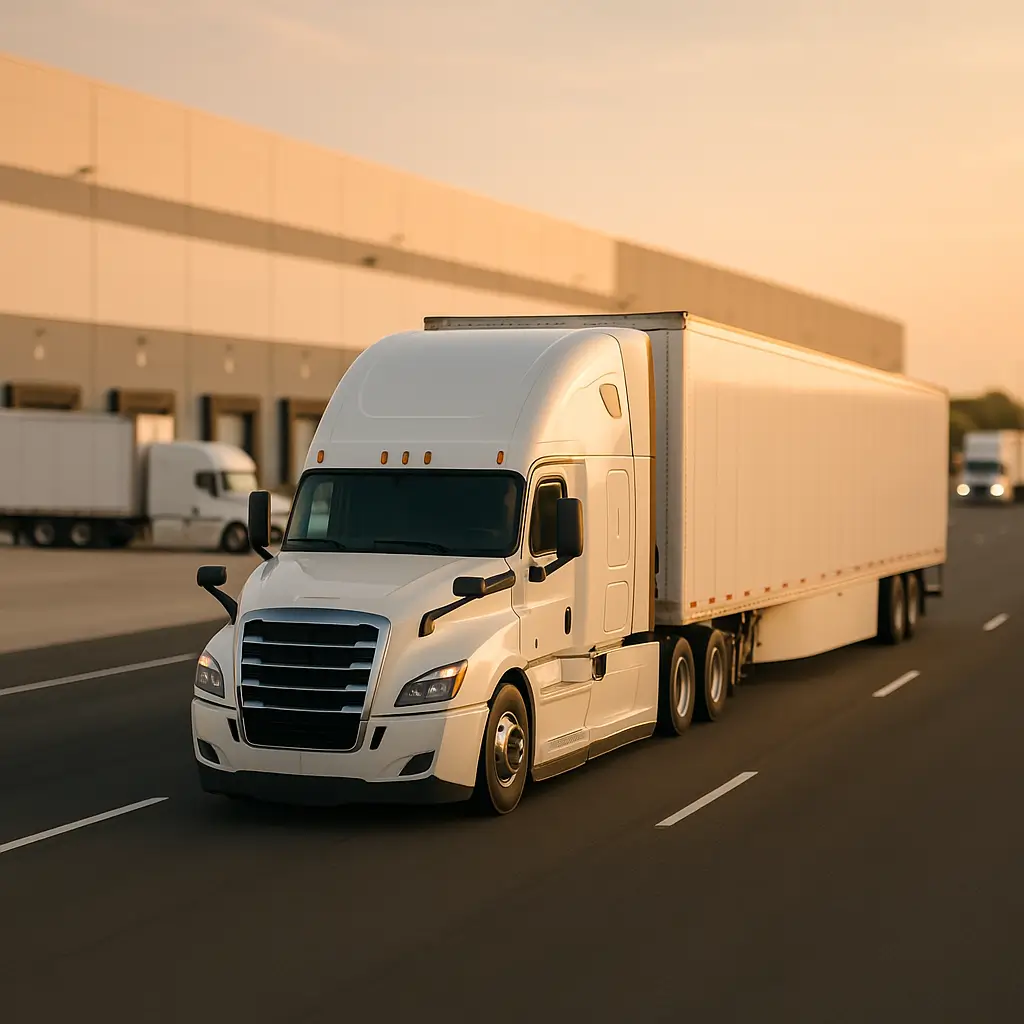

Compare commercial truck insurance rates by state, 50-state tiers, filing impacts, and ways to lower premiums.
Commercial truck insurance rates by state can swing by tens of thousands of dollars per year for the same truck and limits, mainly due to garaging location, lanes, and claim severity patterns. For budgeting, use state benchmarks as guardrails (not guarantees), then verify with apples-to-apples quotes based on your authority, cargo, and operating radius.
If you want a baseline before you dive into the tiers below, start with Logrock’s commercial vehicle insurance rates to see common monthly/annual ranges that help frame state-by-state differences.
What state has the cheapest commercial truck insurance in 2026?
In many benchmark comparisons, lower-density Plains and Mountain states often price lower—commonly states like North Dakota, South Dakota, and Iowa—but “cheapest” still depends on cargo, radius, limits, and loss history, so state averages should be treated as budgeting ranges, not your guaranteed premium.
Table of Contents
Reading time: 10 minutes
- Key Takeaways (2026 snapshot)
- What “Commercial Truck Insurance Rates by State” Actually Means
- 2026 50‑State Benchmarks (Table + Tiers You Can Budget With)
- How to Lower Your Premium in Any State (2026 Checklist + 60‑Second Estimator)
- Frequently Asked Questions
- Conclusion: Use State Tiers to Budget, Then Confirm With Real Quotes

Key Takeaways (2026 snapshot)
For a typical single-truck, non-hazmat owner-operator in 2026, liability-only premiums commonly budget in the ~$7,500–$30,000 annual range and “full package” premiums commonly budget in the ~$13,000–$60,000 annual range depending on state tier, lanes, and underwriting factors.
- State tables are budgeting tools, not quotes: Underwriters price your drivers, units, cargo, lanes, and loss history—state averages are only a starting point.
- Garaging state matters, but lanes can override it: Running dense/high-claim metros or theft corridors can push a “mid-tier” home state into a high-tier budget.
- Filings and authority can affect price: Interstate authority and required filings add compliance requirements and usually increase exposure (more miles and broader lanes).
- You can lower premiums in any state: Cleaner renewals, better documentation, and disciplined quote comparisons can reduce cost even in high-tier markets.
What “Commercial Truck Insurance Rates by State” Actually Means
“Commercial truck insurance rates by state” usually refers to planning ranges (not guaranteed premiums) built from common risk patterns in each state, such as traffic density, claim severity, theft frequency, weather losses, and the local legal environment.
Rates vs premiums vs quotes (plain English)
- Rate: The pricing factor and underwriting model an insurer uses to estimate risk.
- Premium: The actual dollars you pay (monthly or annual).
- Quote: An insurer’s offer for your exact operation (drivers + unit(s) + cargo + lanes + limits + deductibles).
A state table typically assumes a standardized profile; if you’re running new authority, higher mileage, hazmat, refrigerated, or frequent metro lanes, your quote can land far outside the “average.”
What a “full package” typically includes (and why tables vary)
A trucking “full package” quote often includes multiple coverages, and state tables vary depending on which coverages are assumed.
- Auto liability: Often quoted at $1,000,000 for interstate contracts (even if the legal minimum is lower for some operations).
- Physical damage: Comprehensive and collision for your tractor (and sometimes trailers).
- Motor truck cargo: Coverage for cargo loss/damage (limits vary by contract and commodity).
- General liability: Premises/operations liability (often required by brokers or shippers).
- Non-trucking liability / bobtail: Common when leased-on; details depend on dispatch and lease terms.
- Optional add-ons: Trailer interchange, rental reimbursement/downtime, roadside, etc.
If you want clean definitions (and what “rates” usually include), see commercial truck insurance basics.
2026 50‑State Benchmarks (Table + Tiers You Can Budget With)
The budget tiers below use 2026 planning ranges where Low tier commonly falls around ~$7,500–$11,500/year for liability-only and ~$13,000–$22,000/year for a typical full package, while Very High tier commonly falls around ~$18,000–$30,000/year for liability-only and ~$35,000–$60,000/year for a typical full package.
These are planning ranges for a standard owner-operator profile (1 power unit, non-hazmat, average radius, typical limits). Your semi truck insurance or hotshot insurance quote can be higher or lower based on cargo, operating radius, new authority, MVR, credit (where allowed), equipment value, and claims.
FMCSA note (filings): Federal insurance filing requirements for many interstate operations are outlined by FMCSA at Insurance Filing Requirements, and carriers should confirm their exact obligation based on authority type, for-hire/private status, and commodity.
Tier definitions used below (budget bands)
- Low tier: Liability-only ~$7.5k–$11.5k / Full package ~$13k–$22k
- Mid tier: Liability-only ~$10k–$16k / Full package ~$18k–$30k
- High tier: Liability-only ~$14k–$22k / Full package ~$26k–$45k
- Very High tier: Liability-only ~$18k–$30k / Full package ~$35k–$60k
Insurance is consistently one of the largest operating-cost line items for motor carriers, and cost-per-mile math breaks fast when insurance is under-budgeted; ATRI publishes industry research at truckingresearch.org.
2026 commercial truck insurance rates by state (planning table)
Use this the right way: pick your state tier → adjust up for high-risk lanes/metros → then confirm with matched quotes.
Quick reality check: A “Texas average” doesn’t price like Dallas at rush hour, and a “Florida average” doesn’t price like Miami parking—underwriters care about where you garage, where you operate, where you park, and what you haul.
| State | Tier | Liability-only (annual) | Typical full package (annual) | Why it often lands here (common drivers) |
|---|---|---|---|---|
| Alabama | Mid | $10k–$16k | $18k–$30k | Mixed rural/metro exposure, claim severity varies |
| Alaska | High | $14k–$22k | $26k–$45k | Weather, repair logistics, limited markets |
| Arizona | High | $14k–$22k | $26k–$45k | I‑10/I‑40 corridors, metro severity |
| Arkansas | Mid | $10k–$16k | $18k–$30k | Regional lanes, mixed loss patterns |
| California | Very High | $18k–$30k | $35k–$60k | Dense metros, claim severity, legal/medical costs |
| Colorado | Mid | $10k–$16k | $18k–$30k | Weather + mountain exposure on certain lanes |
| Connecticut | High | $14k–$22k | $26k–$45k | Dense traffic, higher claim costs |
| Delaware | Mid | $10k–$16k | $18k–$30k | Dense corridors near major metros |
| Florida | Very High | $18k–$30k | $35k–$60k | Litigation pressure, dense metros, claim severity |
| Georgia | High | $14k–$22k | $26k–$45k | Atlanta exposure, busy freight lanes |
| Hawaii | High | $14k–$22k | $26k–$45k | Limited carrier options, repair costs |
| Idaho | Low | $7.5k–$11.5k | $13k–$22k | Lower density; lane mix drives adjustments |
| Illinois | High | $14k–$22k | $26k–$45k | Chicago metro exposure, traffic density |
| Indiana | Mid | $10k–$16k | $18k–$30k | Strong freight volumes, moderate severity |
| Iowa | Low | $7.5k–$11.5k | $13k–$22k | Lower metro density; stable lanes |
| Kansas | Low | $7.5k–$11.5k | $13k–$22k | Lower density; regional operations common |
| Kentucky | Mid | $10k–$16k | $18k–$30k | I‑65/I‑75 corridors affect exposure |
| Louisiana | Very High | $18k–$30k | $35k–$60k | Litigation environment + storm exposure |
| Maine | Low | $7.5k–$11.5k | $13k–$22k | Lower density; winter weather can adjust |
| Maryland | High | $14k–$22k | $26k–$45k | DC/Baltimore congestion, higher claim costs |
| Massachusetts | High | $14k–$22k | $26k–$45k | Dense traffic, higher medical/repair costs |
| Michigan | High | $14k–$22k | $26k–$45k | Metro severity; freight volumes |
| Minnesota | Low | $7.5k–$11.5k | $13k–$22k | Lower density outside metros; winter factor |
| Mississippi | Mid | $10k–$16k | $18k–$30k | Regional lanes; loss experience varies |
| Missouri | Mid | $10k–$16k | $18k–$30k | Cross-country lanes; metro adjustments |
| Montana | Low | $7.5k–$11.5k | $13k–$22k | Lower density; weather & distance matter |
| Nebraska | Low | $7.5k–$11.5k | $13k–$22k | Lower density; steady interstate corridors |
| Nevada | High | $14k–$22k | $26k–$45k | Vegas metro + I‑15 exposure |
| New Hampshire | Low | $7.5k–$11.5k | $13k–$22k | Lower density; regional lanes |
| New Jersey | Very High | $18k–$30k | $35k–$60k | Dense traffic, high claim severity |
| New Mexico | Mid | $10k–$16k | $18k–$30k | Corridor exposure; theft risk varies by lanes |
| New York | Very High | $18k–$30k | $35k–$60k | Dense metros, high claim costs |
| North Carolina | Mid | $10k–$16k | $18k–$30k | Strong freight volumes; metro adjustments |
| North Dakota | Low | $7.5k–$11.5k | $13k–$22k | Lower density; stable loss patterns |
| Ohio | Mid | $10k–$16k | $18k–$30k | Major corridors; moderate severity |
| Oklahoma | Mid | $10k–$16k | $18k–$30k | Regional lanes; exposure varies |
| Oregon | High | $14k–$22k | $26k–$45k | Portland metro + weather/terrain factors |
| Pennsylvania | High | $14k–$22k | $26k–$45k | Dense corridors; claim costs in metros |
| Rhode Island | High | $14k–$22k | $26k–$45k | Dense traffic; higher claim costs |
| South Carolina | Mid | $10k–$16k | $18k–$30k | Port/metro exposure can raise tiers |
| South Dakota | Low | $7.5k–$11.5k | $13k–$22k | Lower density; stable operations |
| Tennessee | Mid | $10k–$16k | $18k–$30k | Major freight lanes; metro adjustments |
| Texas | High | $14k–$22k | $26k–$45k | Big metros (DFW/Houston) drive severity |
| Utah | Low | $7.5k–$11.5k | $13k–$22k | Lower density; corridor exposure matters |
| Vermont | Low | $7.5k–$11.5k | $13k–$22k | Lower density; weather factor |
| Virginia | Mid | $10k–$16k | $18k–$30k | DC corridor exposure affects pricing |
| Washington | High | $14k–$22k | $26k–$45k | Seattle metro + corridor exposure |
| West Virginia | Mid | $10k–$16k | $18k–$30k | Terrain/weather; moderate density |
| Wisconsin | Low | $7.5k–$11.5k | $13k–$22k | Lower density outside metros; stable lanes |
| Wyoming | Low | $7.5k–$11.5k | $13k–$22k | Low density; weather/long distances |
How to use the table without mispricing your business
- Start with the garaging state tier: It’s your baseline.
- Adjust for your lanes: If you run into High/Very High metros weekly, budget up.
- Adjust for your operation type: Hotshot vs Class 8, new authority, cargo type, and higher limits can move premium fast.
- Then confirm with matched quotes: Same limits, deductibles, listed drivers, radius, and cargo.
Interstate vs intrastate (and why filings change the price)
Interstate operations often price higher because they typically involve more miles, broader lanes, and federal filing requirements that must be maintained continuously to keep authority active.
FMCSA’s filings page is the best starting point for what’s required: https://www.fmcsa.dot.gov/registration/insurance-filing-requirements. For a deeper eligibility-and-pricing view tied to authority and compliance, review FMCSA compliance requirements that impact trucking insurance.
Why “state averages” can be misleading (metros + theft corridors)
A single “state average” can hide the biggest drivers of claim frequency and severity: metro congestion, parking risk, theft corridors, and medical/legal costs in the venues where claims are litigated.
- Garaging: Where the unit sits most nights (and where theft/vandalism risk is priced).
- Operating radius: Local vs regional vs long-haul changes exposure hours and miles.
- Lanes: Repeated runs into high-claim metros can outweigh a low-tier home state.
- Cargo: Higher-value or higher-theft commodities can push pricing up quickly.
Frequently Asked Questions
FMCSA financial responsibility minimums for many for-hire interstate property carriers start at $750,000 in public liability (and can be $1,000,000+ for certain operations), but many brokers and shippers still require $1,000,000 liability regardless of the legal minimum.
Commercial truck insurance is priced on both your garaging address and your operating radius/lane footprint because those factors change claim frequency and severity. Garaging location affects theft, vandalism, and local accident patterns, while lanes affect exposure to dense metros, winter corridors, and high-litigation venues. If you garage in a low-tier state but run weekly into high-cost metro areas, underwriters typically price you closer to the risk of where you operate and park. To keep quotes comparable, list your top lanes and parking practices the same way on every application.
Interstate trucking often costs more to insure because it typically means more miles, broader lanes, and federal compliance/filing requirements tied to authority. For many for-hire interstate property carriers, FMCSA financial responsibility minimums start at $750,000 public liability, and many contracts still require $1,000,000 liability even when the minimum is lower. Intrastate-only can still be expensive in dense, high-claim states, so the best move is to quote both scenarios (intrastate vs interstate lanes, limits, and filings) before you expand across state lines.
The biggest non-state factors are driver MVR/experience, prior losses (loss runs), cargo type, annual mileage, operating radius, equipment value, deductibles, and required limits from brokers/shippers. A clean loss history and stable renewals can move your pricing more than switching a “mid-tier” state to a “low-tier” one on paper. New authority is commonly priced higher early because there’s limited operating history to underwrite. For a detailed breakdown you can use during quoting, see what affects the cost of truck insurance.
Online state averages are useful for directional budgeting, but they’re not reliable as a predicted quote because they often assume a standard profile and may reflect liability-only instead of a full package. Two owner-operators in the same state can land in different tiers based on lanes (metro exposure), cargo, limits, and prior claims. The right way to use averages is to pick a tier band, adjust up for high-risk lanes and new authority, then request multiple quotes with identical limits and deductibles so you can compare coverage apples-to-apples instead of chasing a number that doesn’t match your operation.
Conclusion: Use State Tiers to Budget, Then Confirm With Real Quotes
State insurance tiers are best used to set a realistic cash-flow budget, then refined using your exact lanes, cargo, limits, and loss history. If you treat the table as a quote, you’ll under-budget in high-exposure metros and overpay when your operation is cleaner than the “average.”
Key Takeaways:
- Start with your garaging tier: then adjust up for lanes, metros, cargo, limits, and new authority.
- Match quote inputs: same limits/deductibles/drivers/radius/cargo so you can compare pricing fairly.
- Document safety and stability: loss runs, maintenance records, and clear corrective actions can lower premium in any state.
If you want to sanity-check major markets, review Texas truck insurance costs and Florida truck insurance costs. When you’re ready to turn the budget band into real numbers, start here: commercial truck insurance quotes.





