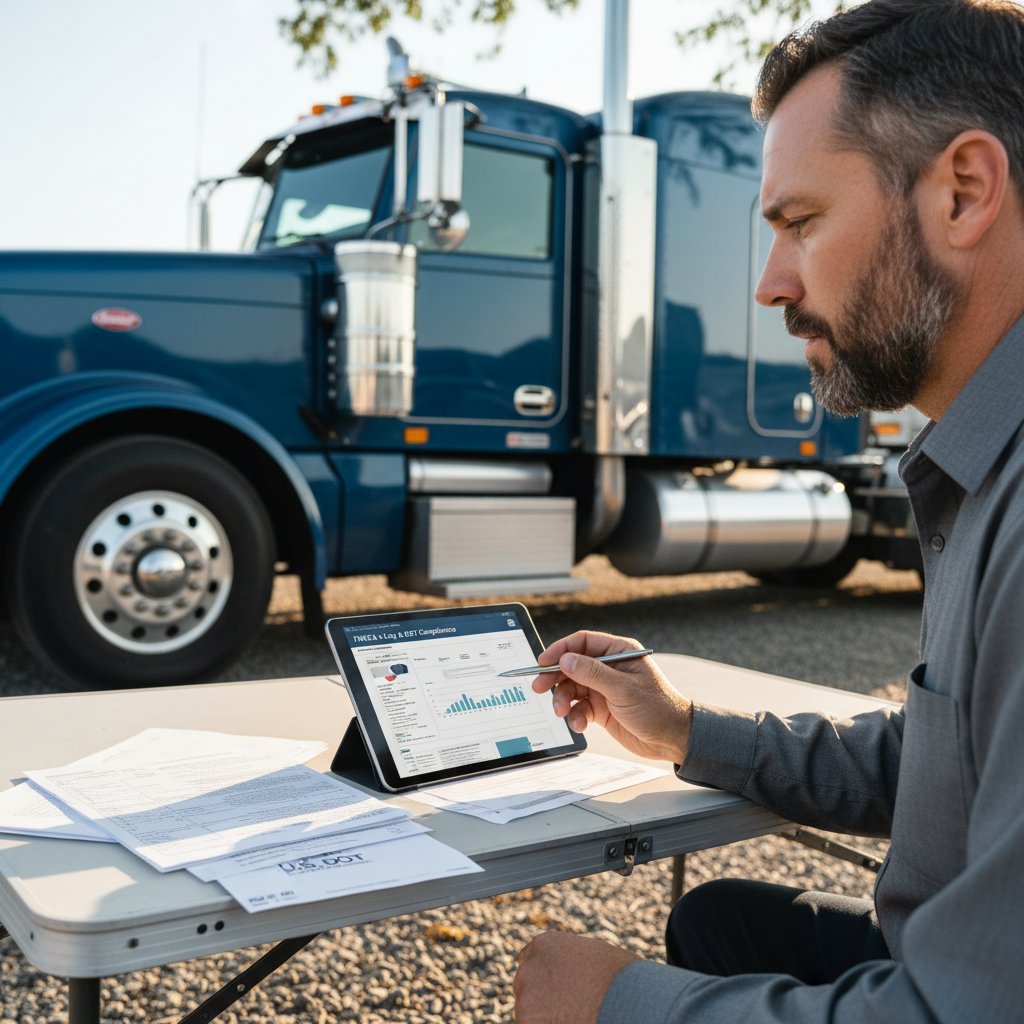
Commercial lines insurance explained fast: 9 core policies, who needs each, common requirements, and 2026 trends. Build smarter coverage—get a quote.

Commercial lines insurance is the group of insurance policies a business buys to protect operations—typically liability, property, employees, vehicles, and specialty risks like cyber or professional mistakes. It isn’t “one policy”; it’s a stack of coverages chosen around your revenue, assets, payroll, contracts, and state rules.
If you want the bigger picture first, start with commercial insurance basics (editorial note: inferred URL—verify before publish). This guide focuses on the lines most owners actually shop, what they do, and what’s changing in 2026.
Table of Contents
Reading time: 8 minutes
Key Takeaways
Commercial lines insurance is usually purchased as 3–6 separate policies (not one bundled contract), with required coverages often driven by state law and client contracts.
- It’s a stack, not a single product: Most businesses combine GL, property/BOP, and either workers’ comp, auto, or both.
- Contracts set the “must-haves”: Certificates of insurance (COIs), additional insured, waiver of subrogation, and specific limits are common requirements.
- Workers’ comp is state-specific: Employee thresholds and owner/officer rules vary by state, so the checklist changes based on where work is performed.
- Regulated auto is different: Some trucking operations must meet FMCSA minimum financial responsibility requirements, not just “standard” commercial auto.
- 2026 trend: Underwriting is more data-driven (telematics and cybersecurity controls), so clean documentation can reduce friction and improve terms.
What Is Commercial Lines Insurance? (Definition + why it exists)
Commercial lines insurance refers to business-focused insurance policies—like general liability, commercial property, workers’ compensation, and commercial auto—designed for higher-dollar claims, employee exposures, and contract requirements that personal policies typically exclude.
Commercial lines exist because business risk is different than personal risk: more foot traffic, larger losses, employees, business-owned vehicles/equipment, and obligations written into vendor agreements and leases.
For general consumer guidance on insurance categories, the NAIC is a solid reference: https://content.naic.org/consumer
Commercial lines vs. personal lines (one-sentence difference)
- Commercial lines cover business operations, contracts, employees, and business assets.
- Personal lines cover individuals/households and personal property/vehicles—and commonly exclude “business use” or “business pursuits.”
What “lines” means in insurance
A “line” is a category of policy (general liability, property, workers’ comp, commercial auto, etc.). Most businesses end up with a portfolio of lines because one policy rarely covers every exposure well.
Pro tip that saves quote time: Use a simple checklist before you shop so you’re comparing apples-to-apples on limits, deductibles, and endorsements: business insurance quote checklist (editorial note: inferred URL—verify before publish).
What Does Commercial Lines Insurance Cover? (At-a-glance table)
Commercial lines coverage can be mapped by pairing a real-world exposure (how you lose money) with the policy line that usually responds, such as GL for third-party injury or workers’ comp for employee injuries.
Image placeholder (table graphic)
Alt text: Table showing business risks and which commercial lines policies cover them
| Your exposure (real-world problem) | The commercial line(s) that typically respond |
|---|---|
| Customer slips, trip-and-fall, property damage you cause | General Liability (GL) |
| Fire, theft, storm damage to building or contents | Commercial Property |
| You can’t operate after a covered loss (lost revenue) | Business Interruption (often added to property/BOP) |
| Employee gets hurt on the job | Workers’ Compensation |
| Business vehicle crash; hired/non-owned vehicle use | Commercial Auto (+ HNOA as needed) |
| Client claims your work caused financial harm | Professional Liability (E&O) |
| Ransomware, data breach, wire fraud/social engineering | Cyber Liability |
| Claim exceeds your GL/auto limits | Umbrella / Excess Liability |
| Tools/equipment move job-to-job or sit at jobsites | Inland Marine / Equipment Floater |
Property is where many owners get surprised—especially around replacement cost vs. actual cash value and whether off-premises equipment is included. If you own or lease a space, start here: commercial property insurance (editorial note: inferred URL—verify before publish).
9 Types of Commercial Lines Insurance (What they cover + who needs them)
The nine most common commercial lines insurance policy types are general liability, commercial property, BOP, workers’ compensation, commercial auto, professional liability (E&O), cyber liability, umbrella/excess liability, and inland marine/equipment floater.
Image placeholder (infographic)
Alt text: Infographic of 9 types of commercial lines insurance
Below is the practical breakdown. For each line, ask one question: What loss does this prevent from turning into a business-ending check?
1) General Liability (GL)
General liability insurance commonly includes bodily injury and property damage liability, and many businesses carry $1,000,000 per occurrence and $2,000,000 aggregate limits because those are frequent contract minimums.
Why it’s essential: A single claim can wipe out months of profit, and many customers won’t sign without a COI.
Who needs it: Retail, trades, professional offices, small manufacturers—almost any customer-facing business.
Contract reality: COIs, additional insured, primary & noncontributory, and waiver of subrogation requests are common in construction and vendor agreements. If GL is a core line for you, go deeper here: general liability insurance (editorial note: inferred URL—verify before publish).
2) Commercial Property
Commercial property insurance covers the building (if owned) and business personal property (inventory, furniture, equipment) against covered perils, with settlement based on terms like replacement cost or actual cash value.
Why it’s essential: Property losses don’t just cost money—they stop operations.
Who needs it: Anyone with a location, inventory, or meaningful equipment (including tenant improvements).
3) Business Owners Policy (BOP)
A Business Owners Policy (BOP) is a packaged commercial policy that often combines GL + property + business income for eligible classes, usually at a lower total cost than buying each piece separately.
Why it’s essential: Efficient coverage structure for many small businesses—when you fit the insurer’s appetite.
Who needs it: Many small retail/office/service operations with low-to-moderate hazard.
4) Workers’ Compensation
Workers’ compensation insurance is governed by state law and typically pays medical costs and wage replacement for job-related injuries while also providing employer liability protection under the policy.
Why it’s essential: It’s often legally required and prevents an injury from becoming a cash-flow crisis.
Who needs it: Most businesses with employees (requirements vary by state).
Key pricing drivers: payroll, class codes, claims history, and your experience mod. For injury/illness rate context by industry, the BLS is a strong reference: https://www.bls.gov/iif/

5) Commercial Auto
Commercial auto insurance provides liability and physical damage coverage for business-owned vehicles and can be structured for scheduled vehicles, fleets, and endorsements like hired and non-owned auto (HNOA).
Why it’s essential: Auto claims get expensive fast—especially with injuries and litigation.
Who needs it: Any business that owns vehicles or has employees driving for work (including rentals/employee-owned vehicles with HNOA).
6) Professional Liability (E&O)
Professional liability (E&O) covers allegations that your professional services caused financial harm, and many policies are written on a claims-made basis where your retro date and tail options matter.
Why it’s essential: GL usually doesn’t cover “your work was wrong” claims tied to professional services.
Who needs it: Consultants, agencies, IT services, accountants, design professionals, and many B2B service businesses.
7) Cyber Liability
Cyber liability insurance can include first-party costs (incident response, restoration, extortion, cyber business interruption) and third-party liability (privacy and network security claims), with underwriting often requiring controls like MFA and tested backups.
Why it’s essential: One breach can trigger legal, regulatory, and customer-notification costs—plus downtime.
Who needs it: Any business handling customer data, processing payments, or relying on email/workflows to get paid.
8) Umbrella / Excess Liability
Umbrella (or excess) liability provides additional limits above underlying policies like GL and auto, and it’s commonly used when contracts or risk exposure push you beyond standard primary limits.
Why it’s essential: Higher limits are often cheaper than rebuilding after a severe loss.
Who needs it: Higher-revenue businesses, public-facing operations, contract-heavy work, and fleets.
9) Inland Marine / Equipment Floater
Inland marine/equipment floater coverage is designed for tools and equipment that move—protecting property while in transit, at jobsites, or temporarily off-premises where standard property coverage may be limited.
Why it’s essential: Many property policies focus on the “described premises” unless broadened.
Who needs it: Contractors, mobile service businesses, installation companies, and anyone moving equipment daily.
State & Regulatory Requirements + 2026 Trends (What changes your checklist)
Workers’ compensation requirements vary by state, and FMCSA sets minimum liability limits of $750,000 to $5,000,000 for many interstate motor carriers depending on commodity and operation, so “standard coverage” can be the wrong answer for regulated businesses.
This is where owners get burned: buying a generic package without checking state rules, contract requirements, and industry filings.
Workers’ comp rules vary by state
Most states require workers’ comp when you have employees, but thresholds differ, owner/officer inclusion differs, and “where the employee works” can matter more than where you’re headquartered.
Commercial auto can be regulated (trucking example)
Not every business has federal filing requirements—but many interstate motor carriers do. If you run a rig, hotshot, or fleet, confirm whether your operation triggers FMCSA minimum financial responsibility and filing rules here: https://www.fmcsa.dot.gov/registration/insurance-filing-requirements
If you’re specifically shopping commercial truck insurance, trucking insurance, semi truck insurance, hotshot insurance, or affordable trucking insurance, you’re typically dealing with heavier compliance and claims exposure than a basic commercial auto policy—especially around filings, radius, commodity, driver MVRs, and safety controls (ELD/HOS compliance and maintenance documentation). Start here for the trucking-focused breakdown: commercial truck insurance (editorial note: inferred URL—verify before publish).
2026 trends you should plan for (even if you hate paperwork)
- Cyber underwriting is stricter: MFA, backups, endpoint controls, and tighter sublimits (especially social engineering/wire fraud).
- More data-driven pricing: telematics for fleets; sensors and loss-control requirements for some property classes.
- Faster quoting for simple risks, slower for complex ones: the cleaner your documentation, the fewer delays at bind.
- More contract scrutiny: COIs, additional insured wording, and certificate turnaround time affect whether you can start work, get loaded, or get paid.
Frequently Asked Questions
These FAQs answer the most common commercial lines insurance questions, including the 9 core policy types and common GL limit requests like $1,000,000 per occurrence / $2,000,000 aggregate.
Commercial lines insurance covers the major risks of running a business—typically general liability (third-party injury/property damage), commercial property (building/contents), workers’ comp (employee injuries), and commercial auto (business vehicle liability), plus specialty lines like professional liability (E&O) and cyber. It isn’t one policy; it’s a set of policies selected based on how you operate, what you own, and what your contracts require. A common contract benchmark for GL is $1M per occurrence / $2M aggregate, but requirements vary by client and industry.
Commercial lines insurance is designed for business operations—customers, employees, contracts, business-owned vehicles, and higher claim severity—while personal lines insurance is designed for household risks and frequently excludes business use. Commercial policies are also built for contract compliance, so endorsements like additional insured, waiver of subrogation, and COIs are normal in commercial settings. Personal auto and homeowners policies commonly exclude coverage for ongoing business activity (like deliveries, paid work, or business-owned equipment) unless endorsed, which is why businesses usually need commercial forms.
Commercial lines commonly include general liability, commercial property, a BOP, workers’ compensation, commercial auto, professional liability (E&O), cyber liability, umbrella/excess liability, and inland marine/equipment floater. Depending on your size, payroll, and contracts, you may also need specialty coverage like EPLI (employment practices), D&O (directors and officers), crime, or surety. Cyber is one of the most misunderstood lines; for a deeper breakdown, see cyber liability insurance (editorial note: inferred URL—verify before publish).
Any business with customers, revenue, property, employees, vehicles, or contract insurance requirements typically needs commercial lines insurance. A one-truck operator hauling under a motor carrier contract may need commercial auto/trucking coverage and filings; a contractor running crews usually needs GL and workers’ comp; a restaurant needs GL and property; a consultant often needs E&O; and an e-commerce company may need cyber because it stores customer data and relies on payment systems. If you sign contracts, expect required limits and COI wording to dictate part of your program.
Examples of commercial lines insurance include general liability for a trip-and-fall claim, commercial property for a fire or theft loss, workers’ comp for an employee injury, commercial auto for a crash, E&O for a professional mistake that causes a client’s financial loss, cyber for ransomware and breach response costs, umbrella when a claim exceeds your primary limits, and inland marine for stolen tools at a jobsite or equipment in transit.
You can reduce commercial lines premium by lowering controllable loss drivers—like implementing driver screening and training, improving property protections (alarms, sprinklers, maintenance), and strengthening cybersecurity with MFA and tested backups—then matching deductibles and limits to your real contract requirements. Shopping early also matters: clean, complete submissions typically get better underwriting attention and fewer “worst-case” assumptions. If you want a tactical cost-control playbook, see how to lower business insurance premiums (editorial note: inferred URL—verify before publish).
Conclusion: Build Your Commercial Lines Stack Around Your Risks
Commercial lines insurance works best when it’s built around your actual exposures, contract requirements, and state rules—not a generic “small business package.” The right stack keeps one claim from wiping out your cash flow, equipment, or ability to keep contracts.
Key Takeaways:
- Start with your exposure map: GL, property/BOP, workers’ comp, and commercial auto are the core building blocks for many businesses.
- Confirm compliance early: workers’ comp is state-driven, and trucking operations may face FMCSA minimums and filing requirements.
- Plan for 2026 underwriting: telematics and cybersecurity controls increasingly affect quoting speed, eligibility, and pricing.
Once your basics are set, two strong next reads are umbrella insurance and how to lower business insurance premiums (editorial note: inferred URLs—verify before publish).