
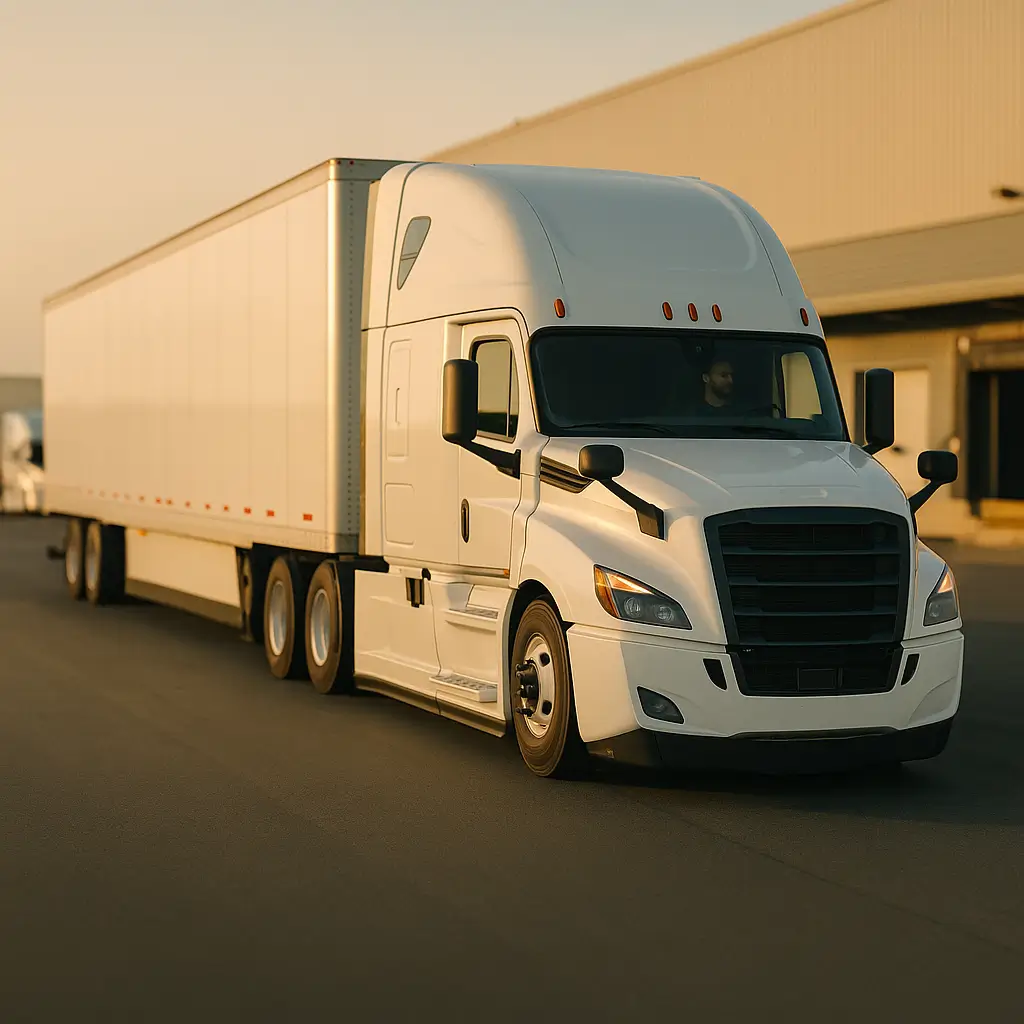

See 2026 New York commercial truck insurance costs, required coverages, state and federal filing steps, key rate factors, and ways to save.
Commercial truck insurance New York pricing is usually higher than most states, and in 2026 many owner-operators land around $10,000–$18,000 per truck per year, with NYC-metro garaging ZIPs often higher due to congestion, theft exposure, and claim severity. If you want a fast answer: budget in that range, then refine it based on your garaging ZIP, radius, cargo, loss history, and authority status.
If you want a deeper NY pricing breakdown by region and truck type, start with cheapest commercial truck insurance in New York, then use this page for the coverage + filings playbook that keeps you dispatch-ready.
Table of Contents
Reading time: 8 minutes
- Key takeaways (NY cost + compliance)
- Who needs commercial truck insurance in New York?
- Commercial truck insurance New York requirements (FMCSA vs NY) + filings vs COIs
- Required coverages for NY commercial trucks (what you’ll actually need to haul)
- 2026 cost of commercial truck insurance in New York (NYC vs Upstate) + how to lower it
- The Logrock approach
- Next steps (quotes + filings timeline)
- Frequently asked questions
- Conclusion

Key takeaways (NY cost + compliance)
In 2026, many New York owner-operators plan for $10,000–$18,000 per truck per year, and NYC-metro garaging ZIPs are often priced higher due to higher claim frequency and severity.
- NYC often costs more: insurers price dense traffic, theft/vandalism risk, limited secure parking, and higher medical/property claim severity.
- “Minimum required” isn’t always “load-ready”: brokers, ports, and warehouses can require higher limits and specific COI wording.
- Filings are not your COI: filings go to regulators; certificates go to brokers/shippers—mixing them up delays dispatch.
- You can lower premiums without going bare: radius control, driver screening, smart deductibles, and continuous coverage usually matter more than chasing the cheapest base rate.
Who needs commercial truck insurance in New York?
Any business or driver operating a truck commercially in New York—whether one unit or a small fleet—needs a trucking insurance setup that matches their authority, contracts, and the way they run lanes.
Owner-operators (leased-on vs. own authority)
Leased-on means you operate under a motor carrier’s authority, while own authority means you operate under your own USDOT/MC and are responsible for primary insurance and filings tied to that authority.
Leased-on drivers often assume “the company covers everything,” but real leases can leave gaps in off-dispatch liability and in protecting the truck itself. If you’re leased-on, review bobtail insurance for leased-on owner-operators to understand non-trucking liability (NTL) limits and when it does (and doesn’t) apply.
Small fleets (2–10 units) and for-hire carriers
Small fleets are typically underwritten heavily on driver quality, loss history, safety controls, and documentation consistency across trucks (maintenance, onboarding, coaching, and compliance routines).
If you can document standards—MVR checks, driver files, incident coaching, maintenance intervals—your renewal options are usually better than a fleet that “wings it.”
If you want the minimums spelled out plainly, our commercial auto insurance in New York guide covers exactly that. Running box trucks instead of tractor-trailers? See New York box truck insurance for small fleets for equipment-specific numbers.
Commercial truck insurance New York requirements (FMCSA vs NY) + filings vs COIs
Commercial truck insurance New York compliance is shaped by two rulebooks: federal FMCSA financial responsibility rules for interstate/authority operations and New York-specific requirements for certain intrastate/for-hire operations.
Federal requirements (FMCSA) for interstate trucking
FMCSA requires certain for-hire interstate carriers to maintain financial responsibility and keep required insurance filings active on record to operate under authority.
FMCSA’s insurance filings overview is here: https://www.fmcsa.dot.gov/registration/insurance-filing-requirements. If you’re still setting up authority and need help timing insurance and filings, see FMCSA authority application steps.
New York-specific rules (why “§370” comes up)
New York operations sometimes involve additional proof or requirements (often discussed as “NY Insurance Law §370”) depending on whether you’re intrastate, for-hire, and how the vehicle is registered and used.
Start with NY DMV’s insurance information hub, then confirm your exact operational requirement with your agent: https://dmv.ny.gov/insurance.
Filings vs. COIs (where dispatch gets delayed)
A COI (Certificate of Insurance) is proof you show to brokers/warehouses, while a filing is submitted by your insurer to a regulator to show required coverage is in force.
- COI request: “Please issue a certificate listing X as certificate holder and add Y wording.”
- Filing request: “Please submit the required regulator filing and confirm when it’s accepted.”
If you keep hearing “we need your MCS-90,” read MCS-90 insurance filing explained so you don’t confuse an endorsement with having the right policy in place.
Certificates and filings are just one piece of staying dispatch-ready — here’s why your full carrier packet matters.
Required coverages for NY commercial trucks (what you’ll actually need to haul)
Most New York trucking operations need a stack that includes primary auto liability plus contract-driven coverages like motor truck cargo and often general liability, with physical damage and non-trucking liability depending on equipment and leasing.
Coverage checklist (plain-English table)
| Coverage | What it protects | When you need it | Typical “real world” note |
|---|---|---|---|
| Primary auto liability | Injuries/damage you cause to others | Essentially always | Contracts often require higher limits than a bare minimum |
| Motor truck cargo | The freight you’re hauling | Commonly required by broker/shipper | Watch exclusions (unattended theft, reefer breakdown, securement) |
| Physical damage (comp/collision) | Your truck/trailer | If financed/leased; smart if you can’t self-insure | Deductible and valuation terms drive what you actually collect on a loss |
| General liability | Non-auto business claims | Many shippers require it | Often requested on COIs with specific wording |
| Non-trucking liability (bobtail/NTL) | Off-dispatch liability for leased-on drivers | If your lease requires it | Doesn’t cover you while under load/dispatch |
| Occupational accident / workers comp (varies) | Driver injury benefits | Common for owner-ops | Not the same as health insurance; benefits and exclusions vary |
For a deeper look at limits and typical costs, see general liability for truckers.
Primary liability (commercial auto liability)
Primary auto liability is the core policy that responds when you cause bodily injury or property damage while operating a commercial vehicle.
Buy limits based on the freight and customers you want access to, not just the cheapest quote you can bind today. If you plan to work with brokers, ports, or larger shippers, expect higher limits and COI wording requirements.
Cargo insurance (motor truck cargo)
Motor truck cargo coverage protects freight you’re legally responsible for under the carriage contract, and it’s commonly required even when the state doesn’t explicitly mandate it.
Cheap cargo with heavy exclusions is where claims go sideways—especially with unattended theft, improper securement allegations, or temperature issues. For limits, exclusions, and how claims play out, see cargo insurance for owner-operators.
Physical damage (comprehensive + collision)
Physical damage coverage pays for theft, vandalism, weather losses, and collision damage to your truck (and often trailer by endorsement), subject to deductibles and valuation terms.
If you can’t write a major repair or replacement check without shutting down, you’re not “self-insuring”—you’re exposed. For NYC-metro operators, secure overnight parking can change both your risk and your premium.
2026 cost of commercial truck insurance in New York (NYC vs Upstate) + how to lower it
In 2026, many NY owner-operators budget $10,000–$18,000 per truck per year, and rates can move sharply based on garaging ZIP, operating radius, cargo, driver experience, and whether you’re new authority.
For a closer look at how these numbers break down, see our guide to the cost of commercial truck insurance in New York.
Typical 2026 NY planning range (what many owner-ops see)
Think of this as a budgeting range, not a quote: $10,000–$18,000/year per truck, with NYC-metro commonly higher for similar equipment and lanes.
Prefer a quick video breakdown? Here’s a fast look at 2026 New York truck insurance costs: New York Truck Insurance Costs 2026 Revealed.
Insurance is also a major component of per-mile operating costs in trucking research; ATRI tracks insurance within its industry cost reporting: https://truckingresearch.org/.
Why NYC is usually higher than Upstate
- Traffic density: more exposure per mile and more “minor” losses that still cost real money.
- Claim severity: higher property and medical costs, especially in metro areas.
- Theft/vandalism + parking reality: more risk when parking is tight and secure yards cost more.
- Contract complexity: ports/warehouses/brokers often require extra endorsements and tighter COI wording.
Underwriting checklist (what insurers will ask you for)
Underwriters typically rate and approve your policy using specific operational and driver data, and missing items can trigger delays, declines, or worst-case pricing.
- Drivers: experience, MVR/PSP, violations, prior accidents.
- Garaging + parking: address, overnight parking plan, theft controls.
- Equipment: VINs, values, and lender/lessor requirements.
- Lanes: radius, states, NYC/metro exposure, OTR vs regional.
- Cargo: commodity types, high-value exposure, reefer vs dry van.
- Prior insurance: continuous coverage and loss runs (if available).
- Authority status: new venture vs established authority, start date, safety plan.
7 ways to lower your NY premium (without creating dangerous gaps)
Most sustainable premium reductions come from reducing measurable risk, tightening operations, and keeping coverage continuous so you stay eligible for better markets.
- Control your radius when your lanes allow it (radius is a major rating factor).
- Raise deductibles strategically on physical damage only if you can actually fund them.
- Use dash cams/telematics and coach drivers from the data (not just “install-and-pray”). Telematics can also unlock direct pricing credits — see ELD discounts for owner-operator insurance.
- Tighten driver screening (bad MVRs and inexperience get priced hard in NY).
- Match cargo to the freight so a denied claim doesn’t become a cash hit.
- Only add endorsements you truly need for the customer/load (extra wording can increase cost).
- Avoid lapses—continuous coverage is one of the simplest ways to prevent rate spikes.
For more tactical ways to reduce premiums without buying “cheap but wrong” coverage, read how to save on truck insurance.
For more on how underwriters reward safety data, watch Trucking Underwriters: Unlock Hidden Safety Discounts Now!.
The Logrock approach: practical coverage that keeps you dispatch-ready
Dispatch-ready trucking insurance in New York means you have the right coverages for your freight, your contracts, and your authority, and your certificates and filings are handled before the load is on the board.
Logrock’s goal isn’t to sell “the cheapest policy.” It’s to help owner-operators and small fleets stay compliant, stay insurable, and protect the truck and business when a real claim hits.
Next steps: get the right NY truck coverage (and get the filings done)
Most filing and dispatch delays happen when insurance is bound too late, so a practical timeline is to start quoting early enough to allow underwriting review and any required regulator filings.
Action plan:
- Confirm your operation type: leased-on vs own authority, intrastate vs interstate, lanes and radius.
- Build the right coverage stack: liability + cargo + physical damage, then only the add-ons your lease/shipper requires.
- Handle certificates and filings early: ask for “COI wording” vs “regulator filing” so the request is clear.
Related reading for multi-state operators:
Frequently Asked Questions
These answers reflect common 2026 New York owner-operator scenarios, including typical cost ranges, contract requirements, and federal filing confusion points like the MCS-90.
Many New York owner-operators budget about $10,000–$18,000 per truck per year in 2026, and NYC-metro garaging ZIPs often price higher due to congestion, theft exposure, and claim severity. Your final premium usually swings most on garaging ZIP, operating radius, cargo type, loss history, driver experience, and whether you’re new authority. Use this as a planning range, not a guaranteed quote—one claim, a lapse, or high-risk freight can push pricing outside the range. For deeper regional and truck-type examples, see cheapest commercial truck insurance in New York.
Garaging ZIP is one of the biggest rating factors in New York because insurers price in local claim frequency, theft risk, and parking security — NYC-metro ZIPs are typically priced meaningfully higher than Upstate ZIPs for otherwise identical trucks and drivers. If you have a choice of garaging location, ask your agent how much moving a few miles could change your quote. For more detail, see the cost of commercial truck insurance in New York.
The minimum commercial truck insurance required in New York depends on whether you operate interstate under FMCSA rules, intrastate/for-hire under New York rules, and what your brokers and shippers require by contract. FMCSA financial responsibility and filing rules apply when you’re operating under federal authority, and you can confirm the federal filing framework here: FMCSA insurance filing requirements. Even when you meet a legal minimum, higher-paying freight often requires higher limits, cargo coverage, general liability, and specific COI wording—so “legal minimum” and “load-ready” aren’t the same thing.
Most insurers will not bind a policy for a driver with a currently suspended or revoked CDL, and even a recently reinstated license can trigger higher rates or added scrutiny during underwriting. If your CDL status has changed recently, disclose it upfront rather than letting it surface during a claims investigation, since non-disclosure can jeopardize coverage entirely.
If you operate under federal authority and must meet FMCSA financial responsibility rules, an MCS-90 endorsement may be required on your liability policy—but an MCS-90 is not a standalone insurance policy and it does not replace having proper primary liability, cargo (when required), and other needed coverages. The MCS-90 is best understood as a federal endorsement tied to specific compliance situations, and the common mistake is thinking “having an MCS-90” equals “having the right insurance.” If a broker or dispatcher asks for it, read MCS-90 insurance filing explained so you can respond correctly and avoid dispatch delays.
Most dedicated-lane contracts still require the carrier to carry cargo insurance regardless of exclusivity, since the shipper’s requirement is about protecting the freight itself, not about how many customers you serve. Check your specific contract language, as some dedicated agreements specify higher cargo limits than standard for-hire work.
Often, yes—leased-on owner-operators in New York commonly need their own policies for exposures the motor carrier doesn’t cover for them, even if the carrier provides primary liability while you’re under dispatch. Many leased-on drivers carry physical damage to protect the truck (especially if financed) and may need non-trucking liability (bobtail/NTL) for off-dispatch use depending on the lease terms. The key is to confirm when the carrier’s coverage is primary, when you’re considered “under dispatch,” and what the lease requires you to maintain. For the most common off-dispatch gap, review bobtail insurance for leased-on owner-operators.
New York generally requires workers’ compensation coverage for employees, though owner-operators without employees are typically exempt — the rules differ depending on whether drivers are classified as employees or independent contractors under your lease or contract. Confirm your specific obligation with New York’s Workers’ Compensation Board and your insurance agent, since misclassification can create coverage gaps.
A lapse in coverage — even a short one — can flag you as a higher risk to future insurers, often resulting in higher premiums or non-renewal offers at your next term. It can also jeopardize your FMCSA filing status if the lapse isn’t reported and replaced quickly. Avoiding lapses is one of the simplest ways to protect both your rates and your authority.
Conclusion: budget smart, buy the right stack, and handle filings early
In 2026, a realistic planning range for many owner-operators is $10,000–$18,000 per truck per year for commercial truck insurance in New York, and NYC-metro ZIPs often price higher than Upstate due to exposure and claim severity.
The best outcome is simple: match coverage to your freight and contracts, keep paperwork clean, and give underwriting and filings enough lead time so you don’t lose revenue waiting.
Key Takeaways:
- Budget with real drivers: garaging ZIP, radius, cargo, losses, and authority status can swing pricing fast.
- Get “load-ready,” not just “legal minimum”: cargo, GL, and COI wording are often what brokers care about.
- Separate COIs from filings: asking for the right thing prevents avoidable dispatch delays.
If you’re ready to tighten up your coverage stack and reduce premium without gaps, start quotes early and bring clean driver/equipment details to underwriting.
If you’re budgeting for New York truck insurance costs, sorting out which coverages your contracts actually require, or trying to untangle filings from certificates before your next load, LogRock can help you review your operation and coverage stack. Talk to our team to ask questions, identify possible gaps, and request a quote based on your business.





