
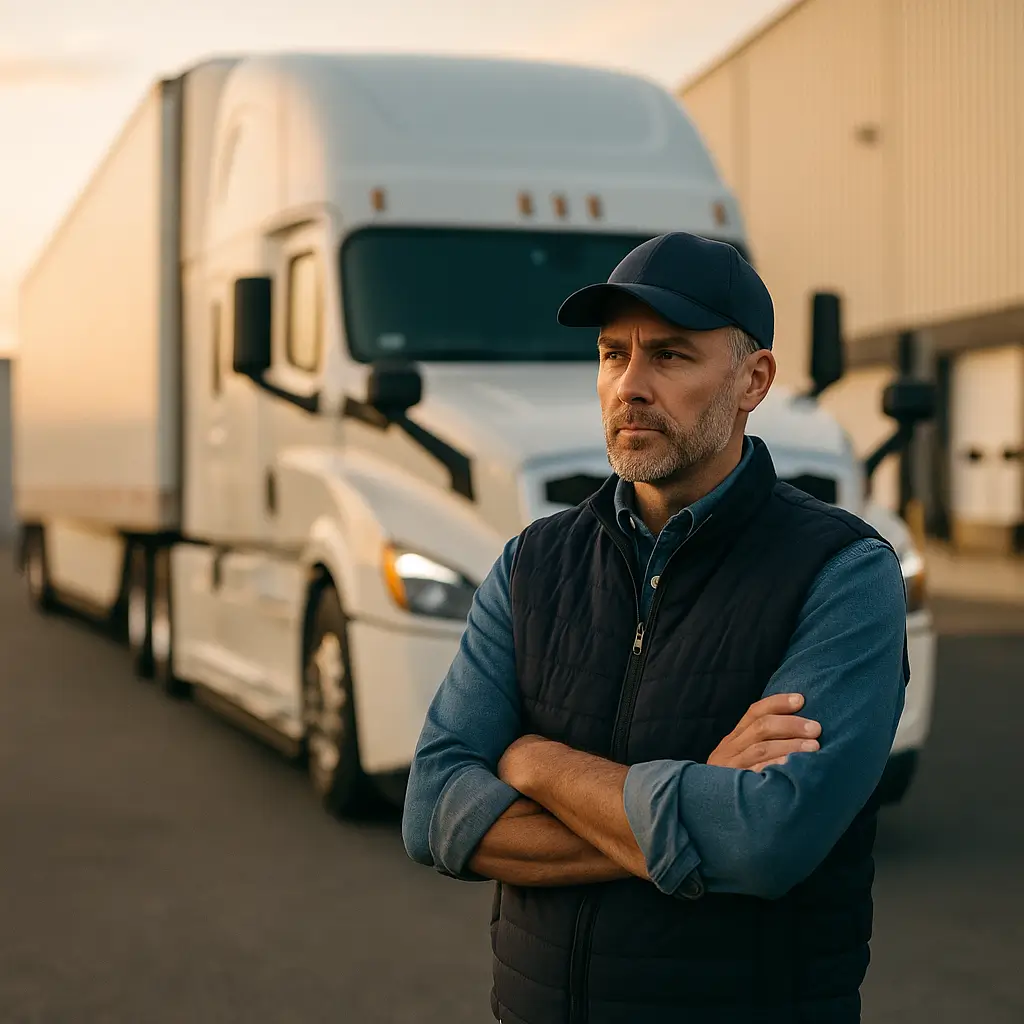

Learn 2026 New Jersey commercial truck insurance minimums, required coverages and filings, plus typical owner-operator costs of $16K–$26K.
Commercial truck insurance NJ requirements in 2026 usually start with primary auto liability that meets New Jersey and/or FMCSA financial responsibility rules, then build up to match what your broker, shipper, lease agreement, or terminal requires (often cargo and physical damage). If you run interstate, you’ll also need the right documentation and filings to keep your authority and dispatch moving.
If you want a quick refresher on what a trucking policy is (and what it isn’t), read commercial truck insurance basics first—then use this NJ guide as a practical checklist.
Watch this quick breakdown of NJ truck insurance costs for 2026 before diving into the full guide:
Table of Contents
Reading time: 8 minutes
- Introduction (Read This Before You Buy a Policy)
- Key Takeaways
- Who Needs Commercial Truck Insurance in New Jersey?
- NJ Minimum Liability (2026): What You Must Carry vs What Loads Actually Require
- What a NJ Commercial Truck Policy Usually Includes (Coverage Types That Matter)
- How Much Does Commercial Truck Insurance Cost in NJ? (2026 Ranges + Real-World Examples)
- Next Steps: Get NJ Truck Coverage That Keeps You Working
- Frequently Asked Questions
- Conclusion: Buy Coverage That Prevents Downtime

Introduction (Read This Before You Buy a Policy)
Commercial truck insurance NJ requirements in 2026 typically include primary auto liability that meets state and/or federal minimums, plus additional coverage limits required by contracts and facilities.
For owner-operators in New Jersey, the biggest risk isn’t just paying a high premium—it’s buying the wrong coverage and finding out at the worst time: at the gate, at dispatch, or in the middle of a claim. One “small” mistake (wrong limit, wrong wording, wrong classification) can turn into a parked truck and lost revenue.
This guide is written like a working checklist, so you can buy insurance that keeps you rolling—not a policy that only looks correct on paper.
Key Takeaways
Many New Jersey owner-operators commonly see annual commercial truck insurance premiums in the $16,000–$26,000 range, with pricing driven by radius, experience, vehicle value, and loss history.
- NJ truck coverage isn’t just “commercial auto”—your truck type, weight, cargo, and lanes change what you need and what it costs.
- Legal minimums and real-world requirements aren’t the same thing; brokers/ports often want higher limits and specific COI wording.
- If standard carriers won’t quote you, New Jersey has an assigned-risk option (NJCAIP), but it’s usually a last resort, not a bargain.
Who Needs Commercial Truck Insurance in New Jersey?
Commercial truck insurance is a business policy package designed for trucking operations and typically includes liability, physical damage, and cargo-related coverage that standard commercial auto often won’t address correctly.
What it is (plain English)
Trucking insurance is the coverage that protects you when you cause a crash (liability), when your equipment is damaged (physical damage), and when freight is damaged or stolen (cargo), plus a few “situational” coverages that matter a lot in trucking (interchange, NTL, GL, etc.).
Why it’s essential (business reality)
NJ is dense: tight docks, aggressive traffic, short merges, and a lot of stop-and-go. One claim can spike your renewal, trigger a non-renewal, or push you into a high-risk market that eats your profit per mile.
Who typically needs it
- Owner-operators with their own authority: You’re buying the full stack (liability + cargo + physical damage + whatever your contracts demand).
- Leased owner-operators: Your motor carrier may cover you under dispatch, but you may still need non-trucking liability for off-dispatch use (based on your lease terms).
- Small fleets (3–20 trucks): You need consistent COIs, consistent underwriting descriptions, and a renewal plan that won’t blow up mid-season. Learn more about small fleet truck insurance costs and coverages.
- Hotshot operators: Many loads still require true hotshot insurance (not “light commercial auto”) based on GVWR, use, and commodity.
If you’re running a tractor-trailer and comparing package setups, this overview of semi truck insurance options helps when you’re deciding between “liability-only” and a working policy.
Pro tip: If you’re shopping hotshot insurance, be precise about your trailer, GVWR, and what you haul. Misclassification is a common reason claims and audits get messy.
NJ Minimum Liability (2026): What You Must Carry vs What Loads Actually Require
Minimum liability is the least insurance required to operate legally, but many New Jersey brokers, shippers, ports, and lease-on agreements commonly require higher limits (often $1,000,000 CSL) to tender loads.
NJ rules vs federal rules (intrastate vs interstate)
- Intrastate (NJ-only): Your minimums are governed by New Jersey commercial auto/truck rules and how your vehicle is classified. Verify commercial auto requirements through the New Jersey Department of Banking and Insurance.
- Interstate (crossing state lines): Federal financial responsibility rules apply to many carriers and operations, and you’ll be expected to show compliant proof.
FMCSA’s insurance filing overview is here: FMCSA insurance filing requirements.
Federal minimums vary by operation and cargo, so you should match the requirement to your authority type and what you haul—not what someone “heard” at a truck stop.
For a broader explainer that ties minimums to filings and documentation, keep this bookmarked: truck insurance requirements and filings.
Quick table: “Minimum” vs “Typical to Work”
Buying decisions usually come down to what’s legal versus what keeps you dispatchable with your customers.
| Situation | What you must have | What you usually need to stay working |
|---|---|---|
| Local NJ work, light/medium commercial vehicles | NJ-required liability (varies by class/weight) | Higher liability if your shippers/contracts require it |
| Tractor-trailer / heavier operations | Higher liability tiers are commonly referenced in NJ resources | Often $1M CSL (or higher) depending on broker/shipper, port work, and lanes |
| Interstate authority | Federal minimums by operation/cargo (FMCSA) | Often $1M CSL plus cargo limits that match your rate confirmation |
Pro tip (don’t skip this): Ask for requirements in writing from the broker/shipper/terminal. Don’t guess—especially around ports and intermodal facilities.
Proof of insurance (what dispatch actually needs)
In real life, “proof” usually means a clean certificate that matches the contract.
- COI (Certificate of Insurance): Correct limits, correct policy names, correct effective dates.
- Certificate holder and additional insured: Many contracts require specific wording.
- Contract add-ons: Waiver of subrogation is sometimes requested.
Bad COIs cause the most frustrating downtime: sitting while someone “fixes the wording” and the facility refuses entry.
High-risk option in NJ: NJCAIP (Assigned Risk)
The New Jersey Commercial Automobile Insurance Plan (NJCAIP) is an assigned-risk market designed to help drivers meet legal insurance requirements when the standard market won’t write the risk.
NJCAIP info: NJCAIP (New Jersey Commercial Automobile Insurance Plan).
Expect NJCAIP to be more about getting legal than getting “cheap trucking insurance.”
What a NJ Commercial Truck Policy Usually Includes (Coverage Types That Matter)
A New Jersey trucking policy is typically built around primary auto liability, then layered with cargo, physical damage, and operational coverages required by brokers, shippers, lenders, and terminals.
Coverage types (simple table)
| Coverage | What it does | Who typically requires it |
|---|---|---|
| Primary auto liability | Pays for injuries/damage you cause | State/federal + brokers/shippers |
| Motor truck cargo | Pays for covered freight loss/damage | Brokers, shippers, load boards |
| Physical damage (comp/collision) | Repairs or total-loss coverage for your truck | Lenders/lessors (and smart owner-ops) |
| Non-trucking liability (NTL) | Liability when you’re off-dispatch (leased-on) | Many leased owner-ops |
| Bobtail liability (term is often misused) | Liability while bobtailing; details depend on policy wording | Depends on lease and underwriting |
| Trailer interchange | Covers non-owned trailers in your care, custody, and control | Intermodal/terminal work |
| General liability for trucking businesses | Slip/fall and property damage off the road | Some contracts/facilities |
| Umbrella/excess | Adds limits above auto/GL | Higher-risk contracts/port work |
Not sure which limit is right for your operation? This video breaks down how to pick the number that actually protects you:
Cargo is where a lot of owner-ops get burned
Cargo claims aren’t only “wreck and freight is damaged”—they also include theft, water damage allegations, reefer temperature disputes, and load shift due to securement issues.
- Theft claims: Often tied to unattended vehicle clauses or secured-parking requirements.
- Reefer allegations: Even without a crash, a shipper can claim temperature abuse.
- Water damage: A “sealed” trailer doesn’t always protect you from claims.
- Securement/load shift: Exclusions and negligence arguments matter.
If you want a straight answer on limits, deductibles, and common exclusions, read motor truck cargo insurance before you sign a rate confirmation that demands a cargo limit you don’t actually carry.
Pro tip: Match your cargo limit to what you haul and what your contracts require. Too low gets loads rejected. Too high “just because” is wasted premium.
How Much Does Commercial Truck Insurance Cost in NJ? (2026 Ranges + Real-World Examples)
Commercial truck insurance in New Jersey often lands around $16,000–$26,000 per year for many owner-operators, but the final premium can swing significantly based on radius, experience, garaging, commodity, vehicle value, and loss runs.
Typical NJ price range (what operators actually see)
Pricing isn’t one-size-fits-all, but you can usually predict the direction: dense metro exposure, new authority, and prior claims push premiums up fast.
For a NJ-specific breakdown by truck type and limits, use this reference: commercial truck insurance cost in New Jersey.
Example scenarios (realistic, not fantasy)
Example 1: 26-ft box truck, local radius (NJ metro), general freight
Likely needs: liability + cargo (if broker-required) + physical damage (if financed).
Pricing drivers: dense traffic exposure, garaging ZIP, driver experience, claims history.
Example 2: Tractor-trailer, NJ/PA/MD lanes, dry van
Likely needs: higher liability limits + cargo + physical damage, and possibly interchange for certain accounts.
Pricing drivers: interstate radius, prior loss runs, new authority surcharge, equipment values.
Example 3: Hotshot (1-ton + flatbed), regional lanes, mixed freight
Likely needs: properly rated trucking coverage (not just “commercial auto”), plus cargo depending on broker requirements.
Pricing drivers: GVWR setup, commodity class, prior experience, and consistency of operation description.
How to save in NJ without going bare-minimum
ATRI’s Operational Costs of Trucking reports consistently show insurance as a major cost category for carriers and owner-operators (report hub): ATRI’s Operational Costs of Trucking 2026 report.
- Shop early: Start 30–60 days before renewal so you’re not forced into bad pricing.
- Understanding how your DOT record affects your truck insurance is one of the most underused cost-control tools for NJ operators.
- Tell the truth about radius: If you claim “local” and regularly run multiple states, underwriting will catch it.
- Use dash cams and basic safety controls: Clean MVR standards and documented training reduce uncertainty.
- Pick deductibles like a business owner: Raise deductibles only if you can fund them without killing cash flow.
- Keep vehicle values accurate: Over-insuring is real, and under-insuring can break you after a total loss.
Bottom line: “Affordable trucking insurance” usually comes from lower risk and accurate underwriting info—not stripping coverage until one claim wipes you out.
A quick reminder on why going bare-minimum on insurance can cost you far more than it saves:
Next Steps: Get NJ Truck Coverage That Keeps You Working (Not Just “Legal”)
To keep loads moving in New Jersey, your insurance needs to be both legally compliant and contract-ready, which means correct limits, correct COI wording, and documentation that matches your real operation.
If you’re buying or renewing, prioritize the things that prevent downtime:
- Confirm your operation: intrastate vs interstate, ports/intermodal exposure, hotshot vs tractor-trailer.
- Set limits to match contracts: don’t rely on “minimum” if your customers require more.
- Get COIs right the first time: certificate holder, additional insured, and any waiver wording.
- Shop early: give underwriters time to review, especially for new ventures or prior losses.
If you operate interstate, keep a documentation checklist like DOT compliance and trucking insurance so you’re not scrambling when a broker asks for proof.
If you run NJ/PA or NJ/NY lanes, these are useful comparisons to bookmark:
When you request quotes, ask upfront about COI turnaround time. Waiting on certificates is basically unpaid detention with extra steps.
Frequently Asked Questions
These commercial truck insurance NJ FAQs cover minimum liability, real 2026 cost ranges like $16K–$26K/year, cargo requirements, and the FMCSA proof-and-filing basics most brokers expect.
NJ minimum liability requirements depend on your vehicle class/weight and whether you operate intrastate (NJ-only) or interstate under FMCSA rules. Even if you meet the legal minimum, many brokers, shippers, ports, and lease agreements commonly require higher limits (often $1,000,000 CSL) before they’ll tender loads. The fastest way to avoid rejected loads is to get the requirement in writing and have your agent build the policy and COI to match it. For how limits and filings connect, see truck insurance requirements and filings.
Commercial truck insurance in New Jersey commonly falls around $16,000–$26,000 per year for many owner-operators, but it can be lower or much higher depending on radius, experience, garaging, cargo/commodity, truck value, and loss history. Liability-only can be cheaper, but many working accounts also need cargo and physical damage to satisfy brokers and lenders. If you want NJ-specific ranges by truck type and limit, use commercial truck insurance cost in New Jersey and compare quotes using the same coverage targets.
There isn’t one “best” commercial truck insurance company in NJ because availability depends on your risk profile, including new venture vs established authority, loss runs, cargo type, radius, and port/intermodal exposure. In practice, you’ll see a mix of standard commercial carriers, specialty trucking markets, and excess & surplus options for tougher risks. The smartest way to shop is to get multiple quotes with the same limits and deductibles so you’re not comparing apples to oranges, and to confirm certificate requirements (additional insured, waiver wording) before binding.
Yes, but expect it to cost more and require more documentation. New authority (under 12 months) is considered higher risk by most standard carriers, which means some will decline the quote, others will add a surcharge, and the available markets narrow. In New Jersey specifically, the combination of dense metro exposure and new authority can push premiums to the higher end of the $16K–$26K range — or above it. Your best move is to apply 30–60 days before you need coverage, be accurate about your operation (radius, commodity, equipment), and work with an agent who has access to specialty trucking markets, not just standard commercial auto.
NJCAIP — the New Jersey Commercial Automobile Insurance Plan — is an assigned-risk market for drivers who can’t get coverage in the standard market. It exists to make sure operators can meet the legal minimum even when standard carriers won’t write the risk. If you’ve been declined by multiple carriers due to loss history, new authority, or a difficult risk profile, NJCAIP may be the only path to staying legal. That said, it’s a last resort, not a deal — premiums are typically high, coverage options are limited, and it doesn’t solve the underlying risk factors that got you there. Work with an independent agent who can shop the specialty and surplus markets before going the NJCAIP route.
Heavy trucks over 26,000 lbs GVWR often end up carrying higher liability limits because of state references, federal rules tied to certain operations, and—most commonly—the limits demanded by brokers, ports, and larger shippers. If you cross into New York, you should verify NY expectations for your exact operation and match your limits to the strictest common requirement you face. For tri-state operators, review commercial truck insurance in New York and make sure your COI wording and limits don’t change your ability to book loads day to day.
If you have an interstate policy, it generally follows your truck across state lines — but the key is making sure your limits satisfy whatever the strictest state or customer requirement is along your lanes. NJ/PA/NY is one of the most active tri-state corridors in the U.S., and brokers working those lanes often require limits that meet or exceed $1M CSL. The bigger issue is usually your COI wording: facilities in NY and PA may require specific additional insured language, wording that your agent needs to anticipate when building your policy. Confirm your lanes with your agent upfront so the policy is built to match.
Motor truck cargo insurance is not always legally required in New Jersey, but it is commonly required by brokers and shippers before they’ll tender a load. The right cargo limit depends on what you haul and what your contracts say, and exclusions matter—especially theft rules, unattended vehicle conditions, reefer breakdown allegations, and securement-related claims. If you haul load-board freight, cargo is frequently non-negotiable and must match the rate confirmation. For a clear breakdown of limits and common “gotchas,” read motor truck cargo insurance.
Non-trucking liability (NTL) covers you when you’re using your truck for personal or non-business purposes while leased to a motor carrier — think driving home between loads, not under dispatch. Most leased owner-operators in NJ need it because the carrier’s primary policy typically only covers you while you’re actively dispatched. Check your lease agreement: if it requires you to maintain liability coverage off-dispatch, that’s your NTL requirement. NTL is usually affordable, but the wording matters — confirm with your agent that the policy matches your actual lease terms.
Bobtail insurance and non-trucking liability (NTL) are often confused — and the terms are sometimes used interchangeably, but they’re not always the same thing. Bobtail typically refers to driving your tractor without a trailer (bobtailing). NTL typically refers to personal/off-dispatch use of your truck regardless of whether you have a trailer. The actual coverage depends on the policy wording, not just the label on the product. If you’re a leased owner-op, clarify with your agent which product your lease requires and what scenarios it actually covers. Buying the wrong one can leave you exposed.
If you operate interstate from New Jersey, you may need to meet FMCSA financial responsibility requirements and maintain proof that satisfies brokers, enforcement, and facilities. The most common day-to-day “proof” is a correct COI, but your operation may also require insurance filings tied to your authority depending on how you’re registered. Start with FMCSA’s overview at FMCSA insurance filing requirements, then keep a documentation checklist like DOT compliance and trucking insurance so you’re ready when dispatch asks.
Conclusion: Buy Coverage That Prevents Downtime
Commercial truck insurance in NJ works best when it’s built around your real operation and your real contracts—not a generic “liability-only” template. If you confirm your lane radius, set limits to match customers, and get COIs right the first time, you’ll avoid the most expensive problem in trucking: downtime.
Key Takeaways:
- Plan for the gap between legal minimums and what brokers/ports require (often $1M liability plus cargo).
- Use cargo and physical damage limits that match how you actually work, not how you wish you worked.
- Shop 30–60 days early and treat underwriting accuracy as a cost-control tool.
If you’re operating in New Jersey and want to make sure your coverage matches your lanes, your contracts, and your real operation — not just the legal minimum — LogRock can help. Talk to our team to review your coverage, ask questions about COI requirements, and request a quote built for how you actually work.
Talk to LogRock and Request a QuoteIf you’re ready to shop, compare quotes using the same limits and request certificate requirements in writing before you bind.





