
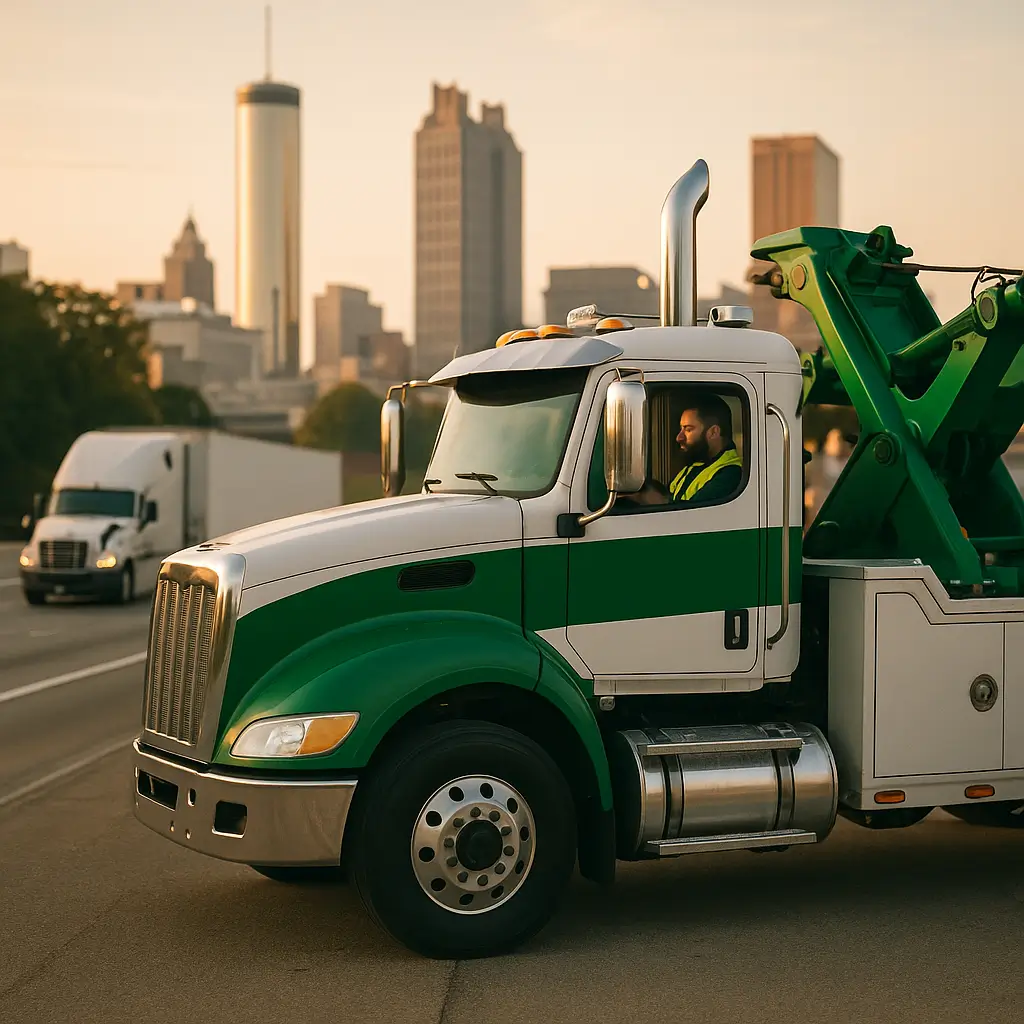

Learn 2026 commercial vehicle insurance rules, including FMCSA limits, state requirements, required filings, penalties, and a 10-step compliance checklist.
Commercial vehicle insurance rules in 2026 come down to three layers you have to meet at the same time: federal FMCSA minimums (if you’re regulated), your state’s intrastate requirements, and the contract limits brokers, shippers, and job sites demand. If any layer is missing—especially a required filing—your authority, registration, or loads can get interrupted fast.
If you’re still sorting out what “commercial auto” actually means (and why personal auto often fails the moment you use the vehicle for work), start here: commercial auto insurance basics.
Key Takeaways:
- FMCSA minimums commonly range from $750,000 to $5,000,000 depending on what you haul and whether you carry passengers (49 CFR Part 387).
- State rules still matter for intrastate operations, proof requirements, and registration/permit compliance.
- A policy isn’t the same as a filing; many regulated operations require the insurer to file proof with FMCSA.
- Legal minimums aren’t business minimums; many brokers and shippers require $1,000,000 liability plus cargo coverage.
Table of Contents
Reading time: 8 minutes

Commercial vehicle insurance rules #1–#2: FMCSA minimums + filings for interstate operations
Under 49 CFR Part 387, certain interstate for-hire motor carriers must carry minimum public liability coverage that commonly ranges from $750,000 to $5,000,000 depending on the commodity (including hazmat) and whether passengers are transported.
If you cross state lines for business—or you’re for-hire in a way that requires operating authority—think “FMCSA first,” then stack state and contract requirements on top.
What FMCSA “financial responsibility” means (plain English)
FMCSA financial responsibility rules are the federal baseline that says: carry specific liability limits and, for many regulated carriers, have your insurer file proof so your authority stays active.
That’s why insurance isn’t just a bill. It’s permission to keep operating under the authority you’re running.
Who typically triggers FMCSA insurance rules
Carrier status depends on your specific operation, but federal requirements commonly come up when you’re:
- For-hire hauling freight (including many hotshot setups that operate under authority)
- Interstate (crossing state lines in commerce)
- Transporting passengers (shuttle, limo, charter, bus)
- Hauling certain hazmat (higher required limits for some classes/quantities)
FMCSA minimum liability limits (quick reference)
Federal minimums vary by operation and commodity under 49 CFR Part 387; you can verify the current rule text in the eCFR: https://www.ecfr.gov/current/title-49/subtitle-B/chapter-III/subchapter-B/part-387.
| Operation type (high-level) | What you’re carrying/doing | Typical federal minimum (liability) | Business reality (common requirement) |
|---|---|---|---|
| For-hire motor carrier | General freight (non-hazmat) | $750,000 | $1,000,000 is commonly required by brokers/shippers |
| For-hire motor carrier | Certain hazmat | $1,000,000 or $5,000,000 (varies by class/quantity) | Often $1,000,000+ plus hazmat-specific compliance and underwriting |
| For-hire passenger carrier | Passengers (thresholds vary by vehicle/seating) | Commonly $1,500,000 to $5,000,000 | Permits/contracts may push higher limits |
Interstate FMCSA-regulated commercial vehicles must meet federal minimum financial responsibility limits. Depending on what you haul and whether you carry passengers, liability minimums commonly range from $750,000 to $5,000,000 under 49 CFR Part 387. Many brokers and shippers still require $1,000,000 even when the federal minimum is lower.
Key terms that change how your policy actually works
- Primary liability insurance: Pays for injuries and property damage you cause to others; it’s the core “required” layer in most regulated trucking contexts. Use this straight-talk primer: primary liability insurance for trucking.
- MCS-90 endorsement: A federal endorsement tied to financial responsibility for certain operations; it’s not the same thing as “extra coverage” for your truck.
- Physical damage: Comprehensive and collision for your equipment; not usually required by law, but often required by lenders and critical for survival after a loss.
- Cargo insurance: Frequently a contract requirement even when it’s not universally required by law (more on cargo at the end).
Rule #2: A policy isn’t enough—you may need FMCSA filings
FMCSA generally requires proof-of-insurance filings to be submitted electronically by the insurer for regulated carriers, and a missing or lapsed filing can impact operating authority status.
FMCSA’s filing overview is here: https://www.fmcsa.dot.gov/registration/insurance-filing-requirements.
Practical reality looks like this:
- Your agent can bind a policy today.
- If your operation requires a filing and it doesn’t post (or it later lapses), your authority can get flagged and your week can fall apart.
If you’re setting up authority and trying to time insurance correctly, this walkthrough helps you align coverage and filings with the application timeline: FMCSA authority application guide.
For a walkthrough of how insurance and authority fit together when you’re setting up, watch this:
Commercial vehicle insurance rules #3–#4: Intrastate (state) rules + “commercial use” scenarios
Every state sets its own intrastate commercial auto requirements, and minimums are typically stated as split limits (for example, $25,000/$50,000/$25,000) or as a combined single limit (CSL), plus any state-specific proof or reporting rules.
Even if you never cross a state line, state DMV/DOT rules (and sometimes city permits) can still cause registration, permit, or jobsite problems if your coverage doesn’t match the vehicle and use.
Rule #3: State minimums can differ—and proof/reporting can matter as much as the limit
State compliance problems often happen because the operator has “insurance,” but not the right limits, the right vehicle class, or the right proof on file. That’s how you end up burning hours trying to fix paperwork when you should be working.
Here’s a fast way to verify what you actually need:
- Step 1: Confirm whether you’re truly intrastate only or if you cross state lines in commerce.
- Step 2: Check your state DMV/DOT guidance for commercial vehicle insurance requirements and required proof (card, COI, electronic reporting, filings, etc.).
- Step 3: Confirm whether the state requires insurance reporting to keep registration active.
- Step 4: Collect any jobsite/broker requirements (limits, additional insured wording, waiver of subrogation, certificate holder details).
A concrete example of how states publish reporting requirements (use it as a model for what “official guidance” looks like) is Connecticut’s DMV commercial insurance reporting page: https://portal.ct.gov/dmv/commercial-and-industry-services/report-commercial-insurance.
For a practical hub you can use to double-check your state without getting stuck in a 50-state wall of text, see: commercial auto insurance requirements by state.
Rule #4: “Commercial vehicle” changes by use case (5 scenarios that surprise people)
Insurance classification is usually driven by how the vehicle is used (and what you haul), not just what the vehicle is. Here are common real-world scenarios that change the rules fast:
- Scenario 1: Contractor pickup/van used for job sites. Tools, materials, employee drivers, and jobsite COI wording often push you into commercial coverage even when the vehicle “looks personal.”
- Scenario 2: For-hire hauling (including hotshot) across state lines. This is where trucking insurance becomes compliance. Even when the legal minimum might be $750K, broker onboarding often requires $1M liability before you ever see a rate confirmation.
- Scenario 3: Leased-on owner-operator (who covers what?). The motor carrier may provide liability while you’re under dispatch, but you still need to plan for off-dispatch exposure and your own equipment.
- Scenario 4: Passenger transport. Passenger operations commonly trigger higher liability requirements and permit rules that depend on vehicle type and seating thresholds.
- Scenario 5: Hazmat/high-risk commodities. Higher limits can apply, underwriting is stricter, and compliance scrutiny is higher.
Commercial vehicle insurance rules #5–#7: Cost, penalties, and a 10-step compliance checklist
Operating without required coverage can lead to tickets, registration/permit suspension, contract cancellation, and—if you’re FMCSA-regulated—authority interruption when required filings lapse, and insurers typically must provide 35 days’ notice to cancel certain FMCSA liability filings via a cancellation notice filing.
This is where “rules” stop being theory and start affecting cash flow and uptime.
Rule #5: Cost isn’t the rule—but it’s the consequence (illustrative 2026 ranges)
Commercial auto pricing depends on state, radius, experience, vehicle type, cargo, and loss history, so treat any range as budgeting help, not a quote.
- Contractor van / small pickup (local business use): ~$1,200–$3,500/year
- Local box truck / service truck: ~$3,000–$9,000/year
- Hotshot (for-hire, multi-state): ~$7,000–$18,000/year
- Semi truck insurance (new venture, for-hire interstate): often ~$12,000–$30,000+/year for liability (varies widely)
What usually drives “affordable trucking insurance” in real life:
- Driving record and verifiable experience (especially recent CDL / tractor-trailer time)
- Operating radius (local vs regional vs OTR)
- Commodity and trailer type (general freight vs high-value vs hazmat)
- Claims history and lapse history
- Garaging location, equipment value, and theft exposure
Rule #6: Penalties can stop your business fast (federal + state)
Enforcement outcomes differ by jurisdiction, but the most common results are being parked, losing registration/permits, losing authority status, or losing contracts when your COI doesn’t match requirements.
| Consequence | Who enforces | Common trigger | How you fix it |
|---|---|---|---|
| Ticket/fine | State/local | No proof of insurance | Provide proof, pay fine, correct coverage |
| Registration/permit hold | State DMV/DOT | No insurance on file / lapse | Reinstate coverage + any required reporting |
| Authority interruption | FMCSA (if regulated) | Filing lapse or cancellation | Insurer refiles proof and resolves compliance flags |
| Contract loss | Broker/shipper/jobsite | COI missing limits/wording | Update policy/COI to meet contract terms |
To keep your paperwork (and audit readiness) tight, connect insurance to your broader compliance habits here: DOT compliance requirements for owner-operators.
Rule #7: 10-step commercial vehicle insurance compliance checklist (copy/paste)
This 10-step checklist helps you avoid the most common coverage mistakes that cause filing issues, COI rejections, and claim denials tied to misclassified operations.
- Confirm intrastate vs interstate operations (be honest about where you actually run).
- Document vehicle specs: GVWR/GCWR, power unit + trailer details.
- Define operations: for-hire vs private, dispatch/lease-on status.
- List what you haul: general freight, hazmat, autos, refrigerated, high-value, etc.
- Identify passenger exposure (if any): shuttle/charter/limo rules can be different.
- Set liability limits based on (a) legal minimums and (b) contract minimums.
- Confirm whether you need FMCSA filings tied to authority (if regulated).
- Make sure the named insured matches your legal entity (LLC vs personal name matters).
- Gather COI requirements: additional insured, waiver of subrogation, certificate wording.
- Prevent lapses: calendar renewals, verify autopay, and confirm filings stayed active after endorsements.
Want the physical version of this checklist? Here’s what should be in your truck:
Before you pay: read exclusions, deductibles, driver listing rules, and radius assumptions. A “cheap” policy that doesn’t match your real operation gets expensive the first time it’s tested.
Frequently Asked Questions
A vehicle is typically considered commercial for insurance when it’s used for business activity like deliveries, carrying tools/materials, transporting clients, or running regular work mileage—and insurers often rate it differently than personal auto because the exposure is higher. Ownership can matter too (for example, a vehicle titled to an LLC), but use is usually the biggest trigger. Job sites and brokers also change the “rules” by requiring a COI with specific wording, limits, and endorsements. The safest move is to tell your agent your exact operation (vehicle, radius, cargo, drivers) and match the policy classification to that reality.
For certain interstate, regulated operations, FMCSA financial responsibility minimums commonly range from $750,000 to $5,000,000 depending on passengers and hazmat categories under 49 CFR Part 387. Many freight brokers and shippers still require $1,000,000 in primary liability even when the federal minimum is lower, so you must meet both the legal minimum and the contract minimum to get loaded. If your operation is regulated, you may also need your insurer to file proof with FMCSA (a policy alone may not keep authority compliant).
No, you can buy a commercial auto policy without an MC number, because insurance can be written for many business uses that don’t require federal operating authority. The compliance issue is whether your operation is for-hire and interstate in a way that triggers FMCSA authority and proof-of-insurance filings. If you do need authority, your insurer may need to file proof electronically with FMCSA to keep the authority active, and that filing can take time to post. Align your insurance start date with your authority timeline to avoid gaps.
Many leased-on owner-operators are covered by the motor carrier’s liability while they are under dispatch, but when they are off dispatch they may need non-trucking liability (bobtail) depending on the lease terms and how the carrier defines “dispatch.” Non-trucking liability is typically designed for personal use of the truck when not hauling under the carrier’s business. You should also consider physical damage coverage to protect your equipment regardless of dispatch status. For a clear breakdown of when bobtail/non-trucking applies, see: non-trucking liability (bobtail) insurance explained.
Still sorting out bobtail vs. non-trucking liability? This video covers common mistakes to avoid:
You’re interstate if you cross state lines in commerce, even occasionally for a single load — physical distance isn’t the only factor; the movement of goods or passengers matters. Some operations can also be treated as interstate even while staying inside one state if the freight is part of a longer interstate shipment. If you’re unsure, check your FMCSA registration status before assuming state rules alone apply.
If a required filing lapses because a policy was cancelled, replaced, or non-renewed without a new filing posting in time, FMCSA can flag your operating authority as out of compliance. That can stop you from dispatching loads until the issue is resolved. Your insurer or agent typically needs to file replacement proof electronically, and reinstatement is not always instant, so treat any coverage change as a filing event, not just a policy event.
No — you need one policy that meets the higher requirement. Brokers and shippers set contract minimums on top of the legal floor, not in addition to it, so carrying $1,000,000 in primary liability can satisfy both the federal minimum and the broker’s requirement. The mistake to avoid is binding a policy at the legal minimum and assuming it is enough to get loaded.
Often, yes. A state DMV or DOT registration confirms you meet state minimums, but a city permit, construction jobsite, food truck permit, or general contractor requirement can demand higher limits, additional-insured wording, or a specific certificate format the state does not ask for. Treat state compliance and contract or permit compliance as two separate checklists.
Conclusion: Follow the right commercial vehicle insurance rules for where and how you operate
Commercial vehicle insurance rules are a stack: FMCSA rules (if you’re regulated), state intrastate rules, and contract requirements. The fastest way to stay moving is to match your policy (and any required filings) to your real operation—vehicle, radius, commodity, and dispatch status.
Key Takeaways:
- Verify whether you trigger FMCSA minimums and filings (many interstate for-hire operations do).
- Confirm state proof/reporting rules if you operate intrastate or maintain state registration/permits.
- Meet broker/shipper COI requirements early (limits, wording, endorsements) so loads don’t get delayed.
If you’re building out coverage beyond liability, keep going with: cargo insurance requirements and commercial truck insurance in Texas.
If you’re trying to figure out which layer of coverage actually applies to your operation — federal, state, or contract — LogRock can help you match your policy and any required filings to how you really run. Talk to our team to review your limits, close gaps, and request a quote built around your specific operation.
Speak with LogRock and request a quote




