Comprehensive and collision for semi trucks: what each covers, what lenders require, 2026 cost ranges, deductibles, and claim examples—get quotes.
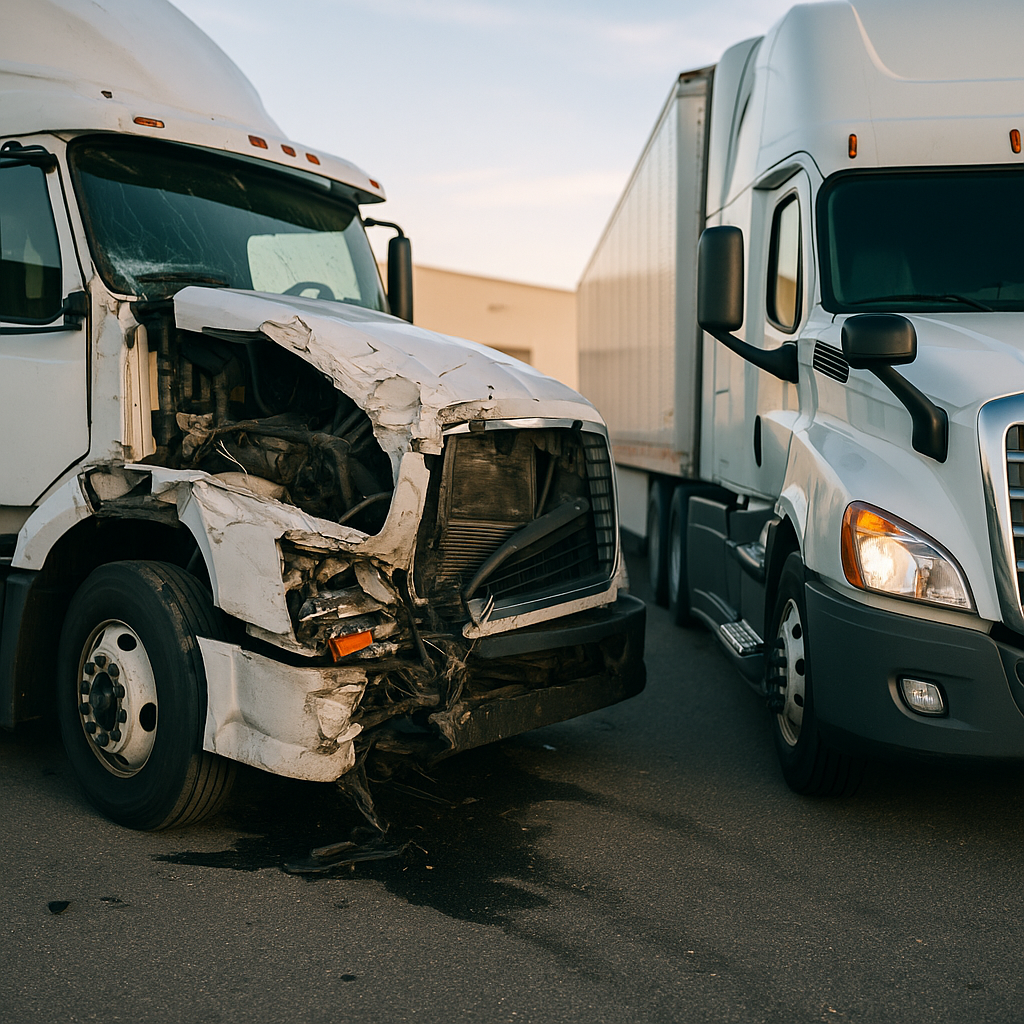
Comprehensive and collision for semi trucks are the two “physical damage” coverages that pay to repair or replace your tractor after a covered loss, minus your deductible. In simple terms, comprehensive is usually theft, fire, hail, vandalism, flood, and many animal strikes, while collision is impact damage like backing into a dock, hitting a guardrail, or a wreck.
If your truck is your paycheck, “optional” coverage can feel non-optional fast. One hailstorm, a deer strike, or a tight dock that turns into a bad day can park you for weeks—while the truck note, IFTA, fuel card, and family bills keep coming.
Table of Contents
Reading time: 8 minutes
- Key takeaways (owner-operator version)
- Where comprehensive & collision fit: physical damage for semi trucks
- Is comprehensive & collision required for semi trucks?
- What comprehensive covers for semi trucks (with real claim examples)
- What collision covers for semi trucks (with real claim examples)
- 2026 cost: comprehensive vs collision for semi trucks + how to choose
- Frequently Asked Questions
- Conclusion: Pick comp/collision like a business owner
👉 Prefer watching a quick video about semi truck insurance?
Watch the video below for a quick overview of semi truck insurance rules, how much it costs, and practical ways to save. Or give us a call: (704) 290-3630
Key takeaways (owner-operator version)
Collision typically covers impact losses, while comprehensive typically covers non-collision losses like theft, fire, and hail.
- Collision = impact. Comprehensive = most non-collision perils. If it “hits something,” think collision; if it’s theft/weather/fire, think comprehensive.
- FMCSA doesn’t require comp/collision to run authority, but lenders and lessors often do to protect the collateral.
- Price them separately. Collision commonly costs more; comprehensive can spike in hail/theft areas.
- Your deductible + ACV settlement drive the real payout, not what you hope the truck is worth.

Where comprehensive & collision fit: physical damage for semi trucks
Physical damage insurance for a semi truck typically includes comprehensive and collision, plus optional endorsements for items like custom equipment.
Physical damage is the part of commercial truck insurance that protects your iron—your tractor (and sometimes your trailer). A good starting point is understanding the physical damage bucket: comprehensive + collision + a few add-ons that plug real-world gaps.
For a deeper breakdown of how comp/collision fit together (and how tractor vs trailer is usually handled), see physical damage insurance for semi trucks.
What it is (plain English)
- Comprehensive: Non-collision losses (theft, fire, hail, vandalism, flood, and often glass damage depending on policy wording).
- Collision: Impact losses (vehicle/object impact, and sometimes rollover/jackknife depending on policy language and facts of loss).
Why it’s essential (business reality)
If you’re a one-truck operation, this coverage isn’t about “nice to have.” It’s about staying in business when the unexpected happens—because the truck is the income-producing asset.
Who needs it (most of the time)
- Financed or leased trucks: commonly required by contract.
- Paid-off trucks: depends on your cash reserves, truck value, and how fast you could replace the unit without crushing cash flow.
- New authority / tight cash ops: downtime can be the real killer; physical damage helps you survive the hit.
Tractor vs trailer (quick clarity)
- Tractor physical damage: covers the specific unit scheduled on the policy.
- Trailer physical damage: depends on whether you own the trailer and schedule it.
- Non-owned trailers: often require a separate solution (commonly trailer interchange) when you’re responsible under an interchange agreement.
Is comprehensive & collision required for semi trucks?
FMCSA financial responsibility rules in 49 CFR Part 387 require public liability coverage for many for-hire interstate motor carriers, but they do not require comprehensive or collision (physical damage) coverage.
Here’s the clean line: federal filings are about liability, not physical damage. FMCSA’s insurance filing requirements are focused on financial responsibility (liability filings such as BMC forms), not paying to fix your truck after a theft, hailstorm, or crash.
Reference: FMCSA insurance filing requirements.
Required by law vs required by contract
- Required by law (often): liability minimums tied to your authority and operation.
- Required by contract (often): physical damage required by your lender/lessor to protect their collateral.
Pro tip: avoid a nasty surprise
Pull your finance/lease agreement and look for language like “physical damage required” and any maximum deductible allowed (some lenders cap collision deductibles at $1,000 or $2,500).
For a bigger picture on how insurance and compliance fit together, see DOT compliance and trucking insurance requirements.
What comprehensive covers for semi trucks (with real claim examples)
Comprehensive insurance generally covers non-collision losses such as theft, fire, vandalism, and weather-related damage like hail, subject to policy terms and your deductible.
A plain-English baseline is the NAIC’s consumer overview of auto insurance coverages: NAIC auto insurance overview. Now translate that into trucking life.
Typical comprehensive losses for semis
- Hail/wind: especially if you’re parking outside in hail-prone states.
- Theft/vandalism: stolen tractor, broken glass, stolen batteries/APU, vandalism damage.
- Fire: engine-bay fire that spreads into hood/fairings/cab components.
- Flood/water intrusion: coverage depends on the facts and the policy wording.
- Animal strike: often treated as comprehensive in many policies (confirm your form and carrier rules).
Real-world comprehensive scenarios
- Hail claim: you’re shut down at a truck stop and hail totals the hood/fairings.
- Break-in: smashed window while you’re in the sleeper plus stolen electronics.
- Vandalism: damage in a poorly lit lot leads to repairable (but expensive) body/component claims.
- Deer strike: front-end damage without another vehicle involved.
What comprehensive usually does not cover
- Wear and tear (maintenance)
- Mechanical breakdown/engine failure (not a covered comprehensive peril)
- Rust/corrosion
- Unscheduled custom equipment over base limits (APUs, toolboxes, inverters often need endorsements)
Who needs comprehensive the most
- Operators parking in hail belts or high-theft metros
- Anyone with a newer/high-value tractor
- Anyone who can’t eat a $10,000–$30,000 surprise repair without missing payments
If you run hotshot (dually + trailer), you’re playing the same risk game—weather, theft, tight yards. See hotshot insurance guide.
What collision covers for semi trucks (with real claim examples)
Collision insurance generally covers damage to your tractor caused by impact with another vehicle or an object, minus your collision deductible.
Collision is the one that often hurts the most financially because it’s tied to miles, traffic exposure, tight yards, winter routes, and human mistakes—so it’s usually priced accordingly.
Typical collision losses for semis
- Vehicle impact: contact with another vehicle (passenger car or CMV).
- Object impact: guardrail, pole, barrier, dock post, curb, low-clearance contact.
- Single-vehicle events: some jackknife/rollover losses may be treated as collision depending on policy wording and claim facts.
Real-world collision scenarios
- Backing claim: you clip a concrete post and crush a cab extender.
- Low clearance: an overpass contact rips off roof fairing and damages cab structure.
- Winter wreck: black ice leads to a jackknife with tractor damage from impact/roll.
- Yard incident: you bump a parked trailer and tear up hood/headlights.
Collision vs “at-fault” confusion (keep it straight)
- Collision: pays for your truck’s damage (minus your deductible), regardless of fault.
- Liability: pays for damage you cause to others (their vehicle/property), subject to your liability limits and claim outcome.
Pro tip: comp and collision deductibles can be different
It’s common to see setups like $1,000 comprehensive / $2,500 collision because collision claims tend to be more frequent. For the trade-offs and how deductibles change both premium and payout, see truck insurance deductibles explained.
2026 cost: comprehensive vs collision for semi trucks + how to choose
Comprehensive and collision premiums are commonly priced as a percentage of the truck’s insured value, with collision often higher because impact losses are more frequent.
Insurance is consistently a major operating cost category in trucking, and it’s tracked as such in industry cost studies like ATRI’s operational cost reporting: American Transportation Research Institute (ATRI).
1) Rule-of-thumb pricing (separate premiums)
These ranges are directional—real quotes depend on truck value, garaging/parking, states you run, experience, loss history, and carrier appetite.
- Comprehensive (annual): often around 0.5%–2% of the truck’s insured value
- Collision (annual): often around 2%–6% of the truck’s insured value
Example (easy math): $100,000 tractor value
- Comprehensive might land around $500–$2,000/year
- Collision might land around $2,000–$6,000/year
- Combined physical damage might land around $2,500–$8,000/year
Collision is usually higher because frequency tracks driving exposure: miles, docks, urban traffic, winter routes. Comprehensive can spike in hail and theft/vandalism hotspots, and sometimes based on where/how you park.
2) The 3 levers that change your payout (and your price)
Deductible, ACV, and total-loss math decide whether a claim saves you—or still leaves you stuck.
Deductibles (comp vs collision)
- Higher deductible usually lowers premium, but you need real cash reserves.
- Lenders often cap deductibles; if your contract says max $1,000 and you pick $2,500, you can create a compliance problem with the note/lease.
ACV settlement (don’t guess—confirm)
Many physical damage claims settle on Actual Cash Value (ACV), meaning market value at the time of loss (not what you owe, and not necessarily what you paid at the top of a hot market). Keep receipts and photos for upgrades (tires, APU, headache rack, toolboxes) because documentation can help support valuation.
Total loss math (simple example)
If your tractor’s ACV is $120,000 and your collision deductible is $2,500, a simplified view is that the payout starts near $117,500, then gets adjusted based on claim details and policy terms (including salvage handling and any applicable conditions). The point: deductible and ACV matter more than what you “feel” the truck is worth.
3) Decision tool: comprehensive, collision, or both?
- Step 1 — Is the truck financed/leased? If yes, you’ll often need both by contract.
- Step 2 — Can you replace/repair the truck without killing cash flow? If no, carry both (or at least the one matching your biggest exposure).
- Step 3 — Biggest risk where you run/park: hail/theft/yard parking risk leans comprehensive; high miles/urban/docks/winter routes lean collision.
- Step 4 — Choose deductibles that match reserves: if a $2,500 deductible forces credit-card repairs at high interest, it’s not “savings.” It’s risk.
4) How to lower physical damage premiums without getting stupid
Smart premium control is about reducing claim frequency and tightening your risk, not stripping coverage until one loss wipes you out. For practical levers that apply directly to comp/collision, see how to save on truck insurance.
- Secure parking: fewer theft/vandalism claims
- Dashcams: helps defend disputed losses
- Clean loss history: frequency drives pricing pain
- Right-size deductibles: don’t over-insure tiny losses you can comfortably self-fund
Frequently Asked Questions
Physical damage insurance for semi trucks generally means comprehensive + collision coverage that pays to repair or replace your scheduled tractor after a covered loss, minus your deductible. It protects your equipment (your truck), not the other driver’s car or property—that’s handled under liability coverage. Trailer coverage depends on whether you own the trailer and whether it’s scheduled on the policy; non-owned trailers often require a different setup. For a deeper breakdown, see physical damage insurance for semi trucks.
Comprehensive insurance for a semi truck typically covers non-collision losses like theft, vandalism, fire, and weather-related damage (including hail), subject to policy terms and your comprehensive deductible. Many policies also treat certain animal-strike losses as comprehensive, but the exact handling depends on the carrier form and facts of loss. Comprehensive usually does not cover wear and tear, rust/corrosion, or mechanical breakdown (those are maintenance and warranty problems). If you have expensive add-ons like an APU or specialty toolboxes, ask whether you need a custom equipment endorsement.
Collision insurance for a semi truck typically covers damage to your tractor from an impact, such as hitting another vehicle, a guardrail, a pole, a dock post, or other objects, and it pays subject to your collision deductible. Collision can also apply to certain single-vehicle crash losses depending on policy wording and the facts (for example, some rollover/jackknife scenarios). Collision is separate from liability: collision handles your truck’s repairs, while liability handles damage you cause to others. Deductibles often differ from comprehensive (for example, $1,000 comp / $2,500 collision).
Yes, lenders and lessors often require comprehensive and collision on financed or leased semi trucks because physical damage coverage protects the collateral. Contracts commonly require you to carry physical damage on the tractor (and sometimes on owned trailers), and they may set a maximum deductible (often $1,000 or $2,500) so you can’t raise the deductible too high to cut premium. The lender may also require certain interest wording on the policy (for example, loss payee/lienholder language). Always confirm the exact requirements in your finance or lease agreement.
No, comprehensive and collision on your tractor do not automatically cover physical damage to a non-owned trailer you’re pulling. If you’re moving trailers under a trailer interchange agreement, you may need trailer interchange coverage to insure physical damage to that trailer while it’s in your care, custody, and control. This is a common gap when drivers assume “full coverage” means every trailer they hook to is insured. For a practical explainer, see trailer interchange insurance explained.
Conclusion: Pick comp/collision like a business owner
Comprehensive and collision for semi trucks comes down to one question: can your business survive a major hit to its main asset? If the truck is financed, you’ll usually need both. If it’s paid off, decide based on truck value, cash reserves, routes, parking security, and your real exposure.
Key Takeaways:
- Comprehensive is generally theft/fire/hail/vandalism; collision is impact-related damage—each is priced and underwritten differently.
- Deductible + ACV determine whether a claim is truly survivable for your cash flow.
- Non-owned trailers are not automatically covered by tractor comp/collision; interchange agreements often require trailer interchange coverage.
If you want a coverage package that protects your income without paying for gaps you don’t need, build your stack from the full picture: Semi Truck Insurance 2026: Rates ($250–$2,500/mo) and the owner-operator truck insurance coverage checklist.