Get Cover Whale small fleet insurance quotes fast: what to submit, telematics expectations, and 2026 cost ranges. Compare smart—get options.
Cover Whale small fleet insurance quotes can move quickly, but only if your submission is complete, your operation fits the program appetite, and your details match what underwriters (and FMCSA records) can verify. For fleets with 2–20 trucks, insurance isn’t a line item—it’s a survival bill that affects cash flow, broker onboarding, and whether you can keep trucks rolling.
If you want a plain-English baseline for what a real quote should include—liability, physical damage, cargo, filings, and the stuff brokers actually ask for—start with commercial truck insurance basics.
Table of Contents
Reading time: 9 minutes

Key Takeaways
For most small fleets (commonly defined as 2–20 power units), quoting speed is driven by data completeness—especially VIN schedules, driver MVR clarity, garaging ZIPs, and loss runs—more than it’s driven by the carrier’s website.
- Speed comes from your submission packet: Missing loss runs, unclear cargo, or wrong garaging ZIPs are common quote killers.
- Compare apples-to-apples: Match limits, deductibles, drivers, and radius across every quote or the “cheapest” option is meaningless.
- Telematics can affect renewal outcomes: Continuous monitoring can influence pricing and eligibility if driver behavior isn’t managed.
- Budget realistically: Many small fleets plan around ~$8,000–$15,000+ per power unit/year for commercial auto, often higher for new ventures and higher-risk operations.
Quick Answer: What you need for a Cover Whale small fleet quote (and what slows it down)
A small-fleet trucking insurance quote typically requires DOT/MC details, garaging ZIPs, a vehicle schedule with VINs and values, a driver roster with experience and violations, cargo/class, requested limits, and prior loss history (often 3–5 years of loss runs if available).
How fast can you get a small-fleet insurance quote?
You may get a quote the same day when your information is complete and consistent across your application, prior policy documents, and public records (like FMCSA/SAFER). To keep it moving, have these ready:
- DOT/MC and company details (plus garaging ZIPs)
- Fleet schedule (VINs, year/make/model, stated value)
- Driver roster (CDL state, experience, violations/accidents; MVR access)
- Cargo/classifications and the limits you actually need
- Telematics/continuous underwriting expectations
- Exclusions/deductibles/filings review before binding
If you’re managing multiple units, you’re not buying “one policy”—you’re building a process for scheduling units, controlling drivers, and handling endorsements. A good overview of fleet insurance can help you set up routines that reduce surprise premium changes.
The 60-second submission checklist (so you don’t get stuck waiting)
Use this checklist to avoid the “we can’t quote yet” loop.
- Company + Ops: Legal name/DBA, FEIN (if applicable), DOT/MC, garaging address(es)/ZIPs, operating radius (local/regional/long-haul), main lanes, and basic driver standards.
- Units: Power unit schedule (VIN, year/make/model, value, lienholder) and trailer schedule (VINs/values) if you own trailers or have interchange exposure.
- Drivers: Full roster (including occasional/part-time), experience by driver, prior carrier info, violations/accidents, and any inexperienced drivers (underwriters care).
- Loss + Prior Coverage: Prior carrier/policy dates, loss runs (request early), and any lapses (disclose honestly).
What commonly delays (or derails) quotes
- DOT/MC data doesn’t match what’s submitted (name, garaging, authority status)
- Cargo is vague (“general freight”) but you’re actually mixed commodities
- Loss runs aren’t available yet, or show undisclosed losses
- Requested limits don’t match contracts, or the operation triggers different underwriting requirements
Does Cover Whale offer small fleet insurance? Fit, eligibility, and red flags
Small fleet trucking insurance eligibility is primarily driven by measurable risk factors—driver quality, loss history, cargo type, operating radius, equipment, and garaging state—rather than by fleet size alone.
Cover Whale is often positioned as a tech-forward option in commercial auto/trucking insurance, and it can be a fit for some small fleets. That said, availability and appetite can vary by program and state, and a “fast quote” still depends on clean inputs.
What “small fleet” usually means (in insurance terms)
In trucking insurance, “small fleet” commonly means 2–20 power units, although cutoffs vary by carrier and program. Underwriters rate fleets differently because:
- More units and miles generally increase exposure
- Driver turnover adds unpredictability
- Safety process maturity matters more than what you say you do
Best-fit profiles (and when to shop elsewhere)
Often a better fit when you:
- Keep consistent drivers and lanes (less chaos = better underwriting)
- Run clear commodities (dry van, power only, dedicated accounts, etc.)
- Can document safety coaching (even if it’s simple)
Shop wider (or expect tougher terms) when you:
- Have frequent driver churn or add drivers midterm constantly
- Have recent severe losses or repeated preventables
- Run high-theft commodities or complicated mixed freight
- Have prior cancellations or non-pay issues
New authority / new venture expectations
New venture trucking insurance is typically priced higher because underwriters have limited operating history to validate driver selection, lane stability, and loss performance.
If you’re a new venture, expect more document requests, higher down payments, and tighter driver/radius scrutiny until you build a track record. Before you request quotes, review what new authority insurance usually requires.
How to get Cover Whale small fleet insurance quotes (step-by-step)
A repeatable quoting process for small fleets reduces turnaround time by preventing rework on the most common underwriting friction points: authority verification, loss runs, driver discovery, and mismatched radius/cargo disclosures.
Step 1: Confirm authority + required limits/filings
FMCSA authority and insurance filing status can be checked using public FMCSA systems, and mismatches between your submission and FMCSA records are a common reason quotes stall.
You (and your agent/MGA) can verify basics through the FMCSA SAFER system: https://safer.fmcsa.dot.gov/
FMCSA’s official insurance filing requirements overview is here: https://www.fmcsa.dot.gov/registration/insurance-filing-requirements
For a trucking-first breakdown and how filings connect to quoting, keep this handy: FMCSA insurance requirements.
Step 2: Build your “submission packet” (what underwriters want)
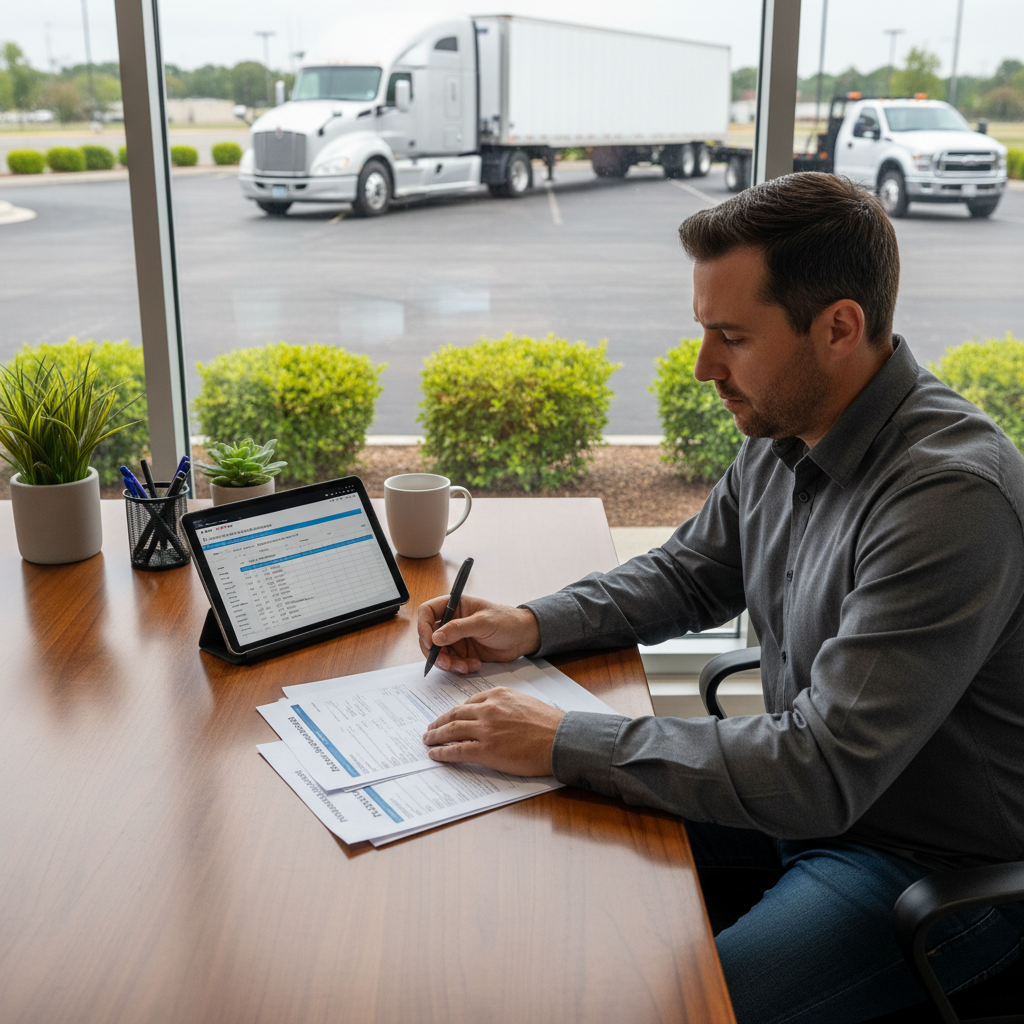
A complete submission packet usually includes an up-to-date driver list, a VIN-based vehicle schedule with accurate garaging ZIPs, prior insurance details, and loss runs requested early enough to arrive before you need to bind.
- Driver list with experience notes (who’s new, who’s solid)
- Vehicle schedule with accurate garaging ZIPs
- Prior insurance info + loss runs (request these early)
- Safety overview (ELD, dashcams, coaching cadence, termination rules for reckless driving)
Pro tip (time is money): Keep this packet in a shared folder (Google Drive/Dropbox) and update it quarterly so you’re not rebuilding it under renewal pressure.
Step 3: Request quotes—and confirm what’s included
A usable trucking quote must show limits, deductibles, cargo terms, endorsements, and payment requirements in writing, because “price-only” comparisons hide coverage gaps and claim-time surprises.
- Liability limit(s)
- Physical damage deductibles (comp/collision) and stated values
- Motor truck cargo limit and key exclusions/conditions
- Required endorsements (if any)
- Filing expectations (if any) and expected turnaround time
- Payment plan and down payment requirements
If you’re shopping, compare 3–5 quotes using identical inputs (same limits, same deductibles, same drivers) so you’re not comparing guesses.
Step 4: Review terms like an underwriter would
Underwriting review focuses on whether your stated operation (radius, garaging, cargo, and drivers) matches reality, because mismatches can trigger re-rating, coverage disputes, or post-bind documentation problems.
- Radius and garaging accuracy (wrong ZIPs can create claim handling issues)
- Driver restrictions (named drivers only, minimum experience, etc.)
- Cargo conditions (theft rules, unattended vehicle clauses, temperature controls for reefer)
- Documentation deadlines after binding (what’s due, by when)
Step 5: Bind + get your COIs/filings issued (without delays)
Binding typically requires signed applications, a down payment, and any requested underwriting documents, and delays often happen when COIs/endorsements are requested before the policy file is complete.
- Signed applications and confirmations
- Down payment
- Requested documents (loss runs, vehicle titles/leases, driver info)
Don’t do “bind now, fix later.” If material facts were wrong, it can lead to re-rating, midterm changes, or serious coverage disputes.
Coverage, telematics, and cost: what to ask for (and what it usually runs)
A complete small-fleet trucking insurance quote commonly includes commercial auto liability, physical damage, and motor truck cargo, and your final premium is heavily influenced by drivers, loss history, cargo, radius, garaging state, and safety/telematics participation.
What coverage to request in every small fleet quote
Most small fleets evaluate a package built around these coverages (what you need depends on contracts and operations):
- Commercial auto liability: The core of commercial truck insurance.
- Physical damage: Comprehensive/collision for the tractor (and sometimes trailers).
- Motor truck cargo: Conditions and exclusions matter as much as the limit.
- General liability: Often requested by shippers/brokers; varies by operation.
- Trailer interchange: Relevant if you pull non-owned trailers.
If one carrier is dramatically cheaper, it’s usually because one of the rating inputs differs (drivers, radius, garaging, cargo, limits, deductibles) or because terms are tighter. For a deep dive on what drives premium up or down, review truck insurance cost factors.
Is telematics required? What “continuous underwriting” can mean
Telematics requirements can vary by program and state, and “continuous underwriting” generally means driving behavior and exposure patterns can influence eligibility and renewal pricing throughout the policy term.
In plain English, telematics may track metrics like speeding, harsh braking, route/radius patterns, and (depending on setup) distracted driving indicators. The operational impact is simple:
- Better behavior plus documented coaching can support better terms over time.
- Unmanaged risky driving can pressure renewal pricing and eligibility.
Practical move: If you use telematics or dashcams, schedule weekly coaching and enforce consequences; “we have cameras” doesn’t reduce claims—coaching and follow-through do.
Cover Whale small fleet insurance cost (2026): realistic planning ranges
Small fleet commercial auto pricing varies widely by state, radius, drivers, losses, and cargo, but many fleets plan around ~$8,000–$15,000+ per power unit per year for commercial auto, often higher for new ventures, inexperienced drivers, high-risk commodities, or adverse loss history.
For broader operating-cost context in trucking, ATRI publishes benchmarking research (including its “Operational Costs of Trucking” report): https://truckingresearch.org/
3 illustrative small-fleet scenarios (examples, not promises)
These scenarios are meant to set expectations and highlight what underwriters tend to care about.
- Scenario A: 2 trucks, dry van, regional, clean drivers: Established authority, stable garaging, consistent lanes, clean MVRs; raising limits, adding younger drivers, or increasing radius can raise cost.
- Scenario B: 5 trucks, mixed commodities, expanding radius, recent at-fault loss: More underwriting questions and tighter terms are common; improving driver selection and stabilizing radius can help over time.
- Scenario C: 10 trucks, reefer, stronger safety process: Cargo severity potential is higher, but documented coaching and strong controls can improve outcomes versus similar fleets with weak processes.
Compare Cover Whale quotes vs traditional carriers (10-point checklist)
A consistent comparison checklist reduces the chance you buy a “cheap” quote that becomes expensive at claim time.
- Same limits and deductibles across every quote
- Same driver list (including part-timers)
- Confirm radius and lanes are correct
- Confirm cargo class + exclusions/conditions
- Physical damage values match lienholder reality
- Trailer interchange included if you need it
- Endorsements and filing expectations are clear
- Claims workflow: who you call and what happens next
- Midterm change rules (adding drivers/units, lane changes, garaging changes)
- Total cost of risk: premium + deductible + downtime exposure
What reviews tend to suggest (small fleet view)
Tech-forward insurance experiences often come down to two things: speed when the submission is clean, and service consistency when you need endorsements, COIs, or midterm changes.
- Common positives: Faster quoting/binding when the submission is complete; less paperwork back-and-forth.
- Common complaints to pressure-test: Service responsiveness, documentation follow-ups after binding, and speed of midterm changes (adding drivers/units).
Questions to ask before you bind
- Who is my best contact for endorsements and COIs?
- What triggers underwriting review or re-rating midterm?
- What documents are required after bind, and what are the deadlines?
Frequently Asked Questions
Yes—small fleets can be eligible, and “small fleet” commonly means about 2–20 power units, although program definitions vary by carrier and state. Eligibility typically depends more on drivers (experience and MVRs), loss history, cargo type, operating radius, and garaging location than it does on the fleet size alone. The fastest way to get a usable quote is to submit an accurate driver roster, a VIN-based vehicle schedule with stated values, correct garaging ZIPs, and loss runs if you can get them. For broader context on how multi-unit policies are structured, review fleet insurance.
You may receive a quote the same day when your submission packet is complete, consistent, and ready for MVR and loss-history review. Quotes often take longer when (1) loss runs haven’t arrived yet, (2) driver surprises show up late (violations, accidents, license issues), or (3) cargo and radius are unclear or don’t match the real operation. In practice, “speed” is less about the platform and more about the quality of your data: VIN schedules, garaging ZIPs, driver roster completeness (including part-timers), and truthful cargo/lane disclosures.
Not always—telematics requirements vary by program, state, and operation, but telematics and “continuous underwriting” are common in tech-forward trucking insurance programs. If telematics applies, plan for underwriting questions about safety technology, driver monitoring, and coaching frequency because monitored driving behavior (speeding, harsh braking, route/radius patterns) can influence renewal pricing and ongoing eligibility. The operational best practice is simple: set written driver rules (speed, phone use, hard braking), coach weekly, and document coaching so you can show you manage risk instead of just installing devices.
Most small fleets shop a package anchored by commercial auto liability, physical damage (comp/collision), and motor truck cargo, with optional add-ons like general liability and trailer interchange depending on contracts and operations. The “right” package depends on what brokers and shippers require, what commodities you haul, and whether you pull non-owned trailers. Always confirm exclusions and conditions in writing—especially for cargo theft rules, unattended vehicle clauses, and any radius or garaging restrictions—because those details often matter more than the headline limit.
Availability can change over time and may vary by program, so the accurate answer is: confirm using your garaging state(s) and your real operating lanes/radius when requesting quotes. Underwriters rate based on where the risk primarily lives (where units are kept and operated), not where you’d prefer it to be rated. If you garage in multiple states or have consistent out-of-state lanes, disclose that upfront; surprises on garaging or radius are a common reason quotes change before issuance or at renewal.
At minimum, an accurate small fleet quote needs your DOT/MC, garaging ZIPs, operating radius/lanes, cargo type(s), requested limits, a vehicle schedule (VINs and values), a driver roster (experience plus violations/accidents), prior carrier/policy dates, and loss runs if available (often 3–5 years). Having this ready is the difference between a fast quote and weeks of back-and-forth. If you’re unsure what a quote should include, it helps to review commercial truck insurance basics so you can compare policies on coverage—not just price.
Quotes commonly change due to MVR surprises, undisclosed losses, mismatches between stated and actual radius/cargo, adding drivers or units midterm, or missing post-bind documents by deadline. You can reduce surprises by submitting accurate info up front, ordering loss runs early, and turning requested documents around quickly. Also make sure you understand COI and filing workflows, because last-minute certificate or filing issues can create chaos when a broker needs proof immediately; see filings and certificates (COI) for trucking.
Sometimes yes, but new ventures and lapses in coverage often lead to higher pricing, stricter driver requirements, higher down payments, and more documentation requests. Your best leverage is stability you can prove: experienced drivers, realistic radius, consistent garaging, and a simple safety plan you can enforce. Start the insurance process early—don’t wait until you’re ready to pull your first load—because loss runs, MVR checks, and document reviews can create delays. If you’re launching authority, review new authority insurance to set expectations.
Conclusion: Faster quotes come from cleaner data (and better fleet habits)
Fast Cover Whale small fleet insurance quotes—and better quote options in general—come from submitting a clean packet and comparing multiple carriers with identical inputs. The long-term win is operational: fewer preventables, documented coaching, and fewer surprise midterm changes.
Key Takeaways:
- Build a reusable submission packet (drivers, VINs, garaging ZIPs, loss runs, cargo, radius).
- Compare 3–5 quotes with the same limits and deductibles to avoid false “cheap” pricing.
- Manage telematics with coaching and accountability so the data works for you at renewal.
To keep momentum, read how to lower trucking insurance premiums and bookmark state-by-state trucking insurance guides for garaging and state availability nuances.