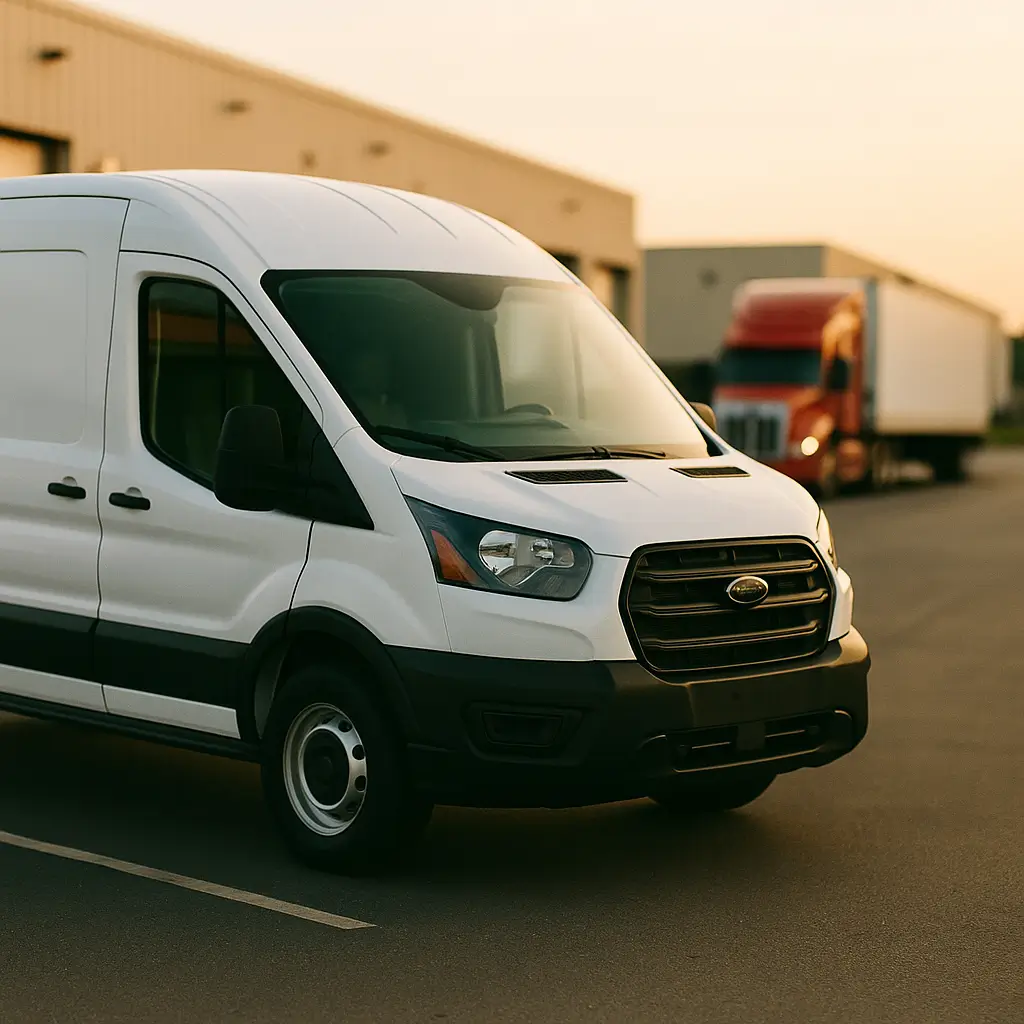
Learn 7 driveaway insurance coverages, 2026 cost ranges, state tag and permit risks, common exclusions, and claim-denial traps to avoid.

Driveaway insurance coverage is the protection that applies while a vehicle is being transferred by driving it (not shipping it), and it can be the difference between a routine pickup and a five-figure problem. The no-surprises version is simple: confirm who is insured, confirm liability limits, and confirm whether the vehicle you’re driving has comprehensive and collision during the trip.
If you’re moving units for a dealer, auction, or fleet, don’t rely on verbal assurances. Get a binder, ID card, or COI that matches the trip details—and understand how a commercial policy is built (named insured, permissive users, limits, endorsements). This quick primer helps: commercial auto insurance basics.
Table of Contents
Reading time: 8 minutes
- Key takeaways (save these before you pick up the keys)
- What is driveaway insurance coverage (and what it isn’t)?
- Who needs driveaway insurance? (4 real-world scenarios)
- Driveaway insurance coverage: the 7 most common coverages (what each pays for)
- Driveaway insurance cost in 2026: what you’ll typically pay (and why)
- State requirements, temporary tags/transit plates, and claim-denial pitfalls
- Frequently Asked Questions
- Conclusion: match the coverage to the trip (and protect your cash flow)
Key takeaways (save these before you pick up the keys)
Driveaway insurance coverage can be personal or commercial, and that classification can change what the policy allows, who is insured, and whether a claim is paid.
- “Driveaway insurance” can mean personal one-time coverage or commercial driveaway/towaway coverage. The rules, proof requirements, and pricing are different.
- Liability is the floor; physical damage is the money. If the vehicle you’re driving isn’t covered for comp/collision, you can be on the hook for the unit itself.
- Claims get denied for boring reasons: wrong “use” classification, unauthorized driver, coverage start/end time errors, or missing written permission.
- Insurance is only half the battle. Temporary tags, transit permits/plates, and proof-of-insurance formats vary by state—plan before you roll.
What is driveaway insurance coverage (and what it isn’t)?
Driveaway insurance coverage is the auto liability (required by state financial-responsibility laws) and optional physical damage coverage used while a vehicle is being moved by driving it during a transfer.
Driveaway insurance is built for one job: moving a vehicle by driving it—not hauling it on a trailer and not “general coverage for anything transportation-related.”
1) Personal/one-time driveaway (you bought a vehicle and need to drive it home)
This is the “I just bought it—how do I legally and safely drive it back?” situation. You might use:
- your existing personal auto policy (some policies extend to a newly acquired vehicle for a limited window), or
- a short-term/temporary binder that explicitly covers the trip and the vehicle.
2) Commercial driveaway/towaway (moving vehicles for a business, often for hire)
Commercial driveaway/towaway work follows commercial auto logic: the named insured, permissive-user rules, endorsements, and “use” classification control whether you’re covered.
Coverage may sit on a dealer/fleet policy or a driveaway company’s commercial policy—and you must confirm you’re an authorized driver and the trip is within scope (radius, states traveled, vehicle type, and purpose).
Quick reality check: driveaway vs shipping
Shipping and driving are different risk problems: with shipping you evaluate the carrier’s liability and cargo setup; with driveaway you are the operator on the road, so your liability, physical damage, and driver authorization matter more.
Who needs driveaway insurance? (4 real-world scenarios)
You typically need driveaway insurance coverage any time a vehicle is being driven during a transfer and the trip depends on proof of insurance, a temporary tag/permit, or a commercial “for-hire” setup.
Use these scenarios as a fast match—because the right coverage depends on why you’re driving the vehicle.
Scenario A: You bought a vehicle out of state and need to drive it home (PERSONAL)
Common pain points:
- You need proof of insurance before a dealer releases the vehicle.
- You need a temporary tag/permit to avoid an immediate roadside problem.
- Your current policy may not automatically cover a newly purchased unit unless it’s reported quickly and the vehicle fits your policy rules.
Scenario B: Dealership or fleet transfer (COMMERCIAL)
This is where who owns the dealer’s policy matters more than the words “driveaway insurance.”
- Are you an employee driver or a contractor?
- Does the dealer/fleet policy allow long-distance transfers (some policies have radius, usage, or driver-authorization restrictions)?
- Does the policy include physical damage on the unit being transferred, or just liability?
Scenario C: Professional driveaway driver working under a dispatch/service (COMMERCIAL / FOR-HIRE)
If you’re being paid to move vehicles, treat it like commercial insurance due diligence:
- What does the company provide (liability, physical damage, occupational accident)?
- What do you need to carry personally based on the agreement and how dispatch is structured?
- Do they require a COI, MVR review, or specific limits before they’ll assign loads?
Scenario D: Moving an unregistered, recently titled, or “in limbo” vehicle (PERSONAL or COMMERCIAL)
Insurance may be in place—but you can still get stuck if your route crosses states that require specific temporary permits, transit plates, or documentation formats.
If you’re debating “drive it” vs “ship it,” start here: auto transport insurance options.
Soft CTA: Before you pick up, jump to the checklist section and confirm who’s responsible for liability and damage to the vehicle you’re driving.
Driveaway insurance coverage: the 7 most common coverages (what each pays for)
Driveaway insurance coverage typically includes liability plus a mix of physical damage and injury protections, with commercial moves adding a “non-owned vehicle / vehicle-in-care” exposure when the unit belongs to someone else.
Definitions vary by carrier and state, but the function is consistent. For baseline consumer definitions (liability, comp/collision, deductibles), NAIC is a solid reference: https://content.naic.org/consumer/auto-insurance.
1) Liability (bodily injury & property damage)
What it pays: injuries and property damage you cause to others (the other driver, passengers, guardrails, buildings, etc.).
Why it matters: this is what keeps a fender-bender from becoming a lawsuit that hits your income or your business.
For a closer look at what liability coverage actually pays for:
2) Collision
What it pays: repairs/replacement for the vehicle you’re driving if you hit something or roll it (often subject to a deductible).
Practical translation: if you’re moving a high-value pickup, van, or commercial unit, collision is where the big dollars live.
3) Comprehensive
What it pays: non-collision damage (hail, theft, vandalism, animal strike, falling objects).
Real-world trigger: overnight parking and storm season are exactly where comprehensive earns its keep.
Quick tip on keeping physical damage costs down:
4) Medical payments / PIP (where applicable)
What it pays: medical costs for injuries, subject to state rules and policy form (PIP is common in no-fault states).
Pro tip: don’t assume your health insurance makes this irrelevant; MedPay/PIP can cover deductibles, passengers, and timing gaps.
5) Uninsured/underinsured motorist (UM/UIM)
What it pays: your injury-related losses when the at-fault driver has no insurance, not enough insurance, or flees.
Why it matters: hit-and-runs and minimum-limit drivers are a real cost center.
6) Roadside/towing/trip interruption (optional)
What it pays: towing, jump starts, lockouts, and sometimes limited lodging/meal reimbursement (depends on the endorsement).

When it’s worth it: older vehicles, long routes, tight delivery windows, or any trip where a breakdown creates contractual penalties.
7) Vehicle-in-care exposure (COMMERCIAL driveaway/towaway nuance)
What it pays: damage to a vehicle that belongs to someone else may be handled by the owner’s physical damage policy or by a commercial form/endorsement tied to “property/vehicles in your care, custody, or control” (terminology varies).
If you’re unsure how deductibles, valuation, and “what actually pays to fix the unit” work, read: physical damage coverage (comp & collision).
Visual: coverage matrix (use this during pickup calls)
| Coverage | What it pays for | Who often provides it | Common “gotchas” |
|---|---|---|---|
| Liability | Damage/injuries to others | Dealer/fleet policy, driveaway company, or driver | Unauthorized driver, wrong use (commercial excluded) |
| Collision | Damage to the vehicle you’re driving | Owner/dealer policy or a policy you buy | Deductibles; value settlement disputes |
| Comprehensive | Theft/hail/vandalism | Owner/dealer policy or a policy you buy | Overnight parking exposure; theft scenarios (keys left in vehicle) |
| MedPay/PIP | Injury-related costs | Policy-specific | State rules vary; coordination with health insurance |
| UM/UIM | Other driver can’t pay | Policy-specific | Limits may be lower than you think |
| Roadside | Towing/breakdown help | Add-on | Caps/limits; reimbursement rules |
| Vehicle-in-care exposure | Damage to customer’s unit (commercial nuance) | Commercial arrangement-specific | “We thought the dealer covered it” disputes |
Medium CTA: If you can’t point to one document that shows liability limits and whether the unit has comp/collision during the trip, you’re gambling. Get it in writing before pickup.
Driveaway insurance cost in 2026: what you’ll typically pay (and why)
Driveaway insurance cost in 2026 is driven by the same underwriting variables as personal and commercial auto insurance—driver record, vehicle value, route exposure, and whether the trip is personal or for-hire—so there is no single “standard price.”
Pricing is all over the map because “driveaway” can be personal or commercial, short or multi-day, low-value or high-value, local or cross-country.
Typical 2026 pricing ranges (ballpark, not promises)
- Personal, liability-only, one-time trip: often priced as a short-term binder or endorsement and frequently lands in the low hundreds of dollars depending on driver and state.
- Personal, “full coverage” (liability + comp/collision): commonly ranges from the mid-hundreds to $1,000+ for higher-value vehicles or multi-day routes with overnight stops (vehicle value and deductible choices matter).
- Commercial driveaway/towaway operations: underwritten like commercial auto/trucking and often start at several thousand dollars per year due to higher limits, business use, and documentation requirements.
What drives the price up fast
- Driver age, MVR, and prior claims
- Vehicle type/value (sedan vs cargo van vs heavy truck)
- Route distance and overnight stops (theft/hail exposure)
- Coverage level (liability-only vs comp/collision)
- Commercial classification (getting paid to drive changes the risk category)
For a deeper look at the underwriting factors that affect your rate:
For a clean breakdown of underwriting variables that affect rate, see: insurance cost factors.
Three quick “quote-style” examples (illustrative)
- Example 1 (PERSONAL): 1-day in-state drive home, liability-focused → lower cost, fewer moving pieces.
- Example 2 (PERSONAL): 3–5 day out-of-state route with overnight stops + comp/collision → higher cost due to exposure and vehicle value.
- Example 3 (COMMERCIAL): weekly dealer transfers under a business arrangement → commercial underwriting, proof requirements, and higher minimum premiums.
State requirements, temporary tags/transit plates, and claim-denial pitfalls (the stuff that ruins your week)
For interstate, for-hire commercial operations, FMCSA financial responsibility rules can require at least $750,000 in public liability coverage for non-hazardous property carriers under 49 CFR §387.9, and that’s separate from state minimums and dealer contract requirements.
This is the part everyone ignores until it’s a problem—then you’re on the shoulder, on the phone, losing time and money.
State/legal requirements: what to expect (and what to verify)
- Minimum liability laws apply when you’re driving on public roads, but your policy limit may need to be higher due to dealer/shipper/contract requirements.
- If the vehicle is not registered, you may need temporary tags or a transit permit/driveaway plate depending on the state(s) involved.
- If you’re crossing multiple states, check origin + destination + transit states. Don’t rely on “the dealer said it’s fine.”
Because tag and transit-permit rules vary by state, confirm the route with the origin and destination DMV before pickup; AAMVA is a useful starting point for state motor vehicle agency references: https://www.aamva.org/.
When driveaway becomes “commercial” (and why that matters)
If you’re moving vehicles for hire (or under a motor carrier arrangement), federal rules can enter the picture—especially around commercial truck insurance requirements and insurance filings like a BMC-91X filing.
- FMCSA insurance filing overview: https://www.fmcsa.dot.gov/registration/insurance-filing-requirements
- Verify a company profile in SAFER: https://safer.fmcsa.dot.gov/
Exclusions & denial traps (most are preventable)
The most common driveaway claim disasters are boring:
- Unauthorized driver (you weren’t listed or weren’t permitted under the dealer/fleet policy)
- Wrong use classification (commercial use excluded on a personal policy)
- Coverage timing (policy effective at 12:01 a.m. tomorrow; you leave today)
- Geography/radius limits (policy not intended for long-haul transfers)
- Missing documentation (no written permission to drive, unclear ownership, no bill of sale)
If you want a checklist of denial patterns insurers cite over and over, review: common reasons insurance claims get denied.
Not sure what liability limit is actually enough for your trip? This breakdown can help you sanity-check the number before pickup:
Copy/paste checklist (use this before you pick up the vehicle)
- Named insured: Who is the policy actually written to?
- Driver authorization: Are you explicitly allowed to drive this unit (email/text/work order)?
- Liability limits: Do they meet the dealer/shipper/contract requirement (not just state minimum)?
- Physical damage: Is comp/collision included on the vehicle you’re driving? Deductible = ?
- Use type: Is the trip personal or paid/commercial—and does the policy allow it?
- Proof format: Do you have an ID card/binder/COI that the dealer will accept?
- Tags/permits: Do you have the correct temporary tag/transit permit for your route?
- Start/end time: When does coverage start and end (date + time zone)?
- Crash plan: Claim phone number saved, tow plan, photo checklist, and who to call first.
Frequently Asked Questions
Driveaway insurance is coverage that applies while a vehicle is being transferred by driving it (for example, buying a car out of state and driving it home, or moving dealer/fleet units). It isn’t always a standalone product—many trips are covered by a personal auto policy extension, a short-term binder, or a commercial dealer/driveaway company policy. The must-check items are the named insured, whether you’re an authorized driver, the liability limits shown on the binder/ID card/COI, and whether the vehicle has comprehensive and collision during the trip.
You need driveaway insurance coverage when you’ll be driving a vehicle during a transfer and you can’t clearly prove who is insured and what’s covered. Common cases include (1) buying a vehicle out of state and driving it home, (2) transferring vehicles for a dealership or fleet, (3) working as a professional driver moving vehicles for hire under dispatch, and (4) moving an unregistered/newly titled vehicle where temporary tags or transit permits are required. Claims most often fall apart due to unauthorized driver issues or the wrong “use” classification (personal policy used for paid/commercial work).
Driveaway insurance cost in 2026 varies by driver record, vehicle value/type, route distance, overnight exposure, and whether the trip is personal or commercial/for-hire. As a practical range, personal one-time trips are often quoted in the low hundreds for liability-only and can run from the mid-hundreds to $1,000+ when comprehensive and collision are added for a higher-value vehicle or multi-day route. Commercial driveaway/towaway setups are usually priced like commercial auto/trucking and often start at several thousand dollars per year due to higher limits and stricter underwriting.
No—driveaway insurance and temporary car insurance overlap, but they’re not the same thing. “Temporary car insurance” describes duration (short-term coverage), while “driveaway” describes the purpose (moving a vehicle by driving it). A one-time “drive it home” trip might be solved with a temporary binder, but you still have to confirm the policy applies to the specific vehicle, dates/times, states traveled, and whether you’re being paid to drive. For one-time comparisons, start here: temporary commercial truck insurance.
At minimum, bring written driver authorization, a bill of sale or proof of ownership, and the insurance binder, ID card, or COI showing limits and dates. Missing written permission is one of the most common reasons a driveaway claim gets delayed or denied, so confirm the paperwork before pickup.
Usually not. Most personal auto policies exclude for-hire or business use, so if you’re being paid to move a vehicle, that trip likely needs to run through the dealer’s, fleet’s, or driveaway company’s commercial policy — or through a policy you carry yourself that explicitly allows paid driving. For the business-use distinction, review LogRock’s guide to commercial auto insurance vs personal coverage.
The temporary tag or permit only addresses whether the vehicle is allowed on the road — it does not replace insurance. Liability and physical damage claims are handled under whichever policy names you as an authorized driver and applies to the vehicle, dates, route, and use type. Confirm that separately from your tag or permit paperwork.
It depends on the provider, but most one-time driveaway binders are written for the length of the specific trip — often 1 to 5 days — with an exact start and end date/time. Confirm the effective time zone, because a policy starting tomorrow can leave you uncovered if you leave today. For business moves, compare this with short-term truck insurance rules before relying on temporary coverage.
That depends on whether comprehensive coverage applies to the vehicle and who the named insured is. If the trip includes overnight stops, confirm before pickup whether comp coverage is active the whole time or only while the vehicle is in transit — some policies narrow coverage during stops. For the coverage mechanics, review physical damage insurance.
It depends on the vehicle. For standard passenger vehicles and light trucks under 26,001 lbs GVWR (with no air brakes and no hazardous materials), a standard driver’s license is generally sufficient. If the unit is a day cab, tractor, or any vehicle over the CDL weight threshold, you need the appropriate CDL class before accepting the load. Always confirm the specific vehicle’s GVWR and configuration with the dispatcher or dealer before pickup — driving a unit you’re not licensed for can void your coverage and create additional liability.
The owner’s or dealer’s policy may extend to permissive users — but only if you’re explicitly authorized under that policy’s terms. If the policy requires named drivers, restricts contracted or commercial use, or imposes radius limits, their coverage may not protect you. Always get written confirmation that you are an authorized driver before pickup. If the owner’s coverage doesn’t extend to you, you’ll need your own policy or endorsement that explicitly covers the trip. For context on how commercial driveaway arrangements typically work, see commercial driveaway insurance.
Detours and personal stops can create coverage gaps. Many driveaway policies and dealer/fleet policies are written for a specific origin-to-destination route and purpose. A significant personal detour — especially one that adds mileage, changes the risk exposure, or falls outside the policy’s stated use — may give the insurer grounds to deny a claim if an incident occurs during that deviation. If you plan to make any stops that aren’t directly on the approved route, confirm with the policy owner or your insurer beforehand.
Conclusion: match the coverage to the trip (and protect your cash flow)
Driveaway insurance coverage only works when it matches the real job: personal vs commercial use, liability-only vs full coverage, and your state/permit reality. The most expensive mistake is assuming “the dealer/dispatch has it handled” without seeing proof and confirming you’re an authorized driver.
If your driveaway involves heavier equipment—day cabs, tractors, straight trucks, or anything that starts looking like a commercial move—treat it like commercial truck insurance due diligence, including compliance and filings where applicable.
Key Takeaways:
- Get one document (binder/ID card/COI) showing limits, dates/times, and insured parties before pickup.
- Confirm whether the vehicle itself is covered for comprehensive and collision during the transfer.
- Don’t ignore tags/permits and driver authorization; those “paperwork” issues can stop you or sink a claim.
Related reading: For compliance/filings in commercial operations, see motor carrier insurance requirements. If you’re moving heavier units, start with semi truck insurance guide.
When you’re ready, get the limits, dates, and driver authorization in writing—and then compare options for the most affordable trucking insurance that still protects the unit and your business.
If you’re picking up a vehicle for a personal move, a dealer transfer, or a driveaway route under a business arrangement, LogRock can help you confirm the right coverage before you leave the lot. Talk to our team to review liability limits, physical damage coverage, and driver authorization for your specific trip.
Speak with LogRock and Request a Quote