
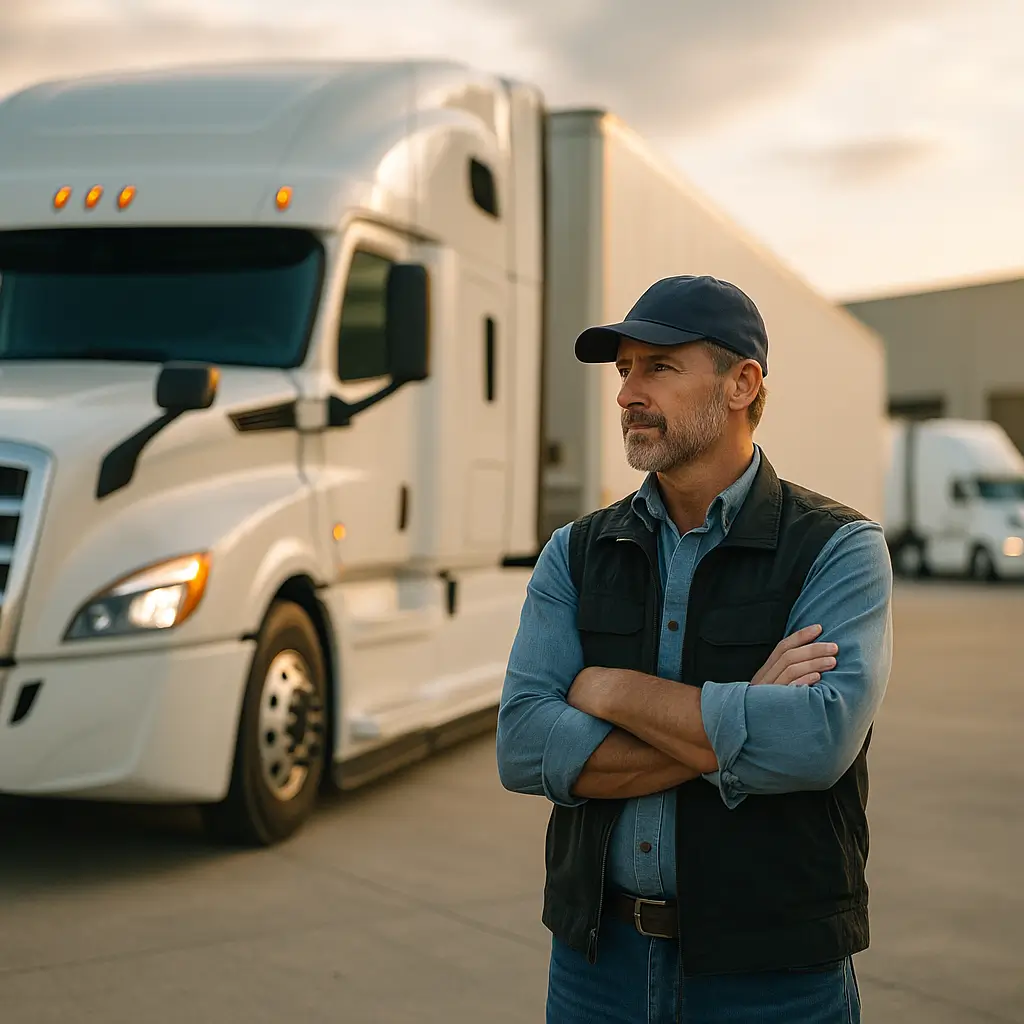

Compare 7 Florida commercial auto insurance companies for 2026, including rate ranges, coverage must-haves, business fit, and practical quote tips.
If you’re shopping for a Florida commercial auto insurance company in 2026, the fastest way to win is to match the carrier to your risk (vehicle type, drivers, territory, and COI demands) instead of chasing the lowest headline price. Most Florida businesses should compare at least 3 like-for-like quotes with the same limits, deductibles, and endorsements so coverage doesn’t fall apart at claim time.
Before you start, read this quick primer on commercial auto insurance so you can sanity-check what you’re actually buying.
Table of Contents
Reading time: 8 minutes
- 7 “top company” options (best fit by risk)
- What counts as commercial auto insurance in Florida?
- Florida commercial vehicle insurance requirements (and when federal rules apply)
- How to choose the right Florida commercial auto insurance company (direct vs agency)
- Florida commercial auto insurance rates (2026): ranges + what drives price
- Next step: compare Florida commercial auto quotes the smart way
- Frequently Asked Questions
- Conclusion

7 “top company” options in Florida (best fit by risk)
A “top” Florida commercial auto insurance company is usually one of seven market types, and the best choice depends on driver eligibility, vehicle class, delivery exposure, and COI turnaround time.
Here are the most common “best fit” buckets Florida owners shop in:
- Large direct writers: Simple 1–2 vehicle operations with clean MVRs and predictable use.
- National commercial carriers: Contractors and service fleets needing higher limits and stable endorsements.
- Independent agencies (multiple markets): Mixed drivers, specialty vehicles, or faster problem-solving when a carrier says “no.”
- Fleet-focused programs: Often worth it at 3+ vehicles, especially with turnover or multiple garaging locations.
- Specialty delivery/courier markets: Higher mileage, dense metro routes, time pressure, and higher frequency risk.
- Specialty transportation/trucking markets: Box trucks, hotshots, semis, or anything edging into motor carrier territory.
- Excess/umbrella markets: When contracts push limits above your base commercial auto policy.
Key takeaways (what matters most in Florida)
- Florida “legal minimum” isn’t business-safe: Most jobsites, municipalities, brokers, and lenders require higher limits than the state baseline.
- Direct can work for simple risks: Independent agencies often win on specialty vehicles, mixed drivers, and COI speed.
- Rates swing hardest by: Territory (Miami-Dade vs. Panhandle), MVR/claims, radius/mileage, and delivery exposure.
- Your fastest win: Gather VINs, driver info, garaging ZIPs, and COI requirements before requesting quotes.
What counts as commercial auto insurance in Florida?
Commercial auto insurance in Florida is a business auto policy designed for vehicles used for work (employee drivers, jobsite travel, deliveries, transporting tools/materials) and is rated and underwritten differently than personal auto.
Florida is a tough state for business auto because the mix of dense traffic corridors, higher claim severity, and jobsite documentation needs can turn “cheap insurance” into expensive downtime when you can’t produce proof of coverage fast.
If you want the state-specific view of how business policies are typically packaged and requested, start with this Florida commercial insurance guide.
Commercial vs. personal (plain English)
Personal auto is priced for commuting and errands, while commercial auto is priced for business operations like service calls, multiple drivers, client property exposure, higher limits, and contract-required certificates.
If business use isn’t properly disclosed (or isn’t eligible) on a personal policy, the worst time to discover a problem is after a crash—when coverage decisions and exclusions get real.
Not sure what auto liability actually pays for if something goes wrong? This quick breakdown explains exactly what the coverage does — and what it doesn’t.
Who usually needs commercial auto in Florida
- Contractors (HVAC, plumbing, electrical, roofing)
- Cleaning and janitorial companies
- Delivery/courier and route operations
- Landscaping and lawn crews
- Home health and service businesses with employee drivers
- Any business that needs frequent COIs or “Additional Insured” wording
Florida commercial vehicle insurance requirements (and when federal rules apply)
Florida vehicle insurance compliance can come from four different sources—state law, lender/lessor rules, contract rules, and FMCSA motor carrier rules—and each can require different limits, coverages, or filings.
For a deeper breakdown of how insurers and regulators think about proof and limits, see commercial auto insurance requirements.
For a full overview of how Florida commercial vehicle insurance is structured, see our dedicated coverage page before diving into the compliance breakdown below.
Florida minimums (high-level) vs. what protects your business
Florida’s consumer-facing “financial responsibility” basics are published by FLHSMV, and most vehicles registered in Florida must carry at least $10,000 PIP and $10,000 property damage liability (PDL) to keep registration active (verify applicability to your vehicle/class/use). Florida’s $10,000 PIP requirement is governed by Fla. Stat. §627.736 — verify current applicability for your vehicle class and use before relying on this figure.
- State baseline: A legal entry point, not a contract-ready risk transfer plan.
- Contracts/jobsites: Often require higher liability limits, Additional Insured wording, and certificate turnaround in hours—not days.
- Lenders/lessors: Commonly require comp/collision (physical damage) and may specify deductible maximums.
Authoritative reference (Florida): FLHSMV insurance and financial responsibility basics.
When federal rules can apply (box trucks, hotshots, semis)
FMCSA requires for-hire interstate motor carriers to carry minimum public liability limits that can start at $750,000 under 49 CFR §387.9 (with higher requirements for certain hazmat and passenger operations).
This is where owners confuse “business auto” with “motor carrier/trucking.” If you’re operating under DOT/MC authority—especially with a box truck, hotshot setup, or semi—you may need filings and coverages beyond a standard commercial auto policy.
Authoritative reference (federal filings): FMCSA insurance filing requirements.
Not sure how high your limits should actually go? This breakdown explains how to size coverage to your real exposure.
Common Florida “compliance moments” you’ll actually feel
- Jobsite/vendor onboarding: COIs, Additional Insured, waiver of subrogation requests
- Leased/financed vehicles: Comp/collision requirements and deductible limits
- Hiring a new driver: MVR and eligibility changes can affect pricing immediately
- Expanding radius: More miles + new territories = re-rated exposure
How to choose the right Florida commercial auto insurance company (direct vs agency)
Choosing between a direct writer and an independent agency in Florida is a risk-fit decision based on driver mix, vehicle class, delivery exposure, and how fast you need COIs and endorsements.
To avoid apples-to-oranges quotes, use a structured process like how to compare commercial insurance quotes.
Quick decision flow (direct vs independent)
Use a direct writer when the risk is simple and stable:
- 1–2 vehicles (standard pickups/vans)
- Clean MVRs and stable garaging
- Predictable radius and no unusual endorsements
Use an independent agency when you need more markets and faster fixes:
- Mixed drivers (new hires, younger drivers, imperfect MVRs)
- Delivery exposure, higher mileage, or multiple territories
- Specialty vehicles (upfits, utility bodies, food trucks, trailers)
- Fast COI turnaround and renewal/claims advocacy
Vetting checklist (don’t skip this in Florida)
A “Florida commercial auto insurance company” in practice includes the carrier, the agent/agency, and the claims process you’ll live with after a loss.
Basic verification starting point: Florida Office of Insurance Regulation (FLOIR).
- COIs: Can they issue same-day and handle Additional Insured wording correctly?
- HNOA exposure: Are rentals and employee-owned vehicles addressed?
- Operations restrictions: Any delivery exclusions or radius limits that don’t match reality?
- Credits: What telematics/safety credits exist, and what’s required to earn them?
Since COI speed can make or break jobsite onboarding, here’s how fast certificate handling actually works.
Florida commercial auto insurance rates (2026): realistic ranges + what drives the price
Florida commercial auto insurance rates in 2026 commonly range from about $150 to $1,200+ per vehicle per month depending on ZIP code, driver record, mileage/radius, vehicle class, and whether the operation includes delivery/courier exposure.
If you want the full rating breakdown, see what affects commercial auto insurance rates. Use LogRock’s commercial auto insurance cost estimator to see how your specific variables move the number before you request quotes.
For a Florida-specific owner-operator cost snapshot, this quick video gives additional context for trucking-related insurance costs:
2026 “typical quoting ranges” (scenario-based)
These are ballpark quoting ranges—not guarantees—because garaging ZIP, MVRs, claims history, limits, deductibles, and classification can move pricing fast.
| Florida business scenario | Typical monthly range (per vehicle) | Why it lands there |
|---|---|---|
| Solo contractor pickup/van (service calls, low mileage) | $150–$450 | Lower mileage, less delivery exposure, simpler driver profile |
| Service van with employee driver (tools, jobsite COIs) | $250–$650 | More liability exposure + driver variables |
| Delivery/courier (dense metro, high mileage, tight schedules) | $400–$1,200+ | Higher frequency risk + territory + mileage |
| 3–10 vehicle small fleet (mixed drivers) | $220–$900 (per vehicle) | Fleet rating + driver turnover + controls matter |
Coverage checklist by vehicle type (Florida examples)
| Vehicle/use | Must-have coverage | Common add-ons | Common “gotchas” |
|---|---|---|---|
| Contractor pickup/van | Liability + physical damage (if financed) | Rental reimbursement, towing/labor | Tools usually need separate coverage (often inland marine), not “auto” |
| Delivery/courier | Correct class code + higher liability | Medical payments, UM/UIM | Misclassification can create claim disputes |
| Food truck/specialty | Physical damage reflecting equipment value | Equipment endorsement or separate policy | “Custom equipment” limits can be low by default |
| Employees using personal cars | Business liability protection for non-owned exposure | Hired/non-owned auto liability | Your business can be sued even if the employee has personal auto |
The fastest ways to reduce premium (without creating a gap)
- Tighten driver controls: MVR checks, written hiring rules, enforce seatbelt/phone policies.
- Use telematics strategically: Credits can help, and data can defend claims (speed/hard braking events).
- Pick deductibles you can actually pay: If you can’t fund it same-day, it’s a cash-flow risk.
- Fix classification issues: Delivery exposure priced as “service” often backfires at claim time.
- Reduce garaging risk: Secure parking, cameras, and consistent overnight locations.
If you want to walk through these savings levers step-by-step, this video covers five commercial insurance discounts that are often overlooked.
Next step: compare Florida commercial auto quotes the smart way
Smart quote comparison in Florida means requesting at least 3 quotes with matching limits, deductibles, and endorsements, then confirming COI turnaround times and jobsite certificate language before you bind coverage.
If you’re trying to keep your business stable, the goal isn’t the cheapest policy—it’s a policy that won’t break when a claim hits and won’t slow revenue because you can’t produce proof of insurance.
Related reading (to tighten operations fast)
- How COIs work (and how to avoid certificate drama): truckers general liability and COI requirements
- When it’s time to move from single-vehicle to a program: fleet insurance
Brand value (why Logrock)
Logrock content is built for operators who don’t have time to guess. We focus on correct classification, contract-ready documentation, and fewer surprises at claim time—whether you’re insuring a service van or stepping into commercial truck insurance and broader trucking exposures.
Frequently Asked Questions
The best commercial auto insurance companies in Florida in 2026 are the ones that match your risk type, because pricing and eligibility change by vehicle class, driver mix, and delivery exposure. In practice, “top” options usually fall into large direct writers, national commercial carriers, independent agencies, fleet programs, and specialty transportation markets. The tie-breaker in Florida is often COI speed and endorsement flexibility.
Commercial auto insurance in Florida commonly quotes from about $150 to $1,200+ per vehicle per month in 2026, depending on garaging ZIP, driver MVRs, claims, mileage/radius, and vehicle use. A solo contractor pickup/van doing service calls may land around $150–$450/month, while delivery/courier in dense metros can run $400–$1,200+/month per vehicle.
South Florida carries some of the state’s highest commercial auto rates because of dense traffic, high claim frequency and severity, litigation trends, and theft/weather exposure. Two identical vans can quote very differently based only on garaging ZIP. If you operate metro routes, expect to land toward the upper end of any range and lean on driver controls and telematics to offset it.
Florida requires vehicles registered in the state to meet Florida’s financial responsibility rules, and FLHSMV commonly cites at least $10,000 PIP and $10,000 PDL for most registered vehicles (verify your vehicle/class/use). Many businesses still need higher limits because contracts, jobsites, lenders, and municipalities often require more than the state baseline plus specific COI wording. If you operate as a for-hire interstate motor carrier under DOT/MC authority, federal rules can apply; FMCSA minimum public liability limits can start at $750,000 under 49 CFR §387.9.
You can sometimes use personal auto insurance for very limited business use, but it’s risky if the vehicle is titled to a business, used for deliveries, driven by employees, or used regularly for jobsite/service operations. Many personal auto policies restrict “livery,” delivery, commercial use, or undisclosed drivers, which can create delays or disputes after a crash. For a clear breakdown of what the right coverage looks like, see Florida business car insurance.
If your business rents vehicles, borrows vehicles, or has employees using personal cars for work, you typically need hired and non-owned auto (HNOA) liability to protect the business from lawsuits. HNOA generally helps cover your business’s liability when a hired, borrowed, or non-owned vehicle is involved in an accident, even if you don’t own that vehicle. For related examples, see HNOA explained.
To get a Florida commercial auto quote quickly, you should have a complete driver list and a complete vehicle list ready before you submit applications. Most carriers will ask for driver names, DOBs, license numbers, and hire dates; vehicle VINs, stated values, garaging ZIPs, and ownership/lease status; operations details like radius, annual mileage, and whether you do delivery/courier work; and prior loss runs if you’ve had coverage.
Usually not. Auto physical damage covers the vehicle, not the tools and materials inside it. Those are typically insured separately, often through inland marine or contractor’s equipment coverage. Confirm this explicitly—assuming “the van is covered, so my gear is too” is a common and expensive mistake.
With the right setup, same-day or even self-service within minutes. Jobsites and brokers often require a COI with correct Additional Insured wording before you can start work, so confirm your carrier or agency can issue and amend certificates quickly. Slow COIs cost you jobs, not just paperwork.
Often yes, around 3+ vehicles. Fleet rating can simplify administration, accommodate driver turnover, and sometimes lower per-vehicle cost. The trade-off is that controls like MVR rules, telematics, and garaging matter more. Compare a fleet quote against stacked individual policies before deciding.
You can lower your Florida commercial auto premium by reducing the exact variables insurers rate: driver quality, claim frequency, mileage/radius, garaging risk, and accurate classification. Practical moves that often help include running MVRs before hiring, enforcing phone/seatbelt rules, using telematics programs that offer documented credits, and choosing deductibles you can actually pay without financing. Finally, compare at least 3 quotes with matching limits and endorsements.
Commercial auto covers liability and physical damage arising from the use of business vehicles — accidents on the road, damage to other vehicles or property, and injuries to others. General liability covers bodily injury and property damage that happens in or around your business operations that isn’t vehicle-related — a client slipping at your jobsite, or damage to a customer’s property during a service call. Many Florida businesses need both: the auto policy for vehicles, the GL policy for everything else. They are not interchangeable and do not cover each other’s exposures.
“Garaging ZIP” is the ZIP code where your vehicle is stored or parked overnight on a regular basis — not just where it drives during the day. Insurers use this location to assess local theft rates, claim frequency, traffic density, and weather exposure. In Florida, two identical vans garaged in different ZIP codes can have significantly different premiums — sometimes 30–60% apart. If employees take vehicles home or if your fleet moves between locations, confirm with your agent how garaging should be reported, because a mismatch can affect your coverage at claim time.
Most commercial auto policies include out-of-state coverage provisions that automatically apply higher liability limits if the state where the accident occurred requires more than your policy provides. However, this is not the same as being properly set up for regular interstate operations. If your vehicles routinely cross state lines, confirm that your radius and territory classifications are accurate — misclassification can create coverage disputes. For operations that cross into motor carrier or for-hire interstate territory, FMCSA filings may apply regardless of where an accident occurs.
An Additional Insured (AI) is a person or entity — typically a jobsite owner, general contractor, property manager, or municipality — that is added to your certificate of insurance and receives certain protections under your policy. When a client or project requires AI wording, your policy and certificate must both reflect it correctly before work begins. Not all policies support every type of AI endorsement, and the wording matters: a certificate that lists someone as “certificate holder” is not the same as naming them “additional insured.” Confirm with your agent that your policy actually allows AI endorsements — not just that the name appears on the certificate.
Your business can face liability even if the accident involved a vehicle you don’t own. The employee’s personal auto policy may respond first, but if the claim exceeds their limits — or if their policy excludes business use — your business could be exposed. Hired and non-owned auto (HNOA) liability is designed to cover exactly this gap: it protects the business for lawsuits arising from accidents in hired, borrowed, or employee-owned vehicles used for work. If employees regularly run work errands in personal vehicles, HNOA is not optional — it’s a necessary layer of protection. See the HNOA question above for more detail.
Conclusion: Buy for fit, documentation speed, and claim survivability
A Florida commercial auto insurance company is only “best” when it matches your drivers, vehicles, territory, and contract requirements—and can prove coverage fast when a jobsite asks for a COI today.
Use scenario-based pricing ranges, compare like-for-like endorsements, and treat classification accuracy as non-negotiable (especially for delivery and higher-mileage operations).
Key Takeaways:
- Get 3 comparable quotes with matching limits, deductibles, and endorsements before you choose.
- Florida compliance can come from state rules, contracts, lenders, or FMCSA—and those requirements aren’t the same thing.
- Rates are driven most by territory, MVR/claims, mileage/radius, and delivery exposure, not just vehicle value.
If you’re comparing a Florida commercial auto insurance company and want quotes that actually match — same limits, deductibles, and endorsements — LogRock can help you classify your operation correctly, line up like-for-like coverage, and catch gaps before a claim makes them expensive. Bring your VINs, driver list, and any COI or jobsite requirements, and we’ll help you build coverage that holds up when it counts.
Speak with LogRock and request a quote




