
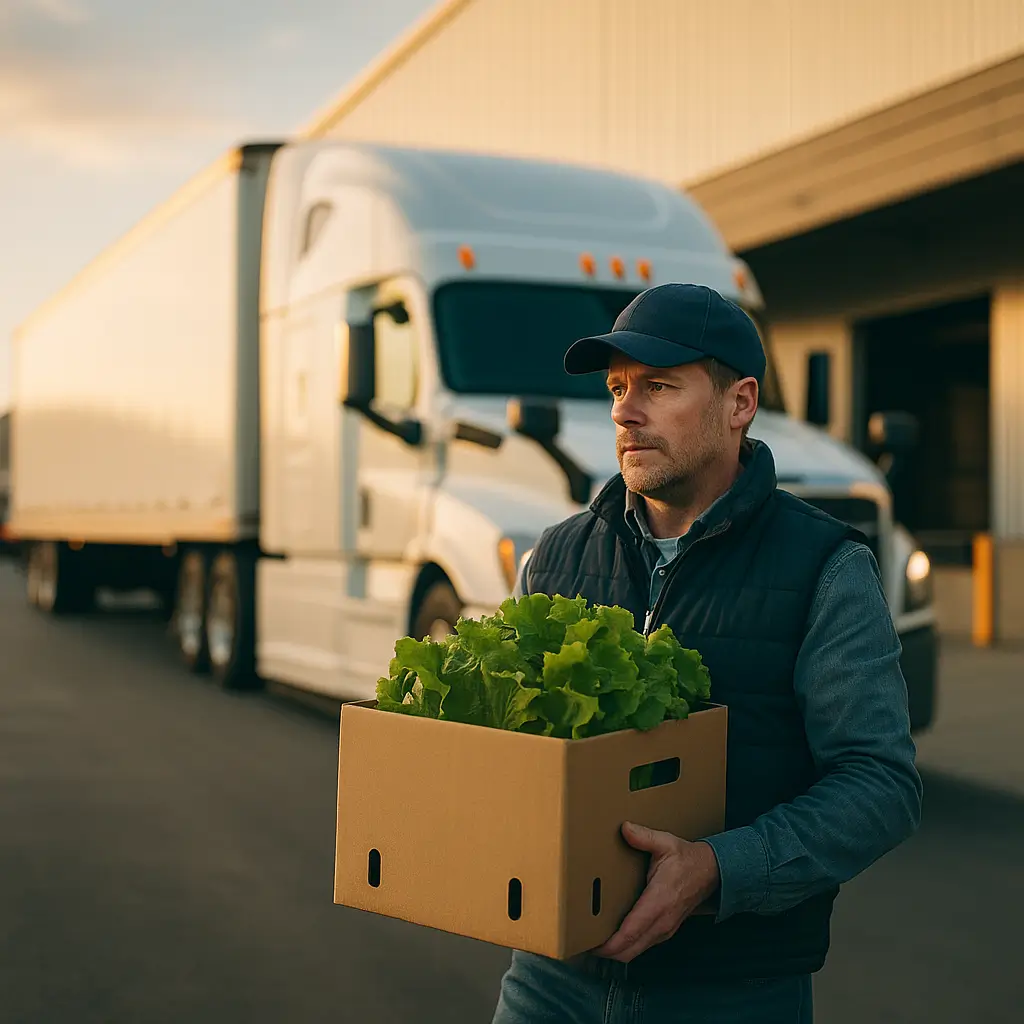

Learn food handling insurance coverages, COI requirements, 2026 cost ranges, truck insurance considerations, and checklist steps.
Food handling insurance is usually a bundle of policies—most often general liability + product liability—that protects food vendors, caterers, and food trucks from claims like customer injuries, alleged foodborne illness, and venue property damage. If one cooler fails, one customer gets sick, or one venue rejects your paperwork the night before an event, you’re not just handling food—you’re handling a cash-flow emergency.
Many venues won’t let you set up without proof like general liability insurance. If you want the plain-English baseline first, start with general liability insurance for food vendors.
Table of Contents
Reading time: 8 minutes

What Is Food Handling Insurance? (Plain-English Definition + Who Needs It)
Food handling insurance is a practical set of policies that commonly starts with $1,000,000 per occurrence / $2,000,000 aggregate general liability plus product liability to address food-related claims like injury, property damage, and alleged foodborne illness. There’s no universal policy literally titled “Food Handling Insurance”—you’re buying a coverage stack that matches how you cook, store, transport, and serve.
Why it matters (risk + contract reality)
Even when you follow safe practices, allegations still happen, and legal defense costs money. Separately, many markets, festivals, commissaries, and venues require a Certificate of Insurance (COI) and specific wording before they’ll approve your vendor packet.
If you’ve ever been told “send your COI and list us as additional insured,” you’ve hit the #1 bottleneck. Use this checklist before you’re on a deadline: certificate of insurance (COI) checklist.
Who typically needs it
- Farmers market vendors, pop-ups, and festival booths — see food vendor insurance for coverage specifics.
- Caterers and meal prep businesses (especially off-site service) — see catering insurance for coverage specifics.
- Food trucks and mobile kitchens
- Cottage-style producers (where allowed) and small packaged-goods brands
- Small processors/manufacturers selling wholesale
Compliance note: Food safety rules are commonly implemented at the state and local level using model guidance (for example, the FDA Food Code), so permitting and operating requirements can vary by jurisdiction. Source: FDA Food Code overview (2022): FDA Food Code 2022
The 7 Coverages Food Businesses Use Most (What They Cover + Who Needs Them)
Most U.S. food vendors and caterers are asked to carry $1M/$2M general liability with product liability included, then add spoilage, equipment, and auto coverage based on whether they refrigerate inventory, travel to events, or deliver. Below is the bundle many people mean when they say “food business liability insurance,” “catering insurance,” or “food vendor insurance requirements.”
Table: Food handling insurance coverages (what it covers + who needs it)
| Coverage | What it covers (simple) | Common requirement triggers | Typical limits (examples) | Best fit businesses |
|---|---|---|---|---|
| 1) General Liability (GL) | Slip-and-fall, third-party property damage, some legal defense | Venues, markets, landlords | $1M / $2M common request | Everyone selling/serving in public |
| 2) Product Liability | Alleged foodborne illness, allergen claims, labeling allegations, defense costs | Wholesale contracts, events, retailers | Often bundled with GL for small ops | Anyone selling edible products |
| 3) Commercial Property | Equipment, inventory, contents (at your location) | Leases, commissaries | Based on values | Kitchens, commissary users, storage |
| 4) Spoilage / Equipment Breakdown (endorsement) | Refrigeration failure, temperature excursion (if triggered) | Your own risk management | Sub-limited (varies) | Anyone holding cold/frozen inventory |
| 5) Contamination / Recall (specialized) | Recall costs, disposal, crisis response (varies) | Retail/wholesale relationships | Case-by-case | Packaged goods, processors |
| 6) Inland Marine / Tools & Equipment | Gear that moves: tents, tables, chafers, POS, smallwares | Off-site events, mobile setups | Scheduled or blanket | Vendors, caterers, pop-ups |
| 7) Commercial Auto / Hired & Non-Owned | Accidents during delivery/catering operations | Delivery work, frequent transport | State + contract-driven | Caterers, delivery, food trucks |
1) General liability (GL)
General liability is the policy that typically responds when a third party claims bodily injury or property damage from your operations at a booth, venue, or event. A tipped-over hot beverage on someone’s laptop, a tent leg scratching a venue floor, or a customer slipping near your table are the kinds of scenarios that show up in real claims.
Not sure how general liability differs from the auto coverage your vehicle needs? This breakdown clears it up:
2) Product liability (foodborne illness + allergen claims)
Product liability is the coverage tied to what you sold or served, including allegations of foodborne illness, allergen reactions, and certain labeling-related claims (plus legal defense). The CDC estimates U.S. foodborne illnesses affect 48 million people per year (about 1 in 6), with 128,000 hospitalizations and 3,000 deaths. Source: CDC foodborne illness burden: CDC foodborne illness estimates
Allergen note: Federal food labeling rules such as the Food Allergen Labeling and Consumer Protection Act are one reason allergen and labeling claims can become serious liability issues for food businesses.
If you want the cleanest explanation of what typically triggers product liability (and what doesn’t), read: product liability insurance for food businesses.
3) Spoilage and refrigeration breakdown (usually not automatic)
Spoilage coverage is often added by endorsement and may only apply when a specific cause of loss is met (for example, refrigeration breakdown or a covered power issue). One overnight cooler failure can wipe out inventory and a weekend’s profit, so this is less about “venue requirements” and more about protecting your cash flow.
4) Inland marine (mobile tools and equipment)
Inland marine is designed for business property that moves or is used off-premises, like tents, tables, hot boxes, chafers, and POS systems. Many vendors assume property coverage follows their gear everywhere, but off-premises coverage can be limited or excluded without the right form.
For a deeper breakdown of what “mobile equipment coverage” usually means, see: inland marine insurance for mobile equipment.
5) Commercial auto (and why personal auto can be a trap)
Commercial auto is written for business driving, including deliveries, catering transport, and frequent hauling of food and equipment. Personal auto policies often exclude certain business uses, and one claim denial can turn an accident into a personal financial problem.
If you deliver, cater, or haul equipment regularly, compare coverages here: commercial auto insurance for deliveries.
6) Workers’ comp (often required once you hire)
Workers’ compensation covers employee injuries and related costs, and requirements vary by state and job classification. Even a part-time helper changes your risk profile, and some venues or contracts will ask for proof once you have staff. For a federal starting point, see the U.S. Department of Labor workers’ compensation overview.
7) Liquor liability (if you serve alcohol)
Liquor liability addresses alcohol service exposures, and many venues require it as soon as alcohol is involved—even if you aren’t the one selling it. If you cater events with bartending or alcohol service, plan for this early so your COI isn’t delayed.
Venue Requirements, 2026 Cost Ranges, and the “Don’t Get Burned” Checklist
Event and venue contracts commonly require a Certificate of Insurance (COI) showing $1M per occurrence / $2M aggregate general liability plus additional insured wording, and mismatched COI language is one of the top reasons vendors get rejected. This is where small operators lose time and money: wrong limits, missing one endorsement, or realizing too late that the COI doesn’t match the contract.
What markets, festivals, and venues usually require (COI reality)
Most commonly requested items include:
- GL limits (often $1M/$2M, but it varies)
- Certificate holder listed exactly as instructed
- Additional insured status (often required)
- Event dates and location matching the contract
- Sometimes: waiver of subrogation and primary & noncontributory wording (contract-driven)
If you’ve never sent a COI before, this walkthrough covers the process step by step:
If you need a step-by-step checklist you can hand to a market manager or venue coordinator, use: certificate of insurance (COI) checklist.
Table: Common venue/contract insurance requirements (quick reference)
| Scenario | Most common required coverages | Typical limits requested (examples) | Add-ons that reduce disputes |
|---|---|---|---|
| Farmers market booth | GL | $1M / $2M | Additional insured, correct certificate holder |
| Festival/event | GL + product liability | $1M+ | Additional insured + event dates |
| Commissary/kitchen lease | GL + property (your contents) | Varies | Proof of property coverage for your equipment |
| Catering at private venue | GL + product liability | $1M+ | Liquor liability if alcohol involved |
| Wholesale to retailer | Product liability | Contract-based | Higher limits/umbrella sometimes requested |
How much does food handling insurance cost in 2026? (Examples, not promises)
Food handling insurance pricing is driven by measurable risk factors—menu type, refrigeration controls, delivery/off-site volume, revenue, payroll, and claims history—so these ranges are for budget planning, not a quote. If you want pricing that’s actually comparable, you have to quote the same limits and endorsements across carriers.
Table: Typical 2026 cost ranges by food business type (examples)
| Business type | Likely core policies | Typical annual range (example) | Top cost drivers |
|---|---|---|---|
| Low-risk pop-up/vendor (limited cooking) | GL + product | $300–$1,200 | Limits, claims history, prior cancellations |
| Caterer (off-site service) | GL + product + auto/HNOA | $800–$3,000+ | Off-site volume, staffing, alcohol, delivery |
| Food truck | GL + product + auto + property | $2,000–$8,000+ | Vehicle value, cooking methods, locations |
| Small packaged goods (wholesale) | Product + contamination/recall (maybe) | $1,000–$6,000+ | Distribution, ingredients risk, batch controls |
Before you choose a limit, this video explains how to think about what you actually need:
For a narrower breakdown focused on markets and pop-up operators, see food vendor insurance cost for 2026 monthly and annual ranges.
The “don’t get burned” checklist (fast and practical)
- Match the COI to the contract: certificate holder name, event address, and dates must be exact.
- Confirm “additional insured” wording in advance: don’t assume it’s automatic.
- Ask what’s excluded: especially for cooking methods, open flames, and hot holding.
- Spell out delivery/transport use: so your auto coverage matches reality.
- Quote apples-to-apples: same limits, same endorsements, same effective dates.
Transport note (where trucking insurance keywords actually apply)
If you’re moving product beyond a personal car—cargo vans, box trucks, or longer-distance hauling—your insurance conversation starts to overlap with commercial auto and sometimes commercial truck insurance. A one-truck operation delivering pallets has a different exposure than a weekend booth, and the right policy depends on vehicle type, radius, and whether you’re hauling for hire.
- Pickup + gooseneck trailer: some operators end up shopping coverages similar to hotshot-style risks.
- Straight truck or tractor-trailer distribution: limits and contract requirements can change fast.
- “Affordable” coverage: it’s usually driven by clean loss history and accurate use (radius, drivers, garaging), not by stripping needed protections.
One smart move that prevents expensive gaps: if you deliver, cater, or haul equipment regularly, learn the differences here: commercial auto insurance for deliveries.
Next Steps: Get the Right Coverage for How You Actually Handle Food
The fastest way to build the right food handling insurance bundle is to map your operation to your exposures: where you cook, how you store, how you transport, and what your contracts require on the COI. You don’t need “everything,” but you do need the right limits and endorsements for the way you actually work.
If you want clean next steps by business type:
- Mobile operations: food truck insurance basics and food truck insurance requirements
- Bundled coverage that often fits small kitchens: business owners policy (BOP) explained
- Alcohol at events: liquor liability insurance for caterers
Building the right food handling insurance bundle means matching coverage to how you actually cook, store, and deliver — not buying a generic policy and hoping it fits. Whether you’re a weekend market vendor who needs a clean COI, a caterer managing off-site events, or a food truck operator with a vehicle and a kitchen on wheels, LogRock can help you map your operation to the right exposures, identify gaps, and compare quotes from carriers that write food business risks.
Frequently Asked Questions
General liability typically responds to third-party bodily injury and property damage claims tied to your operations, such as a customer tripping at your booth or a tent leg scratching a venue floor. Product liability responds to claims tied to what you sold or served, such as an alleged foodborne illness, allergen reaction, or labeling dispute. For most food businesses, both are needed, and for small operations they are often sold together as a bundled GL + product policy.
Most annual general liability policies cover your operations at multiple venues during the policy period, but some venues require their name on your COI as an additional insured. One-day or event-specific policies — including catering insurance for a day — can work for occasional vendors, but if you work multiple markets or events per year, an annual policy usually costs less per event and is easier to manage. Confirm that your policy covers each location and event type you use.
If you already have an active annual policy in place, most brokers and many carrier platforms can issue a COI the same day — sometimes within a few hours. The COI reflects your existing coverage; no new policy needs to be written. What causes delays is the additional insured request: if a venue requires specific wording or wants to be named as additional insured, your carrier must formally endorse the policy before the COI reflects it. Confirm additional insured requirements with the venue at least 24–48 hours before the event, even when your policy is already active.
Using a personal vehicle for regular business deliveries or catering runs can create a coverage gap. Personal auto policies often exclude regular business use, delivery, or transport for compensation. If you use your own car, truck, or van to transport food, equipment, or supplies for your business, ask about commercial auto, a business-use endorsement, or Hired and Non-Owned Auto (HNOA) for hired or rented vehicles.
Commercial auto covers vehicles your business owns and uses regularly — a food truck, cargo van, or delivery vehicle titled to your company. Hired and non-owned auto (HNOA) covers liability when you or an employee uses a vehicle you don’t own for business purposes, such as a personal car for a catering pickup or a rented van for an event. Many food vendors and caterers need HNOA rather than full commercial auto, especially when they’re not hauling regularly or don’t own the vehicle. As operations grow to include regular delivery routes or business-owned equipment, commercial auto becomes necessary.
Adding someone as an additional insured means your policy extends certain liability protections to that third party, typically the venue, market organizer, or property owner, for claims tied to your operations. You do not always need it by default, but when a venue contract requires it, your policy must support that wording before the COI will reflect it. Confirm the legal name and wording in writing before setup day.
In most cases, yes — even if you’re not the one selling or serving the alcohol. Many venues and event contracts require liquor liability on your COI any time alcohol is part of the event. The coverage addresses claims tied to alcohol service, such as an intoxicated guest who causes harm after leaving your event. The key step is confirming whether the venue’s contract specifically requires it and getting it added to your policy before your COI is issued — not the morning of the event.
Food handling insurance usually means a bundle of policies—most commonly general liability + product liability—that protects a food business from claims tied to operations and the food you sell. In practice, many venues request $1M per occurrence / $2M aggregate liability on your COI, and wholesalers may require product liability specifically. Depending on how you operate, you may also need commercial auto for deliveries, inland marine for mobile gear, and a spoilage/equipment breakdown endorsement for refrigerated inventory. The right mix depends on where you cook, how you store, and how far you transport.
A BOP bundles general liability and commercial property coverage at a typically lower combined price than buying each separately — making it a common starting point for small food businesses with a fixed kitchen or commissary space. Whether it’s the right fit depends on whether you own equipment worth insuring, operate from a fixed location, and whether the BOP form covers your off-premises and food-handling exposures. Some food businesses outgrow a BOP as they add delivery, off-site events, or product liability needs that exceed BOP limits — in those cases, a standalone GL + product + commercial property bundle may give you more control over limits and endorsements.
Food liability insurance cost in 2026 commonly ranges from about $300–$1,200 per year for a low-risk pop-up/vendor to $2,000–$8,000+ per year for many food trucks, with caterers often landing around $800–$3,000+ depending on delivery and off-site service. Pricing is driven by revenue, cooking methods, staffing/payroll, delivery exposure, limits, and claims history. The best way to control cost without creating gaps is to compare quotes with the same limits and endorsements, and confirm your COI wording (additional insured, dates, locations) matches the contract.
Food vendors often need inland marine coverage when they regularly move equipment off-premises, because standard property coverage can have low or no protection for gear in transit or at events. Inland marine is commonly used to cover items like tents, tables, warmers, chafers, signage, POS systems, and smallwares while you’re at markets, festivals, and pop-ups. Before buying, confirm how the policy handles theft from a vehicle, whether items must be scheduled vs. blanket-covered, and whether claims are paid on replacement cost or actual cash value. Learn more here: inland marine insurance for mobile equipment.
Food spoilage is not automatically covered by many standard policies, and it’s commonly added by endorsement with specific triggers and sub-limits. Coverage may require a defined cause of loss (for example, refrigeration breakdown) and may exclude losses tied to poor maintenance, improper temperature controls, or certain power issues. Spoilage coverage also often has documentation expectations, such as inventory records and evidence of the temperature event. Before you rely on it, ask (1) what triggers coverage, (2) what’s excluded, (3) the spoilage sub-limit, and (4) what proof is needed to get a claim paid.
Cottage food laws vary by state and typically allow home-kitchen sales of low-risk products (baked goods, jams, dried goods) without a commercial food license — but they don’t automatically protect you from civil liability if a customer claims harm from your product. Even if your state permits cottage food sales without a permit, carrying general liability and product liability coverage is worth discussing with an agent, especially if you sell at markets or events. Some states also cap cottage food revenue, which affects how much coverage you actually need and whether you’re ready to step into a commercial policy. See food vendor insurance for coverage options that fit small-scale food operations.
Conclusion: Build a Food Handling Insurance Bundle That Passes COI Checks and Protects Cash Flow
For most operators, the baseline is $1M/$2M general liability with product liability, and 2026 budgets often run $300–$1,200 for low-risk vendors and $2,000–$8,000+ for many food trucks. The “right” policy is the one that matches your real operations and produces a COI your venue accepts the first time.
Key Takeaways:
- Start with the foundation: GL + product liability, then add spoilage, equipment, and auto as needed.
- COI wording is a deal-breaker: additional insured and correct certificate holder details prevent last-minute rejection.
- Quote apples-to-apples: identical limits and endorsements are the only fair way to compare price.
If you’re unsure what you actually need, list your top three revenue sources (markets, catering, wholesale) and your transport setup, then build coverage around that—not around a generic checklist.





