
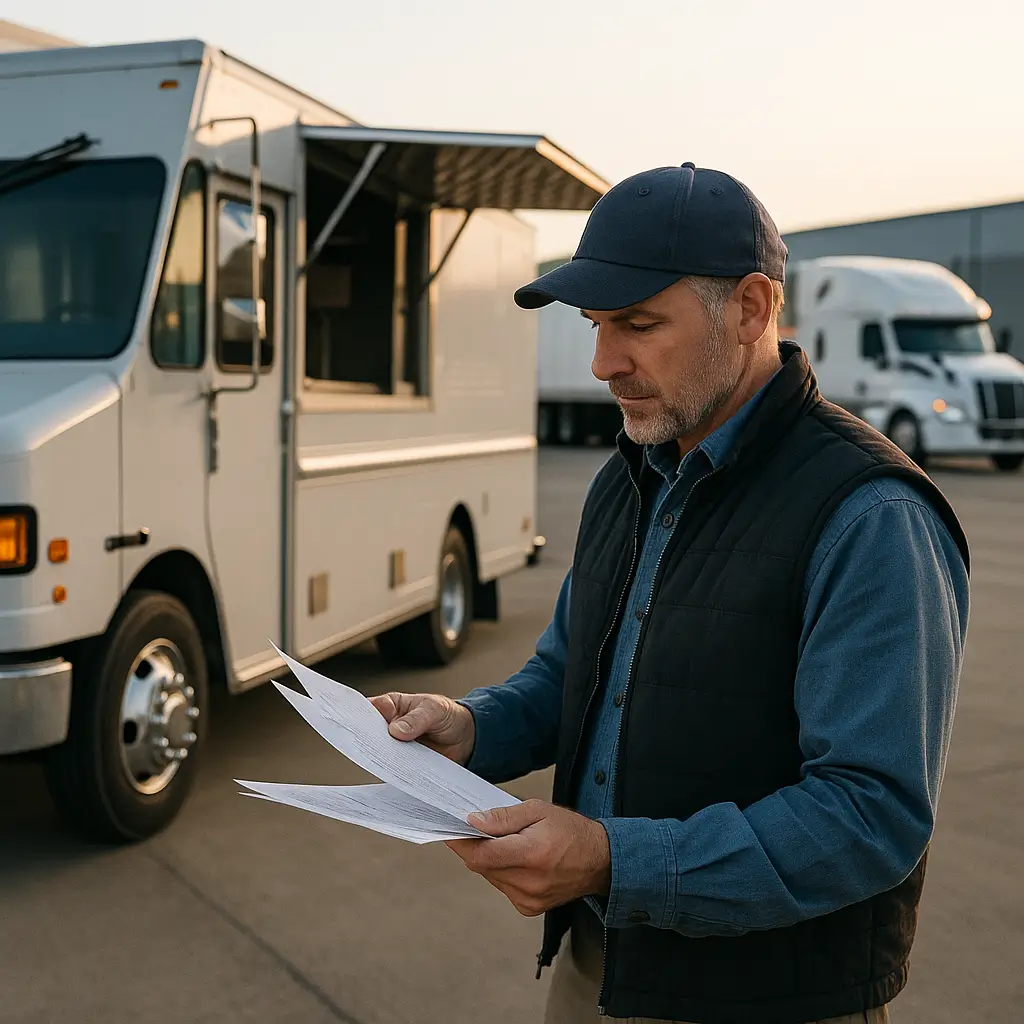

Food liability insurance cost is often $25–$250/mo. Compare 2026 ranges by food truck, catering, bakery & packaged foods—get quotes.
Food liability insurance cost typically runs $25–$250 per month for many small food businesses, with higher pricing for packaged foods, wholesale distribution, and higher contract limits. Most owners are really shopping for general liability plus products/completed operations, because that’s what venues, markets, and retailers usually require on a COI.
If you’re trying to protect thin margins, the goal isn’t “buy the cheapest policy.” It’s to buy the coverage and limits you need to win contracts and keep your doors open after a claim. Start with the basics of General liability insurance for small businesses, then add product-focused coverage when your distribution and contracts make it necessary.
Food claims also don’t always show up immediately, and legal defense costs can hit even when you did things right. For context on how common foodborne illness is in the U.S., see the CDC’s overview: https://www.cdc.gov/foodborneburden/index.html.
Table of Contents
Reading time: 8 minutes

Key takeaways
For many small vendors, food liability insurance cost falls in the $25–$250/month range in 2026, while packaged foods sold through retailers often run higher due to broader product exposure and tougher contract limits.
- Most small vendors land in the $25–$250/mo band, but packaged foods and retail distribution can push higher due to higher required limits and broader product exposure.
- “Food liability” usually means GL + products/completed operations (and sometimes a BOP); recall coverage is different and often needs its own solution.
- Limits and COI requirements often drive price more than your menu does—especially for events, venues, and retailers.
- The fastest savings come from clean underwriting info (sales, processes, safety controls) plus smart deductibles and right-sized limits.
What “Food Liability Insurance” Includes (and what it doesn’t)
“Food liability insurance” is a practical bundle of coverages—most commonly general liability (GL) plus products/completed operations—that helps pay legal defense and damages when a third party alleges your food caused injury, illness, or property damage.
It’s not one magical policy name, and quotes can look “cheap” because they quietly exclude the thing you actually need (like product claims, contract requirements, or higher limits).
General liability vs. product liability (plain English)
General liability is the day-to-day “someone got hurt or property got damaged” coverage (slip-and-fall at your booth, spilled hot soup, damage to a venue’s floor). Product liability (often included as products–completed operations) applies when someone claims your food product caused injury or illness after it was sold or served.
Even when you did everything right, a claim can still trigger attorneys, expert reviews, and long back-and-forth—so defense costs are a big part of why this coverage matters. The NAIC has a consumer-level overview of business insurance basics here: https://content.naic.org/consumer/insurance-basics/business-insurance.
BOP vs. standalone policies (where many businesses overpay)
A BOP (Business Owner’s Policy) commonly bundles GL + property and can reduce total premium versus buying separate policies when you have a fixed location and real property exposure.
If you lease a kitchen, own equipment (ovens, mixers), store inventory, or have a buildout, it’s worth understanding how bundling works. See Business owner’s policy (BOP) explained for a clear breakdown of when it’s the “cheaper together” move.
Common exclusions that make “cheap” expensive
Many low-price quotes look attractive because they exclude or restrict high-cost scenarios like recall expenses, known contamination, or certain contract-related liabilities.
- Known/intentional contamination: Not covered in standard forms.
- Contract assumptions: If you “promise” broad liability in writing, coverage may not follow automatically.
- Recall costs: Often not included in basic product liability.
- Professional services/warranties: Coverage can be limited if you go beyond standard GL intent.
Food liability insurance cost in 2026: typical ranges (plus examples)
In 2026, many small food businesses see food liability insurance cost in the $25–$250/month range, while packaged-food brands selling through retailers can run $175–$400+/month depending on limits, sales, and distribution.
Pricing varies by state, carrier, and class code, so use these as budgeting ranges and a quick “does this quote make sense?” check.
Quick cost ranges (monthly → annual)
| Business profile | Typical monthly range | Typical annual range | What drives the swing |
|---|---|---|---|
| Low-risk / small vendor (farmers markets, low sales, simple menu) | $25–$75 | $300–$900 | Limits, number of events, COIs |
| Average food business (steady sales, events, light wholesale) | $75–$175 | $900–$2,100 | Sales, staffing, product exposure |
| Higher-risk / higher-scale (packaged foods, broader distribution, higher limits) | $175–$250+ | $2,100–$3,000+ | Retail contracts, allergens, volume, higher limits |
Standalone food product liability insurance cost (when you buy it separately)
Standalone product liability pricing for packaged foods often starts around $50–$150/month for small local brands and can reach $150–$300+/month as volume, risk class, and distribution expand.
Food can cost more because one event can involve multiple injured parties, multiple defendants, and expensive medical allegations. Insurers also watch allergen controls and time/temperature practices closely.
For a real-world look at how often product events occur, the FDA’s recalls and safety alert hub is a useful reference: https://www.fda.gov/safety/recalls-market-withdrawals-safety-alerts. For a deeper breakdown of policy structure, see Product liability insurance for packaged foods.
Real examples by business type (what changes the price)
- Food truck at weekend markets: $60–$150/mo (liability only) for $1M/$2M GL with modest sales; more COIs and higher limits push cost up.
- Wedding caterer (50–150 events/year): $100–$250/mo, higher if liquor liability or higher limits are required.
- Cottage food bakery (direct-to-consumer + markets): $25–$90/mo, with allergens and required limits as common drivers.
- Packaged salsa brand in ~30 retail stores: $175–$400+/mo depending on limits, contract wording, channels, and volume.
What drives food liability insurance cost (the underwriting levers you can control)
Insurers price food liability using measurable inputs—gross receipts, distribution channels, loss history, product risk (allergens/temperature control), and required limits—so small operational changes can materially change premium.
Underwriting is basically risk engineering: severity + frequency + uncertainty. Your job is to reduce uncertainty with clear documentation and reduce severity with smart limits and contracts.
Your products and process
Food processes that increase illness likelihood—like poor allergen separation or weak cold holding controls—typically increase price because they raise the probability and severity of product-related claims.
- Allergen handling: Dedicated tools, clear labeling, and cross-contact procedures.
- Time/temperature controls: Simple logs for cooking/cooling/holding can help underwriting.
- Supplier verification: Keep invoices and supplier lists for traceability.
- Written procedures: A one-page SOP is better than “we just do it.”
Your scale and distribution
Selling locally at weekend markets is materially different exposure than shipping packaged food across state lines or selling through retailers, because distribution expands the number of consumers and the potential scope of one incident.
- Gross receipts: Higher sales typically mean higher premium (more units served/sold).
- Wholesale vs. direct-to-consumer: Wholesale often triggers higher limits and tougher contracts.
- Events and locations: More venues usually means more COIs and additional insured requests.
- Co-packers/private label: Contracts and shared liability affect underwriting.
Limits, deductibles, and COI-driven requirements
Venue, market, municipal, and retailer contracts frequently require at least $1,000,000 per occurrence and $2,000,000 aggregate in general liability, and they often require specific COI wording such as additional insured status.
If you’re regularly chasing approvals, learn the mechanics of Certificate of insurance (COI) requirements so you don’t lose revenue over paperwork.
Mini tool: deductible vs. premium (simple scenarios)
| Approach | Typical impact on premium | When it makes sense | When it backfires |
|---|---|---|---|
| Low deductible ($0–$250) | Higher premium | You need predictable cash flow | Premium stays high year after year |
| Mid deductible ($500) | Often moderate savings | You can absorb a small hit | You choose it but don’t keep reserves |
| Higher deductible ($1,000+) | Can reduce premium more | You have cash reserves + good controls | One claim strains cash and disrupts ops |
Mini tool: coverage limit picker (rule-of-thumb)
Many farmers markets and small events require $1M/$2M in general liability, while larger venues, municipalities, and retailers may require $2M/$4M or an umbrella to reach their required limits.
- Farmers markets / small events: often $1M per occurrence / $2M aggregate
- Bigger venues / municipalities: sometimes $2M/$4M or require umbrella
- Retailers/wholesalers: frequently require higher limits + additional insured wording
Match the strictest requirement you must meet this year, not a “maybe someday” requirement.
How to lower food liability insurance cost (without cutting corners)
Lowering food liability insurance cost usually comes from improving underwriting quality—clean sales figures, clear processes, documented controls, and right-sized limits—rather than simply shopping the same weak application to more carriers.
Most real savings come from making your risk easier to understand and less likely to generate a severe claim.
7 practical moves that actually work
- Bundle only when it reduces total cost: A BOP can be efficient for fixed locations with equipment/inventory.
- Right-size limits to contracts you’ll sign this year: Don’t guess—verify requirements.
- Pick a deductible you can pay tomorrow: Choose based on cash reserves, not optimism.
- Document food safety controls: Temp logs, allergen procedures, cleaning schedules, training notes.
- Reduce distribution risk: Tight cold chain, better packaging, shorter routes when possible.
- Avoid coverage lapses: Lapses can increase price because you look unstable to carriers.
- Submit a complete application: Missing details often trigger “assumption pricing,” which is usually higher.
For a broader checklist that applies across industries, use How to lower business insurance premiums.
When umbrella liability is worth it (and when it isn’t)
An umbrella policy adds extra liability limits above your underlying policies and is sometimes cheaper than raising limits across multiple base policies (GL, auto, etc.).
If you’re stepping into bigger contracts, it’s worth understanding how umbrellas work in plain English. See Umbrella insurance basics to compare strategies and eligibility.
Related coverage note for operators who deliver
Delivery exposure is separate from food liability, and businesses using vehicles for deliveries may need commercial auto or heavier-vehicle coverage depending on weight and use.
If you’re a mobile operator, start with the Food truck insurance guide. If you’re expanding into larger vehicles or more formal logistics, review the Commercial truck insurance overview.
Frequently Asked Questions
In 2026, food liability insurance cost commonly runs $25–$250 per month for many small vendors, food trucks, caterers, and bakeries, assuming standard limits like $1M per occurrence / $2M aggregate. Packaged-food brands and wholesale sellers often pay more (commonly $175–$400+/month) because retailer contracts may require higher limits, additional insured wording, and broader distribution exposure. Your gross receipts, claims history, allergen profile, and how far your product travels can move price quickly, so always compare quotes with the same limits and the same products/completed operations terms.
Food liability insurance typically refers to general liability (GL) plus products/completed operations, which can cover third-party bodily injury/property damage (like a slip-and-fall or a burn from hot food) and claims alleging your food caused illness or injury after it was sold or served. Coverage details depend on policy wording, endorsements, and exclusions, and legal defense is often a major part of what you’re buying. Recall expenses and known contamination are common gaps, so confirm whether you have product/illness allegations covered the way your contracts and distribution require.
A common starting point for food businesses is $1,000,000 per occurrence and $2,000,000 aggregate in general liability, because that’s what many markets and smaller venues ask for on a COI. Larger venues, municipalities, and retailers may require $2M/$4M or higher, and many contracts require additional insured status and specific certificate wording. The practical way to choose limits is to collect your top contracts for the next 12 months and match the strictest requirement you need to meet this year.
Umbrella insurance can be a cost-effective way to reach higher liability limits because it sits on top of underlying policies rather than increasing limits on each policy separately. For example, if a retailer requires higher limits, an umbrella may be cheaper than bumping your base GL limits alone—especially if you also have commercial auto exposure. Eligibility and pricing depend on your operations, products, loss history, and minimum underlying limits required by the umbrella carrier, so it’s not automatic. Use Umbrella insurance basics to compare approaches before you commit.
No — standard general liability and products/completed operations policies typically exclude recall expenses. Recall coverage, which can help with pulling product, notifying customers, and replacing inventory, is usually a separate endorsement or standalone policy. Packaged-food brands should confirm this gap directly with their carrier before selling through retailers or wholesale channels.
Food liability insurance is rarely mandated by law for every food business, but it is frequently required contractually by venues, farmers markets, municipalities, and retailers as a condition of doing business. In practice, most operators need it to get booked, approved, or stocked, even when there is no blanket legal mandate.
Often yes. Even small-scale, direct-to-consumer sales carry product liability exposure if a customer alleges illness or injury from your food. Farmers markets and event organizers frequently require proof of liability insurance on a COI regardless of your sales volume. For market-style operations, review LogRock’s guide to food vendor insurance.
Insurers view allergen cross-contact and mislabeling as major severity drivers because these claims can involve serious injury. Documented labeling procedures, ingredient controls, and dedicated equipment can help keep pricing more favorable. For more on safe handling controls, see food handling insurance.
Yes — many carriers offer short-term or single-event liability policies for one-off catering jobs, pop-ups, or festival vendors, often with same-day COI issuance. If you only need coverage for one booking, compare the event’s required limits and certificate wording before you buy. LogRock’s catering insurance for a day guide explains how that setup works.
Conclusion: Get the right limits first, then shop the market
The best-priced food liability policy is the one that actually gets your COIs approved and still protects you after a claim, which usually means matching contract limits and confirming products/completed operations terms.
Start by listing your top venues, markets, or retailers and collecting their insurance requirements. Then quote apples-to-apples (same limits, same wording, same add-ons) so you can compare price without guessing what changed.
Key Takeaways:
- Budget range: $25–$250/mo is common for many small food businesses; packaged foods and retail distribution can run higher.
- Contract-first approach: Your limits and COI wording often drive cost more than your menu.
- Best savings lever: Clean underwriting info plus documented safety controls tends to beat “shopping harder.”
If you want a faster, cleaner quote process, collect your estimated annual sales, top products, distribution channels, and the strictest COI requirement you need to meet this year.
If you’re trying to line up the right coverage before your next market, venue, or retail contract, LogRock can help you review your limits, confirm your products/completed operations terms, and spot any recall or contract gaps before they cost you a booking. Talk to our team to ask questions, identify possible gaps, and request a quote based on your business.
Speak with LogRock and request a quote




