
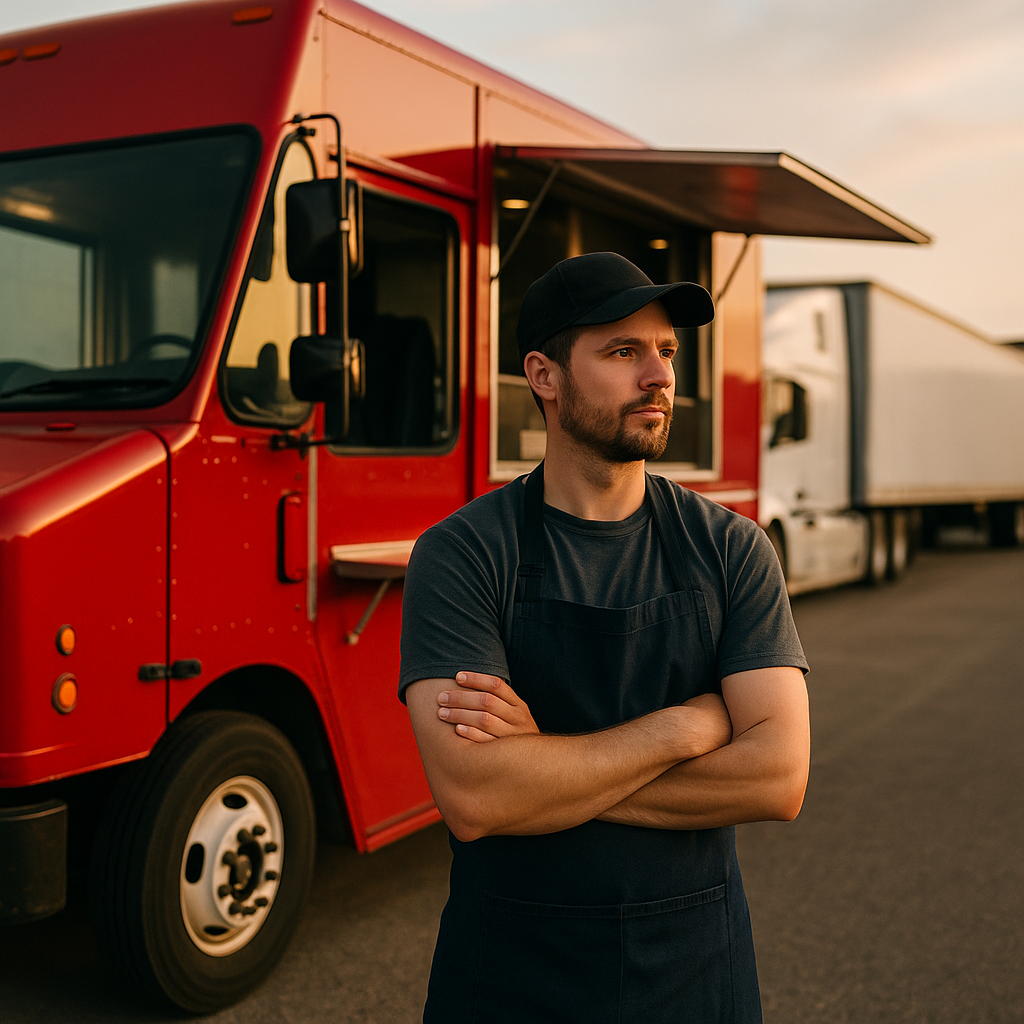
Food truck insurance cost in 2026 often runs $70–$500/mo. See GL, BOP, auto & workers’ comp costs—plus smart ways to cut premiums. Get quotes.

Food truck insurance cost in 2026 usually lands between $70 and $500 per month for most operators, but the final number depends on whether you buy GL-only or a full package with property, auto, and employees.
Quick answer (featured snippet): In 2026, food truck insurance cost commonly ranges $70–$500 per month, driven mainly by truck value, city driving exposure, event/festival requirements, payroll (workers’ comp), and add-ons like equipment breakdown. A good baseline is starting with general liability insurance for food trucks and then building coverage around how you actually operate.
Table of Contents
Reading time: 8 minutes
- Introduction: Insurance is a “fixed cost” that can quietly eat your margin
- Key takeaways (save this before you call for quotes)
- Quick Answer: Average Food Truck Insurance Cost Per Month (2026)
- Cost Breakdown by Coverage Type (GL, BOP, Auto, Workers’ Comp + “Commercial Truck Insurance” Context)
- What Actually Drives Food Truck Insurance Cost (Menu Risk, Events, State/City, and COIs)
- Optional Add-Ons + 9 Ways to Lower Food Truck Insurance Cost (Without Going Bare)
- Frequently Asked Questions
- Conclusion: Budget insurance like a fixed cost—and re-shop before peak season
Introduction: Insurance is a “fixed cost” that can quietly eat your margin
Food truck insurance cost in 2026 is commonly quoted at $70–$500 per month, but last-minute venue requirements (like higher limits on a certificate) can push you into a higher tier fast.
If you’re running a food truck, you already know the math is tight: propane, prep, permits, commissary fees, card processing, repairs, and unpredictable weather. Insurance is the expense that feels boring—until a venue requires higher limits next weekend, your generator dies mid-event, or you get hit in traffic.
Most operators don’t overspend because they’re careless—they overspend because they’re buying coverage in pieces, guessing at limits, and reacting to Friday-afternoon certificate requests. Start with the baseline (usually general liability insurance for food trucks) and build a package that matches how you actually operate.
Key takeaways (save this before you call for quotes)
Most food truck operators end up paying more for commercial auto than general liability because vehicle value, garaging ZIP, and driver history can dominate the premium.
- Commercial auto is usually the biggest line item: driving radius, garaging ZIP, driver MVR, and truck value move the number quickly.
- A BOP (GL + property) is often the cleanest setup: it’s a common way to insure equipment and inventory without stacking separate policies.
- Employees change everything: workers’ comp is payroll-based and can bump you into a higher monthly tier.
- You can lower cost without “going bare”: raise deductibles strategically, pay annually, tighten driver controls, and document safety.
Quick Answer: Average Food Truck Insurance Cost Per Month (2026)
Average food truck insurance cost per month in 2026 typically falls between $70 and $500 for most U.S. food truck operations, depending on GL-only versus a package with property, auto, and workers’ comp.
Reality check: the “cheap food truck insurance” ads often quote GL-only, but many real-world trucks need GL + property + auto to meet venue, city, and contract requirements.
Before you compare quotes, it helps to understand why premiums swing so much; this explainer on Business insurance cost drivers (small business) shows how underwriting and rating factors create wide price ranges.
Typical monthly cost tiers (common packages)
| Package (typical setup) | Common monthly range | Common annual range | Best fit for |
|---|---|---|---|
| GL-only (basic liability) | $30–$150/mo | $300–$1,800/yr | Very small ops, low-frequency events, minimal venue requirements |
| BOP (GL + property) | $80–$250/mo | $960–$3,000/yr | Most food trucks with meaningful equipment/inventory value |
| Full package (BOP + commercial auto + add-ons) | $250–$700+/mo | $3,000–$8,400+/yr | Trucks that drive often, attend festivals, or carry higher limits |
| Full package + employees (adds workers’ comp) | $350–$1,000+/mo | $4,200–$12,000+/yr | Growing teams, catering-heavy ops, higher payroll exposure |
Important: paying monthly can cost more than paying annually due to policy financing fees. If cash flow allows it, annual pay can reduce total out-of-pocket even when the coverage is identical.
Cost Breakdown by Coverage Type (GL, BOP, Auto, Workers’ Comp + “Commercial Truck Insurance” Context)
Most food truck owners see the biggest premium jump when they add commercial auto, because a single auto loss can be high-severity compared with many GL claims.
This is where owners get blindsided: they budget for GL, then realize the venue wants higher limits, the city requires a COI, and the auto policy is the real heavyweight. For the biggest line item, start with Commercial auto insurance (rate factors + coverages) to understand how liability and physical damage get priced.
General liability (GL): the “you can’t book the event without it” policy
General liability insurance for food trucks is commonly required at $1M per occurrence / $2M aggregate by venues and festivals, although limits vary by contract and city permit rules.
- What it helps cover: customer slip-and-falls, burns, and certain property damage tied to your operations (plus product/completed operations in many forms).
- Why it’s essential: venues, commissaries, landlords, and event organizers often won’t contract without it.
- Typical cost: often $30–$150/month, depending on limits, claims, foot traffic, and event frequency.
BOP (Business Owners Policy): usually the best “value bundle” for food trucks
A BOP typically bundles general liability + business property, which is how many food trucks insure onboard equipment and certain business contents.
GL won’t replace your fridge, POS system, smoker, or built-in equipment after a covered loss; property/BOP is where that protection usually lives. If you’re evaluating bundling, this guide to Business owners policy (BOP) explained makes it easier to compare policies apples-to-apples.
- Typical cost: often $80–$250/month, driven by property limits, deductible, garaging/location, and hazards like open flame and fryer use.
Commercial auto (often the biggest cost driver)
Commercial auto insurance for food trucks commonly runs $150–$400+ per month, with pricing heavily affected by garaging ZIP, driver MVRs, driving radius, and truck value.
- What it is: liability for injuries/damage you cause while driving, plus comp/collision if you carry physical damage.
- Why it matters: personal auto coverage often won’t match business use and can leave you exposed.
- External reference: NAIC auto insurance consumer guidance (rating factors and coverage basics): https://content.naic.org/consumer/auto-insurance
How this compares to “commercial truck insurance,” “semi truck insurance,” and “hotshot insurance”
Food truck auto underwriting overlaps with commercial truck insurance in that the vehicle exposure can dominate the premium, even when your menu and foot traffic are the public-facing risk.
- Semi truck insurance: often priced for long-haul mileage, cargo severity, and highway loss patterns.
- Hotshot insurance: typically pickup + trailer operations with different hauling and contract exposures.
- Food truck auto: often “local urban severity + high vehicle value + frequent stops,” which can drive collisions and theft risk.
If you also run a separate catering trailer or transport setup, disclose it. Mixing operations without telling the carrier is a common cause of coverage disputes.
Workers’ comp (if you have employees)
Workers’ compensation is usually priced per $100 of payroll and can materially change your premium as soon as you add even 1–2 staff members.
- What it is: coverage for employee work-related injuries/illnesses (benefits vary by state rules and policy).
- Why it’s essential: many states require it once you hire, and some venues ask about it when staff will be onsite.
- Helpful benchmark: BLS wage tables for food service roles (sanity-check payroll assumptions): https://www.bls.gov/oes/current/oes_nat.htm
What Actually Drives Food Truck Insurance Cost (Menu Risk, Events, State/City, and COIs)
Food truck insurance cost is driven by underwriting factors like open-flame cooking, event frequency, operating territory, and certificate requirements that can push limits to $1M/$2M or higher.
The most common “surprise cost” isn’t a claim—it’s a venue asking for proof of insurance with specific wording and limits. If you’re regularly sending certificates, this guide to Certificate of insurance (COI) requirements is worth bookmarking.
Menu + equipment risk: what you cook (and how) matters
Fryers, grease, smokers, and propane systems typically increase fire and burn exposure, which can show up as higher premiums, higher deductibles, or required safety controls.
Underwriters like verifiable risk management. Keep receipts and logs for hood cleaning, fire suppression servicing, extinguisher inspections, and propane checks.

Events, festivals, and alcohol: contracts drive limits (and limits drive premium)
Festival and venue contracts commonly require endorsements like additional insured status and may require higher limits that increase premium.
- Additional insured wording
- Primary & noncontributory language
- Waiver of subrogation (varies by contract)
If you serve alcohol (or partner with someone who does), confirm whether you need liquor liability based on your contracts and state rules. “BYOB” and “selling/serving” are not treated the same in many situations.
State and city variation: why the same truck can cost more two ZIP codes over
Garaging ZIP and operating territory can materially change pricing due to local driving density, theft rates, hail/wind, and litigation environment.
Image placeholder: Map showing how food truck insurance costs vary by state
Alt text: Map showing how food truck insurance costs vary by state
Practical tip: don’t overstate your radius “just in case.” If you truly operate within 25–50 miles most weeks, reflect that accurately.
Optional Add-Ons + 9 Ways to Lower Food Truck Insurance Cost (Without Going Bare)
Optional endorsements like equipment breakdown, spoilage, and hired/non-owned auto can add meaningful premium, but they can also prevent high-frequency losses that wreck a weekend’s revenue.
For food trucks, the add-on that’s often worth a serious look is Equipment breakdown coverage explained, because electrical/mechanical failures (generator, refrigeration, compressors) can ruin inventory and force you to cancel events.
Optional endorsements that commonly add cost (and when they’re worth it)
| Add-on | What it typically helps with | Buy / Skip / Depends |
|---|---|---|
| Equipment breakdown | Generator, compressor, refrigeration electrical/mechanical failure (not just “damage from a covered peril”) | Buy if downtime or refrigeration failure would wreck revenue |
| Spoilage / refrigerated property | Food loss from temperature issues (power outage, unit failure—varies) | Depends on inventory value + event schedule |
| Hired & non-owned auto (HNOA) | Employees using personal cars for runs/deliveries | Buy if anyone drives for the business off-policy |
| Higher GL limits / umbrella | High-limit venue and festival contracts | Depends on contracts; often required for larger events |
| Cyber (POS) | Breach response, ransomware, card-related incident expenses (varies) | Depends on POS setup and transaction volume |
9 ways to lower food truck insurance cost (the stuff that actually works)
- Bundle smart: price a BOP versus piecing GL + property separately.
- Pay annually if possible: avoid policy financing fees baked into monthly payments.
- Raise deductibles with a cash plan: don’t pick a $2,500 deductible if you can’t write that check tomorrow.
- Lock down drivers: named drivers only, clean MVRs, no “anyone can move the truck” policy.
- Dial in your radius: accurate territory can help; inflated radius can cost you.
- Document safety: fire suppression receipts, hood cleaning logs, propane inspection records.
- Control small claims: frequent small claims can hit renewals harder than owners expect.
- Keep values current: don’t over-insure outdated gear; don’t under-insure critical build components.
- Shop at renewal (apples-to-apples): same limits, deductibles, and driver list—then compare.
A quick deductible sanity check (example)
- $500 deductible: less pain per claim, usually higher premium
- $1,000 deductible: common middle ground
- $2,500 deductible: can reduce premium, but you must absorb the hit without missing payroll or commissary fees
Mini case studies (typical scenarios, not guarantees)
Solo operator (local lunch route + weekend events): often lands in BOP + commercial auto, with no workers’ comp unless required by state/structure. Costs usually swing on truck value, city driving exposure, and venue limit requirements.
Team operation (3–6 employees + catering): adds workers’ comp and often more COIs. Payroll becomes a major driver, and catering contracts may push higher limits.
Higher-risk concept (BBQ smoker + frequent festivals): more underwriting scrutiny due to equipment and fire exposure; may need higher property limits and add-ons to match downtime/spoilage realities.
Image placeholder: Checklist of 9 ways to lower food truck insurance costs
Alt text: Checklist of 9 ways to lower food truck insurance costs
Frequently Asked Questions
Food truck insurance commonly costs $70–$500 per month in 2026 for most operators, depending on whether you buy GL-only or a package that includes a BOP (GL + property), commercial auto, and workers’ comp for employees. Many “low price” quotes are GL-only, while real-world trucks often need auto and property to meet contracts and protect the build-out. Your biggest price levers are truck value, garaging ZIP and driving radius, driver MVRs, event frequency, required limits (often $1M/$2M), and payroll if you staff up.
Most food trucks need general liability (GL), commercial auto, and property coverage (often packaged as a BOP), and many also need workers’ compensation once they hire employees. GL is what venues commonly require (often $1M per occurrence / $2M aggregate), while commercial auto covers on-road liability and (if carried) comp/collision for the truck. Property/BOP is how you insure equipment and business contents. If you’re hiring, read Workers’ compensation insurance basics so you’re ready for payroll and job class code questions.
Yes, many carriers can bundle food truck coverage by writing a BOP (typically GL + property) and then packaging commercial auto alongside it, which can reduce total cost and simplify billing and renewals. Bundling can also make it easier to issue event certificates quickly, since the GL portion is already in place. The key is comparing bundles apples-to-apples: same limits (often $1M/$2M on GL), same deductibles, same driver list, and the right property values for your build-out. If you want the bundling basics, see Business owners policy (BOP) explained.
Commercial auto for food trucks often runs around $150–$400+ per month, and it can be higher in dense urban areas or for high-value builds. Pricing is driven by garaging ZIP, driving radius, driver MVRs, prior losses, vehicle value, and whether you carry comp/collision (plus your deductibles). If your truck is financed, lenders often require physical damage coverage, which raises premium. For a deeper walkthrough of coverages and rate factors, read Commercial auto insurance (rate factors + coverages) and the NAIC overview at https://content.naic.org/consumer/auto-insurance.
Workers’ compensation cost varies widely because it’s typically priced per $100 of payroll and then adjusted for job class codes and prior loss history. Adding even 1–2 employees can materially change your monthly premium, especially during busy seasons when payroll spikes. State rules also matter: some states require workers’ comp once you have employees, while some allow certain owners to opt out depending on entity type. If you’re estimating payroll, the BLS wage tables can help you build realistic assumptions: https://www.bls.gov/oes/current/oes_nat.htm.
General liability alone is usually not enough for a food truck because GL does not cover auto accidents and often won’t replace your truck equipment and business property the way a BOP/property policy can. GL is a common contract requirement (often $1M/$2M), but many operators still need commercial auto to legally and financially protect on-road exposure, plus property coverage for the build-out, refrigeration, and POS equipment. Also, venues frequently require endorsements and wording shown on a COI, which can force coverage upgrades; see Certificate of insurance (COI) requirements.
Conclusion: Budget insurance like a fixed cost—and re-shop before peak season
A realistic 2026 budget for food truck insurance cost is usually $70–$500/month, with the biggest jumps coming from commercial auto exposure, adding employees (workers’ comp), and contract-driven limit requirements.
If you want to keep this affordable without getting reckless, treat insurance like maintenance: review it annually, update values, and don’t wait until a festival asks for a COI on a Friday afternoon.
Key Takeaways:
- Expect auto to lead the bill: garaging ZIP, driver history, radius, and truck value can move monthly cost by hundreds.
- BOPs often simplify coverage: bundling GL + property can reduce gaps and streamline certificates.
- Shop apples-to-apples at renewal: same limits, deductibles, and driver list, then compare pricing.
When you’re ready to price it properly, use Small business insurance quotes (shopping strategy) to compare GL + BOP + auto around your real routes, events, and staffing.





