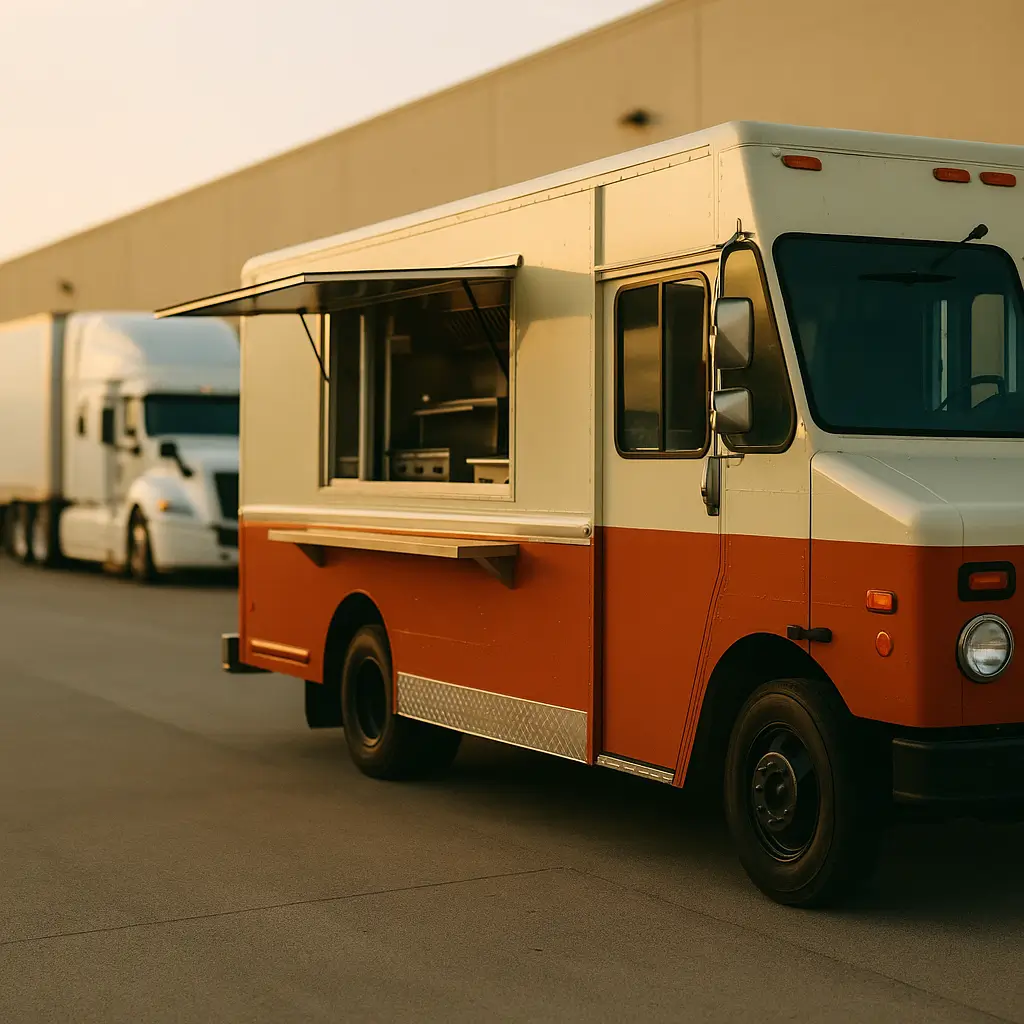
Texas food truck insurance can cost $2K–$6K/yr. See required policies, city permit limits, COI tips, and savings options.
Food truck insurance Texas usually comes down to commercial auto when you drive on public roads and general liability that meets the limits and endorsements required by permits, venues, and festivals. Add property/equipment coverage for the build-out, and review workers’ compensation or occupational accident when you have staff because Texas requirements can be contract-driven.
If you move the unit between lunch spots, breweries, festivals, and catering jobs, start with Texas commercial auto insurance for food trucks rather than relying on a personal policy that may exclude business use.
Table of Contents
Reading time: 8 minutes
Key Takeaways
For many Texas food truck operators in 2026, a permit-ready insurance package commonly totals $2,000–$6,000 per year when it includes commercial auto, general liability, and basic property/equipment coverage.
- Commercial auto + general liability: usually decide whether you can drive and get approved for permits or events.
- COIs + Additional Insured wording: paperwork issues can delay permits and bookings.
- Real savings levers: bundling, deductibles, documented controls, and early renewal shopping can improve pricing.

2026 Texas Update: HB 2844 + Permits
Texas House Bill 2844 established a statewide framework for mobile food vendors and took effect on September 1, 2025. It does not create a single statewide insurance limit that overrides city, event, or contract requirements.
For official history, see Texas Legislature Online’s HB 2844 history. Before your next permit application, confirm the exact COI wording, limits, and Additional Insured requirement for each venue.
For a COI-ready approach to short-notice event work, see catering insurance for a day.
👉 Need to save money on truck insurance in Texas?
Watch the video below for a quick overview of truck insurance in Texas requirements, how much it costs, and practical ways to save. Or give us a call: (704) 290-3630
Here is a walkthrough on how to send your own certificate of insurance so you are not waiting on someone else’s timeline.
Food Truck Insurance Texas Requirements (Policies + Typical Limits)
In Texas, food trucks driven on public roads need auto coverage that reflects commercial use, and many permits and venues commonly require $1,000,000 per occurrence general liability shown on a COI with correct Additional Insured wording.
Commercial auto
Commercial auto covers liability while the truck is driven on public roads and can include physical damage for repairs after a covered loss. Texas minimum financial-responsibility limits do not necessarily meet permit or contract requirements; see the Texas Department of Insurance auto insurance guide.
Still not sure how commercial auto and general liability differ? This quick breakdown explains the distinction in plain terms.
General liability + product liability
General liability covers third-party bodily injury and property damage, while product liability addresses food-related injury allegations. See liability insurance for food vendors.
Property/equipment coverage
Property and equipment coverage can protect the custom build-out, including hood systems, fryers, refrigeration, POS, signage, and gear. For the related liability layer, see food truck liability insurance.
Workers’ comp / occupational accident
Texas is unusual because most private employers may choose whether to carry workers’ compensation, but government contracts, venues, and staffing partners can still require it. See Texas Department of Insurance employer guidance and occupational accident insurance for a related coverage discussion.
Optional add-ons
- Hired & non-owned auto for employee or rented vehicles.
- Liquor liability where alcohol service or contract language creates exposure.
- Business interruption and cyber coverage where they fit the operation.
If you run a cart or stand rather than a full truck, see mobile food vendor insurance.
Food Truck Insurance Texas Costs (2026 Ranges + Cost Drivers)
For many operators, food truck insurance in Texas costs $2,000–$6,000 per year in 2026, with commercial auto frequently the largest line item at roughly $1,200–$4,000+ annually.
Before you request a food truck insurance quote, it helps to know which cost drivers apply. For a direct pricing breakdown, see food truck insurance cost.
| Coverage line | Rough annual range | What pushes it higher |
|---|---|---|
| General liability + product liability | $400–$1,500 | Higher limits, high-traffic events, prior claims |
| Commercial auto | $1,200–$4,000+ | MVR, truck value, miles, metro driving |
| Property/equipment | $300–$1,500 | Build-out value, theft area, deductible |
| Typical package total | $2,000–$6,000/year | Higher limits, umbrella needs, employees |
For a quick take on Texas commercial insurance costs in general, see Texas Truck Insurance Costs 2026.
Cost drivers
- Driving records and who drives the truck
- Truck value and physical damage coverage
- Annual mileage, operating radius, and storage location
- Cooking setup, suppression details, maintenance records, and claims history
How to Lower Food Truck Insurance Texas Costs (Without Cutting Coverage)
Food truck premiums are typically reduced by improving underwriting inputs—driver quality, garaging, documented safety controls, deductible strategy, and bundling—rather than dropping permit-required limits. See how to lower trucking insurance premiums.
- Bundle smartly: combine compatible coverages where eligible.
- Choose deductibles deliberately: do not choose a deductible that breaks cash flow.
- Document controls: suppression inspections, hood cleaning, propane procedures, and temperature logs help.
- Shop early: start 60–90 days before renewal.
Real-world claim scenarios
- Customer slip near the service window: GL may respond.
- Fender-bender between lunch spots: commercial auto may respond.
- Fire damage to hood or wiring: property/equipment coverage may respond.
- Refrigeration failure: spoilage/refrigeration coverage needs to be included.
Frequently Asked Questions
For Texas food truck operators, common permit and venue questions come back to commercial auto, general liability, and COI wording.
For many Texas operators in 2026, food truck insurance commonly totals $2,000–$6,000 per year when it includes commercial auto, general liability, and basic property/equipment coverage. Costs rise with higher festival limits, mileage, truck value, multiple drivers, payroll, claims, or driving violations. Make sure garaging, radius, and vehicle use are classified correctly before comparing quotes.
If you drive the truck on public roads, you need auto coverage that accurately reflects business use. For permits and events, general liability is commonly required at $1,000,000 per occurrence, with the city or venue often listed as Additional Insured on the COI. Property/equipment coverage may not be a legal requirement, but it protects the build-out from fire, theft, and vandalism.
Many city permits and event venues commonly require $1,000,000 per occurrence general liability, often with a $2,000,000 aggregate, plus a COI naming the city or venue as Additional Insured. Festivals may require higher limits through umbrella or excess coverage. Verify the exact wording, dates, entity name, and deadline on the official permit or event page.
HB 2844 took effect on September 1, 2025. It created a statewide framework for mobile food vendors, but operators still need to follow applicable state and local health, fire, zoning, and contract requirements. Confirm the current implementation guidance and any local requirements before applying for a permit.
Standard general liability and commercial auto policies typically do not reimburse spoiled inventory. That usually requires spoilage, refrigeration-breakdown, or equipment-breakdown coverage with the right trigger. If cold storage is essential to your menu, ask whether this coverage is included or needs an endorsement.
Possibly. If alcohol is part of your menu or contract responsibilities, many venues require liquor liability even for occasional service. Standard general liability may only include limited host-liquor coverage, so confirm the venue requirement and your policy language before the event.
Adding payroll changes workers’ compensation exposure and may affect your general liability rating. Texas generally lets most private employers choose whether to carry workers’ compensation, but government contracts, venues, staffing partners, and other agreements can still require it. Review the package before the first hire, not after.
Not automatically in every situation. Your policy territory, endorsements, and a host state’s event requirements can all matter. Tell your agent about interstate events before booking them, especially when a festival requires specific limits, additional insured wording, or a different COI process.
A quote is an estimate based on the information provided; it is not proof of coverage and normally cannot satisfy a permit or venue COI requirement. A bound policy is active coverage, and the carrier or agent can issue a certificate of insurance reflecting the actual limits and endorsements.
Next Steps: Get Texas Food Truck Coverage That Won’t Stall Your Permits
Match coverage to your routes, event calendar, cooking setup, storage location, and COI requirements. Gather driver information, VIN and build-out value, operating details, storage/garaging information, payroll estimates, and your main venue contracts before requesting quotes.
Operating in more than one state? See our California food truck insurance guide.
Conclusion: Build a Permit-Ready, Claim-Ready Package
A solid Texas food truck insurance setup is not about buying the lowest-priced policy. It is about having commercial auto, general liability that meets permit and event requirements, and a COI process that does not cost you bookings.
- Budget realistically: $2,000–$6,000/year is common, but limits, mileage, drivers, and payroll can change the total.
- Plan for paperwork: COIs and Additional Insured wording are operational requirements.
- Save the smart way: bundling, deductible choices, and documented safety controls can reduce premium without creating gaps.
If you’re trying to get permit-ready before your next event season — with the right commercial auto, $1M general liability, and a COI process that won’t stall your bookings — LogRock can help you review your routes, event calendar, and current coverage. Talk to our team to ask questions, spot any gaps, and request a Texas food truck insurance quote based on how you actually operate.